• Recommended Sites & Links
  • About

Dare Something Worthy Today Too!

~ FreeCryptoBitCoins, Cryptocurrency, BitCoin, Ethereum, BitCoin Cash, Ethereum Classic, LiteCoin, DogeCoin, Gold & Precious Metals, Investing & Investments, Stocks and Stock Markets, Financial Markets & Market Timing, Technical Analysis, Oil and Energy Markets, Hard Assets Investing, BlockChain, Airdrops, Earn Free Bitcoin…

Dare Something Worthy Today Too!

Category Archives: XAU

A Challenge! What is Gold going To Do?

27 Friday Feb 2009

Posted by jschulmansr in 10 year Treasuries, 20 yr Treasuries, Bailout News, banking crisis, banks, Barack Obama, Brad Zigler, bull market, capitalism, China, Comex, commodities, Contrarian, Copper, Credit Default, Currencies, currency, Currency and Currencies, depression, DGP, DGZ, economic, Economic Recovery, economic trends, economy, Fed Fund Rate, Federal Deficit, federal reserve, Finance, financial, Forex, Fundamental Analysis, futures, futures markets, gata, GDX, GLD, gold, Gold Bubble, Gold Bullion, Gold Investments, gold miners, Gold Price Manipulation, hard assets, How To Invest, How To Make Money, hyper-inflation, IAU, IMF, India, inflation, Investing, investments, Junior Gold Miners, Latest News, majors, Make Money Investing, manipulation, Market Bubble, market crash, Markets, mid-tier, mining companies, mining stocks, monetization, oil, palladium, physical gold, platinum, platinum miners, precious, precious metals, price, price manipulation, prices, producers, production, recession, risk, run on banks, silver, silver miners, Silver Price Manipulation, small caps, spot, spot price, stagflation, Stimulus, Stocks, TARP, Technical Analysis, The Fed, Tier 1, Tier 2, Tier 3, Today, U.S., U.S. Dollar, warrants, XAU

≈ 1 Comment

Tags

ANV, Austrian school, AUY, Bailout News, banking crisis, banks, bear market, Bollinger Bands Saudi Arabia, Brian Tang, bull market, CDE, central banks, China, Comex, commodities, Copper, Currencies, currency, deflation, Dennis Gartman, depression, DGP, DGZ, dollar denominated, dollar denominated investments, Doug Casey, economic, economic trends, economy, EGO, Federal Deficit, financial, Forex, FRG, futures, futures markets, gata, GDX, GG, GLD, gold, gold miners, hard assets, HL, hyper-inflation, IAU, India, inflation, investments, Jeffrey Nichols, Jim Rogers, Keith Fitz-Gerald, majors, Marc Faber, market crash, Markets, Michael Zielinski, mid-tier, mining companies, monetization, Moving Averages, NGC, NXG, PAL, palladium, Peter Grandich, Peter Schiff, physical gold, platinum, platinum miners, precious metals, price, price manipulation, prices, producers, production, protection, recession, risk, run on banks, safety, Sean Rakhimov, silver, silver miners, SLW, small caps, sovereign, spot, spot price, stagflation, Technical Analysis, TIPS, U.S., U.S. Dollar, volatility, warrants, XAU

This morning  I posted a challenge to Brad Zigler of Hard Assets Investor, I asked him point blank, “Pontificating aside, where do you stand in relation to Gold? Both short term and long term? No charts or arguments just a simple statement I believe Gold will…”. This was in relation to the 1st article below and comments (included); our answers back and forth (highlighted).

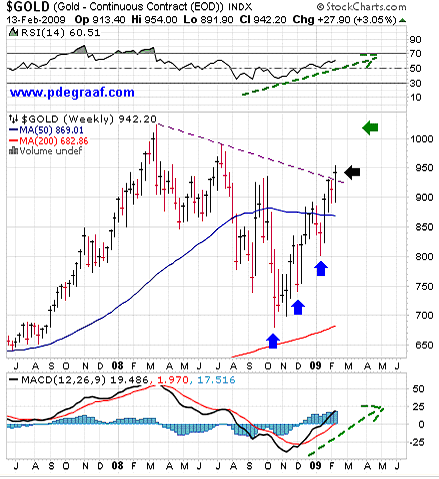
Today Gold is trading currently up $4.40 at $947 (April Contract). It has been as high as $17 up and as low as $946 currently trading at the lower end. We have strong support at the $930 level and if we close above $950 today then I believe next week we’ll see a return to test the $1000 level again.

The 2nd article is from GATA and government intervention/supression of Gold prices. Read my comment after Brad’s article for my short to long term call for Gold. I am getting ready to re-enter my DGP trade again and will be watching the market closely. If we do break resistance here then I will actually go short (buy DGZ) on the Gold market for a very short term trade as I think (if the resistance is broken) then we will go back and test support at $925 and then $880-$890 level. If we close above the $955 level then I will go long for the test of the $1000 level then the next test at $1033 all time high.

Disclosure: I am long in a couple of Precious Metals Mutual Funds, long Gold and Silver Bullion, and many of the Tier 1, 2, and junior mining stocks. Otherwise,as you can see I use DGP or DGZ for the short term moves in gold. 

Follow Me on Twitter and be notified whenever I make a new post!


Here is where I buy my Bullion, get one free gram of Gold just for opening an account! Catch the New Bull! – Buy Gold Online – Get 1 gram free just for opening account– just click here and then again on the Gold Bar!, no minimums – Buy Safely, quickly, and at low prices, guaranteed! – Bullion Vault.comNow the article by Brad…


===================================


Gold’s Devilish Advocate – Seeking Alpha

By: Brad Zigler of Hard Assets Investor.com

In certain circles I’m known as a curmudgeon. Yeah, that’s right. Crusty, irascible and cantankerous. Hard to believe, isn’t it?
The funny thing is that people on both sides of the hard assets spectrum share that point of view. To so-called gold bugs, my under-exuberance for wildly optimist gold forecasts is anathema. Monetarists, on the other hand, grouse about my metering of the dollar’s value against bullion.
No matter what side you line up on, you can’t have ignored the $300 rally in gold prices since late October. For the February COMEX contract, that amounts to a 46% increase; pretty much a replay of the run-up that ended last March. That should prompt you to wonder about the odds of gold topping out again.
No doubt, the answer to that depends upon your gold Weltanschauung. But let’s play devil’s advocate for the moment. What factors argue for a gold sell-off? Or, at least, for keeping a lid on the metal’s ascendance?
The Dollar/Gold Dyad
This year, the dollar’s provided as much refuge for worried investors as gold. Ordinarily, there’s an inverse relationship between gold and the dollar. In the current global disinflationary environment, though, the greenback is proving to be the best nonmetallic haven for global capital. Rising dollar interest rates will enhance the buck’s attractiveness. At least until a cyclical reflation of the currency. Yes, there will be a lot of dollars out there. But right now, there are a lot of representations of the dollar-bills, notes and bonds-awaiting redemption.
The dollar’s prior inflationary pace was braked well before the price of gold peaked last March. We’ve yet to see the leading edge of reflation.

U.S. Monetary Inflation And Gold

U.S. Monetary Inflation And Gold

Dollar interest rates bottomed just before the Obama inauguration and have steadily gained ground since then. Rising rates are like lipstick: A judicious dose can enhance the beauty of a currency; too much, and it looks tawdry. There’s nothing tawdry, though, about the 18-point rise in the dollar LIBOR over the last month. It’s sustainable and makes the buck even more attractive.

Dollar Interest And Gold Lease Rates

Dollar Interest And Gold Lease Rates

Gold Liquidity

The gold lease market belies the shortage scenario played up by many market pundits. Gold lease rates have been falling precipitously as the contango reflected in forward rates has been rising. Contango exists when supplies are plentiful. The current oil market provides testimony of that. The gold market – at least the commercial gold market – gives every indication of being well-supplied.

Overbought Market

Relative strength in gold futures crossed into overbought territory when the spot contract topped $1,000 last week. The peak, if not exceeded, would represent an interim double top and confirmation that the March 2008 high is likely to hold.

COMEX Futures Open Interest

COMEX Futures Open Interest

Speculative Aggressiveness

Commercial hedgers are still driving gold futures pricing. Aggressiveness on the part of large speculative buyers has actually waned as prices moved higher. Over the past month, net long speculative positions rose 34% while commercial net shorts picked up 40%.

Essential Question

Think back to the events surrounding gold’s March 2008 peak and ask yourself this: “Have economic conditions improved or worsened since then?” I think it’s fair to say our financial troubles have deepened. If that’s true, and if gold is a safe haven, why hasn’t the metal made new highs?

This is by no means an exhaustive analysis, but it does raise essential questions that gold bulls should be prepared to address when making their case for higher prices.

Don’t expect to hear the answers in the late-night infomercials hawking gold, though.

================================

Comments:


 JudeJin


    • Comments
    • one cannot decipher a puzzle without having all the pieces.i think you lack a lot of other data to put together a whole picture of where gold stands.there are quite a few people in the world who have collected the all pieces of the puzzle and deciphered the truth behind gold! you are obviously not one of them.i think either you purposely hand-pick the set of charts with very limited time frame to drive your point home or ……    


    Feb 27 06:10 AM
     
    • Brad Zigler
    • 60 Comments
    • Website
    Look at the article’s premise: to play devil’s advocate against a widely held bullish sentiment.
    Feb 27 07:13 AM |Report abuse| Link | Reply
    +30

    You’re offering a complaint, not a refutation. What, specifically, is wrong with the arguments advanced?

    On Feb 27 06:10 AM JudeJin wrote:

    > one cannot decipher a puzzle without having all the pieces.
    >
    > i think you lack a lot of other data to put together a whole picture
    > of where gold stands.
    >
    > there are quite a few people in the world who have collected the
    > all pieces of the puzzle and deciphered the truth behind gold! you
    > are obviously not one of them.
    >
    > i think either you purposely hand-pick the set of charts with very
    > limited time frame to drive your point home or ……

  •  
    • doubleguns
    • 123 Comments
    JudeJin—– I would be interested (very interested) to hear all of the pieces if you would please. If you are one of those people please enlighten us.
  •  
    • huangjin
    • 310 Comments
    I would add the deflation/economic contraction argument. People have less money to spend and they will spend less on everything, including gold.
  •  
    • manya05
    • 11 Comments
    I do not have all the pieces of the puzzle, and I am no expert either, but a few things catch my eye and beg an explanation (or maybe they are the explanation). I see all fiat currencies devaluing, all at the same time more or less, and all for different reasons. For instance, the dollar and euro are devaluing as governments print money like there is no tomorrow, while the yuan and yen devalue to keep the economies from drowning as exports shut down. So everyone is sinking to the bottom. You would expect in that scenario that “something” would retain value. I see why gold bugs may think it is gold (finite amount in existence, finite production, and no use whatsoever other than financial instrument). And that is the clincher, why would something with no other use keep value? how about things that are useful and very much needed? shouldn’t those be appreciating? water, food, energy…why are they not? Sometimes I feel we are all watching the wrong movie and trying to interpret what is happening through the wrong lens…I think this is a systemic readjustment as the value/remuneration among nations in a globalized economy takes its course…but that is the subject for another post…..
  •  
    • craigdude
    • 6 Comments
    Brad- your article really opens my eyes- but I am not clear on a few things and I hope you will school me- you say at the Gold top a few days ago that there were signs the price would drop after the high- you said gold futures were in overbought territory- how did u know this and how do people know to sell at this high? I certainly want to learn how to sell my gold before it turns down? What do you mean the peak if not exceeded- double top etc? does it mean that gold will hold at this high? Please explain how a person can know gold will drop after reaching the $1000 price. Also I have noticed that gold has not dropped enough for me to buy back in if I sell at today’s price- I have to sell at $950 to be at least even and then I have to believe gold will go higher in order for me to buy back in. Where do you think gold will go in the next 6 months as Obama’s money plan reveals itself to be a failure-? If Jim Rogers thinks gold will continue higher because of fundamentals- what do you think of the fundamentals in a 1 or 2 year time frame?
  •  
    • craigdude
    • 6 Comments
    Brad- could gold be controlled by governments leasing gold and selling to keep lid on prices?–please explain double top and overbought
  •  
    • scotty1560
    • 155 Comments
    Brad.. listen gold has held up better than any commodity like oil or
    and any equity or real estate investment.

    It could drop.. I’m not that smart to predict.
    IMO the drop is after the economy recovers and that could take years at
    this point. It’s a safe haven and a trade against the dow.. I see the dow
    much lower.. so gold should at minimum hold it’s ground and perhaps
    rise towards 1500-2000, based on historical trends.
    In troubled times we humans tend to get religion and go back to
    ancient methods of survival.. gold fits that scenario.

    • Alex Filonov
    • 397 Comments
    • Website
    Couple more data points:

    1. NYMEX open interest for April exceeds open interest for all other months. ETF effect?

    2. India is not importing gold anymore. Regular buyer of 30% physical gold is out of the market.

  •  
    • jschulmansr
    • 7 Comments
    • Website
    Brad; Pontificating aside, where do you stand in relation to Gold? Both short term and long term? No charts or arguments just a simple statement I believe Gold will…

    Thanks!

    Jeff Schulman Sr aka jschulmansr

  •  
    • Brad Zigler
    • 60 Comments
    • Website
    No one, of course, “knows” gold will drop or rise from any particular price level. T

    here are, however, technical indicators such as the Relative Strength Index and stochastics which identify certain market levels as overbought or oversold.

    A double top is a price level reached a couple of times by a market as it attempts to rally higher but can’t be hurdled. The failure sets up a decline.

    About gold leases. Often, nefarious intente is ascribed to central bank swap activity. But leasing can be simply a way to garner a return on an otherwise sterile asset as well as a way to stimulate lending and investment activity.

    Outright borrows of bullion by bank customers tend to increase when bearish sentiments prevail. In essence, the borrower doesn’t want to face the prospect of buying back gold at a higher price to close out the loan.

    With that in mind, the market may already favor shorts BEFORE leasing.

    On Feb 27 09:25 AM craigdude wrote:

    > Brad- could gold be controlled by governments leasing gold and selling
    > to keep lid on prices?–please explain double top and overbought

  •  
    • jschulmansr
    • 7 Comments
    • Website
    Brad;
    Ps- I guess I should have added I think your articles are very well written and thought provoking. I make mention of and use your stuff on my blog quite often, but recently I have not heard your outlook for Gold. I do agree we are at a crossroads here, we may see more retracement. I think we are about to see Gold go and test it’s all time highs. Failure there I think will mean a retracement potentially as low to $880 to $890. If we clear due to manipulaton and where the short interest got in at there will be sttrong pressure to bring down prices at the $1050 level. If that hurdle is cleared I think that the banks who are short will give up and cause a very violent spike upwards “shortcovering rally”. After all they can afford to give in now as they figure they can get their money back thru Government stimulus, TARP, and bailout funds. Long term however, I do feel with inflation runnng a tad higher than what you are currently stating,and the fact that the monetary printing presses are running full steam round the clock; that longer term we will see inflation even hypr and/or stagfaltion. In other words get your wheelbarrow to haul your money around to go shopping for a “loaf” of bread. I truly think that prices of $2000 to $3500 oz are not unrealistic given the aforementioned scenario. What is your opinion in regards to this? Maybe even a special article?- Thanks Again- Jeff Schulman Sr aka jschulmansr
    Feb 27 11:29 AM |Report abuse| Link | Reply
    +10
  •  
    • Brad Zigler
    • 60 Comments
    • Website
    Don’t read too much into the large open interest in April futures. There are certain delivery months for gold that are traditionally more active than others. April is one of them (February, June, August, October and December are the others).
    Feb 27 11:31 AM |Report abuse| Link | Reply
    +10

    As February’s expiry approached, open interest rolled to the next active month in the cycle–April. Yes, some of that is ETF interest (namely, DBG, the PowerShares DB Gold ETF). It doesn’t, however, include the SPDR Gold Shares (GLD) or the iShares COMEX Gold Trust (IAU). These trusts hold physical metal, not futures.

    On Feb 27 10:31 AM Alex Filonov wrote:

    > Couple more data points:
    >
    > 1. NYMEX open interest for April exceeds open interest for all other
    > months. ETF effect?
    >
    > 2. India is not importing gold anymore. Regular buyer of 30% physical
    > gold is out of the market.

  •  
    • TexasER
    • 21 Comments
    Speculating on the price of gold has always been risky, never more so than now. If you’re in this trade to turn a quick profit, you have more guts or brains than me.
    Feb 27 11:48 AM |Report abuse| Link | Reply
    +10

    But as “melt-down” insurance, gold has performed exactly as advertised. I see no indication that it will somehow stop acting this way. If the markets fall off another cliff, obviously gold will do well.

    Diversification has always been a prudent strategy. That hasn’t changed, but gold’s importance to a diversified portfolio has changed. Some investors have recognized this out of prudence, not panic, and acted accordingly.

    I’m long, but if gold goes to $500 from here, you won’t hear me whining about it.

  •  
    • jschulmansr
    • 7 Comments
    • Website
    Brad; Thanks for your answer, I am sure you are aware of GATA, that is really were one of my main concern lies. The continued manipulation of prices by both governmental and banks. It will be very interesting to see what the CFTC and Comex are going to do with their investigations in both the Silver and Gold markets. Also long term I think we have a couple of big plays coming up with Silver and Oil. That’s what I love about the markets, sheer boredom puncuated by moments of either sheer elation or sheer terror! Thanks again! – Jeff Schulman Sr aka jschulmansr
    Feb 27 12:03 PM |Report abuse| Link | Reply
    +10
  • ========================================
    Now to “Market Price Manipulation…
    Ex-Treasury official Confirms Gold Suppression Scheme – Gata
    Source: Gold Anti-Trust Action Committee (Gata)
    Home » Daily Dispatches

    Ex-Treasury official confirms gold

    suppression scheme

    Submitted by cpowell on Tue, 2009-02-24 22:13. Section: Daily Dispatches

    5p ET Tuesday, February 24, 2009

    Dear Friend of GATA and Gold:

    In an essay published today at Counterpunch.org, former Assistant Treasury Secretary Paul Craig Roberts confirms that the U.S. government has been leasing gold to suppress its price and support the dollar. The admission is made in the last paragraph of the essay, which is appended.

    CHRIS POWELL, Secretary/Treasurer
    Gold Anti-Trust Action Committee Inc.

    * * *

    Doomed by the Myths of Free Trade: How the Economy Was Lost

    By Paul Craig Roberts
    Tuesday, February 24, 2009

    http://www.counterpunch.org/roberts02242009.html

    The American economy has gone away. It is not coming back until free trade myths are buried 6 feet under.

    America’s 20th century economic success was based on two things. Free trade was not one of them. America’s economic success was based on protectionism, which was ensured by the union victory in the Civil War, and on British indebtedness, which destroyed the British pound as world reserve currency. Following World War II, the US dollar took the role as reserve currency, a privilege that allows the US to pay its international bills in its own currency.

    World War II and socialism together ensured that the US economy dominated the world at the mid-20th century. The economies of the rest of the world had been destroyed by war or were stifled by socialism [in terms of the priorities of the capitalist growth model: Editors.]

    The ascendant position of the US economy caused the US government to be relaxed about giving away American industries, such as textiles, as bribes to other countries for cooperating with America’s cold war and foreign policies. For example, Turkey’s US textile quotas were increased in exchange for overflight rights in the Gulf War, making lost US textile jobs an off-budget war expense.

    In contrast, countries such as Japan and Germany used industrial policy to plot their comebacks. By the late 1970s, Japanese auto makers had the once dominant American auto industry on the ropes. The first economic act of the “free market” Reagan administration in 1981 was to put quotas on the import of Japanese cars in order to protect Detroit and the United Auto Workers.

    Eamonn Fingleton, Pat Choate, and others have described how negligence in Washington aided and abetted the erosion of America’s economic position. What we didn’t give away, the United States let be taken away while preaching a “free trade” doctrine at which the rest of the world scoffed.

    Fortunately, the U.S.’s adversaries at the time, the Soviet Union and China, had unworkable economic systems that posed no threat to America’s diminishing economic prowess.

    This furlough from reality ended when Soviet, Chinese, and Indian socialism surrendered around 1990, to be followed shortly thereafter by the rise of the high speed Internet. Suddenly American and other First World corporations discovered that a massive supply of foreign labor was available at practically free wages.

    To get Wall Street analysts and shareholder advocacy groups off their backs, and to boost shareholder returns and management bonuses, American corporations began moving their production for American markets offshore. Products that were made in Peoria are now made in China.

    As offshoring spread, American cities and states lost tax base, and families and communities lost jobs. The replacement jobs, such as selling the offshored products at Wal-Mart, brought home less pay.

    “Free market economists” covered up the damage done to the US economy by preaching a New Economy based on services and innovation. But it wasn’t long before corporations discovered that the high speed Internet let them offshore a wide range of professional service jobs. In America, the hardest hit have been software engineers and information technology (IT) workers.

    The American corporations quickly learned that by declaring “shortages” of skilled Americans, they could get from Congress H-1b work visas for lower paid foreigners with whom to replace their American work force. Many US corporations are known for forcing their US employees to train their foreign replacements in exchange for severance pay.

    Chasing after shareholder return and “performance bonuses,” US corporations deserted their American workforce. The consequences can be seen everywhere. The loss of tax base has threatened the municipal bonds of cities and states and reduced the wealth of individuals who purchased the bonds. The lost jobs with good pay resulted in the expansion of consumer debt in order to maintain consumption. As the offshored goods and services are brought back to America to sell, the US trade deficit has exploded to unimaginable heights, calling into question the US dollar as reserve currency and America’s ability to finance its trade deficit.

    As the American economy eroded away bit by bit, “free market” ideologues produced endless reassurances that America had pulled a fast one on China, sending China dirty and grimy manufacturing jobs. Free of these “old economy” jobs, Americans were lulled with promises of riches. In place of dirty fingernails, American efforts would flow into innovation and entrepreneurship. In the meantime, the “service economy” of software and communications would provide a leg up for the work force.

    Education was the answer to all challenges. This appeased the academics, and they produced no studies that would contradict the propaganda and, thus, curtail the flow of federal government and corporate grants.

    The “free market” economists, who provided the propaganda and disinformation to hide the act of destroying the US economy, were well paid. And as Business Week noted, “outsourcing’s inner circle has deep roots in GE (General Electric) and McKinsey,” a consulting firm. Indeed, one of McKinsey’s main apologists for offshoring of US jobs, Diana Farrell, is now a member of Obama’s White House National Economic Council.

    The pressure of jobs offshoring, together with vast imports, has destroyed the economic prospects for all Americans, except the CEOs who receive “performance” bonuses for moving American jobs offshore or giving them to H-1b work visa holders. Lowly paid offshored employees, together with H-1b visas, have curtailed employment for older and more experienced American workers. Older workers traditionally receive higher pay. However, when the determining factor is minimizing labor costs for the sake of shareholder returns and management bonuses, older workers are unaffordable. Doing a good job, providing a good service, is no longer the corporation’s function. Instead, the goal is to minimize labor costs at all cost.

    Thus “free trade” has also destroyed the employment prospects of older workers. Forced out of their careers, they seek employment as shelf stockers for Wal-Mart.

    I have read endless tributes to Wal-Mart from “libertarian economists,” who sing Wal-Mart’s praises for bringing low price goods, 70 per cent of which are made in China, to the American consumer. What these “economists” do not factor into their analysis is the diminution of American family incomes and government tax base from the loss of the goods producing jobs to China. Ladders of upward mobility are being dismantled by offshoring, while California issues IOUs to pay its bills. The shift of production offshore reduces US GDP. When the goods and services are brought back to America to be sold, they increase the trade deficit. As the trade deficit is financed by foreigners acquiring ownership of US assets, this means that profits, dividends, capital gains, interest, rents, and tolls leave American pockets for foreign ones.

    The demise of America’s productive economy left the US economy dependent on finance, in which the US remained dominant because the dollar is the reserve currency. With the departure of factories, finance went in new directions. Mortgages, which were once held in the portfolios of the issuer, were securitized. Individual mortgage debts were combined into a “security.” The next step was to strip out the interest payments to the mortgages and sell them as derivatives, thus creating a third debt instrument based on the original mortgages.

    In pursuit of ever more profits, financial institutions began betting on the success and failure of various debt instruments and by implication on firms. They bought and sold collateral debt swaps. A buyer pays a premium to a seller for a swap to guarantee an asset’s value. If an asset “insured” by a swap falls in value, the seller of the swap is supposed to make the owner of the swap whole. The purchaser of a swap is not required to own the asset in order to contract for a guarantee of its value. Therefore, as many people could purchase as many swaps as they wished on the same asset. Thus, the total value of the swaps greatly exceeds the value of the assets.* [See footnote.)

    The next step is for holders of the swaps to short the asset in order to drive down its value and collect the guarantee. As the issuers of swaps were not required to reserve against them, and as there is no limit to the number of swaps, the payouts could easily exceed the net worth of the issuer.

    This was the most shameful and most mindless form of speculation. Gamblers were betting hands that they could not cover. The US regulators fled their posts. The American financial institutions abandoned all integrity. As a consequence, American financial institutions and rating agencies are trusted nowhere on earth.

    The US government should never have used billions of taxpayers’ dollars to pay off swap bets as it did when it bailed out the insurance company AIG. This was a stunning waste of a vast sum of money. The federal government should declare all swap agreements to be fraudulent contracts, except for a single swap held by the owner of the asset. Simply wiping out these fraudulent contracts would remove the bulk of the vast overhang of “troubled” assets that threaten financial markets.

    The billions of taxpayers’ dollars spent buying up subprime derivatives were also wasted. The government did not need to spend one dime. All government needed to do was to suspend the mark-to-market rule. This simple act would have removed the solvency threat to financial institutions by allowing them to keep the derivatives at book value until financial institutions could ascertain their true values and write them down over time.

    Taxpayers, equity owners, and the credit standing of the US government are being ruined by financial shysters who are manipulating to their own advantage the government’s commitment to mark-to-market and to the “sanctity of contracts.” Multi-trillion dollar “bailouts” and bank nationalization are the result of the government’s inability to respond intelligently.

    Two more simple acts would have completed the rescue without costing the taxpayers one dollar: an announcement from the Federal Reserve that it will be lender of last resort to all depository institutions including money market funds, and an announcement reinstating the uptick rule.

    The uptick rule was suspended or repealed a couple of years ago in order to permit hedge funds and shyster speculators to ripoff American equity owners. The rule prevented short-selling any stock that did not move up in price during the previous day. In other words, speculators could not make money at others’ expense by ganging up on a stock and short-selling it day after day.

    As a former Treasury official, I am amazed that the US government, in the midst of the worst financial crises ever, is content for short-selling to drive down the asset prices that the government is trying to support. No bailout or stimulus plan has any hope until the uptick rule is reinstated.

    The bald fact is that the combination of ignorance, negligence, and ideology that permitted the crisis to happen still prevails and is blocking any remedy. Either the people in power in Washington and the financial community are total dimwits or they are manipulating an opportunity to redistribute wealth from taxpayers, equity owners and pension funds to the financial sector.

    The Bush and Obama plans total 1.6 trillion dollars, every one of which will have to be borrowed, and no one knows from where. This huge sum will compromise the value of the US dollar, its role as reserve currency, the ability of the US government to service its debt, and the price level. These staggering costs are pointless and are to no avail, as not one step has been taken that would alleviate the crisis.

    If we add to my simple menu of remedies a ban, punishable by instant death, for short selling any national currency, the world can be rescued from the current crisis without years of suffering, violent upheavals and, perhaps, wars.

    According to its hopeful but economically ignorant proponents, globalism was supposed to balance risks across national economies and to offset downturns in one part of the world with upturns in other parts. A global portfolio was a protection against loss, claimed globalism’s purveyors. In fact, globalism has concentrated the risks, resulting in Wall Street’s greed endangering all the economies of the world. The greed of Wall Street and the negligence of the US government have wrecked the prospects of many nations. Street riots are already occurring in parts of the world. On Sunday February 22, the right-wing TV station, Fox “News,” presented a program that predicted riots and disarray in the United States by 2014.

    How long will Americans permit “their” government to rip them off for the sake of the financial interests that caused the problem? Obama’s cabinet and National Economic Council are filled with representatives of the interest groups that caused the problem. The Obama administration is not a government capable of preventing a catastrophe.

    If truth be known, the “banking problem” is the least of our worries. Our economy faces two much more serious problems. One is that offshoring and H-1b visas have stopped the growth of family incomes, except, of course, for the super rich. To keep the economy going, consumers have gone deeper into debt, maxing out their credit cards and refinancing their homes and spending the equity. Consumers are now so indebted that they cannot increase their spending by taking on more debt. Thus, whether or not the banks resume lending is beside the point.

    The other serious problem is the status of the US dollar as reserve currency. This status has allowed the US, now a country heavily dependent on imports just like a third world or lesser-developed country, to pay its international bills in its own currency. We are able to import $800 billion annually more than we produce, because the foreign countries from whom we import are willing to accept paper for their goods and services.

    If the dollar loses its reserve currency role, foreigners will not accept dollars in exchange for real things. This event would be immensely disruptive to an economy dependent on imports for its energy, its clothes, its shoes, its manufactured products, and its advanced technology products.

    If incompetence in Washington, the type of incompetence that produced the current economic crisis, destroys the dollar as reserve currency, the “unipower” will overnight become a third world country, unable to pay for its imports or to sustain its standard of living.

    How long can the US government protect the dollar’s value by leasing its gold to bullion dealers who sell it, thereby holding down the gold price? Given the incompetence in Washington and on Wall Street, our best hope is that the rest of the world is even less competent and even in deeper trouble. In this event, the US dollar might survive as the least valueless of the world’s fiat currencies.

    *(An excellent explanation of swaps can be found here.)

    —–

    Paul Craig Roberts was assistant secretary of the treasury in the Reagan administration. He is coauthor of “The Tyranny of Good Intentions.” He can be reached at PaulCraigRoberts@yahoo.com.

    * * *

    Help keep GATA going

    GATA is a civil rights and educational organization based in the United States and tax-exempt under the U.S. Internal Revenue Code. Its e-mail dispatches are free, and you can subscribe at http://www.gata.org/.

    ====================================

    Have a Great Weekend! Keep your eyes open for a special weekend post. Good Investing! jschulmansr

    Follow Me on Twitter and be notified whenever I make a new post!

    Catch the New Bull! – Buy Gold Online – Get 1 gram free just for opening account– just click here and then again on the Gold Bar!, no minimums – Buy Safely, quickly, and at low prices, guaranteed! – Bullion Vault.com

    ========================================

    Nothing in today’s post should be considered as an offer to buy or sell any securities or other investments; it is presented for informational purposes only. As a good investor, consult your Investment Advisor/s, Do Your Due Diligence, Read All Prospectus/s and related information carefully before you make any investing decisions and/or investments. –  jschulmansr


    Share this:

    • Click to share on Reddit (Opens in new window) Reddit
    • Click to share on Facebook (Opens in new window) Facebook
    • Click to share on LinkedIn (Opens in new window) LinkedIn
    • More
    • Click to share on X (Opens in new window) X
    • Click to share on Pinterest (Opens in new window) Pinterest
    • Click to share on Tumblr (Opens in new window) Tumblr
    • Click to print (Opens in new window) Print
    • Click to email a link to a friend (Opens in new window) Email
    Like Loading...

    The Noose Tightens

    26 Thursday Feb 2009

    Posted by jschulmansr in 10 year Treasuries, 20 yr Treasuries, Austrian school, Bailout News, banking crisis, banks, bear market, bull market, Comex, commodities, Copper, Currencies, currency, Currency and Currencies, depression, DGP, dollar denominated, dollar denominated investments, Fundamental Analysis, futures markets, GDX, GLD, gold, Gold Bubble, Gold Bullion, Gold Investments, gold miners, Gold Price Manipulation, How To Invest, How To Make Money, hyper-inflation, IAU, inflation, Investing, investments, Jschulmansr, Junior Gold Miners, Latest News, Make Money Investing, manipulation, Market Bubble, market crash, Markets, mid-tier, mining companies, mining stocks, palladium, Peter Grandich, physical gold, platinum, platinum miners, precious metals, price, price manipulation, prices, producers, production, silver, silver miners, Silver Price Manipulation, spot, spot price, stagflation, Stimulus, Stocks, Technical Analysis, The Fed, Tier 1, Tier 2, Tier 3, TIPS, U.S. Dollar, Uncategorized, XAU

    ≈ 2 Comments

    Tags

    ANV, Austrian school, AUY, Bailout News, banking crisis, banks, bear market, Bollinger Bands Saudi Arabia, Brian Tang, bull market, CDE, central banks, China, Comex, commodities, Copper, Currencies, currency, deflation, Dennis Gartman, depression, DGP, dollar denominated, dollar denominated investments, Doug Casey, economic, economic trends, economy, EGO, Federal Deficit, financial, Forex, FRG, futures, futures markets, gata, GDX, GG, GLD, gold, gold miners, hard assets, HL, hyper-inflation, IAU, India, inflation, investments, Jeffrey Nichols, Jim Rogers, Keith Fitz-Gerald, majors, Marc Faber, market crash, Markets, Michael Zielinski, mid-tier, mining companies, monetization, Moving Averages, NGC, NXG, PAL, palladium, Peter Grandich, Peter Schiff, physical gold, platinum, platinum miners, precious metals, price, price manipulation, prices, producers, production, protection, recession, risk, run on banks, safety, Sean Rakhimov, silver, silver miners, SLW, small caps, sovereign, spot, spot price, stagflation, Technical Analysis, TIPS, U.S., U.S. Dollar, volatility, warrants, XAU

    As I write Gold down $3.00 to $366 oz (April Contract). Things are getting very interesting, Japan’s exports drop a new record level. The Wall Street Journal has a quick article about investors wanting Gold in Hand (taking Delivery). As I wrote a few days ago the fastest way to create a short squeeze is to take delivery. Especially on Comex in both Gold and Silver. Is the noose getting tighter? Gold is in a consolidation pattern getting ready to take off? Some say yes other’s in fact a majority are saying no it’s time for a correction. As I mentioned yesterday when most of the crowd is saying one thing the market usually does exactly the opposite. We will see as I am keeping a very careful eye on the Gold market and will let you know via this blog and Twitter when I am getting out of the Long DGP trade. Finally! Cramer has finally decided to give Gold some coverage after a $200 rally, quick excerp below. Let the fun begin! Good Investing! – jschulmansr

    Follow Me on Twitter and be notified whenever I make a new post!

    Here is where I buy my Bullion, get one free gram of Gold just for opening an account! Catch the New Bull! – Buy Gold Online – Get 1 gram free just for opening account– just click here and then again on the Gold Bar!, no minimums – Buy Safely, quickly, and at low prices, guaranteed! – Bullion Vault.com

    ================================

    Cramer’s Mad Money- The EGO Has Landed (2/25/09) – Seeking Alpha


    Source: SA Editor
    Miriam Metzinger

    Good As Gold: Agnico Eagle Mines (AEM), Eldorado (EGO), SPDR Gold Shares (GLD), Yamana (AUY), Goldcorp (GG), Newmont (NEM)

    In spite of gold’s dip from $1,000 to $950, Cramer thinks the uncertainty in the U.S. and in Europe will be good news for the traditional hedge. The question is how to invest in gold. One way is to buy bullion or gold coins, but Cramer prefers stocks. SPDR Gold Shares is a good way to track the price of gold. Cramer would buy a fourth of a position at $90, another at $88, then $85 and $82. He reminded viewers that gold stocks have unique metrics; production growth, sensitivity of earnings to changes in gold prices and price-to-net-asset value. Two gold stocks worth looking at are Agnico Eagle Mines and Eldorado. Agnico has an impressive 344% growth rate, with Yamana at 56% and Eldorado at 27%. Eldorado keeps production costs very low at $286 per ounce: Goldcorp’s expenses are $397, Yamana $411 and Agnico is $483. Even though Agnico’s production costs are at the top, Cramer says they are going down. However, EGO is less sensitive than gold prices than AEM. According to the price-to-net-asset value, AEM is the most expensive, with EGO and Newmont behind. In short, Agnico has an impressive growth rate, but Eldorado might be a better value.

    ====================================

    Worried Investors Want Gold on Hand – Wall Street Journal

    Source: WSJ Online


    Some investors are so worried about the prospect of economic collapse that they are buying gold and having it delivered to them, rather than holding the precious metal in the form of futures contracts or other securities.

    The global recession and worries about the stability of the financial system have sent the price of gold to $1,000 an ounce. But more surprising is that buyers are taking the unusual and expensive step of taking possession of it.

    “We’re having some of our strongest months ever,” said Scott Thomas, president and chief executive of American Precious Metals Exchange, a precious-metals dealer …

    =====================================
    Oil, Dollar and Gold – Peter Grandich’s Blog
    Source:  Peter Grandich’s Blog

    One’s bottoming, one’s topping and one’s consolidating. Can you guess which is which?

    Give yourself a cigar if you said oil, U.S. Dollar and gold.

    The 50-Day Moving Average is just pennies away ($42.50). A close above it could bring in some technical buying. Some early signs of peak supply is showing up and with more people believing OPEC is living up to its quota’s, the mid $30’s look more and more like the bottom.

    We’re at one of the more critical technical points in quite some time. We either have a triple top just above 88 or a major breakout above 90. Because I’m so bearish long-term, I’m currently positioned on the short side. A break above 90 will cause me to rethink my position. Stay tuned.

    The magical $1,000 level has for now proven to be just a news story. I, myself, received several requests for interviews and comments last Friday on $1,000 gold from media people who don’t normally cover gold. This suggested to me that we got a little ahead of ourselves. The $925-$950 area should be the limit to this consolidation. Don’t be surprised if we shoot above $1,000 in the coming days.

    ================================

    Late Flash: They’re trying to manipulate the Gold market again or else the traders are trying the push. I have been stopped out of DGP @ $958. Nice trade. I will now be looking at my next entry point to jump back in again. Gold currently $943.60 (April Contract). I think the lowest April will correct to will be $925 oz (April Contract) and then we are back to challenging $1000 and the all time highs again. Remember 3’s a charm! Good Investing! – jschulmansr

    Catch the New Bull! – Buy Gold Online – Get 1 gram free just for opening account– just click here and then again on the Gold Bar!, no minimums – Buy Safely, quickly, and at low prices, guaranteed! – Bullion Vault.com

    Follow Me on Twitter and be notified whenever I make a new post!

    ====================================

    Nothing in today’s post should be considered as an offer to buy or sell any securities or other investments; it is presented for informational purposes only. As a good investor, consult your Investment Advisor/s, Do Your Due Diligence, Read All Prospectus/s and related information carefully before you make any investing decisions and/or investments. –  jschulmansr

    Share this:

    • Click to share on Reddit (Opens in new window) Reddit
    • Click to share on Facebook (Opens in new window) Facebook
    • Click to share on LinkedIn (Opens in new window) LinkedIn
    • More
    • Click to share on X (Opens in new window) X
    • Click to share on Pinterest (Opens in new window) Pinterest
    • Click to share on Tumblr (Opens in new window) Tumblr
    • Click to print (Opens in new window) Print
    • Click to email a link to a friend (Opens in new window) Email
    Like Loading...

    Is the Glitter Fading?

    25 Wednesday Feb 2009

    Posted by jschulmansr in Austrian school, Bailout News, banking crisis, banks, bear market, bull market, capitalism, China, Comex, commodities, Contrarian, Copper, Currencies, currency, Currency and Currencies, deflation, depression, DGP, dollar denominated, dollar denominated investments, Doug Casey, economic, Economic Recovery, economic trends, economy, Fed Fund Rate, Federal Deficit, federal reserve, Finance, financial, Forex, futures, futures markets, GDX, GLD, gold, Gold Bubble, Gold Bullion, Gold Investments, gold miners, Gold Price Manipulation, hard assets, How To Invest, How To Make Money, hyper-inflation, IAU, India, inflation, Investing, investments, Jschulmansr, Junior Gold Miners, Latest News, majors, Make Money Investing, Market Bubble, market crash, Markets, mid-tier, mining companies, mining stocks, monetization, oil, palladium, physical gold, platinum, platinum miners, precious, precious metals, price, price manipulation, prices, producers, production, run on banks, safety, silver, silver miners, Silver Price Manipulation, spot, spot price, stagflation, Stimulus, Stocks, TARP, Technical Analysis, The Fed, Tier 1, Tier 2, Tier 3, Today, U.S., u.s. constitution, U.S. Dollar, volatility, warrants, XAU

    ≈ 1 Comment

    Tags

    ANV, Austrian school, AUY, Bailout News, banking crisis, banks, bear market, Bollinger Bands Saudi Arabia, Brian Tang, bull market, CDE, central banks, China, Comex, commodities, Copper, Currencies, currency, deflation, Dennis Gartman, depression, DGP, dollar denominated, dollar denominated investments, Doug Casey, economic, economic trends, economy, EGO, Federal Deficit, financial, Forex, FRG, futures, futures markets, gata, GDX, GG, GLD, gold, gold miners, hard assets, HL, hyper-inflation, IAU, India, inflation, investments, Jeffrey Nichols, Jim Rogers, Keith Fitz-Gerald, majors, Marc Faber, market crash, Markets, Michael Zielinski, mid-tier, mining companies, monetization, Moving Averages, NGC, NXG, PAL, palladium, Peter Grandich, Peter Schiff, physical gold, platinum, platinum miners, precious metals, price, price manipulation, prices, producers, production, protection, recession, risk, run on banks, safety, Sean Rakhimov, silver, silver miners, SLW, small caps, sovereign, spot, spot price, stagflation, Technical Analysis, TIPS, U.S., U.S. Dollar, volatility, warrants, XAU

         As I write Gold is down $3.00 at $966 (nearest futures month). It is still holding around the $960 to $965 support levels. However, I want to assert this, Gold is in a long term upward trend. The only thing that would change my thinking would be a close under the $880 which represents the bottom level of the long term uprward channel. We may however in the short term see a correction downward to even as low as $900 to $910. I will be watching very closely as this may be a “bear trap” in an upward market. One thing however I am somewhat of a contrarian. Last week almost every analyst under the sun was touting Gold as the ONLY investment. When I see that I get very nervous and know that a correction is about to happen.  For those who remember the day silver hit $50 oz., Walter Cronkite announced on his evening new that “It’s time for everyone to go out and buy some silver”! The very next day the silver market tanked like a lead balloon. So a little downside action here will be a good thing to shake out the “nervous nellies” and “johnny come lately’s” out of the market. Because I have seen it time and time again as soon as that happens “Kaboom” the market takes of and does not look back. I will be watching very carefully here and will let you (those who have subscribed to this blog and are following me on twitter), when I get out of the DGP trade. I got in at $890 oz and think a little patience here will pay off.  Given the current state of things Gold could still easily hit $1050 this week as well as have a price correction. Be sure to subscibe in the top right corner and/or follow me on twitter to be kept up to date…

         The best investment in my opinion right now is to continue accumulating the Junior and Mid-tier Gold and Precious Metals mining companies. Once again there are many still selling at or near book value levels. Remember to choose companies who currently have production or are about to start producing. One exception might be those companies who have made some big strikes,  are sitting on huge “proven” reserves, and have plenty of cash and financing to bring those reserves into production in the future. Another play is to investigate “Warrants” which give you the right to buy a stock at a given price for a certain timeframe. There are many out there which could give your portfolio a couple of “home runs” gains of 2-3000%. Either way do your own good due diligence, check the companies out, their balance sheets, prospectus/s  and consult your own financial advisors before making any trades.- Good Investing! -jschulmansr

    ==========================

    Follow Me on Twitter and be notified whenever I make a new post!


    Catch the New Bull! – Buy Gold Online – Get 1 gram free just for opening account– just click here and then again on the Gold Bar!, no minimums – Buy Safely, quickly, and at low prices, guaranteed! – Bullion Vault.com

    =============================

    Panic=Gold – Seeking Alpha

    Source: Hard Assets Investors

    It’s axiomatic that gold has a role as safe haven for many investors. That this is largely a matter of collective psychology is irrelevant – it has worked for centuries, and it’s unlikely to stop working tomorrow.

     But lately, gold been more than a mere market hedge; it’s been a panic hedge.

    Current Gold

    Gold briefly nudged over the $1,000 mark to $1006.43 on Friday, February 20, before settling back down to close at $993.25. It was the first time since last March that gold crossed the insignificant but satisfyingly round $1k level. Technical geeks would point out that it’s still below the high of $1012.55 hit March 18th, but that’s splitting hairs.

    Of course, gold didn’t stay above $1,000/ounce for long last March; it quickly reversed course and traded down all year, before bottoming at $712.41 on November 20th. Since then, gold has risen 39.4%; it was up 13.4% in January alone.

    The last time I wrote about gold (Demanding Gold) was just before that November bottom. Back then I discussed the underlying demand for gold – because one of the great things about commodities is that ultimately, they’re always about supply and demand. And with the gold-bug’s most important supply and demand report out for 2008, it’s the perfect time to revisit the subject. (The full link to the World Gold Council’s Supply and Demand Statistics for Q4 and Full Year 2008 report is here.)

    Looking At Demand

    Gold demand can be broken into three main areas of interest – jewellery, which accounted for roughly 58% of identifiable demand in 2008, industrial and dentistry demand, and finally identifiable investment demand.

    On the whole, gold saw demand grow 4% from 2007 to 2008, but the picture is a bit more complex than just that.

    Not everything was rosy for gold in 2008. As we predicted, jewellery demand was down significantly. In 2007 around 68% of gold demand was attributed to jewellery consumption. In 2008, that number dropped to 58%.

    At the end of December, The World Gold Council released a report entitled “What Women Want: Global Discretionary Spending Report 2008“. In it, the WGC details the values and significance different countries attribute to gold jewellery and why people buy it. One new thing the study uncovered is that gold jewellery is now competing with items such as cell phones and other everyday items for discretionary spending.

    The report also states that “confidence that gold will hold its value has waned,” reflecting in part the volatility gold prices have experienced in the past year. With gold rising and falling by 30% in a single year, it’s no wonder people are feeling less comfortable with it as a store of value.

    Demand on the jewelry front appears to be price elastic. In India, the largest consumer of gold jewellery, demand in the fourth quarter more than doubled compared to Q4 of 2007. While this would seem to buck the year-long numbers, it’s likely due to the fact that lower gold prices occurred precisely at the time of the Diwali festival – a peak gold-buying time in India. In 2007, gold prices were high during the festival, which depressed demand. For the full year of 2008, jewellery demand in India dropped 15%.

    China was one of the only countries that posted an increase in demand for jewellery, up 8% from 2007. Much of this demand was for 24-karat jewelry, which commonly implies jewellery purchases that are doubling as investments.

    The Big Stick: Gold Bugs

    According to the World Gold Council report, gold demand for investment rose from 663.7 tonnes in 2007 to 1090.7 tonnes in 2008 – a somewhat staggering year-on-year increase of 64.3%. Retail investment – things like bar hoarding, official coins, medals/imitation coins and other kinds of retail investment – almost doubled, going from 410.3 tonnes in 2007 to 769.3 tonnes in 2008. That gives some credence to the wide scale anecdotal evidence throughout the year that gold coins were virtually impossible to obtain in many countries.

    Exchange-traded funds and similar products also showed a large increase, from 253.3 tonnes to 321.4 tonnes (a 26.9% increase). This trend has continued into 2009. The SPDR Gold ETF (NYSE: GLD) – the largest physical gold trust – now has 1,028.98 tonnes in its vaults. This is a trust that started 2009 with 780.23 tonnes, meaning its gold horde has risen 31.9% in less than two months. To put that in perspective, 249 tonnes is over 10% of the total amount of gold mined in all of 2008. This acceleration happened almost entirely in a dramatic surge mid-February.

    Net-net, however, if you offset the huge rush in gold investments with the significant drop in jewelry demand, the net gain in tonnage terms was just 4%.

    There is, however, another way to look at things. When viewed through the (occasionally depressing) lens of the dollar, gold demand seems endless:

    Gold Supply in Flux

    With the demand part of the picture in hand, it’s time to turn to supply. The third quarter of 2008 saw a huge supply deficit with demand far outreaching supply. In the fourth quarter, supply rose 19%, almost entirely due to an increase in gold scrap. Yes, that’s right: Those late night commercials offering to buy your old tangled gold necklaces were on to something, and people were selling.

    Scrap sales for 2008 ended up 17% higher than 2007, and that along with slightly higher total mine supply just about offset lower central banks sales so that in the end, 2008 ended the year with only 1% less total supply than 2007 – practically even.

    The moral of the story is simple: supply and demand remain incontrovertible laws. The unbelievable demand vs. the stagnant (mine) and dwindling (central bank) supply created a vacuum, and a new source came on line to fill the need. Thus, at least indirectly, gold went from the scrap heap into brand new shiny gold coins, just when the market needed them the most.

    Which brings up the question: how long can consumers fill their own demand through scrap? And what price level is needed to support the tremendous scrap levels already in place?

    =================================

    Catch the New Bull! – Buy Gold Online – Get 1 gram free just for opening account– just click here and then again on the Gold Bar!, no minimums – Buy Safely, quickly, and at low prices, guaranteed! – Bullion Vault.com

    ==================================

     Five Weeks of Silver Backwardation – Seeking Alpha

    By: Trace Mayer of Run to Gold.com

    During an interview with Contrary Investors Cafe on 24 February 2009 I discussed both gold backwardation and silver backwardation. After the interview I was asked why more commentators are not discussing this issue. I do not know.

    Regarding money there are two competing views: (1) money is determined by the market or (2) chartalism which asserts that ‘money is a creature of law.’ Governments can only manage money if they create it. Obviously, the market determines money because money existed before governments were created.

    Regarding gold there are two competing paradigms: (1) gold is a commodity and (2) gold is money. Paradigm (1) asserts that gold is a hedge against inflation and there is no monetary demand for gold. On the other hand, paradigm (2) asserts that gold is a hedge against currency collapse and the primary demand for gold is monetary. I subscribe to the second paradigm and assert that at all times and in all circumstances gold remains money.

    WHAT IS SILVER’S ROLE

    Under which paradigm does silver fall? Is silver a commodity or is silver money? For a commodity to be money its primary demand must be monetary.

    Like gold, for thousands of years silver functioned as money in the market. The term dollar, as used in Article 1 Section 9 Clause 1 and the Seventh Amendment of the US Constitution, is defined as 371.25 grains of fine silver under Section 9 of the Coinage Act of 1792. Governments stockpiled billions and billions of ounces. However, on 24 June 1968 the United States government defaulted on their silver certificates. Over the decades, silver, like gold, has been demonetized in ordinary daily transactions. Supposedly there are large stockpiles of gold in central bank vaults. Unlike gold there are no reported large above ground stockpiles of silver stashed in central bank vaults. Additionally, a large portion of silver demand is industrial as it is used in cell phones, refrigerators, dental equipment, computers, etc.

    Therefore, it appears that silver is confused about its role. In other words, silver functions as a commodity and as quasi-money.

    FIVE WEEKS OF SILVER BACKWARDATION

    While similar, there are differences between future and forward contracts. For example, future contracts are traded on exchanges, use margin and are marked to market daily. In contrast, forward contracts are generally traded over-the-counter (OTC derivatives) and are not marked to market. Therefore, forward contracts are subject to greater counter-party risk than future contracts.

    Because the primary reason backwardation arises is counter-party risk and because forward contracts are impregnated with greater counter-party risk than future contracts, therefore it is highly likely that backwardation would appear in the forwards markets before the futures markets.

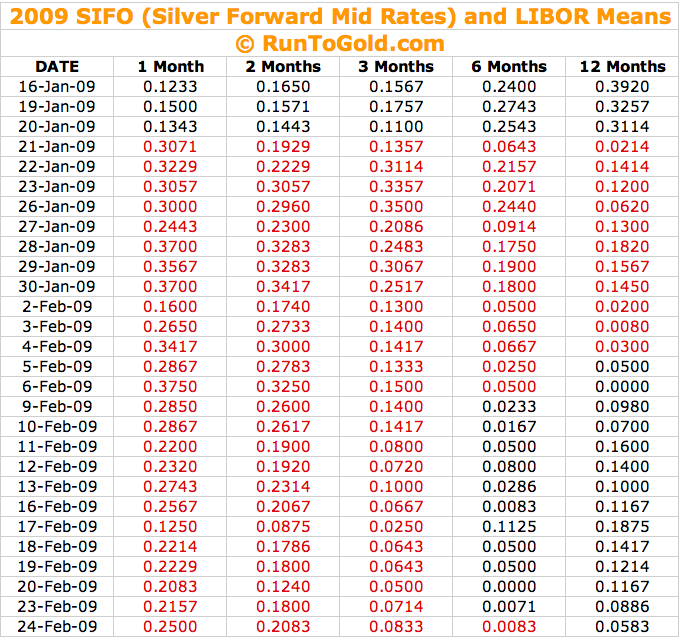
    This is precisely what has happened. While the COMEX silver futures contract have not been in backwardation the LBMA Silver Forward Mid Rates have been in backwardation for five consecutive weeks. Of particular interest is the 6 month contract.

    SO WHAT?

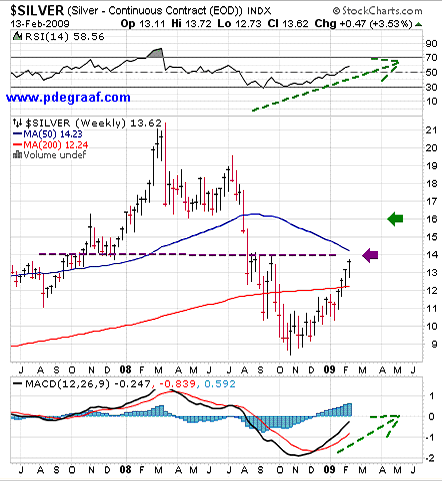
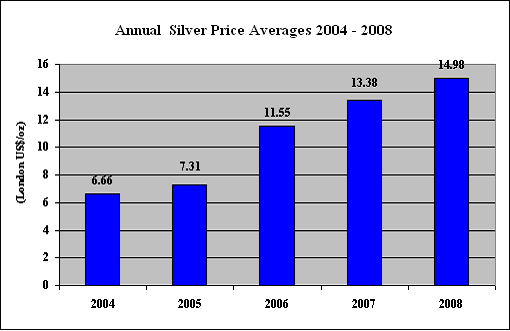
    What does all this mean? Well, I think the backwardation reflects the market’s uncertainty of silver’s role as money. The chronic silver backwardation began on 8 December 2009, the same day I wrote about gold in backwardation, and silver was priced about $9.60. Currently silver is trading about $13.82. Predictably, the gold/silver ratio is narrowing. If the backwardation persists it will be interesting to see if silver’s price in illusory FRN$ continues rising.

    In my opinion, as the great credit contraction grinds on and intensifies, the commodity silver will reassert itself as money and eventually currency. As I mentioned during the interview with Contrary Investors Cafe what would be really interesting is if the central banks decide to start hoarding silver!

    In the meantime it may behoove those who are bullish towards silver to increase the pressure on physical silver delivery. For example, I purchased some beautiful Austrian philharmonics at the Cambridge House Investment Conference and Silver Summit over the weekend. The beautiful coin cost $20 which was an amazing $5.50 over spot.

    While there are cheaper ways to purchase physical silver bullion, like GoldMoney, these huge premiums over spot beg the question: What is the real silver price? With the specter of counter-party risk driving silver into backwardation if there is a failure to deliver then it will likely cause the silver price to shift from the COMEX just like a failure to deliver would cause the gold price to shift from the COMEX.

    Bottom line: Do not get caught with your paradigms down!

    ===============================

    Catch the New Bull! – Buy Gold Online – Get 1 gram free just for opening account– just click here and then again on the Gold Bar!, no minimums – Buy Safely, quickly, and at low prices, guaranteed! – Bullion Vault.com

    ================================

    Doug Casey: What to Do in “The Greater Depression” — Seeking Alpha

    Source: The Gold Report


    Bullion and oil appear in the lineup of power players that Doug Casey thinks investors can count on as the world slips deeper and deeper into what he calls the “Greater Depression.” Despite the raging economic storm and Doug’s doubts that Western civilization’s governments will take the actions needed to quell it, though, the Chairman of Casey Research is nowhere close to calling the game. In fact, he sees silver lining in the clouds of crisis—opportunity—and expresses optimism that technological advances, coupled with capital rebuilding once over-consumption runs its course, will prevail eventually. The Gold Report caught up with the peripatetic author, publisher and professional international investor between polo matches in New Zealand, one of several nation-states he calls home from time to time.


    The Gold Report: You’ve been discussing what you’re calling “crisis and opportunity,” and in fact have a summit by that same name coming up in Las Vegas next month. Could you give us a high-level overview of what you foresee?

    Doug Casey: We’ve definitely entered what I describe as the Greater Depression. It’s not coming; it’s here. It’s going to get much, much worse as far as I’m concerned and unfortunately, it’s going to last a long time. It doesn’t have to last a long time, but the root cause is government intervention in the economy and everything they’re doing now is not just the wrong thing, it’s the opposite of what they should be doing. It’s almost perverse.

    The distortions and misallocations of capital and the uneconomic patterns of production and consumption that have been going on for over a generation need to be liquidated and changed, but everything the government’s doing is trying to maintain these patterns. So it’s going to be horrible. In addition, the government is necessarily directing more power toward itself with all of its actions. If I were you, I’d rig for stormy running for a good long time.

    TGR: By “a long time,” do you mean a couple of years, a decade, a generation?

    DC: This is, in some ways, uncharted territory. Let me say that for the long run I’m very optimistic. Why? Two things act as the mainsprings of progress. Number one is technology and that’s going to keep advancing, so that’s very good. Second is capital and savings. Individuals will solve their own problems and, therefore, they will stop consuming more than they produce, which is what they’ve been doing for years, and they’ll again start producing more than they consume. The difference is savings; that builds capital.

    So technology and capital are going to solve the depression. But the government can do all kinds of stupid things to make it worse. Look at the Soviet Union. They suffered a depression that lasted 70 years from its founding. Look at China. The whole reign of Mao was one long economic depression. That could certainly happen in the U.S., too, where the government misallocates capital in such a way that technology doesn’t advance as it could and people can’t build individual capital the way they would. I’m optimistic, but anything can happen.

    TGR: But didn’t China and the Soviet Union have governmental structures very different from those in Western Europe and the U.S., and those structures allowed for more intervention? Are you projecting that we might slip into an era where Western civilization will allow their government to run themselves like the Soviet Union and China did?

    DC: It seems to be going in that direction. Of course, Europe is going to be hurt much worse than the U.S. Europeans are much more heavily taxed and much more heavily regulated. The average European is much more reliant upon the state psychologically as well as economically. So it’s all over for Europe and this doesn’t even count the problems that they’re going to have in the continuing war against Islam, which are much more serious for Europe than they are for the U.S. So, no, Europe is fated to be nothing but a source of houseboys and maids for the Chinese in the next generation.

    TGR: So do you think that societies in Western Europe—and even the U.S.—will allow themselves to be governed in the same fashion as the Soviet Union and China were during their depressions?

    DC: Oh, totally. I don’t see why that would not be the case. Even Newsweek says we’re all socialists now. That seems to be the reigning ideology. In addition, psychologically, the average American—just like the average European—looks to the government to solve things. This is very bad. Most people are unaware that Homeland Security, which is one agency that should be abolished post-haste, is building a 400-acre campus in southeast Washington, D.C., where initially they’re going to put 25,000 employees. That’s as many as the Pentagon has and with 400 acres, Homeland Security has a lot more room to grow. Ironically, the property is at the site of St. Elizabeth’s Hospital, the first federal insane asylum in the United States. Once a bureaucracy has a piece of real estate and builds buildings, it’s game over. They’re just going to accrete and grow and grow, so that’s one indication. The trend is clearly in motion.

    It’s all over for the U.S. In fact, let me say this. America doesn’t exist anymore. What is left is not even these United States. That was decided in the 1860s. It’s the United States. America, which is basically an idea, a concept, is dead and gone. The United States is just another of 200 awful little nation-states that have spread across the face of the earth like a skin disease. There’s no longer any difference that I can tell between the U.S. and any other country.

    TGR: How would you describe the concept that America was based on that is now gone? And is there another country in the world embracing that concept? Will there be a new America?

    DC: No, there is no other place. I’ve been to 175 countries and lived in 12. My feeling is that the best thing that you can do is set your life up so that you’re not to be considered the property of any one government. You might have a passport or several passports and, therefore, that government thinks they own you. But if you don’t spend time in a country, practically speaking, there’s nothing they can do about it.

    So, no, there is no real haven for freedom in the world today. The best you can do is go where the governments are so unorganized that they can’t control you effectively. That’s one reason I like to spend time in Argentina. They have an incredibly stupid government, but they’re also very inefficient and ineffective. So it’s wonderful as a place to live. I also spend time in Uruguay, because it’s a tiny little country with no ambitions to conquer the world. The nice thing about New Zealand, where I am now, is that it’s a small country, only 4 million people, lots of open land. It’s got some severe problems, but it’s pleasant. I think the U.S. is going to be the epicenter of a lot of problems in the years to come.

    TGR: Few of our readers are probably in positions where they could live in 12 different countries, but they have amassed assets here in the United States. What advice would you give them to safeguard those assets?

    DC: The key is to remember that we’re going to have a long and deep depression, so most things that worked well over the last 20 years are unlikely to work well in the future. I’d been predicting the real estate collapse for a long time. It’s still got a way to go, too, because a lot of real estate debt remains that has to be liquidated. There’s a lot of leverage out there and there’s been a huge amount of overbuilding. So it’s far too early to get into real estate, at least in North America or Europe.

    It’s also way too early to get into the general stock market, for all kinds of reasons. Dividend yields are still extremely low. Earnings are going to collapse. Government bonds are perhaps the worst single thing to be in, because with the government printing up money literally by the bushel basket, the dollar is going to start losing value radically and interest rates are going to start going up radically at some point. So you have to rule out most stocks.

    I’m afraid that the most intelligent thing you can do is to own a lot of gold, preferably gold coins in your own possession. And I think speculation in gold stocks makes sense at this point, because gold stocks are about as cheap as they’ve ever been relative to other assets, really, in history. Now is an excellent time to do that as well. But that’s in terms of speculation.

    Investment risk is tough enough, but the biggest problem is political risk. That’s what you have to watch out for. That means you have to diversify internationally. This is harder for most people, harder psychologically, and it takes more assets to make international diversification viable. But if you’re in a position to do it, it’s the most important thing you can do.

    TGR: Since you mentioned having coins in your own possession, should we assume you’re not a big fan of the ETFs or some of these other paper gold promises, if you will?

    DC: ETFs are okay for the convenience that they offer and for significant amounts of money, but gold coins should be first on your list, no question about that. If you’re only talking about $50,000 or $100,000, or $200,000, coins are fine to keep in your own possession. They won’t take up much room and you can put them in some safe place (which, incidentally, is not a bank safe deposit box).

    TGR: Are you recommending putting all of your investment in gold into the bullion or are you also recommending some portion in producing junior and explorations?

    DC: Both, but look at the stocks as being speculative. Most of your money should be in gold with a bit of silver, too. Silver is basically an industrial metal, but it has monetary characteristics. Now is the time to be very overweight in the metals and I think owning gold stocks is a good idea. They’re very cheap.

    TGR: Anything else investors can do to preserve whatever may remain of their wealth?

    DC: Owning real estate in some foreign countries is a very good idea—from a lifestyle point of view, an asset diversification point of view, and a possible capital gains point of view, too. They can’t make you repatriate foreign real estate. Having some U.S. dollar cash while we’re going through this deflationary period is very wise as well, but that’s not going to last. Eventually the U.S. dollar is going to reach its intrinsic value.

    TGR: Not that you have a crystal ball, but how would you see the rest of ’09 playing out?

    DC: Nothing goes straight up or straight down, but it seems that ’09 is going to see much higher gold prices and much lower stock prices and much lower bond prices, too. But remember, the worst is yet to come.

    You haven’t heard an awful lot about people losing their pensions yet, but that’s going to happen because what are pensions invested in? They’re mostly invested in stocks and bonds and commercial real estate. All three of those things are disaster areas, and bonds are the big disaster area yet to come. So I think it’s going to be nothing but bad news in 2009. What happened in 2008 was just an overture to what I think is going to happen in ’09 and ’10.

    TGR: Even into 2010?

    DC: Yes. This isn’t going to be cured overnight, mainly because of what the government’s doing. As I said, it’s perversely exactly the opposite of what they should be doing, which is abolishing all the agencies and freeing up the economy. They’re passing lots of new regulations, they’re going to have to raise lots of taxes eventually, and they’re inflating the currency. So it has to last, at least into 2010. It’s going to be quite dismal, actually.

    TGR: And what happens with the unfunded Medicare liabilities?

    DC: They’re not going to be funded. They’re going to be defaulted on and, actually, that’s the best thing that could happen. That’s one of the things that should be done now; the U.S. government should default on its debt. This is shocking for people to hear, but it wouldn’t be the first time the U.S. government has done that. It did that almost at its founding in continental days.

    This debt represents a tax liability that’s being foisted off on the next generations who have no moral obligation to pay and should not pay. I think as an ethical point, the U.S. should default on this debt. It’s impossible to pay it back, and it won’t be paid back. It’s more honest to acknowledge that bankruptcy now as opposed to pretend it’s going to be paid back. Defaulting even might forestall runaway inflation in the dollar, which would be a catastrophe of the first order. So it’s the smart and moral thing to do, and it’s going to happen eventually anyway. All the real wealth will still be here; a lot of it will just change ownership. The big losers will be those who lent to the State, thereby enabling its depredations, and they deserve to be punished.

    But even a default tomorrow will do no good unless you put the U.S. government into reverse and disband all of these ridiculous, destructive agencies that have grown like a cancer for years. Taxes should be cut 50% to start with, just out of hand. And the defense establishment—it’s a misnomer; it’s not defense at all but rather foments wars around the world—should be cut hugely. Not with a butcher knife; but a chain saw. But none of this is going to happen; in fact, just the opposite. That’s why I’m so pessimistic now that the tipping point’s finally been reached.

    TGR: Are we at the tipping point?

    DC: Yes, we’ve absolutely gone over the edge. The consumer is no longer in a position to consume. Everybody is going to cut consumption to the bone and hopefully find something to produce instead. It would be better for people to start viewing themselves as producers than consumers. That would be a step in the right direction to get them psychologically more in line with reality.

    TGR: In last fall’s meltdown, gold held up, but the stocks didn’t. Quite a few producers and soon-to-be producers, and some companies making discoveries, seem to have bottomed out in November and December. But worry persists in the market. Suppose another shoe drops or another black swan appears? Richard Russell (Dow Theory Letters) and others have been talking about the Dow going down to 5,000. What would that do to the gold stocks?

    DC: Gold stocks are also stocks, and the best environment for gold stocks historically has always been when both gold and the stock market are going up. But since the last gold stock bull market came to an end, I think it’s entirely possible to see a bubble develop in gold stocks with all the money being created. I certainly hope so. I’m actually optimistic for gold stocks just because they’re so cheap relative to everything else.

    TGR: They have been beaten down.

    DC: Yes. And that fact, along with the waves of money being printed around the world and the much higher gold prices we are going to see, could cause a speculative mania to develop in the gold stocks. Nobody’s even thinking about that possibility right now, because they’re so battered. But this is the time to get into the right ones because it’s likely to happen in the future.

    TGR: The ’29 crash—which was really the preamble, because ’30, ’31, ’32 and ’33 were certainly bigger—is when gold stocks such as Homestake did their best. How do you see that playing out this time around? Is it different this time or do you expect a similar pattern?

    DC: You know what they say, “History doesn’t repeat itself, but it rhymes.” I think that, first of all, the gold mining industry is a much worse industry now than it’s ever been in the past, because just as all the easily defined light sweet oil basically has been discovered, all the easy-to-find high-grade gold basically has been discovered. Most mines that are going into production are low-grade, which means that you have to move a lot of dirt, which means that they’re much more capital-intensive than in the past. So gold mining’s a worse industry from that point of view.

    Also, politically speaking, with the rise of the green movement, there are people who don’t want any oil burned, any dirt moved, any trees cut. They don’t want to see anything happen. This makes it much harder to do gold from a permitting and political point of view. We’re in a much higher tax environment than in the past. So it’s a tough industry. It really is. It’s just a 19th century choo-choo train type of industry that interests me only as a speculative vehicle. You’ll notice that gold went from lows of about $300 to highs of about $900 and none of these gold companies are making any money because their costs actually went up faster than the price of gold. So I’m not saying gold mining is a great business. It’s not. It’s a crappy business. Still, we could have a bubble in the stocks. I’m hoping we do.

    TGR: Aren’t we going to see a change in that in ’09? Oil, which is one of the large components of that cost, has come down dramatically. A lot of these producers must be locking in oil at these lower prices. Won’t that translate into year-over-year earnings increases for the gold producers?

    DC: That’s possible. The producers actually may show increases for the next couple of years. I don’t doubt that. But I don’t think oil will stay where it is. I think oil’s eventually headed back to $150 a barrel or more.

    TGR: So why wouldn’t you own oil as well as gold?

    DC: It’s a good idea, but we weren’t really talking about oil. I’d say that oil is a good thing to own. Oil is a real buy now. It’s as good a buy at $40 as gold is at $900 right now. Maybe a better buy; who knows?

    TGR: If we go into worldwide depression, will oil continue to be a good buy or will it self-regulate around this $40 a barrel?

    DC: I am bullish on oil. Although I’m philosophically not very sympathetic to the peak oil theory, I think it’s a geological fact. Also, China and India and the other developing parts of the world don’t use a whole lot of oil now. As they develop, they will to want—and almost need—to use a lot more oil. That’s going to keep pressure up on the demand side. But the supply side actually finally is constrained, so it’s going to mean higher prices. In a depression-type environment, U.S. and Western oil consumption could drop a lot, but the third world would take up most of that slack. So I have to be bullish on oil.

    TGR: Are you bullish on any other sectors or commodities?

    DC: I’m bullish on agricultural commodities. They ran way up last year and then collapsed again. I think a good case can be made that most of the soft commodities are quite cheap and will go higher, so I’d look at those, too. I think gold definitely, oil in the years to come has the potential to go much, much higher, and the agricultural commodities have a lot of potential.

    TGR: Gold appears to be uncoupling from the dollar. Historically, when the dollar was strong, gold would be weak. But we’ve had a couple of recent instances in which both the dollar and gold have been strong. Obviously, we’ve seen a total decoupling of gold from oil. It used to be when oil was running, gold was running and vice versa, but that no longer seems to be the case. Is that just an old wives’ tale or is something going on?

    DC: I’ve never seen any necessary relationship between gold and oil, just like there’s no necessary relationship between rice and natural gas, or nickel and soybeans. All these commodities tend to move together, all the currencies tend to move together and stock markets tend to move together, but they all have their own dynamics. I think it makes sense to compare the relative prices of various commodities and see what may be cheap or dear relative to other things based on the fundamentals.

    On any given day, somebody may have to buy or somebody may have to sell a huge amount of almost anything. It’s unpredictable and you can’t tell what constraints are out there in the market. I don’t even pay attention to day-to-day fluctuations because they’re just random noise. I watch the big trend. It’s been shown that if you just made one correct trade and stuck with it at the beginning of every decade for the last four decades, you would have realized something like 1,000 times on your money. To me, this is the proper approach to the markets, not to try to second-guess from day-to-day what’s going to happen. That’s foolish because you get chewed up with commissions and bid-ask spreads and double-thinking your own psychology and so forth.

    I really just like to look at long-term trends. In terms of long-term trends, you’ve got to be long gold, long silver, long oil; you’ve got to be short bonds. I think that’s really all you need to know. The other things we mentioned such as agricultural commodities and so forth are worthy of attention. But, as I said, I’m not a day-to-day trader. I think that’s very foolish.

    TGR: Are these the themes that you and your group of speakers will focus on in Las Vegas?

    DC: They are. I certainly want to invite anybody who reads this interview to join us. We put on very small, very classy seminars. They’re not gigantic mob scenes, so it’s possible to get to know individual speakers and fellow attendees in a very collegial atmosphere. I think it’s something that anybody who’s seriously interested in these kinds of things should consider.

    The Casey Research Crisis & Opportunity Summit, will be held March 20 – 22, 2009, at the Four Seasons Resort in Las Vegas.

    A citizen of the world in more ways than most of us can imagine, Doug Casey, Chairman of Casey Research, LLC, is the international investor personified. He’s spent substantial time in about 200 different countries so far in his lifetime, living in 12 of them (currently New Zealand and Argentina). And Doug’s the one who literally wrote the book on crisis investing. In fact, he’s done it twice. After The International Man: The Complete Guidebook to the World’s Last Frontiers in 1976, Doug came out with Crisis Investing: Opportunities and Profits in the Coming Great Depression in 1979. His sequel to this groundbreaking book, which anticipated the collapse of the savings-and-loan industry and rewarded readers who followed his recommendations with spectacular returns, came in 1993, with Crisis Investing for the Rest of the Nineties. In between, his Strategic Investing: How to Profit from the Coming Inflationary Depression (Simon & Shuster, 1982) broke records for the largest advance ever paid for a financial book. Bill Bonner (The Daily Reckoning) describes Doug as “smart, hard-working, and extremely knowledgeable” with “an instinct about investments that has made him and many of those around him very rich.”

     Doug, who now spends more time as an expatriate than he does on American soil, has appeared on NBC News, CNN and National Public Radio. He’s been a guest of David Letterman, Larry King, Merv Griffin, Charlie Rose, Phil Donahue, Regis Philbin and Maury Povich. He’s been the topic of numerous features in periodicals such as Time, Forbes, People, US, Barron’s and the Washington Post – not to mention countless articles he’s written for his own various websites, publications and subscribers.

     ==================================

    Catch the New Bull! – Buy Gold Online – Get 1 gram free just for opening account– just click here and then again on the Gold Bar!, no minimums – Buy Safely, quickly, and at low prices, guaranteed! – Bullion Vault.com

    That’s all for Today- Enjoy! jschulmansr

    Follow Me on Twitter and be notified whenever I make a new post!

    ================================== 

    Nothing in today’s post should be considered as an offer to buy or sell any securities or other investments; it is presented for informational purposes only. As a good investor, consult your Investment Advisor/s, Do Your Due Diligence, Read All Prospectus/s and related information carefully before you make any investing decisions and/or investments. –  jschulmansr


    Share this:

    • Click to share on Reddit (Opens in new window) Reddit
    • Click to share on Facebook (Opens in new window) Facebook
    • Click to share on LinkedIn (Opens in new window) LinkedIn
    • More
    • Click to share on X (Opens in new window) X
    • Click to share on Pinterest (Opens in new window) Pinterest
    • Click to share on Tumblr (Opens in new window) Tumblr
    • Click to print (Opens in new window) Print
    • Click to email a link to a friend (Opens in new window) Email
    Like Loading...

    Support At the Pit Stop

    24 Tuesday Feb 2009

    Posted by jschulmansr in banks, bull market, Comex, Currencies, currency, Currency and Currencies, deflation, depression, DGP, dollar denominated, dollar denominated investments, Economic Recovery, economic trends, economy, Federal Deficit, federal reserve, Finance, financial, Forex, Fundamental Analysis, futures, futures markets, GLD, gold, Gold Bubble, Gold Bullion, Gold Investments, gold miners, Gold Price Manipulation, How To Invest, How To Make Money, hyper-inflation, IAU, inflation, Investing, investments, Junior Gold Miners, Latest News, majors, Make Money Investing, Market Bubble, Markets, mid-tier, mining companies, mining stocks, oil, palladium, physical gold, platinum, platinum miners, precious metals, price, price manipulation, producers, production, silver, silver miners, spot, spot price, stagflation, Stimulus, Stocks, Technical Analysis, The Fed, Tier 1, Tier 2, Tier 3, U.S. Dollar, Uncategorized, XAU

    ≈ 1 Comment

    Tags

    ANV, Austrian school, AUY, Bailout News, banking crisis, banks, bear market, Bollinger Bands Saudi Arabia, Brian Tang, bull market, CDE, central banks, China, Comex, commodities, Copper, Currencies, currency, deflation, Dennis Gartman, depression, DGP, dollar denominated, dollar denominated investments, Doug Casey, economic, economic trends, economy, EGO, Federal Deficit, financial, Forex, FRG, futures, futures markets, gata, GDX, GG, GLD, gold, gold miners, hard assets, HL, hyper-inflation, IAU, India, inflation, investments, Jeffrey Nichols, Jim Rogers, Keith Fitz-Gerald, majors, Marc Faber, market crash, Markets, Michael Zielinski, mid-tier, mining companies, monetization, Moving Averages, NGC, NXG, PAL, palladium, Peter Grandich, Peter Schiff, physical gold, platinum, platinum miners, precious metals, price, price manipulation, prices, producers, production, protection, recession, risk, run on banks, safety, Sean Rakhimov, silver, silver miners, SLW, small caps, sovereign, spot, spot price, stagflation, Technical Analysis, TIPS, U.S., U.S. Dollar, volatility, warrants, XAU

    Gold is resting today, taking a quick pitstop allowing people to jump in on the next rally to $1033 and then if clear that $1050+. All of this talk of the Gold bubble. Bubble or not there is some serious money to be made here- even at these levels. Have some stories to tell your Grandchildren and Great Grandchildren of how you “caught” the Gold Bull.  Get in now or you will regret it!  Gold currently holding above the key support level of $985. Gold needs to clear the $1026 to $1033 level to be sustained in it’s upward rally. A note of caution if it fails at $1033, retracement back down to $900 is possible, I would put in a trailing stop to protect your current profits.  I recommend a 20-25% trailing stop so you don’t get caught in a whipsaw market action. Stay tuned as I am still long DGP and will tell you when I am getting out. Good Investing! – jschulmansr 

    ps- Follow Me on Twitter and be notified whenever I make a new post!

     Here is where I buy my Bullion, get one free gram of Gold just for opening an account! Catch the New Bull! – Buy Gold Online – Get 1 gram free just for opening account– just click here and then again on the Gold Bar!, no minimums – Buy Safely, quickly, and at low prices, guaranteed! – Bullion Vault.com

    ==========================================

    Protecting Yourself from a Gold ETF Bubble- Seeking alpha

    BY: Tom Lydon of ETFT Trends


    Are gold ETFs entering a bubble? More and more people seem to think so.

    Last week, we noted a story that contained 12 reasons to short gold. Barron’s raises the question, too, now that gold is priced above $1,000 an ounce. The price is equivalent to more than 25 barrels of oil, a ratio that has rarely been exceeded in the last 35 years, says Michael Santoli for Barron’s.

    There are two sides to the argument:

    Owning gold seems logical now, given that the turmoil has gone completely global. Gold has also been rising, even as the U.S. dollar is gaining strength, too.

    On the other hand, SPDR Gold Shares (GLD) is now routinely turning over $2 billion worth of trading each day, which might give investors pause. Is it becoming a herd mentality?

    Meanwhile, Brett Arends for The Wall Street Journal gives the ins and outs of gold investing, including that gold is volatile and no one knows its true worth. For that reason, the mania is to be taken with a pinch of salt, he says.

    While gold can be a volatile metal, right now, the trend is there. You can’t fight it. But if you’re in gold, have an exit strategy at the ready (we get out either 8% off the recent high or when it falls below the 200-day moving average). This will help protect investors from further losses, and may even preserve some gains that might have been made.


     =================================

    My Note: The reason I put my stops at a greater percentage than 8% is from my days as a futures trader. Traders on the floor love tight stops of 5%, 10%, and even 15% and will often bid a commodity down 10%-15% to catch people’s stops and then let the market rise and pocket the money. This happens especially on days of lower volumes of trades. Watch carefully and his idea about exit after a close below the 200 day moving average is sound, remember though that it is a daily close (end of day) below the moving average not intraday trading. For those who already know this remember I have readers who are newbies and don’t know all the ins and outs, this is for them as I care about all my readers! – jschulmansr

    =================================

    Next Here is the Article mentioned above…

    Gold: Where to Invest and What to Avoid – Wall Street Journal

    Source: Brent Arends of WSJ.com

    Great news. The next bubble has already begun!

    We’re still in intensive care from the stock market, housing and credit bubbles, but a gold bubble is now underway.

    The precious metal crossed $1,000 per ounce on Friday, as investors around the world rushed to “shelter” their money from financial meltdown and spendthrift governments. And many people think it may rise to $2,000 or even $3,000.

    Ordinary investors are jumping aboard. They’re buying gold coins or the gold exchange-traded fund, GLD.

    I’m not against investing in gold-mining stocks. I recommended them here a few months ago — just before they began skyrocketing. It could certainly make sense to put 5% or 10% of a portfolio in the right precious metals fund. I have one suggestion below.

    But look out before buying actual coins, bullion, or the ETF. This is risky.

    First: Gold is incredibly volatile. It can halve, or double, in short order. This is not like a normal mutual fund.

    Second: No one really knows what gold is worth, because it generates no cash flow. Any numbers are pure guesswork.

    And third: Investing directly in gold violates the old adage that you should never get into bed with anyone crazy. Gold fanatics are far-out nuts. No kidding. If you met these people you’d run a mile.

    Even some intelligent, and otherwise sensible, people aren’t immune from the madness. They will pound the table and insist gold is the only “real” money because it’s been coveted since ancient Egypt, if not before.

    Please. Ancient superstition is no argument. People around the world used to think only a monarchy could be a “real government”. Sorry, I’m not buying the Divine Right of Gold any more than I buy the Divine Right of Kings.

    Ancients coveted gold for three reasons. It was pretty. It’s really soft, so it was easy to manipulate with primitive tools. And they didn’t have many other material things worth desiring, like split-level oceanfront homes or flat screen TVs or first-class tickets to Hawaii. The ancients were short on opportunities for retail therapy.

    The world has changed since, so take gold mania with a certain pinch of salt.

    [How to Invest in Gold] Associated Press

    Gold ingots from Switzerland, America and Germany are shown on display at The Coin Broker store, in Palo Alto, Calif.

    Nonetheless gold has some value. So do other precious metals. (I think the long-term case for platinum is stronger – but that’s another column.)

    Every government on the planet is printing money in the trillions to stave off a prolonged depression, and they’re going to continue to do so until it works. Precious metals cannot be manufactured in the same way. So you can expect them to rise in price.

    Shares in the big gold miners, like Barrick and Newmont, have been booming for a few months.

    But the smaller ones are still looking very cheap – especially compared to the gold price. (See chart.)

    These stocks got absolutely crushed last year, along with gold prices and small company stocks.

    Although they have started rallying too, they have much further still to go. Ordinary retail investors haven’t started buying them – yet.

    Don’t go it alone. Investing in gold minnows is tricky.

    One mutual fund worth a look: US Global Investors’ World Precious Minerals Fund. It’s one of the few to focus mainly on smaller gold stocks.

    Manager Frank Holmes, a 20-year industry veteran, agrees the juniors are comparatively cheap. And he sees takeovers starting as well. “Eventually the seniors will have to gobble (the juniors) up,” he says. “They can’t find enough gold to replenish their production.”

    Write to Brett Arends at brett.arends@wsj.com

    ====================================

    My Note: What Have I been telling you about the juniors? Remember as a general rule I buy those junior miners which currently are producing or are about to start production in the very near term. These companies I believe are the ones who will be the most attractive takeover candidates. My disclosure: I am Long GLD, UNPWX, along with many of the juniors too-jschulmansr

    Catch the New Bull! – Buy Gold Online – Get 1 gram free just for opening account– just click here and then again on the Gold Bar!, no minimums – Buy Safely, quickly, and at low prices, guaranteed! – Bullion Vault.com

    =========================================

    Nothing in today’s post should be considered as an offer to buy or sell any securities or other investments; it is presented for informational purposes only. As a good investor, consult your Investment Advisor/s, Do Your Due Diligence, Read All Prospectus/s and related information carefully before you make any investing decisions and/or investments. –  jschulmansr
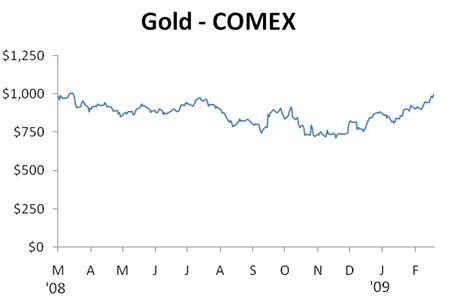
    Share this:

    • Click to share on Reddit (Opens in new window) Reddit
    • Click to share on Facebook (Opens in new window) Facebook
    • Click to share on LinkedIn (Opens in new window) LinkedIn
    • More
    • Click to share on X (Opens in new window) X
    • Click to share on Pinterest (Opens in new window) Pinterest
    • Click to share on Tumblr (Opens in new window) Tumblr
    • Click to print (Opens in new window) Print
    • Click to email a link to a friend (Opens in new window) Email
    Like Loading...

    Are you going to let them do this?

    23 Monday Feb 2009

    Posted by jschulmansr in 10 year Treasuries, 20 yr Treasuries, Austrian school, Bailout News, banking crisis, banks, bear market, capitalism, Comex, commodities, Copper, Credit Default, Currencies, currency, Currency and Currencies, deflation, dollar denominated, dollar denominated investments, economic, Economic Recovery, economic trends, economy, Fed Fund Rate, Federal Deficit, federal reserve, Finance, financial, follow the news, Forex, Fundamental Analysis, futures, futures markets, gata, GDX, GLD, gold, Gold Bullion, Gold Investments, gold miners, Gold Price Manipulation, inflation, Investing, investments, Junior Gold Miners, Latest News, Make Money Investing, manipulation, market crash, Markets, monetization, palladium, physical gold, platinum, platinum miners, precious metals, price manipulation, prices, producers, production, run on banks, Short Bonds, silver, silver miners, Silver Price Manipulation, spot price, stagflation, Stimulus, Stocks, TARP, Technical Analysis, Ted Bultler, The Fed, U.S., U.S. Dollar, XAU

    ≈ Comments Off on Are you going to let them do this?

    As I write there is selling pressure or maybe price manipulation on the gold market right now. Are we going to let them do this? Especially with everything else in the markets i.e. the dollar, banks, stock markets in chaos and dissarray? The best way to fight back is to keep buying gold especially on Comex and taking delivery. That would catch them and for once the little guy wins! The Gold price is holding steady at $990 oz after being tested early this morning, Gold bounced right off the $975 – $977 support and is now holding steady. Today’s articles do talk about the manipulation going on in the Gold and Silver markets. To date the largest short positions and majority of the short interest on Comex consists of a few banks who went short in the $750 to $950 range ( I know a large spread but they have been cost averaging their positions). If all the longs would start taking possesion of their gold and silver off of Comex, I am telling you this, we would have one of the largest “Short Squeezes” in history! – Good Investing! -jschulmansr

     =======================================

    Catch the New Bull! – Buy Gold Online – Get 1 gram free just for opening account– just click on the Gold Bar!, no minimums – Buy Safely, quickly, and at low prices, guaranteed! – Bullion Vault.com 


    “Nothing will unnerve the paper gold shorts more quickly and do more to undercut their confidence than to strip them of the real metal and force them to come up with more hard gold bullion to make good on deliveries. “Stand and Deliver or Go Home” should be the rallying cry of the gold longs to the paper gold shorts.” –Trader Dan Norcini
    =======================================

    This is an older article which explains the manipulations which have been going on. The same banks still hold teir positions of as last published Comex reports.– jschulmansr

    Chris Powell: Gold and Silver Market Manipulation Update – Gold Anti Trust Action Committe GATA

    Submitted by cpowell on Fri, 2008-11-14 20:51. Section: Essays

    Good afternoon and thank you for being here. It’s an honor to get to speak with so many interested in silver, especially at such an interesting time in history. I’m going to ramble a bit, and try not to get too detailed and save some time for questions where you can get specific.

    Remarks by Chris Powell, Secretary/Treasurer
    Gold Anti-Trust Action Committee Inc.
    New Orleans Investment Conference
    New Orleans Marriott Hotel
    Thursday, November 13, 2008

    A year ago it was still a struggle to persuade some people that the gold and silver markets were being manipulated by Western central banks. Now, after months of financial turmoil around the world and constant central bank intervention in the markets, to believe that the gold and silver markets are not being manipulated by central banks you have to believe that those markets are the only markets not being so manipulated.

    Why are the gold and silver markets manipulated by governments and the financial houses that serve as their agents? Because gold and silver are competitive currencies and because their value greatly influences interest rates, which ordinarily governments like to keep low. 

     Last year at this conference I reviewed in detail the official documentations and admissions of the gold price suppression scheme. Those documentations and admissions remain posted at GATA’s Internet site:

    http://www.gata.org/node/5654 

    Today I’d like to review some evidence that has turned up more recently, as well as some related developments.

    Maybe most interesting have been the studies of the U.S. Commodity Futures Trading Commission market reports done by silver market analyst Ted Butler and by Gene Arensberg, a market analyst for ResourceInvestor.com. Butler and Arensberg reported that as of August just two banks held more than 60 percent of the short positions in silver on the New York Commodities Exchange. This was an unprecedented and seemingly illegal concentrated short position, and it implied that the smashing down of silver was very much a manipulation by one or two very rich and powerful market participants, a destruction of the free market. Complaints about this concentrated short position prompted the CFTC to undertake still another investigation of the silver market, this time by a different division of the commission, its enforcement division. Further, CFTC Commissioner Bart Chilton has told GATA that the agency is investigating the gold market as well.

    This week Arensberg found that the CFTC’s latest report shows that just three or fewer banks now hold half the short positions in gold on the Comex and more than 80 percent of the silver short positions.

    Also this week Butler obtained a copy of a letter from the CFTC to U.S. Rep. Gary G. Miller, R-California, that sought to explain the concentrated short position in silver. The CFTC’s letter implied that this extreme short position resulted from JPMorganChase’s acquisition of Bear Stearns in March. If we construe the CFTC’s letter correctly, that would make MorganChase the big short in silver now and imply that, in financially underwriting MorganChase’s acquisition of Bear Stearns, the Federal Reserve was also underwriting MorganChase’s assumption of that short position in silver.

    Of course MorganChase was also the bullion banker to Barrick Gold, the biggest gold shorter over the last decade. In 2003 Barrick told U.S. District Court Judge Helen Berrigan right here in New Orleans that, in shorting gold, Barrick had become the agent of the central banks in regulating the gold market and thus should share their sovereign immunity against lawsuits.

    MorganChase is also the world’s biggest issuer of interest-rate derivatives, instruments by which interest rates are suppressed.

    All this causes GATA to believe that MorganChase is in effect an agency of the U.S. government, or rather, perhaps, that the U.S. government is an agency of MorganChase. In any case, MorganChase has had an intimate relationship with the U.S. government since the days of J. Pierpont Morgan himself.

    Incidentally, Jean Strouse’s 1999 biography of Morgan, which won the Bancroft Prize for American History and Diplomacy, recounts that Morgan’s first big triumph in finance was to corner the gold market in New York in 1863 during the Civil War. Nearly 150 years later there really may be nothing new under the sun.

    Also lately raising suspicion about surreptitious government intervention in the precious metals markets has been the refusal of the Federal Reserve and the Treasury Department to release to GATA hundreds of pages of government documents about the disposition of the U.S. gold reserve. The Fed has told GATA’s lawyers that the documents are being withheld in part because their release might compromise information that is proprietary to private companies. Why anything about the U.S. gold reserve should be considered proprietary to anyone is beyond those of us at GATA — unless, of course, the reserve is being used to manipulate markets surreptitiously.

    But we at GATA do not feel picked on by the Fed and the Treasury. For the Fed and the Treasury seem to be treating everybody as if the disposition of public assets is nobody’s business but Wall Street’s. This week Bloomberg News Service reported that the Federal Reserve is refusing to disclose how much it has lent to particular banks and exactly what sort of collateral the Fed has accepted for those loans, which have reached hundreds of billions of dollars. For example, is the Fed valuing the same kind of collateral from different borrowers the same way, and lending against it at the same rate? Or is the Fed giving advantages to certain borrowers and not others, depending on their political influence and straitened circumstances? That is, are the Fed and the Treasury Department now being operated as the greatest patronage and market-rigging schemes in history? The government is concealing the evidence.

    Since we last gathered here in New Orleans many of us been cowering under the prospect of more official-sector gold sales, particularly gold sales by the International Monetary Fund, which has approved a plan of selling gold to raise cash to replace the income it is no longer getting from interest on loans to developing countries. But despite more than a year of loud talk about it, the IMF has not sold any gold yet, and GATA suspects that the IMF really does not have the 3,200 tonnes it says it has, only a tenuous claim on the gold reserves of its member nations, particularly the United States, which has a veto on any IMF gold sales and has not approved any yet.

    Back in April I tried to engage the IMF in a dialogue about its gold and I had an exchange by e-mail with an IMF publicist, Conny Lotze.

    My first question was: “Your Internet site says the IMF holds 3,217 metric tons of gold ‘at designated depositories.’ Which depositories are these?”

    Conny Lotze of the IMF replied, but not specifically. She wrote: “The fund’s gold is distributed across a number of official depositories,” adding that the IMF’s rules designate the United States, Britain, France, and India as depositories.

    My second question was: “If you’d prefer not to identify the depositories for security reasons, could you at least identify the national and private custodians of the IMF’s gold and the amounts of IMF gold held by each?”

    Conny Lotze replied, again incompletely: “All of the designated depositories are official.”

    My third question was: “Is the IMF’s gold at these depositories allocated — that is, specifically identified as belonging to the IMF — or is it merged with other gold in storage at these depositories?”

    Conny Lotze replied, still not very specifically: “The fund’s gold is properly accounted for at all its depositories.”

    My fourth question was: “Do the IMF’s member countries count the IMF’s gold as part of their own national reserves, or do they count and identify the IMF’s gold separately?”

    Conny Lotze replied a bit ambiguously: “Members do not include IMF gold within their reserves because it is an asset of the IMF. Members include their reserve position in the fund [the IMF] in their international reserves.”

    This sounded to me as if the IMF members are still counting as their own the gold that supposedly belongs to the IMF — that the IMF members are just listing the gold assets in another column on their own books.

    My fifth question was: “Does the IMF have assurances from the depositories that its gold is not leased or swapped or otherwise encumbered? If so, what are these assurances?”

    Conny Lotze replied: “Under the fund’s Articles of Agreement it is not authorized to engage in these transactions in gold.”

    But I had not asked if the IMF itself was swapping or leasing gold. I had asked whether the custodians of the IMF’s gold were swapping or leasing it.

    This prompted me to raise one more question for Conny Lotze. I wrote her: “Is there any audit of the IMF’s gold that is available to the public? I ask because, if the amount of IMF gold held by each depository nation is not public information, there doesn’t seem to be much documentation for the IMF’s gold, nor any documentation for the assurance that its custody is just fine. Without any details or documentation, the IMF’s answer seems to be simply that it should be trusted — that it has the gold it says it has, somewhere.”

    And Conny Lotze … well, she never wrote back to me again. After all, I had uttered the dirtiest word in government service: A-U-D-I-T.

    That the International Monetary Fund refuses to account for the gold it claims to have should be potential news for the financial media. It would be nice if the financial media pursued that issue before their next attempt to scare the gold market with stories about IMF gold sales.

    But even if such sales by the IMF should be undertaken, they might not be much for gold investors to worry about. For a month ago I happened to attend in New York City the annual fall dinner of the Committee for Monetary Research and Education, and it had an unscheduled speaker, Columbia University Professor Robert Mundell, who, as you may recall, won the Nobel Prize in economics in 1999 and is regarded as the father of the euro. Through great luck I got to sit next to Mundell on the platform and so heard him clearly as he went out of his way to join the discussion of my topic, gold. Mundell remarked that if the IMF sold any gold, China should buy all of it to diversify its foreign exchange reserves. Since Mundell is a consultant to the Chinese government, the Chinese government surely heard this advice from him long before the CMRE meeting did.

    You can do a lot of market rigging when you can print legal tender to infinity, pass out huge amounts of it to your friends, and induce them to use derivatives to siphon speculative demand for real stuff away from actual possession of that real stuff. But in the end printing legal tender and contriving promises to deliver real stuff don’t produce real stuff. With infinite legal tender and derivatives you can push the futures price of a commodity below its production costs and below its free-market price for a while, but you risk causing shortages. And of course that’s what we have in gold and silver right now — falling prices for the paper promises of metal even as little real metal is to be had and the spread between the futures price and the real price grows. Last night a GATA supporter in Bangkok, Thailand, who long has been in the silver business e-mailed me that real silver there is priced at $18 per ounce for orders of 1 kilo or more and $23 per ounce for smaller orders. Our friend in Bangkok added that when he shows silver dealers there the New York silver futures price on the Internet, they laugh at him. Shortages can have various causes but generally they are their own cure. When shortages persist, they well may result from government intervention in markets.

    Of course prices always have been determined to a great extent by the volume and velocity of money and credit, and so the creation of money and credit is, all by itself, inevitably an intervention into markets. But lately money and credit have been disappearing and reappearing in a flash in the billions and trillions. How can so much come and go so quickly? Maybe because what passes for money and credit today is a bit too ephemeral, having little connection to reality and a lot of connection to politics.

    That is why market advice today is more doubtful than ever: Markets have become more politicized than ever. Supply and demand and profitability are no longer the primary determinants of markets. No, the primary determinant of markets is now politics: Which countries will cut interest rates the most? Which countries will subsidize their banks and corporations the most? Which countries will get IMF and World Bank loans? Which countries will be given unlimited currency swap lines and which won’t? Which companies will get bailed out and which won’t? How much more dishoarding of gold will central banks do to keep the price down, and which central banks? When will central banks run out of gold or decide to stop spending it this way? Most importantly, when will the world decide to stop financing the wild irresponsibility of the United States by lending the U.S. money that can never be repaid?

    These are all political questions, and only political decisions will answer them. Some of these questions may be answered as soon as this weekend at the international conference in Washington. Answers to some of the other questions probably will be conveyed in advance to certain insiders — like the financial houses that serve as the market agents of the central banks — and those insiders will get richer. As good as this conference is, you will not be hearing from any of those insiders here.

    But we may gain some confidence from politics too, since we know that governments are no longer shy about intervening in the markets and since central banking was invented precisely to inflate, to avert debt deflation, to devalue the currency when that is deemed necessary or convenient by those in power — which is most of the time. We know that the world is now drowning in debt, and in a research paper published in May 2006 a British economist, Peter W. Millar — founder of Valu-Trac Research in London, formerly an executive with the Abu Dhabi Investment Authority — forecast that to avert debt deflation and to increase the value of their monetary reserves, central banks would need to increase the value of gold by at least 700 percent and maybe by as much as 2,000 percent. This could be done easily, for to increase the value of their monetary reserves central banks need only to stop selling and leasing gold and to stop subsidizing the sale of gold derivatives by their agents, the financial houses. Revalued high enough, gold could cover all government debts and let the world start over again.

    Millar kindly has given GATA permission to post his research paper at our Internet site, and you can find it here:

    http://www.gata.org/files/PeterMillarGoldNoteMay06.pdf

    When Millar made his forecast about such an upward revaluation of gold — 2 1/2 years ago — gold had just reached $700 per ounce, not far from where it is now. Multiplied by 700 percent, that would mean a gold price of about $5,000 per ounce. Multiplied by 2,000 percent … well, if that happens, we may be able to afford to hire someone to do the math for us — if, of course, those of us who do not live in free countries like China and Russia are allowed to keep our gold. But that is still another political question.

     ==========================


     “Nothing will unnerve the paper gold shorts more quickly and do more to undercut their confidence than to strip them of the real metal and force them to come up with more hard gold bullion to make good on deliveries. “Stand and Deliver or Go Home” should be the rallying cry of the gold longs to the paper gold shorts.” –Trader Dan Norcini
    ==========================

     Gold’s Assault on the Clueless – Rick’s Picks

    By: Rick Ackerman of Rick’s Picks

    We’ve been monitoring gold’s vital signs closely, since any foray above $1000 is cause for nervousness. The yellow stuff has always been free to roam, and even to misbehave, below that threshold; but once above $1000, the bankers regard each rally with a glower of malice.  While it is clear that debt deflation’s overwhelming power has rendered the central banks impotent in their efforts to arrest the collapse of the global economy, the bankers still retain the ability to crush any hint of rebellion by gold bulls who would deign to challenge the monetary order. With their relatively large stocks of physical gold, and the complicity of institutional agents such as JP Morgan to help suppress “paper gold” in futures markets, the bankers and the IMF have enough influence over bullion’s price to temporarily suspend the laws of supply and demand.


    panic-small


    The politicians are on board, of course, although not as conspirators. They are all knee-jerk Keynesians at the moment, either too stupid and/or lacking in imagination to understand why fiscal spending, no matter how much of it, cannot possibly extricate the economy from a deflationary black hole. They have put their trust in eggheads and MBAs to fix things, even if most of us have begun to suspect that throwing yet more trillions of dollars into the maw of deflation will not solve anything. And although our elected leaders might not feel so strongly about gold as Keynes, who was appalled by the popular appeal of “that barbarous relic,” they are nonetheless dumbfounded as to why anyone would prefer gold-backed currency to the Monopoly money that The Government has empowered as legal tender.

     Concerning our immediate outlook for gold, we have identified 1025.20 as the next significant point of resistance for the Comex April contract. The number is yet another in a series of  Hidden Pivots that have told us unequivocally and at each step along the way whether buyers were ready to forge effortlessly higher. So if 1025.20 gives way easily, as other points of resistance already have, we’re ready to infer that the benighted acolytes of Keynes are about to get fragged by investors who are growing increasingly restless, if not to say panicky, about The Government’s apparent powerlessness to ameliorate economic distress.


    (If you’d like to have Rick’s Picks commentary delivered free each day to your e-mail box, click

    ==========================================

    Catch the New Bull! – Buy Gold Online – Get 1 gram free just for opening account– just click on the Gold Bar!, no minimums – Buy Safely, quickly, and at low prices, guaranteed! – Bullion Vault.com

     ====================================

    Only Seller Left? – Silver Seek

    Source: Silver Seek  Author: Ted Butler

    Another week, another data release from the CFTC proving manipulation in the silver market. The most recent Commitment of Traders Report (COT) provides additional compelling evidence that the COMEX silver market is manipulated. The new report proves manipulation so clearly, as to make it almost undeniable. In recent weeks and months, it appears that all the additional short sales of COMEX silver futures contracts are coming from one entity. If true, there could be no clearer proof of manipulation.
    I am going to try to make this as simple as possible, but it does involve different facts and figures. It is very clear and simple to me, but that is because I have spent decades studying this data. I hope I can make it clear enough for both you and the CFTC to understand. This is not about whether silver is manipulated, as that’s a given. This is about whether I can explain and prove it.

    The COT, for positions as of the close of business February 10, the total commercial net short position increased by 1864 contracts for the week. However, the net short position of the 4 largest traders increased by 2832 contracts. This means that of all the commercial traders, the only short selling came from the 4 largest traders, with all other commercial traders (the 5 through 8 largest traders and the raptors, the 9+) buying. This was very unusual, in that the commercials generally operate as one cohesive unit, all buying on the way down in price and selling on the way up.

    Even more unusual is that this pattern has persisted back to the December 22, COT report. On an almost $2.50 rise in the price of silver since then, the total commercial net short position has increased by 4357 contracts, yet the big 4 have increased their net short position by 5396 contracts. This means all new short selling in COMEX silver has come from the biggest traders, for the first time in memory. That should be enough for any semi-alert regulator to conclude manipulation, as such concentrated short selling by so few participants should have every alarm and whistle blaring at CFTC headquarters. After all, there could be no clearer motive for such selling – the capping of price for the purpose of protecting already obscenely large short positions.

    But even while it is easy to conclude that all new short selling is coming from the same four or less large traders, where do I get off suggesting it is one entity behind all the new silver short selling over the past 7 weeks? Here we have to look at another CFTC data source, the Bank Participation Report. Since the Bank Participation Report (BP) is a monthly publication, while the COT is weekly, we must make appropriate calibrations between the reports. The two most recent BP reports are as of January 6 and February 3. Using those two reports, plus the COTs of the exact same dates, this is what the reports show. Between those two dates, the COT indicates that the total commercial short position increased by 2253 contracts, with the big 4 category increasing by 2256 contracts, once again accounting for more than the entire increase in the commercial category.

    The Bank Participation Reports corresponding to January 6 and February 3 indicate that the two U.S. banks increased their net short position by 2500 contracts in that same time period. This proves, at least during this specific period of time, that one or two U.S. banks accounted for more than 100% of all the commercial short selling and all the selling in the big 4 category. One or two entities, accounting for more than 100% of all total short selling for more than a month is manipulation. Period. It can only have occurred to attempt to cap the price and protect the existing short position.

    Please remember that while I have been documenting the incremental changes in the concentrated short position of what may be one large trading entity, those changes are small compared to the total short position of this entity, which I estimate to be back above 30,000 contracts, or 150 million ounces. That’s more than 22% of the entire annual world mine production of silver. It is impossible for such a large concentrated short position not to be manipulative.

    I’m fed up with the CFTC and their so-called investigation. They claim to be investigating , while the manipulation grows more obvious. I think we’ve passed the point where we can eliminate incompetence as the explanation for their inaction. I have a good idea of what is behind their refusal to right a very obvious wrong, although I won’t get into those details here. Let me just remind them that while they may fear the possible ramifications of a truly free silver market, after decades of manipulation, the greatest damage is their abandonment of the rule of law.

    (Editor’s note – here’s a detailed report of Ted Butler’s past and present dealings with the CFTC regarding the silver manipulation –

    http://www.investegate.co.uk/invarticle.aspx?id=66705)


    ====================================

    “Nothing will unnerve the paper gold shorts more quickly and do more to undercut their confidence than to strip them of the real metal and force them to come up with more hard gold bullion to make good on deliveries. “Stand and Deliver or Go Home” should be the rallying cry of the gold longs to the paper gold shorts.” –Trader Dan Norcini

    ====================================

    Silver, Past, Present, Future – Phoenix Silver Summit Speech – Silver Seek

    Source: SilverSeek.com

    By: Theodore Butler


    I’d like to acknowledge a few people who are not here that had an awful lot to do with me being here today. First, I’d like to thank Jim Cook, from Investment Rarities in Minneapolis, for his sponsorship of my work for more than eight years. It was this support that enabled me to devote all my time to studying and contemplating everything I could about silver. Thanks, Jim.

    Second, I’d like to thank my friend of 25+ years, Israel Friedman. It was Izzy, who back in 1984, issued to me the challenge to prove him wrong in his analysis of silver. Although I had traded and invested in silver for years before his challenge, I admit to never having studied it in depth. Izzy’s claim that the world was and had been consuming more silver than was being produced seemed so at odds with the price at that time, that I took up his challenge. I also admit that I thought it would be easy to prove him wrong, although I was well aware of his buying of silver in the $4 range and then selling it in the $40 range a few years later. When I discovered that he was correct, it set off a thought process that I couldn’t satisfy. I couldn’t reconcile how there could be greater demand for an item than there was current production with prices not moving higher. I’m sure that many had also been deeply perplexed with that puzzle.

    For some reason, rather than to simply dismiss and put out of mind something I couldn’t figure out, I thought long and hard about the silver supply/demand/pricing enigma. It was that thought process, plus my background as a commodity broker, that led me to the conclusion that the silver market was manipulated by excessive short selling on the COMEX. The actual Eureka Moment came one day as I reading the Wall Street Journal Commodity Tables. It wasn’t an accidental discovery. I was looking for something wrong. I was looking for anything that was different about silver that could account for it’s very different behavior compared to other commodities. After all, we were all taught that when consumption is greater than production, price must rise. Yet silver didn’t. The light bulb went off in my head when I realized that COMEX open interest, when converted into real world supplies was completely out of line with every other commodity. This meant that the derivatives market in silver was larger than the underlying host market from which it was derived. A complete absurdity. The paper market tail was wagging the physical market dog. This is something that has remained constant in the subsequent 25 years of manipulation.

    Much later, I would come to understand the role of leasing in the silver manipulation, which answered a lot of open questions in my mind. It was Izzy who caused me to be bitten by the silver bug, just as I may have, in turn, infected others, who in turn infected still more. The good news about this silver virus is that instead of giving you the flu or killing you, it could make you rich. For introducing me to silver, thanks Izzy

    Finally, I’d like to thank my wife, Mila, who has been subjected to my preoccupation of silver for the entire duration. While I have both suffered along the way and enjoyed the journey, it was always my choice to continue or not. I know it was much harder for Mila as a partner, and a I marvel at her ability to persevere where I know I could not, were our roles reversed. Thanks Mila.

    The Past.

    The silver story goes back, quite literally, for thousands of years. You won’t find many stories of longer duration, except if you’re an archeologist. For those thousands of years, it was prized as money and jewelry and for ornamental objects and as a measurement of wealth. Silver’s history is similar to its precious metals brother, gold. Both precious metals were the cause of exploration and the discovery of new worlds, and instrumental in the development and formation of nations, including war. Both gold and silver were dug out of the ground and held and accumulated throughout the ages. For use as money, governments for hundreds of years assigned a fixed ratio of roughly 15 to 16 ounces of silver being worth one ounce of gold. This made sense, because that ratio was close to the rate at which silver came out of the ground compared to gold. There was a lot more silver accumulated above ground than gold, so it further made sense that 16 ounces of silver was equal to one ounce of gold. In the late 1800’s tremendous new silver production came to market, due to the massive supplies from the Comstock Load in the western US. Coupled with a demonetarization of silver, but not gold, by many world governments the price of silver plummeted and with that the amount of silver needed to buy one ounce of gold rose to 100 ounces in the 1920’s. The world was truly awash in silver.

    Coincident with these developments, starting about 100 to 150 years ago, around the same time that the world found itself awash in silver, something else dramatic was occurring. We began to enter the industrial age. Inventions and devices of all kinds began to be introduced, impacting the world as never before. Electricity came into wide use. The automobile was born. Photography was introduced. As dramatic as this overall change was to how people lived, the transformation in silver was even more dramatic. It turned out that the substance that the world was awash in, the substance that had been accumulated for thousands of years, had properties that no one could have contemplated through the vast sweep of history. This largely too abundant material was a perfect fit for the rapidly transforming modern and industrial world. Silver was, and is, the best conductor of electricity, the best heat transfer agent, the best reflector of light, a marvelous lubricant, a versatile catalyst and alloy for a wide range of industrial applications, including medical. Silver was the key ingredient that made photography possible. All these uses, plus abundant supply and cheap prices. It was the perfect consumption set up. And consuming silver is something the world took to in a very big way, until this very day.

    It was the push into the modern age that caused a parting of the ways between silver and gold in how they were used. Gold has many potential industrial applications, although not near as many as silver. But because gold was, and is, so high-priced compared to silver, it wasn’t practical to use it in widespread industrial applications. Because silver was so cheap and abundant, it was used extensively. So extensively, that not only did the world begin to consume every ounce of silver that was taken from the ground, it also began to consume the accumulated inventory from the past.

    In 1940, there were approximately 10 billion ounces of silver above ground in the world, with half owned by the US Government. At that time, there was about a billion ounces of gold. Ten times more silver existed in the world than gold. After more than 60 years of over-consumption of silver, of drawing down and depleting the inventories built up over hundreds and even thousands of years, the relationship of how much silver exists above ground compared to gold has flipped. Now there is much more gold left in the world than silver. Currently there are up to 5 times more gold in the world than silver, depending on how you define inventory. Silver inventories have declined from 10 billion ounces in 1940 to 1 billion today. The U.S. government, the largest owner of silver in 1940, with over 5 billion ounces, now owns zero ounces. Gold world inventories, including jewelry, have increased from 1 billion ounces in 1940 to 5 billion today, according to all reputable sources like the World Gold Council.

    I ask you to think about that for a moment, there being more gold than silver aboveground, as this is one of the most important factors in silver today. It is also one of the least known facts, even though it is easily verifiable and has evolved over such a long time. When people first hear or read it, they instinctively disbelieve it. 99.9% of the people on the planet, to this day, would tell you that it can’t possibly be true that there is more gold than silver in the world. Or even that there is an equal amount of gold and silver. None of this 99.9% has ever taken even a minute to think about it or read or try to verify how much of each remains above ground. They don’t have to. Their verification comes everyday, as it has everyday for decades, from one simple source – the daily price of each. The price of silver and gold is broadcast constantly, to every nook and cranny around the world, that there are 60 to 70 to 80 times more silver in the world than there is gold. That’s what 99.9% of the people in the world think. And I’m not just talking about uneducated people in third world countries. I would include the most sophisticated, wealthy and educated people, who have come to believe that the price doesn’t lie. I do hope 99% of the people here don’t think that.

    It is this simple fact, that the relative price of silver compared to gold is so distorted, relative the their respective quantities in existence, that is all anyone needs to know to buy silver. This is not a knock on gold. I will stipulate to and accept as true every bullish argument that anyone could make on gold. You could spend hours or days lecturing me on all the good things that gold has going for it, and I will accept them without dissent. When you are done giving all the bullish gold arguments, I would just add two things. One, all those arguments apply to silver as well, and two, there is less silver than gold.

    I’m compressing hundreds and even thousands of years of silver history into a few minutes of time. For many centuries, the world dug up and used silver for money and beauty and wealth. In the last century or so, we discovered incredible new uses for this age-old material and continued to dig it out of the ground, in ever increasing quantities, basically consuming all the newly mined silver plus almost all of the old stuff as well. And even though this is a fairly easy set of facts to verify, only an infinitesimal amount of people are aware of how little silver remains. And in spite of the growing rarity of this age-old cherished and desired material, its price, on any objective measure, is dirt cheap. There is less silver in the world on a per capita basis, than in history, yet the price still reflects super abundance. At the risk of over using a statement I’ve made in the past, I couldn’t make this up if I tried.

    The Present

    I’m going to include the 5 years or so, maybe even a little longer, as part of the present. Today, thanks to the Internet and other means of communication, including conferences like this, the true silver story is coming out. I think I’ve played some role in that. Investors, in ever growing numbers are grasping the disconnect between the price and the true value existing in silver. It is this disconnect that presents an exciting investment opportunity.

    Perhaps the most unique and attractive characteristic about silver is its dual role as a vital industrial material and its history and desirability as an investment asset. No other commodity comes close to silver in this regard. Of course, we need copper and zinc and lead for industrial purposes, but they have never been considered popular investments in their pure metal state. Same with other natural resources, like oil. None of these commodities can be practically held in one‘s personal possession. Gold is the primary investment metal, but its high price prevents widespread industrial use. Platinum and palladium are both precious metals and are used extensively in industrial applications, but have not evolved into broad and popular investment assets.

    As the true dual role material, silver stands alone. In its industrial consumption role, silver demand has been so strong for the past 60 years, that it has depleted inventories that took hundreds of years to accumulate. Now that industrial demand has been interrupted by current bleak economic circumstances, investment demand is stepping in to take up the slack. And make no mistake, the evidence clearly indicates that an investment rush is developing in silver.

    The introduction of the silver and gold ETF’s (Exchange Traded Funds) has been the single most important factor on the investment side of silver’s dual role. Since the introduction of the first silver ETF, less than three years ago, over 300 million ounces have been absorbed by the various silver ETF’s. That is remarkable and much more than I ever thought they could accumulate. More importantly, these ETF’s will turn out to be, in my opinion, what my friend Carl Loeb has nicknamed, the Death Star, in that they may absorb all the world’s available silver.

    Lately, I’ve noticed quite a bit of suspicion and criticism concerning the legitimacy of the ETF’s, particularly the gold ETF’s, with the criticism centered on whether the real metal exists that is said to be on deposit. I’d like to add my two cents. Quite frankly, I don’t understand this criticism. If someone would prefer to own metal in his own possession or control, they should do so. It’s an easy choice. Certainly, this has always been my advice. And it’s not like the ETF’s are beyond criticism, and I have publicly done so in the past when I detected massive unreported short selling in the big silver ETF, SLV. I think that’s fraud, and I think there is currently a big unreported short position in SLV.

    But that’s not what the current criticism of the gold ETF’s is all about. The current criticism revolves around allegations that the metal said to be deposited is not really there, even though serial numbers and weights of all bars are listed. It seems some are claiming that the big quantities of gold flowing to the ETF’s are beyond anything reasonable. Where can all this metal be coming from? While I can’t personally guarantee the metal is in the ETF’s, nor do I wish to, I don’t understand this line of thinking. The gold ETF’s have been accumulating gold for more than 4 years. In that time, roughly 50 million ounces have been absorbed by the all the gold ETF’s. That’s one percent of all the gold in the world. Even if you reduce the 5 billion ounce gold inventory by 60%, and say there is 2 billion ounces of gold in good-delivery bullion bar form, the 50 million ounces in gold ETF’s is only 2.5% of that 2 billion ounces. Is it so hard to imagine 2.5% of anything being accumulated over 4 years and with more than a doubling in price? After all, the silver ETF’s have accumulated almost 30% of total world bullion inventories and little is said of that by gold people.

    The fact is, for the most part, the investors who buy the silver and gold ETF’s are institutional investors who probably wouldn’t buy the metal if the ETF’s didn’t exist. You would think the gold analysts criticizing the ETF’s would recognize that. The buying in the silver and gold ETF’s are a very big reason behind the doubling in price in a few years. You would think metal people would be cheering the ETF’s on, instead of complaining. Go figure. Look, I understand that investment demand in mining shares has probably suffered as a result of buying in ETF’s, but that’s a different issue and is no reason to claim that the gold ETF’s don’t have the metal. Metals prices wouldn’t have climbed if there was no metal demand from the ETF’s.

    Back to silver investment demand. Aside from ETF demand, the past year has seen other compelling evidence of an investment rush into silver. For the first time in any of our lifetimes, we have witnessed a persistent retail investment shortage, characterized by soaring premiums and delays in product delivery. I have to laugh when some people say there is no retail shortage, as the very definition of a shortage is rising premiums and delays in deliveries.

    Also, we have witnessed, for twelve straight months, something never seen before. The US Mint, even after doubling its production capacity, hasn’t been able to fully supply Silver Eagles in the quantities demanded, for the first time in the 23 year history of the program. There is no doubt in my mind that my friend Izzy is responsible for kicking off the rush into Silver Eagles with his article in December 2007. I know of no one else who recommended Silver Eagles, then or now.

    The current economic collapse has resulted in a sharp drop in industrial consumption of all commodities, including silver. Production, while falling, has not yet fallen as much. It will, given silver’s byproduct production profile. So, temporarily, we have a “surplus” of silver. Unlike other industrial materials, the surplus in silver is being gobbled up as an investment. Instead of being dumped into exchange warehouse inventories, like copper, zinc, or other industrial metals. Once production of all these metals falls sufficiently enough to balance with industrial consumption, as it must, there should be a shortage in silver that will seem unreal.

    The economic condition of the world is dreadful. That it came like a thief in the night makes it more ominous. When and how we turn this around, I haven’t a clue. Many of us have worried about this for 30 years or more, hoping it would never come. Despite that hope, the wolf has come to the door. We must deal with it. Fortunately for silver, these scary economic times rev up investment demand. The worse economic conditions become, the more silver investment demand should grow. Silver is positioned well for whatever economic conditions prevail.

    The Future

    I want you to do me a favor. I want you to play a little game of imagination with me. It may sound silly at first, but try to play along, as I want to make the central point of the day. I want you to imagine that in this room, right there, in the space between you and me, is a giant elephant. Not a regular elephant, mind you, but the biggest elephant ever documented. A 26,000 lbs African Bush Elephant, 14 feet tall in the shoulders, with absolutely massive tusks. I looked this up, so I‘m not misstating the dimensions. Not only is this the biggest elephant ever recorded, it’s loud, agitated and it stinks to high heaven, flapping its ears and swinging its giant trunk. And it’s right there and has been right there the whole time. I want you to imagine that you’ve been sitting there, listening to me talk about silver with this 13 ton elephant right there, interrupting my speech all along and scaring the dickens out of you. And the kicker is that we’re all trying our best to ignore the elephant. Pretending it’s not there, speaking around it. We’re all trying to act like it’s perfectly normal to be in a room speaking about silver with this giant elephant and trying to act like it’s not there, when it clearly is there.

    The African Bush Elephant in the room is the silver manipulation. But whereas the elephant is imaginary, the silver manipulation is as real as rain. But like the imaginary elephant, most are doing their best to pretend that the silver manipulation doesn’t exist. Not me, of course, as the manipulation is the most important pricing factor in silver, and I write on it continuously. I sense I have convinced many thousands of readers that silver is manipulated and maybe many in this room. But it is absolutely amazing to me how so few analysts and industry people publicly speak out on the manipulation.

    I’m talking of people working for the financial firms and banks whose job it is to follow and write about silver. I’m speaking of those in the mining industry and in particular the Silver Institute. I’m not complaining about this lack of manipulation talk. Maybe at one time it upset me to be so alone, but not anymore. Now it’s just amusing. I read everything there is to read on silver and 95% of what I read never refers to the manipulation in any way. I find that bizarre. I find that to be the real life equivalent to my previous imaginary exercise of the elephant and pretending it’s not in the room.

    I’m not demanding that anyone agree with me about silver being manipulated. I’m human and I reserve the right to be wrong. Besides, it’s better for me to be the only making this the main issue. In the past, many did challenge and attempt to refute my allegations of manipulation, especially those in the mining industry, which never made much sense. But as the issue has become so specific as to the documented facts about the concentration, I’m not even hearing lately anyone explaining why I am wrong or answering simple questions, even on the Internet. If there is one thing I have learned about the Internet, because of its shield of anonymity, many love to tell you why you are wrong and they are right, and in generally a rude manner to boot. But I’ve asked the question for 6 months for how can one or two U.S. banks being short 25% of the world silver production not be manipulative, with no response. I was seriously considering running a contest with a reward for every legitimate answer.

    Stranger still in the collective avoidance of even talking about a potential market manipulation is that the prime regulator, the CFTC, has initiated a formal investigation into my allegations of manipulation in silver. This is the third silver investigation in less than five years, and the first by their Enforcement Division. This has never occurred in any other commodity. Regardless of the outcome of the investigation, the fact that there is another investigation is extraordinary, in and of itself. Nothing could be a more important issue than whether any market is manipulated or free. You would think that there would be wide discussion on the potential outcome or the merits, pro and con, on the investigation itself. Instead, mum’s the word. That so many establishment analysts and mining and industry people can pretend that everything has been completely aboveboard in silver is more bizarre than my elephant in the room example. Especially now that the CFTC has stated that they are investigating.

    Like all manipulations, the silver manipulation has resulted in an artificial price level. Unlike most manipulations, the one in silver is a downward price manipulation. Admittedly, that does make it harder for folks to grasp the issue. But the saving grace to this manipulation is that those not involved in the manipulation can take advantage of the artificially depressed price. The special essence of this manipulation is that outsiders can profit from it in a simple and easy manner. All you have to do is buy and wait.

    Like all manipulations, the silver manipulation will end suddenly and the price must move sharply in the opposite direction of the manipulation. In this case, the price of silver will explode upwards, once the manipulation is terminated. Those holding silver when that occurs will be rewarded. This is not complicated.

    But what happens if the CFTC’s investigation ends with them, once again, finding that no manipulation exists in silver? It doesn’t matter. The silver manipulation must end, suddenly and violently, to the upside, no matter what the CFTC says or does. I wouldn’t be no naïve as to depend on the CFTC for doing the right thing. The price, having been depressed so low and for so long, must result in a shortage. The shortage has been clearly evident in the retail market for more than a year. Not as clearly, but present nevertheless, are strong signs of a wholesale shortage in the unreported shorting of SLV shares and other wholesale indications. When this shortage hits in earnest, no one will be able to stop the sudden demise of the silver manipulation.

    You might further ask, “If the manipulation in silver will end regardless of what the CFTC may or may not do, why do you (meaning me) persist in focusing on this issue? Why not just sit back and let it happen? Well, I have no choice in waiting to let it happen, so I guess the question is whether to keep quiet about it. The answer to that is while the manipulation presents the strongest reason for buying silver, it is a market crime of the highest order. There is no more serious market crime than manipulation. It is the equivalent to Murder One, Treason or kidnapping.

    In addition to providing the most compelling reason for buying silver, the manipulation is a crime in progress. As such it offends my sense of what is right and wrong. Being the best reason for buying silver and being a crime in progress are not mutually exclusive. Just like recommending that people buy silver and write to the regulators and lawmakers complaining about the manipulation is mutually exclusive. And I am gratified that so many have taken the time to contact the regulators, as it has really made all the difference in the world.

    In conclusion, the supply/demand set up in silver, which has evolved over an incredibly long period of time, has been one continuous process promising to culminate in an explosion in price at some point. Quite simply, we are rapidly approaching that defining moment when there just won’t be enough physical material to go around at anything but rapidly escalating prices. Those escalating prices will encourage and drive others, including industrial consumers, to enter what should become a buying frenzy. Superimpose upon that the sudden destruction of a decades-old downward price manipulation and you have all the necessary ingredients for price event that will be referred to forever.

    Thank you and I’d be happy to take any questions you might have.

    ================================================

     “Nothing will unnerve the paper gold shorts more quickly and do more to undercut their confidence than to strip them of the real metal and force them to come up with more hard gold bullion to make good on deliveries. “Stand and Deliver or Go Home” should be the rallying cry of the gold longs to the paper gold shorts.” –Trader Dan Norcini
    =====================================

    My Final Note for today: How long are we going to continue to let 1 or a few Banks disctate the prices of Gold and Silver. If you read their short position is 22% MORE than world’s production in Silver! Everyone needs to be contacting Comex, CFTC, FTC, SEC,and the Federal Justice Dept and screaming their outrage at this! Plus it being allowed to continue! The other action step is to take physical delivery! Sooner or later by bringing all these pressures to bear, (no pun intended), we will see the “Short Squeeze of the Century” as these traders/manipulators will be forced to cover their Short Positions. Just how long are we going to let them do this to us? Good Investing – Jschulmansr now you can also follow me on twitter just click here and be notified every time I make a post and the best part it is absolutely free! 

    ! Catch the New Bull! – Buy Gold Online – Get 1 gram free just for opening account– just click on the Gold Bar!, no minimums – Buy Safely, quickly, and at low prices, guaranteed! – Bullion Vault.com

    ===================================

    Nothing in today’s post should be considered as an offer to buy or sell any securities or other investments; it is presented for informational purposes only. As a good investor, consult your Investment Advisor/s, Do Your Due Diligence, Read All Prospectus/s and related information carefully before you make any investing decisions and/or investments. –  jschulmansr
     

    Share this:

    • Click to share on Reddit (Opens in new window) Reddit
    • Click to share on Facebook (Opens in new window) Facebook
    • Click to share on LinkedIn (Opens in new window) LinkedIn
    • More
    • Click to share on X (Opens in new window) X
    • Click to share on Pinterest (Opens in new window) Pinterest
    • Click to share on Tumblr (Opens in new window) Tumblr
    • Click to print (Opens in new window) Print
    • Click to email a link to a friend (Opens in new window) Email
    Like Loading...

    WOW! What a week- Gold!

    20 Friday Feb 2009

    Posted by jschulmansr in 10 year Treasuries, 20 yr Treasuries, agricultural commodities, Bailout News, banking crisis, banks, bear market, bull market, capitalism, central banks, Comex, Copper, Currencies, currency, Currency and Currencies, Dan Norcini, deflation, DGP, diamonds, dollar denominated, dollar denominated investments, economic, Economic Recovery, economic trends, economy, Fed Fund Rate, Federal Deficit, federal reserve, Finance, financial, Forex, Fundamental Analysis, futures, futures markets, gata, GDX, GLD, gold, Gold Bullion, Gold Investments, gold miners, hard assets, How To Invest, How To Make Money, hyper-inflation, IAU, IMF, inflation, Investing, investments, Jim Sinclair, Jschulmansr, Julian D.W. Phillips, Junior Gold Miners, Latest News, Long Bonds, Make Money Investing, market crash, Markets, mid-tier, mining companies, mining stocks, oil, palladium, Peter Spina, physical gold, platinum, platinum miners, precious metals, price, prices, producers, production, silver miners, sovereign, spot, spot price, stagflation, Stimulus, Stocks, TARP, Technical Analysis, The Fed, Tier 1, Tier 2, Tier 3, TIPS, U.S. Dollar, XAU

    ≈ Comments Off on WOW! What a week- Gold!

    Tags

    ANV, Austrian school, AUY, Bailout News, banking crisis, banks, bear market, Bollinger Bands Saudi Arabia, Brian Tang, bull market, CDE, central banks, China, Comex, commodities, Copper, Currencies, currency, deflation, Dennis Gartman, depression, DGP, dollar denominated, dollar denominated investments, Doug Casey, economic, economic trends, economy, EGO, Federal Deficit, financial, Forex, FRG, futures, futures markets, gata, GDX, GG, GLD, gold, gold miners, hard assets, HL, hyper-inflation, IAU, India, inflation, investments, Jeffrey Nichols, Jim Rogers, Keith Fitz-Gerald, majors, Marc Faber, market crash, Markets, Michael Zielinski, mid-tier, mining companies, monetization, Moving Averages, NGC, NXG, PAL, palladium, Peter Grandich, Peter Schiff, physical gold, platinum, platinum miners, precious metals, price, price manipulation, prices, producers, production, protection, recession, risk, run on banks, safety, Sean Rakhimov, silver, silver miners, SLW, small caps, sovereign, spot, spot price, stagflation, Technical Analysis, TIPS, U.S., U.S. Dollar, volatility, warrants, XAU

    We’re sooo close! $1033 all time high. When I reported this morning we did break the Feb Contract high of $1003, and Gold closed just $4.50 short of the Mar. 2008 high of $1003.70. Look for some more big things as the rally gathers steam. Here is a weekly Market Wrap courtesy of Gold-Seeker.com. Have a Great Weekend! Good Investing! – jschulmansr

    Here is where I buy my Bullion, get one free gram of Gold just for opening an account! Catch the New Bull! – Buy Gold Online – Get 1 gram free just for opening account!, no minimums – Buy Safely, quickly, and at low prices, guaranteed! – Bullion Vault.com

    ===============================================

    Gold Seeker Report – Weekly Wrap Up- Gold and Silver Gain Over 6% on the Week While Dow Falls Over 6%.

    By: Chris Mullen, Gold-Seeker.com


    Close

    Gain/Loss

    On Week

    Gold

    $999.20

    +$24.55

    +6.28%

    Silver

    $14.465

    +$0.48

    +6.13%

    XAU

    132.64

    +3.73%

    +1.34%

    HUI

    321.45

    +3.66%

    +3.31%

    GDM

    1018.70

    +4.03%

    +3.63%

    JSE Gold

    2905.93

    +45.49

    +7.12%

    USD

    86.49

    -1.09

    +0.55%

    Euro

    128.45

    +1.70

    -0.27%

    Yen

    107.34

    +1.19

    -1.28%

    Oil

    $38.94

    -$0.54

    +3.81%

    10-Year

    2.772%

    -0.085

    -3.82%

    Bond

    127.59375

    +1.328125

    +1.04%

    Dow

    7365.67

    -1.34%

    -6.17%

    Nasdaq

    1441.23

    -0.11%

    -6.07%

    S&P

    770.05

    -1.14%

    -6.87%

     
    The Metals:
    Gold and silver remained near unchanged at about $970 and $14 in Asia and then screamed higher in London to as high as $998.92 and $14.56 by about 9AM EST before they retraced to about $990 and $14.40 in later morning New York trade, but they then rallied to new session highs of $1006.07 and $14.607 in the last couple of hours of trade and gold ended with a gain of 2.52% while silver topped that performance with a gain of 3.43%.

    Gold closed just $4.50 from its record high close of $1003.70 set on March 18th of 2008 while silver remains well short of its 27 year high of $20.64 set on March 5th of 2008.  Gold and silver’s intraday highs set on March 17th of 2008 are $1031.85 and $21.34.


    Euro gold rose to a new record high at about €778, platinum gained $12.50 to $1081.50, and copper fell over 5 cents to about $1.41.  Platinum’s record high of $2255 was set on March 5th of 2008.


    Gold and silver equities rose about 3% at the open before they pared their gains slightly midmorning, but they then rose to news highs heading into the afternoon and the miners ended with roughly 4% gains on the day.  The all-time closing highs set on March 14th 2008 are 206.87 for the XAU, 514.89 for the HUI, and 1553.31 for the GDM.  While all three indices have more than doubled from their lows of four months ago, they still remain about 50% from those all-time highs.  For more on the gold stocks, please see Adam Hamilton’s article posted today at http://news.goldseek.com/Zealllc/1235149548.php.


    The Economy:


    Report

    For

    Reading

    Expected

    Previous

    CPI

    Jan

    0.3%

    0.3%

    -0.8%

    Core CPI

    Jan

    0.2%

    0.1%

    0.0%


    More homeowners say homes depreciated: survey  Reuters

    Dodd Says Short-Term Bank Nationalization Might Be Necessary  Bloomberg

    Roubini: Nowhere near end of crisis  Reuters


    All of this week’s other economic reports:


    Leading Indicators – January

    0.4% v. 0.2%


    Philadelphia Fed – February

    -41.3 v. -24.3


    Initial Claims – 2/14

    627K v. 627K


    PPI – January

    0.8% v. -1.9%


    Core PPI – January

    0.4% v. 0.2%


    Industrial Production – January

    -1.8% v. -2.4%


    Capacity Utilization – January

    72.0% v. 73.3%


    Housing Starts – January

    466K v. 560K


    Building Permits – January

    521K v. 547K


    Import Prices – January

    -1.1% v. -5.0%


    Import Prices ex-oil – January

    -0.8% v. -1.1%


    Export Prices – January

    0.5% v. -2.3%


    Export Prices ex-ag. – January

    0.0% v. -1.9%


    Net Long-Term TIC Flows – December

    $34.8B v. -$25.6B


    New York Manufacturing Index – February

    -34.65 v. -22.2


    Next week’s economic highlights include the S&P/CaseShiller Home Price Index and Consumer Confidence on Tuesday, Existing Home Sales on Wednesday, Durable Goods Orders, Initial Jobless Claims, and New Home Sales on Thursday, and GDP, Chicago PMI, and Michigan Sentiment on Friday.


    The Markets:


    Charts Courtesy of http://finance.yahoo.com/


    The U.S. dollar index reversed early gains and ended markedly lower on speculation over US bank nationalization and also on rumors of new European intervention/stimulation that lifted the euro in afternoon trade.


    Oil fell while treasuries rose on persistent worries about the economy and the sustainability of the entire financial system that also sent the Dow, Nasdaq, and S&P markedly lower at times.  The Dow fell below yesterday’s 6 year lows while the S&P was barely able to hold above its late November 2008 intraday/closing lows of 741.02/752.44 and the Nasdaq remained roughly 100 points above its lows of 1295.48/1316.12.  All three indices rallied back higher in the last two hours of trade to actually end the day with only modest losses after having traded roughly 3% lower earlier in the day, but uncertainty still remains quite high as to what will happen next as bank nationalization rumors work through their cycle of being floated and subsequently denied.


    Among the big names making news in the market Friday were Bank of America and Citigroup, Lowe’s, J.C. Penney, and Saab.


    The Commentary:


    “Gold is pushing its record highs from last year, resistance will be formidable, but whether it does it in the next few weeks or in a few months, gold is clearly headed higher, much higher. $1,200 and higher gold is now a possibility in the short-term. Pullbacks will see continued strong investment demand, both from institutional and retail investors. At the rapid rate global paper currencies are being diluted, the destruction of trust and integrity within the financial and banking system and destabilizing consequences such actions will promote, gold and silver are going to attract record amounts of capital seeking wealth preservation.”– Peter Spina, www.goldforecaster.com


    “As we saw the gold price attack the $1,000 level for the second time, but with far more force, institutional investment demand continued to drive the gold price, forcing the closure of ‘short’ positions [selling when the seller doesn’t have the gold] on COMEX and stunting both jewelry and Indian demand, where higher prices have at least temporarily sidelined these buyers.


    The demand for the shares of the gold Exchange Traded Funds is so high that the U.S. based SPDR [gold Exchange Traded Fund] fund has surpassed all records.   If one adds just the Barclays Gold Trust shares to World Gold Council based gold Exchange Traded Funds across the world then the total has surpassed the gold holdings of Switzerland making these holding the 6th largest in the World behind the USA, the I.M.F., Germany, France and Italy.


    Nothing else can describe the fears about monetary stability better than these facts.


    A mindset change is taking place regarding gold as its virtues are standing in stark contrast to the disturbing financial scene in most countries.


    We do not believe these price levels will deter long-term institutional investors.   Expect more of the same in the days ahead.”– Julian D.W. Phillips, www.goldforecaster.com


    “Dear CIGAs,


    Gold hit the magical number of “$1,000” in today’s trading session in the front month April contract at the Comex and immediately registered newswire flashes across the various services. This is something guaranteed to garner the attention of that section of the public who  are still somehow oblivious about the metal not realizing its role as a safe haven and the ease with which it may be bought or sold. Perhaps they have been too busy lining up waiting for the government handouts that are proliferating faster than the flu virus in winter. Either way, those who have been attempting to hold back the metal, got what they did not want – headlines and interest!


    Keep in mind that this is only the second time in its history that gold has shot up above the $1,000 level. Generally short-term oriented traders like to book profits when such things occur so it will not be unexpected to see a bit of a pullback from here.


    I know this does not sound like the words of an inspired market genius but one of two things will happen here. We will get the scenario that I just outlined or the market will shoot sharply higher. If it is the latter, it will be quite telling as it will reveal just how determined, eager or downright terrified people are becoming. Market action of that kind of nature speaks thusly: “get me in at any price – I simply don’t care – I want in”.  Or in the case of trapped shorts: “Get me out at any price – I am terrified of getting wiped out”. In other words, the latter scenario will give us a measure of market intensity. The former will show that there is not yet any panic buying occurring in the gold market even though overall demand is very strong.


    If the market does set back, I do not expect any subsequent price retracement to be very deep this time around – things have changed since last March 2008 ( a year ago), the last time gold was over $1,000. The price rise this time has been measured, it has been steady, and most importantly, it has not been driven by a rush of hot fund money into the market. The open interest is 60% of what it was the last time the price of gold peaked – while there is a sizeable long position in the Comex gold market, it is well off the levels it reached at that last peak. Also, the reported holdings in the gold ETF, GLD, show that investment money is steadily flowing into this sector. The last time gold was over $1,000 back in March, the reported gold holdings were only 663 tons. As of yesterday, holdings were reported at 1029 tons. Obviously a much larger share of the public is moving into gold. I am hard-pressed to see a reason why all this money would suddenly decide to abandon gold unless of course an economic miracle recovery were to immediately commence. Perhaps the Obama administration will discover a new method of creating money that sees it miraculously fall out of the heavens so deep around us that we do not even have to bend over to pick it up. First time something like this occurred, it was quail. At least you could eat that. Paper does not sound particularly appetizing to me.


    I should note here that gold priced in British Pound terms and in Euro terms has set brand new all-time highs the last four days in a row. BP gold is closing in on the 700 level and was fixed at 690.353 while Euro-gold is steadily heading towards the €800 level as it was fixed at €782.437 today. Both charts are absolutely stunning to behold. Europe has reached the point where you might say that confidence in paper money has been lost.  Eastern Europe is still a major overhang and fears about a regional default are probably not out of line.


    Also, we are not yet through the month of February, but gold is on track to put in its highest monthly CLOSE ever. Coincidentally, that occurred back in February 2008 when the front month closed at $975. Next Friday’s close is going to be interesting to say the least. One more thing – gold in inflation adjusted terms is still well off its all time high which on an inflation adjusted basis is over $2,000. The case could me made that even at current levels, gold is not particularly expensive.”– Dan Norcini, More at JSMineset.com


    “My Dear Friends,


    Please be advised on the following concerning the Swiss Franc:


    1. There is an ongoing battle between the US/GB and Switzerland over the full disclosure of the total 19,000 names on the books of UBS wherein tax evasion is said to have been solicited and abetted. In truth, very few of these accounts have been fully revealed and the US/GB wants all 19,000.


    2. Since hedge funds pry on each other we are getting few very fat international hedge funds. They play the currency market in a big way as it is one of the few markets now able to absorb their interest.


    As a result of both number one and two much of the media and expert commentary on the Swiss Franc is the use of media for dirty tricks as this is the major tool of these large funds and governments in conflict.


    I would suggest in this case decision on the future of the Swiss Franc is better made on the 35 year technical price analysis. A short seeking to cover, which generally seems quite correct now amongst the weak versus dollar units, should and is taking place.


    Negative media and short covering has gone hand in hand in this bear market. Was it not the same in all recent major market failures?


    Why should currency be any different?


    Respectfully,”– Jim Sinclair, JSMineset.com


    “April Gold closed up 25.7 at 1002.2. This was 12.7 up from the low and 2.8 off the high.


    March Silver finished up 0.555 at 14.49, 0.085 off the high and 0.085 up from the low.


    The gold market traded sharply higher pushing through the psychological $1,000 per oz price level as escalating anxiety regarding the health of the global economy and financial sector put equity markets in a tailspin for most of the session. Panic selling in the equities market pushed April gold above the July high and to the highest price level since March of last year. Ongoing concerns over rising risk to European banks due to their high exposure to eastern European economies added to the safe haven buying in gold. Strong investment buying interest continued to flow to the gold market on rumors that the government may consider nationalizing some banks. A sharp reversal in the dollar during the selling may have provided some additional support. Gold trimmed gains on profit taking after comments by the White House supporting a private US banking system triggered a sharp bounce in equities.


    The silver market rallied sharply on strong investor safe haven buying interest that took the May contract to the highest price level since last August. The dive in equity prices and the uncertainty surrounding the health of the economy and banking system triggered the safe haven buying in silver. The reversal action in the dollar added to bullish sentiment. It was impressive to see silver retain most of its gains despite a late session recovery in equity market.”– The Hightower Report, Futures Analysis and Forecasting


    The Statistics:

    As of close of business: 2/20/2009

    Gold Warehouse Stocks:

    8,458,484

    –

    Silver Warehouse Stocks:

    124,743,230

    –


    Global Gold ETF Holdings

    [WGC Sponsored ETF’s]


    Product name

    Total Tonnes

    Total Ounces

    Total Value

    New York Stock Exchange Arca (NYSE Arca) AND Singapore Exchange (SGX) AND Tokyo Stock Exchange (TSE) AND Hong Kong Stock Exchange (HKEx)

    SPDR® Gold Shares

    1,028.98

    33,082,801

    US$ 32,432m

    London Stock Exchange (LSE) AND Euronext Paris AND Borsa Italiana AND Frankfurter Wertpapierbörse (Deutsche Börse )

    Gold Bullion Securities

    132.12

    4,247,645

    US$ 4,234m

    Australian Stock Exchange (ASX)

    Gold Bullion Securities

    12.49

    400,508

    US$ 400m

    Johannesburg Securities Exchange (JSE)

    New Gold Debentures

    28.63

    920,348

    US$ 902m

    Note: Change in Total Tonnes from yesterday’s data: SPDR added 4.89 tonnes to a new record high holding and the LSE added 0.13 tonnes.


    COMEX Gold Trust (IAU)

    Profile as of 2/19/2009


    Total Net Assets

    $2,189,768,426

    Ounces of Gold
    in Trust

    2,243,824.921

    Shares Outstanding

    22,800,000

    Tonnes of Gold
    in Trust

    69.79

    Note: No change in Total Tonnes from yesterday’s data.


    Silver Trust (SLV)

    Profile as of 2/19/2009


    Total Net Assets

    $3,617,484,283

    Ounces of Silver
    in Trust

    253,738,517.300

    Shares Outstanding

    257,250,000

    Tonnes of Silver
    in Trust

    7,892.15

    Note: Change in Total Tonnes from yesterday’s data: 18.4 tonnes were added to the trust to a new record high holding.


    The Stocks:


    Barrick’s (ABX) fourth-quarter loss, Buenaventura’s (BVN) increased economic interest in El Brocal, Timberline’s (TLR) receipt of notice from the NYSE, Teck’s sold Hemlo stake to Barrick, Aurizon’s (AZK) renewal in mineral reserves and increase its mineral resource estimate, Anglo American’s (AAUK) job cuts, and Orezone’s (OZN) obtained final court approval for the IAMGOLD (IAG) transaction were among the big stories in the gold and silver mining industry making headlines Friday.


    WINNERS

    1.  Alexco

    AXU +23.85% $1.61

    2.  Silver Wheaton

    SLW +11.53% $7.35

    3.  Minefinders

    MFN +9.66% $6.13


    LOSERS

    1.  Anglo American

    AAUK -15.09% $7.43

    2.  Entree

    EGI -3.33% $1.16

    3.  Ivanhoe

    IVN -1.78% $4.42

    Winners & Losers tracks NYSE and AMEX listed gold and silver mining stocks that trade over $1.


    All of today’s gold and silver stock news:

    Buenaventura Increases Economic Interest in El Brocal to 46% – “Compania de Minas Buenaventura S.A.A. (“Buenaventura”) (NYSE: BVN; Lima Stock Exchange: BUE.LM), Peru’s largest publicly traded precious metals mining company, announced today an agreement with Teck Cominco Metals Limited (“Teck”) to purchase the 19.8% interest in Inversiones Colquijirca, the holding company that owns a 51.06% stake in Sociedad Minera El Brocal.” More
    – February 20, 2009 | Item | E-mail


    Explor Resources Inc.: Private Placement – More
    – February 20, 2009 | Item | E-mail


    Queenston Announces $18 Million Financing – More
    – February 20, 2009 | Item | E-mail


    Pacific Gold Corp. Announces Stock Dividend – More
    – February 20, 2009 | Item | E-mail


    Hana Mining Reports Exploration and Corporate Update at Ghanzi Copper-Silver Project in Botswana – More
    – February 20, 2009 | Item | E-mail


    Barrick takes loss on writedown but output strong – “A $773-million charge to write down assets pulled Barrick Gold (ABX.TO) to a fourth-quarter loss, the gold miner said on Friday, but its core earnings came in around estimates on strong copper and gold output.

    Stripping out the writedowns, which covered three mines in Tanzania and Australia as well as last year’s acquisition of Cadence Energy, Barrick, the world’s top gold miner, earned 32 cents a share. This compared with analysts’ forecasts of 30 cents a share, as polled by Reuters Estimates.” More
    – February 20, 2009 | Item | E-mail


    Timberline Announces Receipt of Notice From the NYSE Alternext US LLC Regarding Minimum Listing Requirements – “The Exchange based their analysis on Timberline’s September 30, 2008 financial statements which report stockholders’ equity of $3.55 million. As of Timberline’s interim financial statements for the three months ended December 31, 2008, Timberline’s stockholders’ equity had already increased to $4.62 million and Timberline’s management believes that it will continue to make significant progress in the rest of the fiscal year towards meeting the requisite standards to ensure its continued listing on the Exchange. Timberline intends to submit a plan to the Exchange by March 13, 2009 outlining the steps the Company expects to take in order to bring stockholders’ equity into compliance with the continued listing standards of the Exchange.” More
    – February 20, 2009 | Item | E-mail


    Affinity Gold Corp. Enters Into Letter of Intent With Peruvian Company to Acquire Mining Concession Rights – More
    – February 20, 2009 | Item | E-mail


    Tiomin Invests in Kivu Gold Corp. – More
    – February 20, 2009 | Item | E-mail


    Orezone Obtains Final Court Approval for IAMGOLD Transaction – “IAMGOLD Corporation (Toronto:IMG.TO – News)(NYSE:IAG – News)(BOTSWANA: IAMGOLD) and Orezone Resources Inc. (Toronto:OZN.TO – News)(AMEX:OZN – News) (“Orezone”) jointly announced today that the Ontario Superior Court of Justice has issued a final order approving the terms of the arrangement with IAMGOLD.” More
    – February 20, 2009 | Item | E-mail


    NWT Uranium announces grant of options – More
    – February 20, 2009 | Item | E-mail


    Inmet Mining presentation at BMO Capital Markets 2009 Global Metals and Mining Conference – More
    – February 20, 2009 | Item | E-mail


    Tombstone Exploration Receives Layne Christensen Proposal for 2009 Drill Program – More
    – February 20, 2009 | Item | E-mail


    Blue Note Subsidiary Obtains Creditor Protection – More
    – February 20, 2009 | Item | E-mail


    Symbol Change: CGFIA.OB, Minority Shareholders RULE! Colorado Goldfields Inc. Issues B Shares and B Warrants Exclusively to Beneficial Owners – More
    – February 20, 2009 | Item | E-mail


    Barrick Gold posts loss after writedowns – “Barrick Gold Corp (ABX.TO) reported a fourth-quarter loss on Friday as it took a non-cash charge of $773 million, mostly related to goodwill writedowns at four assets.

    The world’s top gold miner lost $468 million, or 53 cents a share, compared with a profit of $537 million, or 61 cents a share, a year earlier.” More
    – February 20, 2009 | Item | E-mail


    Clifford M. James acquires beneficial ownership of additional common shares of TVI Pacific Inc. – More
    – February 20, 2009 | Item | E-mail


    Cadillac Closes $2.3 Million Financing – More
    – February 20, 2009 | Item | E-mail


    JNR Announces Drilling Program Underway at Way Lake Uranium Project – More
    – February 20, 2009 | Item | E-mail


    TVI Pacific announces issuance of common shares to discharge certain pre-existing obligations – More
    – February 20, 2009 | Item | E-mail


    Teck Cominco sells Hemlo stake to Barrick – “Teck Cominco (TCKb.TO) has agreed to sell its 50 percent stake in the Hemlo gold operations to joint venture partner Barrick Gold (ABX.TO) as part of Teck’s plan to raise cash and pay down debt, the companies said on Friday.” More
    – February 20, 2009 | Item | E-mail


    Kinbauri Announces Private Placement – More
    – February 20, 2009 | Item | E-mail


    Minority Shareholders RULE! Colorado Goldfields Inc. Issues B Shares and B Warrants Exclusively to Beneficial Owners – More
    – February 20, 2009 | Item | E-mail


    AuEx Ventures, Inc.: Klondike North Drill Results – More
    – February 20, 2009 | Item | E-mail


    Mountain Capital Acquires the Inco Lithium Property – More
    – February 20, 2009 | Item | E-mail


    Canasia Industries Corporation: Rodren Drilling Ltd. to Drill the Reed Lake Prospect – More
    – February 20, 2009 | Item | E-mail


    Aurizon reports mineral reserve renewal and mineral resource update for Casa Berardi mine – “Aurizon Mines Ltd. (TSX: ARZ; NYSE Alternext: AZK) is pleased to report a renewal in mineral reserves and an increase in the mineral resource estimate for its Casa Berardi mine, located in north western Quebec, Canada.” More
    – February 20, 2009 | Item | E-mail


    Barrick Gold: Cash Flow Rises to a Record $2.2 Billion in 2008 – “Barrick reported record operating cash flow of $2.21 billion for 2008, a 27% increase over $1.73 billion in the prior year. Net income was $0.79 billion ($0.90 per share) compared to $1.12 billion ($1.29 per share) in the prior year. Adjusted net income rose 60% to $1.66 billion ($1.90 per share)(1) compared to $1.04 billion ($1.19 per share) in the prior year period.” More
    – February 20, 2009 | Item | E-mail


    Anglo American cuts 19,000 jobs as profits fall – “Mining company Anglo American PLC said Friday it will cut 19,000 jobs this year and suspend dividend payments after reporting a 29 percent drop in 2008 profits. The company said it hoped to cut the jobs — 10 percent of its managed work force — through layoffs, natural attrition and scaling back contractor arrangements.” More
    – February 20, 2009 | Item | E-mail


    – Chris Mullen, Gold Seeker Report


    – Would you like to receive the Free Daily Gold Seeker Report in your e-mail? Click here

    Additional Resources for today’s Gold Seeker Report can be found:

    • http://www.capitalupdates.com
    • http://www.goldseek.com
    • http://www.silverseek.com
    • http://www.goldreview.com 

    © Gold Seeker 2009

    Note: This article may be reproduced provided the article, in full, is used and mention to Gold-Seeker.com is given.


    Disclosure: The owner, editor, writer and publisher and their associates are not responsible for errors or omissions.  The author of this report is not a registered financial advisor.  Readers should not view this material as offering investment related advice. Gold-Seeker.com has taken precautions to ensure accuracy of information provided. Information collected and presented are from what is perceived as reliable sources, but since the information source(s) are beyond Gold-Seeker.com’s control, no representation or guarantee is made that it is complete or accurate.  The reader accepts information on the condition that errors or omissions shall not be made the basis for any claim, demand or cause for action.  Past results are not necessarily indicative of future results.  Any statements non-factual in nature constitute only current opinions, which are subject to change.  Nothing contained herein constitutes a representation by the publisher, nor a solicitation for the purchase or sale of securities & therefore information, nor opinions expressed, shall be construed as a solicitation to buy or sell any stock, futures or options contract mentioned herein.  Investors are advised to obtain the advice of a qualified financial & investment advisor before entering any financial transaction.

    ====================================
    Look for a Special Edition This Weekend, Until then Good Investing! – jschulmansr

    Catch the New Bull! – Buy Gold Online – Get 1 gram free just for opening account!, no minimums – Buy Safely, quickly, and at low prices, guaranteed! – Bullion Vault.com

    ====================================

    Nothing in today’s post should be considered as an offer to buy or sell any securities or other investments; it is presented for informational purposes only. As a good investor, consult your Investment Advisor/s, Do Your Due Diligence, Read All Prospectus/s and related information carefully before you make any investing decisions and/or investments. –  jschulmansr

    Share this:

    • Click to share on Reddit (Opens in new window) Reddit
    • Click to share on Facebook (Opens in new window) Facebook
    • Click to share on LinkedIn (Opens in new window) LinkedIn
    • More
    • Click to share on X (Opens in new window) X
    • Click to share on Pinterest (Opens in new window) Pinterest
    • Click to share on Tumblr (Opens in new window) Tumblr
    • Click to print (Opens in new window) Print
    • Click to email a link to a friend (Opens in new window) Email
    Like Loading...

    Going For The Gold!

    20 Friday Feb 2009

    Posted by jschulmansr in banks, bull market, capitalism, central banks, China, Comex, Copper, Currencies, currency, Currency and Currencies, deflation, diamonds, dollar denominated investments, economic, Economic Recovery, economic trends, economy, Fed Fund Rate, Federal Deficit, federal reserve, Finance, financial, Forex, Fundamental Analysis, futures markets, GDX, GLD, gold, Gold Bullion, Gold Investments, gold miners, How To Invest, How To Make Money, hyper-inflation, IAU, inflation, Investing, investments, Iran, Israel, Japan, Jeffrey Nichols, Jim Sinclair, Jschulmansr, Junior Gold Miners, Latest News, majors, Make Money Investing, market crash, Markets, mid-tier, mining companies, mining stocks, oil, palladium, Peter Grandich, physical gold, platinum, platinum miners, precious metals, price, price manipulation, prices, producers, production, silver, silver miners, small caps, sovereign, spot, spot price, stagflation, Stimulus, Stocks, TARP, Technical Analysis, Tier 1, Tier 2, Tier 3, Today, U.S. Dollar, XAU

    ≈ Comments Off on Going For The Gold!

    Tags

    ANV, Austrian school, AUY, Bailout News, banking crisis, banks, bear market, Bollinger Bands Saudi Arabia, Brian Tang, bull market, CDE, central banks, China, Comex, commodities, Copper, Currencies, currency, deflation, Dennis Gartman, depression, DGP, dollar denominated, dollar denominated investments, Doug Casey, economic, economic trends, economy, EGO, Federal Deficit, financial, Forex, FRG, futures, futures markets, gata, GDX, GG, GLD, gold, gold miners, hard assets, HL, hyper-inflation, IAU, India, inflation, investments, Jeffrey Nichols, Jim Rogers, Keith Fitz-Gerald, majors, Marc Faber, market crash, Markets, Michael Zielinski, mid-tier, mining companies, monetization, Moving Averages, NGC, NXG, PAL, palladium, Peter Grandich, Peter Schiff, physical gold, platinum, platinum miners, precious metals, price, price manipulation, prices, producers, production, protection, recession, risk, run on banks, safety, Sean Rakhimov, silver, silver miners, SLW, small caps, sovereign, spot, spot price, stagflation, Technical Analysis, TIPS, U.S., U.S. Dollar, volatility, warrants, XAU

    As I write Gold today has touched a high so far of $1000.30! If it breaks this level and holds then $1025-$1050 will be the next stop. At this point I would buy on any dips. This run is going to take us at least to $1050 oz. cont…

    **********We officially just broke the $1003 all time high! *************** ******************Market up $28.50 to 1005.00!!!***********************

    cont…

    After that then we will probably see a retracement potentially down to previous resistance levels now support levels.

    I would not be worried at all if we go as low as $940 – $960. That would be normal market action. However a note of caution, as Gold is not necessarily following normal market action as evidenced by the dramatic run to $1000 and then down to $690 approximately.

    I am still a buyer on any dips and at this point I am holding my physical gold and still getting in to some of the Gold and Silver producers who are still selling at or near book values. As far as DGP goes I am still holding my position and will let you know when I exit that trade.

    Remember in the worst case scenario with Gold, you are still locking in the “buying power” of your current dollars. With Bernake running the monetary printing presses at full steam, we will see inflation return. Already the true (not government manipulated figures) inflation rate is running at 6% – 9% depending on who you are following. However, when I go to the grocery story and see a package of hot dog buns that I could buy a few months ago at $1.00 for a package of 8, now selling for as high as $4.00 for the same package; it would seem that the true inflation rate is way higher up around 12% – 18% already!

    So I am still looking at “protecting my dollars”,  by converting them into Gold. You would be wise to do the same, because soon the manipulated value of the dollar will come crashing down; along with all the other major currencies as all of the central banks are printing money and trying to flood their markets with liquidity. 

    As I mentioned in yesterday’s post  Gold is on a major Bull Market run and all of the movement is based on current financial pressures, still without any major news like a new war/conflict especially in the Middle East (i.e. Israel taking out Iran’s nuclear reactor), or major terrorist act. Buy gold “wholesale” thru Comex, take physical delivery, if we all do this we’ll be putting major pressure on the “shorts” and potentially cause a “short squeeze”! Then you see Gold bid up to some amazing levels and be able to jump in and make some quick profits.

    “Nothing will unnerve the paper gold shorts more quickly and do more to undercut their confidence than to strip them of the real metal and force them to come up with more hard gold bullion to make good on deliveries. “Stand and Deliver or Go Home” should be the rallying cry of the gold longs to the paper gold shorts.” –Trader Dan Norcini

    Otherwise, hang on to your hats as the “Gold Express” has left the station and is barreling down the tracks! – Good Investing! – jschulmansr

    Here is where I buy my Bullion, get one free gram of Gold just for opening an account! Catch the New Bull! – Buy Gold Online – Get 1 gram free just for opening account!, no minimums – Buy Safely, quickly, and at low prices, guaranteed! – Bullion Vault.com

    ==================================

    Gold Pole Vaults to $1000 – Market Watch


    By Polya Lesova, MarketWatch
    Last update: 10:07 a.m. EST Feb. 20, 2009
    NEW YORK (MarketWatch) — Gold futures topped the key $1,000 mark for the first time in nearly a year on Friday, as global financial and economic worries boosted the safe-haven appeal of the precious metal.
    In recent action, gold for April delivery traded at $995.30 an ounce, up $19.50, or 2%, on the day. It earlier touched a high of $1,000.30.
    Stocks fell to fresh bear-market lows in early action on Wall Street, with the Dow Jones Industrial Average ($INDU:
    “There is a risk here of a panic sell-off in stock markets and the next leg down in the stock bear market looks imminent, as the ills of the global financial system virulently infect the global economy,” said Mark O’Byrne, executive director at Gold and Silver Investments Limited, in a research note.
    “While gold has become overbought in the short term, its medium and long term fundamentals are as sound as ever,” he said.
    Gold for February delivery, the front-month contract which registered very little volume, was last up $19.30, or 2%, at $995.40 an ounce on Globex. The February contract expires on Feb. 25. Earlier, February gold hit an intraday high of $999.50 an ounce.
    On Thursday, the Dow industrials finished at 7,465.95, down 89.68 points to end at the weakest level since Oct. 9, 2002.
    “The price slide of U.S. equities, with the Dow Jones Industrial Average falling to its lowest level since October 2002, should result in a continued positive mood of investors on gold,” said Eugen Weinberg, an analyst at Commerzbank.
    Also on Globex Friday, March silver futures rose 46 cents, or 3.3%, to $14.39 an ounce, and April platinum futures gained $12.50, or 1%, to $1,089.00 an ounce.
    March palladium futures gained 40 cents, while March copper futures fell 5 cents, or 3.5%, to $1.42 a pound. End of Story
    Polya Lesova is a New York-based reporter for MarketWatch.
    ==============================
    Gold has a “True Bull Run” – Financial Post
    Source: MineWeb.com


    Gold was, at the time of writing, close to $1,000 again. It would seem this level is inevitable sooner rather than later and this time the yellow metal may spend rather more time in the four figure area.

    Author: Lawrence Williams
    Posted:  Friday , 20 Feb 2009

    LONDON – 

    As this article was commenced, the gold price was at $997 and seemingly inexorably headed towards breaching  the US$1,000 level once again.  Indeed by the time you read this it may well already have done so.  April futures had already marginally gone through the $1,000 level.

    The big question is, assuming spot gold does push through $1,000, will this be third time lucky for the gold bugs?  Gold has breached $1,000 twice beforehand and on each occasion its climb into the four figure level was shortlived.  This time it may well be a different situation with the likelihood that the price is poised to go higher still – and maintain its position above $1,000 for some little time to come.

    Gold’s dollar high of $1,033.90 was achieved seemingly a very long eleven months ago but only remained at this exalted level for a few days , before crashing back.  Indeed as stock markets began to collapse and then plunged in the second half of the year, much confidence was lost in gold as an ‘insurance policy’ as it fell back to the high $600s at one stage, but the realisation came about that the main reason for the price decline was that funds and institutions were having to liquidate any tradable assets to meet their commitments, and gold s nothing if not tradable at any price.

    Gold soon recovered and started a steady run back up to current levels despite rising markets and a strong dollar – usually both signs of a likely weakness in the gold price.  Indeed gold broke new price records in virtually all currencies other than the US dollar and now it looks highly likely to do so in terms of the now not-so-mighty greenback itself.  Meanwhile stock markets in general have started to fall back again as the world realises that the various stimulus packages worked out by clutching-at-straw governments are unlikely to improve matters drastically and much of the world heads for depression – or something approaching one.  There is no doubt we are already in recession in the West and depression is just the next, and infinitely more dangerous, phase of the current reality.

    Gordon Brown has certainly not saved the world, and Barack Obama’s deification status is already tarnished after only a few days in office.  It is becoming apparent that what the politicians and economists with clout feel could be remedies to what is facing us ahead are nothing but untried and unproven stopgaps which patently are not working – or not at least yet.

    Meanwhile banks are digging themselves further and further into the mire with more collapses and nationalisations likely, countries will default on their commitments and matters will continue to deteriorate unless some financial miracle happens.

    Indeed the only world saviour may yet be China, but at what cost?  There are indications that the Chinese may have been in part responsible for the depth of the fall in commodity prices by halting industrial plants and infrastructure spending ahead of the Olympic Games and not resurrecting it afterwards as it could see an advantage in keeping prices down.  But the Chinese did not foresee the collapse in the western financial system exacerbating the situation dramatically and the global downturn came back to bite the Chinese in the bum as its exports crashed and huge numbers of people were thrown out of work – a potential cause of serious unrest.

    Beijing has since taken steps to resurrect its infrastructure programmes.  Projects which were lying idle are at full swing again, but this is too little too late for much of the rest of the world. It may serve to keep China itself out of recession – and perhaps throw a lifeline to commodity producers to help them maintain output and support prices, but it’s definitely too late for much of the rest of the global economy which is in a frightening downward spiral.

    But – with regards to securing commodity supplies and controlling future markets we are seeing China, with its huge funding capabilities, tieing up supplies, making major strategic investments in mining and metallurgical companies – and also in some other important western entities – and also providing loans to enable what they see as potential strategic partners stay in business.  But again, as we saw in yesterday’s European Nickel announcement on finance, there are China-benefiting clauses in most of these ‘strategic’ agreements.

    It was Alfred Lord Tennyson in one of his Arthurian epic poems who used the phrase “The old order changeth, yielding place to new” and that is extremely apposite phraseology for what is happening now.  US economic imperialism has started to be replaced by a Chinese version.

    But what has this to do with the gold price?  Because the Chinese were perhaps too late in re-implementing their own stimulus, which could have mitigated the global downturn at an earlier stage and possibly eased its speed, depth and perception, the realisation that gold could actually be the best way of protecting one’s assets began to filter through to previous unbelievers in the yellow metal. 

    This has shown itself in the unprecedented inflow into metal purchases and ETF holdings which seem to be accelerating as the crisis deepens.  Never mind the fall-off in Eastern investment grade jewellery demand and the big rise in gold scrap sales.  ETFs are picking all this up (and global gold production is falling anyway).  But no matter, investment strength is always driven perhaps more by perception than by fundamentals (at least in full-scale bull or bear markets) and the current thought seems to be gaining more and more ground that gold is about the only serious safe haven out there.  The dollar may have proved to be a good bet of late, but everyone knows that pumping out money will ultimately be inflationary – and gold is traditionally a great inflation hedge too.

    Indeed what gold is doing now is demonstrating that all western currencies are weak, rather perhaps than that gold fundamentals are strong, and the currencies are all devaluing against gold which is regaining its position as ultimate money – a position which believers say has never gone away!

    So what of the performance of gold while this article was being written.  Well the price pulled back a little from the brink of bursting up through the $1,000 level and is, at the time of writing, sitting at $994 again, but the overall upwards drive for the moment seems unstoppable as financial news elsewhere continues to deteriorate.  Once gold goes through $1,000 this time it is not unreasonable to suggest it should perhaps stay there for a lot longer than last time – and maybe there is the prospect of a far higher peak.  Gold metal, ETFs, stocks and funds could have a way to run yet.

    ========================

    Have A Great Day! – Good Investing! – jschulmansr

    Catch the New Bull! – Buy Gold Online – Get 1 gram free just for opening account!, no minimums – Buy Safely, quickly, and at low prices, guaranteed! – Bullion Vault.com

    ========================

    Nothing in today’s post should be considered as an offer to buy or sell any securities or other investments; it is presented for informational purposes only. As a good investor, consult your Investment Advisor/s, Do Your Due Diligence, Read All Prospectus/s and related information carefully before you make any investing decisions and/or investments. –  jschulmansr


    Gold has a ‘true bull run’

    This ‘bubble is still being blown up,’ analyst says

    Jonathan Ratner, Financial Post  Published: Thursday, February 19, 2009


    Safe-haven demand and a lack of investment alternatives continue to help gold break from its traditional trading relationships, rising toward a new record, despite a strong U. S. dollar and weak crude oil prices.

    In fact, analysts at Genuity Capital Markets noted that gold has been trading more than US$200 per ounce above its normal value relative to the greenback. The firm also pointed out that the opportunity cost of holding bullion has diminished, with treasury yields at record lows and demand fundamentals deteriorating in the broader commodity and equity markets.

    “Gold’s run since autumn, 2008, has been a true bull run, rising despite the strength of the U. S. dollar and outperforming virtually every other commodity and currency class,” said Canaccord Adams analyst Steven Butler. He told clients that bullion has set recent new highs in euros, pounds and Canadian dollar currency terms, among others.

    Canaccord raised its peak gold price by another US$150, to US$1,100, now that gold has broken through the firm’s previous target of US$950.

    “It is fair enough that gold may be in a bubble, but we think the bubble is still being blown up,” Mr. Butler said.

    While credit risk has fallen from its recent highs, he noted that it is as elevated as during gold’s first peak last March, which coincided with the collapse of Bear Stearns. However, gold is still below the US$1,003 high set about a year ago.

    Meanwhile, inflation may not be registering yet in terms of near-term expectations, but Canaccord believes that it and a general devaluation of paper currencies will be the result of the concerted monetary and fiscal policies to reflate the global economy.

    Gold is known as a measure of real assets value because of its ability to preserve value during inflationary times. However, during disinflationary times like these, the current global growth and demand landscape also supports the notion of too many dollars chasing too few gold ounces, according to Ashraf Laidi, chief market strategist at CMC Markets in London.

    He noted that the equity/ gold ratio has fallen about 85% from its 1999 peak, which occurred when gold stood at 20-year lows and equities reached their highs at the top of the dot-com bubble. Just as the equity/gold ratio stands at 18-year lows, the ratio of total financial assets to physical gold is near the low end of its historical range.

    Mr. Ashraf also pointed out that the world’s available gold stock stands at only 5% to 6% of total global stock and bond market valuation.

    Sustained investor interest in gold throughout 2008 helped push U. S. dollar demand for bullion to US$102-billion, a 29% annual increase, according to the World Gold Council. Its Gold Demand Trends report said identifiable investment demand for gold, which incorporates exchange-traded funds (ETFs), bars and coins, rose 64% last year. This is equivalent to an additional inflow of US$15-billion.

    Genuity noted that holdings of the largest gold ETF, SPDR Gold Trust (GLD/NYSE), have increased by 26% since the beginning of 2009. So while bullion held in depositories on behalf of gold ETFs continues to grow from record levels, price volatility is an important consequence on both the upside and downside.

    The ease of investing in gold via ETFs is matched by the ease of disinvestment, said Jeffrey Nichols, managing director of American Precious Metals Advisors.

    “Just as quickly as gold-ETF depository holdings have grown, so might they shrink when sentiment changes,” he told clients.

    This has already contributed to short-term volatility and may do the same for the long term, given that gold’s ultimate peak could be much higher than many had expected.

    jratner@nationalpost.com

    ======================================

    Catch the New Bull! – Buy Gold Online – Get 1 gram free just for opening account!,

    no minimums – Buy Safely, quickly, and at low prices, guaranteed! – Bullion Vault.com

    ======================================


    Gold stocks are flavour of the month again amongst major analysts – MineWeb

    Source: MineWeb.com


    The recent strong performance of the gold price vis a vis weak stock markets in general is again making gold stocks attractive to institutional and individual investors.

    Author: Steve James and Euan Rocha – Analysis
    Posted:  Friday , 20 Feb 2009

    NEW YORK (Reuters) – 

    The prospects for equity markets and numerous sector indexes have dimmed during the global recession, but gold and the companies that mine it have not lost their luster.

    With gold prices nudging their all-time high and energy and other costs falling, mining company profit margins are widening, making their shares attractive, analysts said on Thursday.

    “Within the next year, we will see the gold stocks sell at significant premiums to traditional earnings measures or net asset value measures,” said Robert Lutts, chief investment officer of Cabot Money Management in Salem, Massachusetts, which manages $400 million of client assets.

    “I have owned Barrick Gold for one reason only — because it has the biggest pile of gold in the ground,” Lutts said of the world’s biggest gold producer, Canada’s Barrick Gold (ABX.N Quote)(ABX.TO: Quote).

    “New interest continues in this increasingly attractive sector,” JPMorgan analyst John Bridges wrote in a note. “We feel all funds should have a core long position in the metal or the equities.”

    Moreover, analysts expect acquisitions in the gold sector to accelerate, as larger players pounce on their cash-strapped smaller colleagues, in a bid to grow their asset base.

    “I believe in investing in both bullion and stocks,” said Jeffrey Nichols, managing director of American Precious Metals Advisors. “Large companies with strong cash positions are in a good position to take advantage” of a higher gold price.

    Lower fuel, raw materials and equipment costs, combined with weaker Canadian and Australian dollars and a flight to gold as a safe haven, have spurred gold miners’ stocks recently.

    The gold and silver index , which comprises major U.S. and Canadian gold mining stocks, has more than doubled over the last four months. Spot gold was selling for $978.80 per ounce in New York on Thursday, closing in on its all-time high of $1,030.80 from last March 17.

    “At these levels, we’d encourage new investors to begin by buying a little Newmont,” Bridges wrote, after Newmont Mining Corp (NEM.N: Quote), the world’s No. 2 gold producer, reported better- than-expected fourth quarter results.

    Since most major gold players no longer hedge production, they stand to gain from the recent run-up in gold prices.

    Nichols touts Barrick and its Canadian peer, Goldcorp Inc (G.TO: Quote). “In general, I like Barrick and Goldcorp because they are well managed, with management you can trust, providing a good return on investment.”

    Credit Suisse analyst David Gagliano saw Newmont as an attractive investment after its solid fourth-quarter results.

    “Newmont is entering the sweet spot,” he wrote in a research note noting higher production, lower costs and lower capital expenditures due to the proposed start-up of Boddington, which will be Australia’s biggest gold mine.

    “Add to this the favorable gold backdrop and declining raw material costs, and we believe Newmont is set up nicely for a strong 2009,” wrote Gagliano.

    Peter Spina, who operates Goldseek.com, a website for investors, said now is the time to invest in gold miners.

    “I think mining companies are looking a lot better,” he said. “With costs down, the profit margins are expanding and people are saying: ‘Where should I invest in this market?’ The gold mining companies are the place to be.”

    Spina noted that capital markets appear to be opening up.

    “We are now seeing more competition for capital where three months ago it was impossible,” he added.

    Spina likes the junior players, such as Denver-based Gold Resource Corp (GORO.OB: Quote), which is developing projects in Mexico.

    Genuity analyst Tony Lesiak expects larger gold players to swoop in on some of the smaller miners.

    “Merger and acquisition activity in the gold sector could be poised to accelerate,” Lesiak said.

    He cited the improved outlook for precious metals, the disconnect between larger companies and cash-starved juniors, and a paucity of internally available quality growth projects.

    Ian Nakamoto, director of research at MacDougall, MacDougall & MacTier, favored unhedged miners.

    “Most producers have an unhedged book, but rising production, such as at Goldcorp and Kinross (Gold Corp (KGC.N: Quote)(K.TO: Quote,) are what come to mind,” he said.

    (Reporting by Steve James, Euan Rocha and Frank Tang in New York and Cameron French in Toronto; Editing by Andre Grenon)

    © Thomson Reuters 2008. All rights reserved.

    ==========================

    In a previous post I gave you a partial list of Tier 1, Tier 2, and Tier 3 mining companies and their websites. Then in another post I gave you questions you should ask when you are doing your due diligence before making any investment in the stocks of these companies and those mentioned in today’s post. Clicks on the links to view.- jschulmansr

    Catch the New Bull! – Buy Gold Online – Get 1 gram free just for opening account!, no minimums – Buy Safely, quickly, and at low prices, guaranteed! – Bullion Vault.com

    =================================

    Gold Sector: Mergers and Acquisitions Set to Soar – Seeking Alpha

    Source: FP Trading Desk

    The gold sector could see a flurry of takeover activity in the coming months, according to Genuity Capital Markets analysts Tony Lesiak, Christine Healy and Michael Gray. With that backdrop, they have broken down a number of potential targets.
    They believe that 2009 could be a big year for gold M&A for a number of reasons: rising bullion prices, the growing valuation disconnect between juniors and seniors, recent financings by the seniors, and a shortage of internal growth projects for the seniors.
    So who could get bought? The analysts ranked 10 junior gold producers and 20 junior development companies on the unusual measure of estimated total acquisition cost per attributable, recoverable ounce.


    On that basis, the top three producer targets are Allied Nevada Gold Corp., Mineral Deposits Ltd., and Kirkland Lake Gold Inc. (KGLIF.PK), while the top junior development targets are Andean Resources Ltd. (ANDPF.PK), Colossus Minerals Inc. (CSIMF.PK), Comaplex Minerals Corp. (CXMLF.PK), Gabriel Resources Ltd. (GBRRF.PK), and Osisko Mining Corp. (OSKFF.PK).


    “We recommend a basket approach to investing in any of these names given the speculative and single-asset nature of the companies,” they wrote in a note to clients.

    With the exception of Gabriel, these are all companies that are often considered takeover targets. Gabriel has problems with NGO opposition in Europe, but the analysts figure that if the company can ever get government approval for its Rosia Montana project, it would be a logical target for Newmont Mining Corp. (NEM).

    The most likely North American buyers in this market include Newmont, Barrick Gold Corp. (ABX), Kinross Gold Corp. (KGC), Eldorado Gold Corp. (EGO), and Alamos Gold Inc. (AGIGF.PK), they wrote.

    ========================================

    Decoding What Gold is Telling Us – Seeking Alpha

    By: Simit Patel of Informed Trades.com

    Well, gold bugs around the world have been having a good chuckle of late, as the market is re-affirming the often eccentric and practically religious views of gold bugs: gold is up over 11% for the year in US dollars, and up over 4% over just the past five trading days. Which begs the question: why? There are a few possible answers to this question:

    1. Deflation. This crisis is global, and everyone is flying to safe stores of wealth. Over the big picture of human history, gold has served as the best store of wealth — and thus gold is rising. In many ways this is the classic “gold is money” argument, one typically championed by Austrian economists. Robert Blumen has offered an excellent explanation of this argument.

    2. Inflation. Gold is typically a hedge against inflation concerns, and as the US federal government continues to aggressively “stimulate” the economy, the rally in gold may be a reflection of increased concerns regarding inflation.

    So which one is it?

    In my opinion, both. With that said, I view inflation as the larger concern, as I have said many times before. If the environment were truly deflationary, Treasury bonds would be the true recipients of flight to quality, as well as dollar holdings in FDIC insured banks. Instead, 20+ year Treasury bonds have fallen by more than 13% thus far (as measured by TLT). Negative correlation between TLT and precious metals suggests inflation, not deflation. The chart below illustrates.

    click to enlarge

    Deflationists will point to the fact that the US dollar may be strengthening relative to other fiat currencies — although this is not necessarily a reflection of deflation, as it could simply be interpreted as weakness of all global currencies, all of which are falling against gold. More relevant may be the rise in PPI and energy prices in January of 2009. While one month alone does not provide sufficient evidence for a substantive reversal in macroeconomic trends, it is not consistent with deflation, and may suggest that the Fed’s inflationary actions in the second half of 2008 may be kicking in.

    Conclusions for Trading

    The recent activity in the market has led me to make the following revisions:

    1. The forex market is increasingly a trader’s environment, perhaps even a daytrader’s environment.

    2. Gold and silver may retrace, perhaps even by several hundred dollars, though I would view it as an opportunity to buy on dips. The global economy is getting worse and conditions are being aggravated by the actions of central bankers. As a result, the fundamental case for gold and silver will get stronger.

    3. Counterparty risk is rising — this strengthens the argument for increasing the physical delivery portion of one’s precious metals portfolio.

    4. Because of inflation concerns, my bias is against short positions in all asset classes. If I were a trader of stocks or commodities, I might look into shorting positions relative to a broader index (i.e. short a particular stock while going long the sector ETF, under the rationale that the stock will do worse than the entire sector).

    5. Oil’s behavior has been quite peculiar; I’ve yet to find a convincing explanation for why it’s moving the way it is. As it escapes my fundamental analysis, and as I find it less appealing than currencies from a technical analysis perspective, I’ll stay away from oil.

    6. As gold becomes too expensive for many, silver will grow in appeal. And as silver fell more than gold during the second half of 2008, it may be set for a larger rally.

    Disclosure: Long gold and silver.


    ========================================

    Short Stories: Anglo American, Rio Tinto, Xstrata, Alcoa – Seeking Alpha

    By: Jessica Johnson of Short Stories

    Anglo American (AAUK), the mining and natural resource company, presents its results today and according to the Financial Times, its CEO, Cynthia Carroll, may face some tough questions. Falling platinum, diamond and copper prices have taken their toll on Anglo’s profit margins, and analysts will be looking for signs of progress from Ms. Carroll’s cost-cutting drive.
    As you can see from this graph of Anglo’s shares outstanding on loan (%SOOL), there has been a recent increase in the short position of the stock, which, over the last ten weeks, is up from 1% to 2.2%. However, this is still a small percentage, compared to Xstrata (XSRAF.PK) (for example), which has just under 10% of its SOOL. Xstrata and Anglo’s other rival Rio Tinto [RIO/LSE] (RTP) have recently used a rights issue and a cash injection from China to shore up their balance sheets, whereas Anglo has manageable debt levels. RIO currently has 1.5% SOOL, which is up from 0.7% in January and down from 2.7% in December.


    Anglo American:

    click to enlarge

    Anglo American

    Xstrata:

    click to enlarge

    Xta

    Rio Tinto (UK Listing)

    click to enlarge

    Rio plc

    The S&P 500-listed stock Alcoa Inc. (AA), which produces aluminum (partly through the mining industry), has seen a rise in its %SOOL. It is up from 2% in October, but down from 8% ten days ago and currently stands at to 6%. This is in line with a fall in its share price, which over the last six months has fallen from $30 to $7. A particularly severe fall in price occurred between September and October when the stock fell from $30 to $10. Since that time, short investors have continued to take profits as the price ebbs around the $10 mark.

    click to enlarge

    Alcoa

    Disclosure: None

    =======================

    My Note: With the exception of Alcoa, I think some of these Short traders are going to lose their shirts especially as Gold continues it’s Bull Stampede!- jschulmansr

    Catch the New Bull! – Buy Gold Online – Get 1 gram free just for opening account!, no minimums – Buy Safely, quickly, and at low prices, guaranteed! – Bullion Vault.com

    ============================

    Third time lucky for gold – the ultimate money? – MineWeb 


    Dow Jones Industrial Average
    S&P 500 Index

    $INDU 7,336.68, -129.27, -1.7%) off more than 100 points, or 1.5%, at 7,357, and the broad S&P 500 index ($SPX: $SPX 764.48, -14.46, -1.9%) down 10 points, or 1.4%, at 768.

    METALS STOCKS

    Gold tops $1,000 for first time in nearly a year!

    Share this:

    • Click to share on Reddit (Opens in new window) Reddit
    • Click to share on Facebook (Opens in new window) Facebook
    • Click to share on LinkedIn (Opens in new window) LinkedIn
    • More
    • Click to share on X (Opens in new window) X
    • Click to share on Pinterest (Opens in new window) Pinterest
    • Click to share on Tumblr (Opens in new window) Tumblr
    • Click to print (Opens in new window) Print
    • Click to email a link to a friend (Opens in new window) Email
    Like Loading...

    Twitter and Tweeting – The Basics plus Gold Update

    18 Wednesday Feb 2009

    Posted by jschulmansr in Bailout News, banking crisis, bull market, Comex, commodities, Copper, Currencies, currency, Currency and Currencies, DGP, dollar denominated, dollar denominated investments, economic, Economic Recovery, economic trends, economy, Finance, financial, Forex, futures markets, GDX, GLD, gold, Gold Bullion, Gold Investments, gold miners, hard assets, How To Invest, How To Make Money, IAU, inflation, Investing, investments, Junior Gold Miners, Latest News, majors, Make Money Investing, market crash, Markets, mid-tier, mining companies, mining stocks, palladium, physical gold, platinum, platinum miners, precious metals, price, price manipulation, prices, producers, production, recession, resistance, risk, run on banks, silver, silver miners, spot, spot price, stagflation, Stimulus, Stocks, TARP, Technical Analysis, The Fed, Tier 1, Tier 2, Tier 3, TIPS, Today, Tweeting, Twitter, U.S. Dollar, XAU

    ≈ Comments Off on Twitter and Tweeting – The Basics plus Gold Update

    Tags

    #(subject), @replies, advertising, appscout, ask for help, Austrian school, Bailout News, banking crisis, banks, bear market, Bollinger Bands Saudi Arabia, Brian Tang, bull market, categorize your tweets, cell phone, central banks, China, Comex, commodities, Copper, Currencies, currency, deflation, Dennis Gartman, depression, desktop client, DGP, direct-messaging, dollar denominated, dollar denominated investments, Doug Casey, economic, economic trends, economy, Federal Deficit, financial, follow the news, Forex, futures, futures markets, gata, GDX, gearlog, GLD, gold, gold miners, hard assets, how to use twitter, hyper-inflation, IAU, India, inflation, investments, Jeffrey Nichols, Jim Rogers, Keith Fitz-Gerald, majors, Marc Faber, market crash, Markets, Michael Zielinski, mid-tier, mining companies, mobile client, monetization, Moving Averages, palladium, pcmag, Peter Grandich, Peter Schiff, physical gold, platinum, platinum miners, pockettweets, pr, precious metals, price, price manipulation, prices, producers, production, promote, promotion, protection, recession, risk, RT, run on banks, safety, Sean Rakhimov, search, search twitter, search.twitter.com, silver, silver miners, small caps, sovereign, spot, spot price, stagflation, tag, tag and search, Technical Analysis, text message, tiny url, TIPS, tricks, tweet from your phone, tweetdeck, Tweeting, tweets, twhirl, twidroid, twitpic, Twitter, twitter for beginners, twitterberry, TwitterFox, twitterific, twitterverse, U.S., U.S. Dollar, use @, volatility, warrants, XAU

    Have you ever Tweeted? In this Special Edition of Dare Something Worthy Today Too!, In this special edition I am including articles dedicated to Twitter and Tweeting Basics. In my earlier post today I stated Gold was consolidating for another thrust to test the All Time High of $1003 an oz. Gold was trading around the $965 level. Now checkout what happened… – Good Investing and Good Tweeting! -jschulmansr

    ps-after today’s action it seems like every “forecaster” is now finally heralding a “New” Bull market in Gold. How much money do these guys charge? If you have been following this blog and my notes you would be up $150+ oz in Physical Gold, not to mention some excellent gains in Gold Stocks too, and for Free! Remember you heard it here first! – jschulmansr

    ============================

    Gold tops $980 as safety buying continues – MarketWatch

    Source: MarketWatch

    METALS STOCKS

    Gold up for second day as safety

    buying continues

    By Moming Zhou, MarketWatch
    Last update: 2:24 p.m. EST Feb. 18, 2009
     
    NEW YORK (MarketWatch) — Gold futures rose Wednesday for a second session, ending at the highest level in seven months after briefly hitting $980 an ounce, as safe-haven buying continued.
     
     
    Meanwhile, holdings in the biggest gold exchange-traded fund surpassed 1,000 tons for the first time ever, according to latest data.
     
    Gold for February delivery ended up $10.70, or 1.1%, at $977.70 an ounce on the Comex division of the New York Mercantile Exchange, the highest closing level for a front-month contract since July 15, when gold closed at the same price.
     
    The February contract, which expires on Feb. 25, rose to $980.80 earlier. Trading more actively, the April contract also ended higher at $978.20.
    Gold is now about $26 below its all-time high above $1,003 an ounce, hit in March 2008. Talk of “gunning for the $1,000 level” should keep buyers at the helm, said Jon Nadler, senior analyst at Kitco Bullion Dealers.
     
    Helping gold prices hold firm Wednesday was more gloomy news from the U.S. economy.
     
    Construction on new U.S. housing units plunged 16.8% to a seasonally adjusted annual rate of 466,000, the Commerce Department reported Wednesday, with housing starts now far below the weakest levels of construction in the post-World War II era.
     
    Such news tends to boost gold prices, as some investors buy the metal as a safe haven against economic troubles.
     
    Meanwhile, the Obama administration released details Wednesday of a program to help millions of at-risk homeowners modify their mortgages. See full story on Obama housing plan.
     
    Demand surpasses $100 billion
     
    Demand for gold surpassed $100 billion last year for the first time ever, amid increased industrial and jewelry consumption and investors’ purchase of the metal as a safe haven, the World Gold Council reported Wednesday.
     
    Gold demand — including jewelry consumption, industrial demand and identifiable investments such as bars, coins and gold exchange-traded funds — hit $102 billion in 2008, up 29% from a year ago.
    In tonnage terms, gold demand rose 4% to 3,659 tons, the WGC said
    Gold holdings in SPDR Gold Shares, the largest gold exchange-traded fund, rose to 1,008.80 tons Tuesday, surpassing the 1,000 ton level for the first time, according to latest data from the fund. The total was up more than 200 tons from a month ago.
     
    The SPDR Gold Trust GLD 96.44, +0.99, +1.0%) gained 1.1% to $96.45.
     
    In spot trading, the London afternoon gold-fixing price — a benchmark for gold traded directly between big institutions — stood at $964 an ounce Wednesday, down $4 from the previous day.
     
    Other metals, equities
     
    In other metals trading, March copper rose 1% to $1.436 a pound, while March silver gained 2% to $14.29 an ounce.
    March palladium added 0.5% to $219.10 an ounce, and the April contract for sister metal platinum rose slightly to $1,098.90 an ounce.
     
    In equities, shares of Barrick Gold Corp. (ABX 37.88, +0.59, +1.6%) , the world’s largest gold-mining company, added 2.2% to $38.13, while Goldcorp Inc. (GG 32.14, +0.30, +0.9%) gained 1.6% to $32.36, and South Africa’s Gold Fields Ltd. (GFI 11.79, -0.04, -0.3%) was up 0.3% to $11.85.
     
    The Amex Gold Bugs Index (HUI 320.54, +1.35, +0.4%) , which tracks the share prices of major gold companies, gained 0.7% to 321.41.
     
    The iShares Gold Trust ETF (IAU 96.48, +0.94, +1.0%) rose 1% to $96.50, while the iShares Silver Trust ETF (SLV 14.20, +0.21, +1.5%) rose 1.4% to $14.18. End of Story
     
    Moming Zhou is a MarketWatch reporter based in New York.
    =========================

    Catch the New Bull! – Buy Gold Online – Get 1 gram free just for opening account!, no minimums – Buy Safely, quickly, and at low prices, guaranteed! – Bullion Vault.com

    ================================

     
    Twitter and Tweeting – The Basics
     
    Top 10 Twitter Tips for Beginners – PC Magazine
     
     by Sean Ludwig
     
    Ready to jump into Twitter, but don’t know how to get started? Follow these 10 tips and you’ll fit right in.
     
    Is it finally time to take the Twitter plunge? The free service that lets users micro-blog 140 characters at a time had accumulated around 1.9 million users as of December 2008, according to comScore. If you are just now jumping on the Twitter bandwagon, or are intimidated by your inexperience with Twitter etiquette and acronyms, allow us to share some Twittery tips that will make your experience easier and more enjoyable.
    1. Shrink Your URLs
    Shrink Your URLs
     
     One of the most common uses of Twitter is sharing links. But you only have 140 characters to work with, so instead of sharing a long URL, use one of several URL-shortening services to shrink that link. Some of our favorites include tinyurl.com, is.gd, ow.ly, and bit.ly. 
    2. RT = Retweet
    2. RT = Retweet
    If you want to copy and paste someone else’s tweet, that’s totally accepted and appreciated, as long as you give the original tweeter credit for it. Just put “RT @name” in front of their tweet and post it yourself.
    3. Direct Messaging
    Direct Messaging
    With Twitter’s direct-messaging (DM) function, you can send a private 140-character message to another user, kind of like abbreviated e-mail. However, you can only direct message Twitter users that are following you.
    4. Use the @ Sign
    Use the @ Sign
    To create a reply or to give someone props on Twitter, simply place an @ sign in front of their Twitter name. If it is a reply, the @ sign must be the first character of the tweet. To see replies to your own tweets, click on @Replies from your profile page.
    5. Search For Your Friends
    Search For Your Friends
    Search.twitter.com works well for finding your friends, celebrities, or organizations, or for searching for specific topics you’re interested in.  
    6. Categorize Your Tweets for Added Visibility    
     

    Categorize Your Tweets for Added Visibility
    If you’re tweeting about a popular subject (Obama, Lost, etc) putting a # in front of the subject makes it easy for others to find your tweet, and perhaps they will want to follow you. For example, when the plane crashed into the Hudson River in January, #flight1549 became a popular tag and search term.
    7. Share Pictures
    Share Pictures
    People love sharing their photos with the world, and some even break news with them, like Janis Krums, who used TwitPic to post one of the first up-close photos of Flight 1549 on his Twitter feed. Services like TwitPic let users easily upload their photos and post them directly to Twitter.
    8. Tweet from Your Phone
    Tweet from Your Phone
    Twitter allows you to update your status and receive updates via text message. Under Settings, go to the Devices tab and enter your phone number to start sending and receiving mobile tweets. If your incoming tweets/texts are overwhelming you, disable this option by going back to the same panel and following the instructions.
    9. Pick a Good Desktop Client
    Pick a Good Desktop Client
    With desktop clients such as TweetDeck, Twhirl, and TwitterFox, you can receive tweets in a much more manageable fashion, especially if you follow a lot of people, respond often, and use direct messages a lot. TweetDeck, for example, allows you to create specific groups, if you want to split your feed into individual columns.
    10. Download a Mobile Client
    Download a Mobile Client
    If you have a BlackBerry, an iPhone, or another smartphone with Wi-Fi or 3G access, a mobile client might be a better option than using text messages. Mobile Twitter clients worth checking out include Twitterific, TwitterBerry, PocketTweets, and Twidroid. You can even follow PCMag on Twitter! Find us at http://twitter.com/pcmag, and follow AppScout and Gearlog too!
    =======================
    My Note: you can follow me on Twitter too!
    http://twitter.com/jschulmansr  or click here.
    =======================
    Six Ways to Make Twitter Useful – PC Magazine
    Source: PCMAG.com by Nick Douglas

    02.17.09

    Twitter’s usefulness goes far beyond finding out what strangers ate for lunch. Read breaking news, get customer service, or even chat with your favorite celebrities.

    Twitter is vapid, Twitter is narcissistic—Twitter is actually terribly useful if you can ignore knee-jerk backlash. The casual, instant nature of the service lends itself to solving small problems quickly, distributing live-on-the-scene news reports, and keeping track of people. Here are six easy ways to transform Twitter from a time sink into an indispensable tool.


    Follow the News

    In general, the Web at large is still a more complete news source. Twitter is for keeping track of one niche you care about, staying informed on a news-heavy day, and getting live updates from Twitter users on the scene (like from an Apple keynote or a plane crash in the Hudson River). @CNN posts headlines with story links, but I prefer the one-sentence story summaries on the unofficial @cnnbrk. @NYTimes posts headlines and links too, but it also follows the accounts of 80 NYT sections and writers. Other popular news feeds include @BreakingNewsOn, @nprnews, @weirdnews, @macrumors, @MarsPhoenix, @Astronautics, and several feeds from Digg. PCMag offers a feed for tech news, as do Gearlog and AppScout. You can also hand-roll feeds from a news site’s RSS using Twitterfeed, but don’t publicize it too hard lest the site owners complain.

    Get Better Customer Service

    Conducting customer service on Twitter doesn’t make much sense—for the company. It just won’t scale well once Twitter gets another ten million users. But right now you can get more attention than you deserve as a single customer by talking to one of these companies on Twitter: Zappos, Starbucks, Whole Foods, JetBlue, and many, many others. Next time you have a customer complaint, just Google the search string “[Company name] Twitter” to see if you can make your case in 140 characters. Or just post a gripe about the company or product and wait for someone in the Twitterverse to respond.

    Ask for Help

    As with blogs and forums, Twitter is a great place to ask questions you’re too lazy to find the answers for yourself. And the service is absolutely perfect for asking favors (“Can anyone help me move on Friday?”), gathering opinions (“Do organic bananas taste better?”), or getting advice (“How much RAM should I get for my new MacBook?”) Twitter takes a problem you can solve by spending 5 minutes at a computer and makes it solvable in 10 seconds from the produce aisle. Of course, this works best when your real-life friends are following you, as developer Owen Winkler explains. Especially if you ask your followers to help you lose weight. The flip side is that Twitter communication is meant to be two-way. Build your network of followers and your Twitter karma by jumping in with answers and help of your own.

    Promote Your Work/Company

    Again, Twitter isn’t the first service to solve this problem; the immediacy of the service just makes it a good option. If you don’t abuse it, you can use an occasional link to promote an app you’ve built, an article you’ve written, or a longer plea for someone to please, please help you move on Friday. Just keep it to three links a week; any more and you’ll alienate followers who already know about your work or couldn’t care less.

    Keep Up with Friends

    Other than entertaining strangers, this is my favorite use of Twitter. One message at a time, knowing who has a cold or who got in a fender bender is dull. But in aggregate, skimming your Twitter feed gives you a sixth sense about what your social circle is up to, what moods they’re in, whether they’re free for a drink that night and whether you’d better offer to pay. Unlike the more intense location-based services, Twitter still has a built-in casualness: You’re not necessarily asking people to meet you right here right now, you’re just asking if anyone’s free for lunch.

    Meet Celebrities

    Not all of the most-followed Twitter users pay attention to messages from their followers, but Brent Spiner (Star Trek‘s Data) is pretty friendly, as is comedian Stephen Fry. And if you have heroes in the tech media world, you’re set for life here.

    ===========================

    Final Note: Get involved in investing in precious metals whatever form, i.e. bullion, stocks, etf’s and etc. NOW!

    I can be tweeted @jschulmansr or jschulmansr

    Enjoy and Have A Great Evening! -jschulmansr

    ===========================

    Nothing in today’s post should be considered as an offer to buy or sell any securities or other investments; it is presented for informational purposes only. As a good investor, consult your Investment Advisor/s, Do Your Due Diligence, Read All Prospectus/s and related information carefully before you make any investing decisions and/or investments. –  jschulmansr

    Share this:

    • Click to share on Reddit (Opens in new window) Reddit
    • Click to share on Facebook (Opens in new window) Facebook
    • Click to share on LinkedIn (Opens in new window) LinkedIn
    • More
    • Click to share on X (Opens in new window) X
    • Click to share on Pinterest (Opens in new window) Pinterest
    • Click to share on Tumblr (Opens in new window) Tumblr
    • Click to print (Opens in new window) Print
    • Click to email a link to a friend (Opens in new window) Email
    Like Loading...

    It’s Starting Again!

    17 Tuesday Feb 2009

    Posted by jschulmansr in 10 year Treasuries, 20 yr Treasuries, banking crisis, banks, Barack Obama, bear market, bull market, capitalism, central banks, China, commodities, Contrarian, Copper, Credit Default, Currencies, currency, Currency and Currencies, DGP, dollar denominated, dollar denominated investments, economic, Economic Recovery, economic trends, Fed Fund Rate, Federal Deficit, federal reserve, Finance, financial, Forex, Fundamental Analysis, futures, futures markets, gata, GDX, GLD, gold, Gold Bullion, Gold Investments, gold miners, hard assets, How To Invest, How To Make Money, hyper-inflation, IAU, IMF, India, inflation, Investing, investments, Junior Gold Miners, Latest News, Long Bonds, Make Money Investing, market crash, Markets, mid-tier, mining companies, mining stocks, monetization, Moving Averages, palladium, platinum, platinum miners, precious metals, price, price manipulation, prices, producers, production, rare earth metals, run on banks, silver, silver miners, sovereign, spot price, stagflation, Stimulus, Stocks, TARP, Technical Analysis, TIPS, Today, U.S., U.S. Dollar, XAU

    ≈ Comments Off on It’s Starting Again!

    Tags

    Austrian school, Bailout News, banking crisis, banks, bear market, Bollinger Bands Saudi Arabia, bull market, central banks, China, Comex, commodities, Copper, Currencies, currency, deflation, Dennis Gartman, depression, dollar denominated, dollar denominated investments, economic, economic trends, economy, Federal Deficit, financial, Forex, futures, futures markets, gata, GDX, GLD, gold, gold miners, hard assets, hyper-inflation, India, inflation, investments, Jim Rogers, Keith Fitz-Gerald, majors, Marc Faber, market crash, Markets, mid-tier, mining companies, monetization, Moving Averages, palladium, Peter Grandich, Peter Schiff, physical gold, platinum, platinum miners, precious metals, price, price manipulation, prices, producers, production, protection, recession, risk, run on banks, safety, Sean Rakhimov, silver, silver miners, small caps, sovereign, spot, spot price, stagflation, Technical Analysis, TIPS, U.S., U.S. Dollar, volatility, warrants, XAU

    It’s starting again, time to get aboard now, next stop $1000 to $1500! Gold cleared the $950 price mark today with a vengeance. During trading today Gold was up over $970 oz and closing at $967.50 up $25.30. Today’s main headline on MarketWatch was “Bears test November lows- Technical support levels in peril; Investors pile into Gold, Treasuries”. As I have mentioned in a recent post about Gold if we successfully clear and close above the $950 – $960 level the Gold will zoom up and have a retest of the all time highs! To answer my question I posted here… Gold has passed it’s first test with an A++. If you haven’t already invested in gold and precious metals you definitely need to do so now! Some of the following articles explain why… – Good Investing – jschulmansr

    ===========================

    Here is where I buy my bullion:

    Catch the New Bull! – Buy Gold Online –Get 1 Gram Free! Just for Opening and Account, No minimums, Buy Safely, quickly, and at low prices, guaranteed! Bullion Vault.com

    ================================

    Don’t Kick Yourself Later for Not Buying Gold and Silver Now – Seeking Alpha

    By: Peter Cooper of Arabian Money.net

    Gold is powering up towards $1,000 an ounce, and while the odd hesitation along the way is possible it will shortly cross this boundary, hit a new all-time high and then head upwards again.

    A trend is your friend, especially if you take advantage of it. For gold the question is how best to leverage the up trend.

    Gold and silver stocks are the answer. Conveniently precious metal stocks got really thrashed last autumn – along with gold and silver and every other asset class except bonds. So they are dirt cheap.

    Rising prices

    But will gold and silver equities not fall again if global stock markets tank, as they surely must with profit forecasts for the non-financials still ludicrously optimistic (face facts, for many major companies there will be losses and not profits in 2009)?

    No they will not if precious metal prices are rising – and not falling as they did last autumn. And why will gold and silver prices keep on rising this time?

    Well, investors are now very worried about bonds and currency rates, and that leaves gold and silver as the last safe haven in the investment universe. If there is only one investment class left to buy that ought to simplify things for investors.

    Rising profits

    Gold and silver producers are also big beneficiaries of falling energy prices this year, as up to a quarter of production costs go on energy. In addition, most mines are in non-dollar economies, so manufacturers have costs in depreciated currencies and income in the strong dollar.

    That means that even if precious metal prices stagnate – and that looks highly unlikely – gold and silver producers are among the only commodity producers that will see profits jump in 2009.

    My blog contains many articles on gold and silver which can point you towards some of the better, and riskier equity investments in this sector, and taking a risk in a rising market usually pays off handsomely.

    The people who will be kicking themselves later in the year will be those who do not buy gold and silver stocks now.

    This reminds me of my warning to those who did not buy Dubai property when they first had the chance, and even after a 50 per cent fall in house prices they are still 300 per cent up on their original investment!

    ========================

    My Note: If you have been following my Blog “Dare Something Worthy Today Too!”, for any length of time this is exactly what I have been saying – many gold and silver stocks with production are still selling at or near book values! -jschulmansr

    Catch the New Bull! – Buy Gold Online –Get 1 Gram Free! Just for Opening and Account, No minimums, Buy Safely, quickly, and at low prices, guaranteed! Bullion Vault.com

    ========================

    Gold Strikes Record Levels in Most Currencies – Seeking Alpha

    By: Toni Straka of The Prudent Investor

    With all equities markets deep in the red, MSM and bloggers have missed out on this easy scoop for several weeks: Gold currently strikes new all-time highs in most currencies. This sensational news, omitted in all those media that are normally quick to recommend this or that paper ‘asset’, which in the end is always only somebody else’s obligation, can be revealed at this blog exclusively, a Google news search shows. 😉

    Gold traded for more than €771 and GBP 682 for the first time in history. The strong rise in the price of gold to new historic records in most countries except the USA is a logical reaction to the credit and solvency crisis that engulfs the globe as investors, nervous about a total market fallout, flee all paper promises and seek a truly safe haven.

    Gold has never lost its value in more than 3,500 years, whereas no fiat currency survived longer than a human’s lifespan so far. Check out its resistance against inflation here.

    click to enlarge

    GRAPH: Gold priced in Euro has been on a tear since late November. It also outpaced all other asset classes. Chart courtesy of Stockcharts.com

    I have been recommending investments in gold and mining shares since 2005. Licking my wounds from last year’s biggest and longest decline in this equity sector in 80 years, I will at least have a story to tell to my grandchildren.

    But the fundamental outlook has only worsened in the past 4 years. Having correctly called for a sharp economic downturn in the USA since 2005, I nevertheless failed to recognize the dramatic situation in the Eurozone and the recent hard landing of China. This worsening global situation only underscores the value of holding the only asset that is not someone else’s obligation. The Euro is as doomed as are Federal Reserve Notes and nobody outside the UK cares about Sterling anymore.

    We are about to witness the era of busted major fiat currencies that will go out the same way as did all unbacked fiat curencies in the past 1,000 years.

    The Chinese tried it in the 11th century and it ended in a revolt. The same happened in France in the 18th century where it gave birth to the Republic. The decline of the Austro-Hungarian empire in WWI came on the heels of hyper-inflation and Germany’s fate could have taken another turn in the 1920s, if it were not for the hyper-inflation that paved the way for Adolf Hitler.

    Unfortunately, we could very well end up as happened in past crises, with everyone a millionaire beggar.

    ========================

    Bullish Long Term Outlook for Gold – Seeking Alpha

    By: Peter Degraaf of pdegraaf.com

    The long-term outlook for gold is very bullish, for to paraphrase Sir Winston Churchill’s famous remark, “never before in history have so many dollars chased so few ounces of gold (and silver)”.* The mountains of currency are rising, while the number of ounces of gold produced by gold mines is dropping.

    The passing of the Stimulus Bill, referred to by some as the Porkulus Bill, will add billions of dollars to an already ballooning deficit. Instead of allowing the excesses in the credit markets to work themselves out by letting healthy institutions prosper, while allowing unhealthy institutions to fail, the new administration, aided by Congress, is throwing gasoline at the fire by rewarding shoddy business practices. People like Barney Frank and Christopher Dodd, who strong-armed the banking industry to make questionable mortgage loans, are now helping to shape the decisions that will prolong the problems. The foxes are still in the henhouse.

    In the 1960’s it was James U. Blanchard III who pointed to the growing US deficits as the trigger that would cause gold prices to rise. In those days the deficits were still counted in millions of dollars. One wonders what Jim would say about deficits that are now counted in trillions of dollars. His advice would surely be: “Buy Gold”.

    It was my pleasure to meet Jim Blanchard at one of his hard money conferences in New Orleans. Jim founded the National Committee to legalize the ownership of gold in the USA. In 1973, during the inauguration of President Nixon, Jim hired a small plane that flew near the inauguration site towing a banner that read: “Legalize Gold”.

    Jim did everything with style and ingenuity. During one of his conferences he needed to move about one thousand of us from the convention hotel to a nearby convention center. He hired a marching band, and while police controlled several intersections the marching band led us to the center.

    Let’s now look at some charts.

    Featured is the chart (courtesy www.stockcharts.com that compares the price of gold to the XAU index (top), and compares this picture to the HUI index (bottom). The blue vertical lines draw your attention to a ‘link’ when the Gold/XAU rises above 5 and the HUI index begins a multi-month rise from a bottom. The red vertical line points to the only exception to this trend, since 2002. In that last seven years this early warning signal has worked 7 out of 8 times.

    The last link is the ‘mother of all signals’, as the index rose to a record high of 11.5, while the Huey put in a four year bottom.

    According to research done by John Hussman, in the past, when the gold/XAU ratio reached a point above 5, while the ISM purchasing managers index registers a reading below 50 (indicating the US manufacturing sector is decreasing), gold shares advanced at an annual rate of 125%. The current reading for the PMI is 35.6%, while the gold/XAU is at 7.2.

    Featured is the ‘real interest rate’ chart, as reported by the Federal Reserve Bank of St. Louis. The bank shows the real rate at zero percent, having risen up from -3%. If we use the figures supplied by John Williams (see next chart), we arrive at a negative ‘real interest rate’ of -3.5%. Unless and until real rates turn positive by at least 2%, and for at least 6 months, we can depend on gold continuing its bull market rise.

    This chart courtesy www.shadowstats.com compares the official CPI rate in orange to the John Williams interpretation in blue. With the Williams CPI-U at 3.5% and short-term bills at 0% interest, the ‘real interest rates’ are negative by 3.5%.

    Featured is a chart (courtesy www.stockcharts.com) that compares the HUI index to the US dollar for the year 2005. For those who feel that gold stocks cannot rise unless the US dollar falls, this chart tells us that both gold stocks and the US dollar ended the year higher than at the start of the year.

    As long as other currencies, such as the Euro, Yen, Pound and Canadian dollar are having problems of their own (caused by monetary inflation), the US dollar does not need fall, and gold and gold stocks can still rise.

    Featured is the weekly gold chart (courtesy www.stockcharts.com). The blue arrows point to bottoms in the 7 – 8 week gold cycle. The last 3 cycles were short, thus the expectation is that we are due for a longer one, perhaps 9 or 10 weeks. The black arrow points to the upside breakout that occurred last week. This breakout came from beneath resistance that went back all the way to March 2008 AD. The green arrow points to the target for this breakout. The supporting indicators (RSI & MACD) are positive, with room on the upside.

    The Gold Direction Indicator moved up from a reading of + 20% on Feb. 9th, when gold bullion was 895.00, to the current reading of +60% with gold bullion at 941.00.

    Featured is the weekly silver chart (courtesy www.stockcharts.com) . Price has risen four weeks in a row and is expected to meet resistance at the purple arrow. Once this resistance is overcome, the target is at the green arrow. The supporting indicators, (RSI & MACD), are positive with room to rise.

    Featured is the price progression for silver during the past five years (annual average – data supplied by the Silver Institute).

    Summary: Last week’s breakout by the gold price confirms that the Christmas rally that started in November is ongoing. In the short-term we can expect a lot of volatility, as commercial traders and bullion banks that are ‘short’ gold will do their utmost to suppress the price. They will do this by testing the current breakout. They will use the threat of ‘asset deflation’ (which has nothing to do with the effects of monetary inflation, which always leads to price inflation), and they will use the threat of IMF gold sales to try to cap the gold price rallies.

    In the longer term the huge increases in currency (both paper and digital), on a worldwide basis, tell us that the gold bull still has a lot of running room left.

    *(“Never in the field of human conflict was so much owed by so many to so few” – Sir Winston Churchill referring to the Battle of Britain).

    DISCLAIMER: Please do your own due diligence. I am NOT responsible for your trading decisions.- P. Degraaf

    ========================

    Catch the New Bull! – Buy Gold Online –Get 1 Gram Free! Just for Opening and Account, No minimums, Buy Safely, quickly, and at low prices, guaranteed! Bullion Vault.com

    ===============================

    Upwrds momentum builds as gold breaches $950 – MineWeb

    Source: MineWeb.com

    EXPLOSIVE INCREASE AHEAD?

    Upwards momentum builds as

    gold breaches $950

    The gold price this morning moved quickly through the psychological $950 an ounce level and predictions of $1000 gold being seen sooner rather than later seem far from far-fetched.

    Author: Lawrence Williams
    Posted:  Tuesday , 17 Feb 2009

    LONDON –

    In what has been a relatively steady climb over the past few weeks, gold moved back well above the psychological $950 an ounce mark in this morning’s trading (over $960 at the time of writing) – the first time in seven months it has achieved this level – while silver was approaching $14 an ounce, being pulled upwards by the gold price.  Platinum and palladium were also better as platinum maintained its differential price advantage over gold.

    Indeed gold looked poised to move higher still with ETF inflows continuing and a glimmer of renewed demand interest in India as sentiment may be moving towards a growing feeling that the price is poised to increase further.  Previously India, the world’s largest area of consumption,  has seen gold sales and imports at their lowest level for some time with traders anticipating lower prices.  Today, though, the gold price in rupees hit a new record at over 15,000 rupees per 10 grams and there has been wide expectation of the price moving to 16,000 rupees in the short term with open interest in metal for April increasing a little.

    In the Far East in general there appears to be a movement into gold developing strongly as the stock market continues to drift downwards.  The market has seen the dollar price gold consolidating above $930 of late and there has been a strong feeling that the metal is poised to move higher which is now turning into real purchases and becoming reality.

    Bloomberg reports that there is also talk of Central Banks buying gold rather than selling .  The newswire quotes Steven Zhu of Shanghai Tonglian Futures Co. as saying “There’s been a lot of talk about central banks buying but they are quiet about it because they don’t want to disrupt the market, so the market tends to react when there’s some fresh news.”   There is also a report today that Russia’s Central Bank has raised gold’s share of its reserves and plans to continue doing so.

    To an extent $950 an ounce is seen by some as an important trigger point towards the movement to $1,000 gold and it certainly seems that the momentum is with the yellow metal at the moment.  Stock markets remain weak, and in reality there seems to be little but gloomy news ahead.  Economies are very definitely in recession and confidence in the dollar is not strong.  Gold is increasingly being seen by many as the best way of protecting wealth in the current environment.

    The only weakness has been the fall-off in demand from the traditionally strong Eastern markets, and if the realization that gold is more likely to move higher than fall back takes serious hold there then, coupled with the continuing movement by western investors into gold, the price increase could accelerate.  $1,000 gold may be with us again sooner than expected and this time there is a growing feeling that it could stay there for an extended period.  Virtually no-one seems to be betting against this occurring in the very short term – indeed as momentum builds, which it appears to be doing, there could be an explosive price increase ahead in the months ahead.

    =============================

    Catch the New Bull! – Buy Gold Online –Get 1 Gram Free! Just for Opening and Account, No minimums, Buy Safely, quickly, and at low prices, guaranteed! Bullion Vault.com

    ===================================

    Remember: Don’t Forget about Silver too!

    Listed Gold and Silver Stocks Soar – Mineweb

    Source: Mineweb.com

    SILVER BEST PERFORMING

    Listed gold (and silver) stocks soar

    Gold bullion, and listed gold stocks, decouple from a strange and troubled world.

    Author: Barry Sergeant
    Posted:  Tuesday , 17 Feb 2009

    JOHANNESBURG –

    Precious metal prices moved strongly higher on Tuesday, led by gold bullion, which hopped more than USD 30 an ounce to above USD 970 at one stage, prompting yet another sparkling performance by listed gold equities. Gold bullion is currently trading around seven month highs, and just 6% below the record level it set in March 2008.

    At just over USD 14 an ounce, silver is around 34% off its record highs, while platinum at USD 1,085 an ounce is 52% off, and palladium at USD 219 an ounce, a significant 63% off.  Demand for platinum group metals has been deeply damaged by reduced demand from the auto sector, which uses the metals in auto catalysts.

    Silver stocks, which command a combined global market value (capitalisation) of USD 13bn, currently rank as the best performing equity sub-sector in the world, led by stellar performances from  Silver Standard, Fresnillo, and First Majestic. The global grouping of primary silver producers is relatively small, given that the majority of silver is produced as a byproduct at bigger mines; BHP Billiton, the world’s biggest diversified resources stock, ranks as the world’s biggest silver miner.

    There are, however, hundreds of listed stocks that rank as primary gold producers. This global grouping currently carries a combined market value of just over USD 230bn, dominated by Tier I stocks; Barrick, the world’s biggest gold name by production and value, currently holds a market value of just below USD 34bn. This ranks Barrick as the world’s No 5 overall mining stock, after BHP Billiton, Vale, Shenhua, and Rio Tinto. Two other Tier I gold producers, Goldcorp and Newmont, now also rank as members of the world’s top 10 mining groups.

    While silver stocks, as the small cousin of precious metals, may rank as top equity performers, on a relative basis, the Tier II gold grouping, seen alone, ranks as the world’s leading equity subsector. Some of the top performances in this grouping have been produced by recovery stocks such as Centerra, while JSC Polymetal represents the recovery Russian stock, from a jurisdiction where stock prices were savaged to an extent rarely seen elsewhere.

    It is also of interest that some stocks in the global Tier II gold grouping are currently trading close to 12-month highs – a factor virtually unthinkable in any other sector – as seen in the cases of Iamgold, Eldorado, Red Back, and also Franco-Nevada, a royalty, rather than operating, company. It is of further interest that investors have at long last started to move back into Chinese gold stocks in the past few weeks, benefiting the likes of Zijin (Tier I), Zhongjin, and Shandong (Tier II), and Hunan Chenzhou and Lingbao (Tier III).

    The SPDR Gold Shares exchange traded fund (ETF), which holds gold bullion on behalf of investors, rather than mining the stuff, is close to trading at all time record levels. The fund currently holds physical gold bullion worth just under USD 31bn; if it were an operating entity, it would rank second only to Barrick. However, if other gold ETFs around the world are also taken into account, the amount of bullion currently held on behalf of investors is worth well above USD 40bn. Silver ETFs, which are trading in price terms in line with silver bullion’s 34% discount from its record high, currently hold close to USD 4bn worth of physical metal.

    In terms of individual performances by gold stocks, the top overall Tier I performance award is probably deserved by Kinross; the Tier II award is most difficult, but would likely go to Iamgold, while Novagold appears to be a clear winner among the Tier III grouping. Among developers and explorers, spectacular performances have been put in by La Mancha Resources, Azteca Gold, and San Anton Resource; Central Sun Mining has also shown radical price moves, possibly assisted by corporate action.

    Global tier I gold stocks      
      Stock From From Value  
      price high* low* USD bn  
    Goldcorp USD 32.66 -38.0% 136.0% 23.829  
    Polyus USD 32.00 -60.0% 128.6% 6.100  
    Harmony USD 11.96 -17.9% 118.6% 5.005  
    Lihir AUD 3.47 -21.0% 128.3% 4.840  
    AngloGold Ashanti USD 31.10 -20.5% 132.6% 10.995  
    Zijin CNY 8.28 -62.4% 120.2% 12.475  
    Barrick USD 38.71 -29.3% 124.1% 33.773  
    Newcrest AUD 34.28 -15.4% 107.1% 10.502  
    Gold Fields USD 11.47 -31.9% 147.2% 7.495  
    Kinross USD 19.36 -29.3% 182.6% 12.875  
    Newmont USD 42.60 -22.8% 101.2% 20.152  
    Buenaventura USD 21.75 -49.3% 141.7% 5.979  
    Freeport-McMoRan USD 27.89 -78.1% 77.6% 11.469  
    [[SPDR Gold Shares ETF]] USD 95.28 -5.1% 44.4% 30.709  
    Tier I averages/total -36.6% 126.6% 165.489  
    Weighted averages -43.4% 122.9%    
             
    TIER II Stock From From Value  
      price high* low* USD bn  
    Zhongjin CNY 50.48 -58.8% 121.4% 2.594  
    Iamgold USD 8.24 -4.8% 271.3% 2.437  
    Simmer & Jack ZAR 3.24 -48.7% 120.4% 0.335  
    Yamana USD 9.42 -52.7% 184.6% 6.903  
    High River CAD 0.13 -96.4% 212.5% 0.058  
    Eldorado USD 8.68 -7.1% 264.7% 3.197  
    Agnico-Eagle USD 55.42 -33.6% 165.5% 8.577  
    Centerra CAD 5.23 -66.2% 481.1% 0.895  
    Randgold Resources USD 48.49 -13.8% 117.6% 3.709  
    Shandong CNY 66.94 -43.5% 153.6% 3.406  
    Peter Hambro GBP 5.66 -63.3% 262.8% 0.785  
    Hecla Mining USD 1.77 -86.5% 78.9% 0.385  
    Golden Star USD 1.69 -60.9% 322.5% 0.315  
    Franco-Nevada CAD 27.20 -0.1% 134.1% 2.158  
    Fresnillo GBP 4.00 -30.4% 330.1% 4.094  
    JSC Polymetal USD 5.30 -46.2% 430.0% 1.670  
    Red Back CAD 8.50 -8.1% 197.2% 1.533  
    New Gold CAD 2.93 -69.9% 211.7% 0.493  
    Northgate CAD 1.74 -50.1% 159.7% 0.352  
    Tier II averages/total -44.3% 222.1% 43.897  
    Weighted averages -42.3% 188.1%    
               
    TIER III Stock From From Value  
      price high* low* USD bn  
    Western Goldfields CAD 2.35 -40.8% 370.0% 0.254  
    Great Basin CAD 2.10 -45.2% 130.8% 0.357  
    Sino Gold AUD 5.59 -26.6% 135.9% 1.040  
    Alamos CAD 8.25 -9.7% 135.7% 0.687  
    Highland GBP 0.60 -72.0% 185.7% 0.278  
    PanAust AUD 0.17 -86.8% 101.2% 0.167  
    Kingsgate AUD 4.20 -33.3% 90.9% 0.249  
    Int’l Minerals CAD 3.28 -50.7% 180.3% 0.243  
    Allied Gold AUD 0.41 -50.3% 121.6% 0.107  
    First Uranium CAD 5.15 -45.4% 404.9% 0.617  
    Novagold CAD 4.75 -59.4% 900.0% 0.680  
    Gold Wheaton CAD 0.29 -84.6% 1325.0% 0.213  
    Oxus Gold GBP 0.08 -74.3% 113.9% 0.042  
    Pan African GBP 0.04 -47.5% 113.3% 0.063  
    Citigold AUD 0.23 -49.4% 50.0% 0.106  
    Jaguar CAD 7.15 -47.7% 199.2% 0.362  
    Pamodzi Gold ZAR 1.40 -88.3% 185.7% 0.013  
    Oceanagold AUD 0.58 -81.9% 286.7% 0.060  
    DRDGold ZAR 9.25 -9.8% 223.4% 0.340  
    Dominion Mining AUD 4.82 -1.2% 152.4% 0.316  
    Avoca Resources AUD 1.92 -34.2% 118.9% 0.338  
    Integra Mining AUD 0.23 -67.6% 142.1% 0.057  
    Royal Gold USD 43.33 -13.0% 90.5% 1.474  
    Hunan Chenzhou CNY 12.84 -62.0% 115.8% 1.005  
    Aurizon CAD 4.59 -15.5% 279.3% 0.538  
    Kazakh Gold USD 6.80 -74.8% 209.1% 0.285  
    Gammon Gold CAD 8.74 -22.0% 226.1% 0.829  
    Crew Gold CAD 0.11 -94.6% 110.0% 0.071  
    Lingbao HKD 2.42 -56.0% 202.5% 0.093  
    Zhao Jin HKD 8.57 -54.7% 360.8% 0.483  
    Rusoro Mining CAD 0.70 -63.7% 197.9% 0.216  
    Minefinders CAD 6.59 -51.2% 97.9% 0.308  
    Andina Minerals CAD 1.98 -57.3% 280.8% 0.125  
    Crystallex CAD 0.36 -87.6% 260.0% 0.084  
    Ramelius Resources AUD 0.57 -54.0% 52.0% 0.067  
    Tanzanian Royalty CAD 4.96 -21.5% 149.2% 0.349  
    Minera Andes CAD 0.64 -66.7% 100.0% 0.096  
    Semafo CAD 2.07 -1.4% 176.0% 0.381  
    Tier III averages/total -50.1% 225.7% 12.991  
    Weighted averages -51.9% 170.0%    
                     

    ====================

    In my opinion you need to move now and move quickly and get on this great Bull Market in Gold and ALL Precious Metals -jschulmansr

    My Disclosure: Long Many of the Tier’s 1, 2, 3 mining stocks, Precious Metals Bullion, Long DGP,GDX, CES, ROY. You might say I am a Gold Bug and Proud of it! Good Investing! – jschulmansr

    Catch the New Bull! – Buy Gold Online –Get 1 Gram Free! Just for Opening and Account, No minimums, Buy Safely, quickly, and at low prices, guaranteed! Bullion Vault.com

    ============================

    Nothing in today’s post should be considered as an offer to buy or sell any securities or other investments, it is presented for informational purposes only. As a good investor, consult your Investment Advisor, Do Your Due Diligence, Read All Prospectus/s and related information carefully before you make any investments. – jschulmansr

    Share this:

    • Click to share on Reddit (Opens in new window) Reddit
    • Click to share on Facebook (Opens in new window) Facebook
    • Click to share on LinkedIn (Opens in new window) LinkedIn
    • More
    • Click to share on X (Opens in new window) X
    • Click to share on Pinterest (Opens in new window) Pinterest
    • Click to share on Tumblr (Opens in new window) Tumblr
    • Click to print (Opens in new window) Print
    • Click to email a link to a friend (Opens in new window) Email
    Like Loading...

    Shock and Awe! – Doug Casey

    12 Thursday Feb 2009

    Posted by jschulmansr in 10 year Treasuries, 20 yr Treasuries, Bailout News, banking crisis, banks, Barack Obama, bear market, Bollinger Bands Saudi Arabia, Brian Tang, bull market, capitalism, central banks, China, Comex, commodities, Contrarian, Copper, Credit Default, Currencies, currency, Currency and Currencies, Dennis Gartman, depression, DGP, dollar denominated, dollar denominated investments, Doug Casey, economic, Economic Recovery, economic trends, economy, Fed Fund Rate, Federal Deficit, federal reserve, Finance, financial, Forex, Fundamental Analysis, futures, futures markets, gata, GDX, GLD, gold, Gold Bullion, Gold Investments, gold miners, hard assets, how to change, How To Invest, How To Make Money, hyper-inflation, IMF, India, inflation, Investing, investments, Jeffrey Nichols, Jim Rogers, Jschulmansr, Keith Fitz-Gerald, Latest News, Long Bonds, majors, Make Money Investing, Marc Faber, market crash, Markets, Michael Zielinski, mid-tier, mining companies, mining stocks, monetization, Moving Averages, palladium, Peter Grandich, Peter Schiff, physical gold, platinum, platinum miners, precious, precious metals, price, price manipulation, prices, producers, production, protection, rare earth metals, recession, resistance, risk, run on banks, safety, Sean Rakhimov, SEO, Short Bonds, silver, silver miners, small caps, sovereign, spot, spot price, stagflation, Stimulus, Stocks, TARP, Technical Analysis, The Fed, TIPS, U.S., U.S. Dollar, uranium, volatility, warrants, XAU

    ≈ Comments Off on Shock and Awe! – Doug Casey

    Tags

    Bailout News, Bollinger Bands Saudi Arabia, Brian Tang, China, Comex, commodities, Copper, Currencies, currency, Dennis Gartman, dollar denominated, dollar denominated investments, Doug Casey, Federal Deficit, Forex, futures, futures markets, gata, GDX, GLD, gold miners, hard assets, hyper-inflation, India, investments, Jeffrey Nichols, Jim Rogers, Keith Fitz-Gerald, majors, Marc Faber, Michael Zielinski, mid-tier, mining companies, monetization, Moving Averages, palladium, Peter Grandich, Peter Schiff, physical gold, platinum, platinum miners, precious metals, price, price manipulation, prices, producers, production, protection, recession, risk, run on banks, safety, Sean Rakhimov, silver, silver miners, small caps, sovereign, spot, spot price, stagflation, Technical Analysis, TIPS, U.S., U.S. Dollar, volatility, warrants, XAU

    Late Breaking: I came across this from the Contrarian Master Himself- Mr. Doug Casey. Here is his take for 2009 a must read for investors- especially Gold Bugs! Enjoy and Good Investing! – jschulmansr

    ================================

    Catch the New Bull! – Buy Gold Online – Get 1 gram free! – Buy Safely, quickly, and at low prices, guaranteed! – Bullion Vault.com

    ====================================

    2009: Another Year of Shock and Awe – Seeking Alpha

    By: Jeff Clark of Casey Research


    In their annual forecast edition, the editors of BIG GOLD asked Casey Research Chairman and contrarian investor Doug Casey to provide his predictions and thoughts on issues everyone’s thinking about these days. Read what he has to say on the economy, deficits, inflation, and gold…


    The $1.1 Trillion Budget Deficit


    My reaction is that the people in the government are totally out of control. A poker player would say the government is “on tilt,” placing wild, desperate bets in the hope of getting rescued by good luck.


    The things they’re doing are not only unproductive, they’re the exact opposite of what should be done. The country got into this mess by living beyond its means for more than a generation. That’s the message from the debt that’s burdening so many individuals; debt is proof that you’re living above your means. The solution is for people to significantly reduce their standard of living for a while and start building capital. That’s what saving is about, producing more than you consume. The government creating funny money – money out of nothing – doesn’t fix anything. All it does is prolong the problem and make it worse by destroying the currency.

    Over several generations, huge distortions and misallocations of capital have been cranked into the economy, inviting levels of consumption that are unsustainable. In fact, Americans refer to themselves as consumers. That’s degrading and ridiculous. You should be first and foremost a producer, and a consumer only as a consequence.

    In any event, the government is going to destroy the currency, which will be a mega-disaster. And they’re making the depression worse by holding interest rates at artificially low levels, which discourages savings – the exact opposite of what’s needed. They’re trying to prop up a bankrupt system. And, at this point, it’s not just economically bankrupt, but morally and intellectually bankrupt. What they should be doing is recognize that they’re bankrupt and then start rebuilding. But they’re not, so it’s going to be a disaster.

    The U.S. Economy in 2009

    My patented answer, when asked what it will be like, is that this is going to be so bad, it will be worse than even I think it’s going to be. I think all the surprises are going to be on the downside; don’t expect friendly aliens to land on the roof of the White House and present the government with a magic solution. We’re still very early in this thing. It’s not going to just blow away like other post-war recessions. One reason that it’s going to get worse is that the biggest shoe has yet to drop… interest rates are now at all-time lows, and the bond market is much, much bigger than the stock market. What’s inevitable is much higher interest rates. And when they go up, that will be the final nail in the coffins of the stock and real estate markets, and it will wipe out a huge amount of capital in the bond market. And higher interest rates will bring on more bankruptcies.

    The bankruptcies will be painful, but a good thing, incidentally. We can’t hope to see the bottom until interest rates go high enough to encourage people to save. The way you become wealthy is by producing more than you consume, not consuming more than you produce.

    Deflation vs. Inflation

    First of all, deflation is a good thing. Its bad reputation is just one of the serious misunderstandings that most people have. In deflation, your money becomes worth more every year. It’s a good thing because it encourages people to save, it encourages thrift. I’m all for deflation. The current episode of necessary and beneficial deflation will, however, be cut short because Bernanke, as he’s so eloquently pointed out, has a printing press and will use it to create as many dollars as needed.

    So at this point I would start preparing for inflation, and I wouldn’t worry too much about deflation. The only question is the timing.

    It’s too early to buy real estate right now, although a fixed-rate mortgage could go a long way toward offsetting bad timing. It would let you make your money on the depreciation of the mortgage, as opposed to the appreciation of the asset. Still, I wouldn’t touch housing with a 10-foot pole – there’s been immense overbuilding, immense inventory. And people forget: a house isn’t an investment, it’s a consumer good. It’s like a toothbrush, suit of clothes, or a car; it just lasts a little bit longer. An investment – say, a factory – can create new wealth. Houses are strictly expense items. Forget about buying the things for the unpaid mortgage; before this is over, you’ll buy them for back taxes. But then you’ll have to figure out how to pay the utilities and maintenance. The housing bear market has a long way to run.

    The U.S. Dollar and the Day of Reckoning

    It’s very hard to predict the timing on these things. The financial markets and the economy itself are going up and down like an elevator with a lunatic at the controls. My feeling is that the fate of the dollar is sealed. People forget that there are 6 or 8 trillion dollars – who knows how many – outside of the United States, and they’re hot potatoes. Foreigners are going to recognize that the dollar is an unbacked smiley-face token of a bankrupt government. My advice is to get out of dollars. In fact, take advantage of the ultra-low interest rates; borrow as many dollars as you can long-term and at a fixed rate and put the money into something tangible, because the dollar is going to reach its intrinsic value.

    The Recession

    This isn’t a recession, it’s a depression. A depression is a period when most people’s standard of living falls significantly. It can also be defined as a time when distortions and misallocations of capital are liquidated, as well as a time when the business cycle climaxes. We don’t have time here, unfortunately, to explore all that in detail. But this is the real thing. And it’s going to drag on much longer than most people think. It will be called the Greater Depression, and it’s likely the most serious thing to happen to the country since its founding. And not just from an economic point of view, but political, sociological, and military.

    For a number of reasons, wars usually occur in tough economic times. Governments always like to find foreigners to blame for their problems, and that includes other countries blaming the U.S. In the end, I wouldn’t be surprised to see violence, tax revolt, or even parts of the country trying to secede. I don’t think I can adequately emphasize how serious this thing is likely to get. Nothing is certain, but it seems to me the odds are very, very high for an absolutely world-class disaster.

    Gold’s Performance in 2008

    The big surprise to me is how low gold is right now. It’s well known that even if we use the government’s statistics, gold would have to reach $2,500 an ounce to match its 1980 high. I don’t necessarily buy the theories that the government and some bullion banks are suppressing the price of gold. Of course, with everything else going on, the last thing the powers-that-be want is a stampede into gold. That would be the equivalent of shooting a gun in a crowded theater; it could set off a real panic. But at the same time, I don’t see how they can effectively suppress the price. Either way, the good news is that gold is about the cheapest thing out there. Remember, it’s the only financial asset that’s not simultaneously someone else’s liability. So I would take advantage of today’s price and buy more gold. I know I’m doing just that.

    Gold Volatility

    Gold will remain volatile but trend upward. I don’t pay attention to daily fluctuations, which can be caused by any number of trivial things. Gold is going to the moon in the next couple of years.

    Gold Stocks

    Last year, it seemed to me that we were still climbing the Wall of Worry and that the next stage would be the Mania. But what I failed to read was the public’s indirect involvement through the $2 trillion in hedge funds. On top of that, while the prices of gold stocks weren’t that high, the number of shares out and the number of companies were increasing dramatically. Finally, the costs of mining and exploration rose immensely, which limited their profitability.

    The good news is that relative to the price of gold, gold stocks are at their cheapest level in history. I still have my gold stocks and the fact is, I’m buying more. I’m not selling, because I think we’re starting another bull market. And this one is going to be much steeper and much quicker than the last one. I’m not a perma-bull on any asset class, but in this case I’m forced to go into the gold stocks. They’re the cheapest asset class out there, and the one with the highest potential.
    =========================================


    Catch the New Bull! – Buy Gold Online – Get 1 gram free! – Buy Safely, quickly, and at low prices, guaranteed! – Bullion Vault.com


    =========================================

    Enjoy and Good Investing – jschulmansr


    Nothing in today’s post should be considered as an offer to buy or sell any securities or other investments; it is presented for informational purposes only. As a good investor, consult your Investment Advisor, Do Your Due Diligence, Read All Prospectus/s and related information carefully before you make any investments. –  jschulmansr


    Share this:

    • Click to share on Reddit (Opens in new window) Reddit
    • Click to share on Facebook (Opens in new window) Facebook
    • Click to share on LinkedIn (Opens in new window) LinkedIn
    • More
    • Click to share on X (Opens in new window) X
    • Click to share on Pinterest (Opens in new window) Pinterest
    • Click to share on Tumblr (Opens in new window) Tumblr
    • Click to print (Opens in new window) Print
    • Click to email a link to a friend (Opens in new window) Email
    Like Loading...
    Newer posts →

    Authors

    • jschulmansr's avatar jschulmansr
      • Free Crypto!
      • Free Crypto Currency
      • This is Blessed!
      • Trump Rally Charleston
      • Trump Rally Charleston

    Blog at WordPress.com.

    Privacy & Cookies: This site uses cookies. By continuing to use this website, you agree to their use.
    To find out more, including how to control cookies, see here: Cookie Policy
    • Subscribe Subscribed
      • Dare Something Worthy Today Too!
      • Already have a WordPress.com account? Log in now.
      • Dare Something Worthy Today Too!
      • Subscribe Subscribed
      • Sign up
      • Log in
      • Report this content
      • View site in Reader
      • Manage subscriptions
      • Collapse this bar
     

    Loading Comments...
     

      %d