• Recommended Sites & Links
  • About

Dare Something Worthy Today Too!

~ FreeCryptoBitCoins, Cryptocurrency, BitCoin, Ethereum, BitCoin Cash, Ethereum Classic, LiteCoin, DogeCoin, Gold & Precious Metals, Investing & Investments, Stocks and Stock Markets, Financial Markets & Market Timing, Technical Analysis, Oil and Energy Markets, Hard Assets Investing, BlockChain, Airdrops, Earn Free Bitcoin…

Dare Something Worthy Today Too!

Tag Archives: Gold Price Manipulation

FixAFlat Needed For Stocks and Banks!

22 Wednesday Apr 2009

Posted by jschulmansr in ANV, Austrian school, AUY, Bailout News, banking crisis, banks, bear market, Bollinger Bands Saudi Arabia, bonds, Brian Tang, bull market, CDE, CEF, central banks, China, Comex, commodities, Copper, crash, Currencies, currency, Currency and Currencies, deflation, Dennis Gartman, depression, DGP, dollar denominated, dollar denominated investments, Doug Casey, economic, economic trends, economy, EGO, Federal Deficit, financial, Forex, FRG, futures, futures markets, gata, GDX, GG, GLD, gold, Gold Bullion, Gold Investments, gold miners, Gold Price Manipulation, GTU, hard assets, HL, hyper-inflation, IAU, India, inflation, investments, Jeffrey Nichols, Jim Rogers, John Embry, Keith Fitz-Gerald, majors, Marc Faber, market crash, Markets, Michael Zielinski, mid-tier, mining companies, monetization, Moving Averages, NAK, NGC, NXG, PAL, palladium, Peter Grandich, Peter Schiff, physical gold, platinum, platinum miners, precious metals, price, price manipulation, prices, producers, production, protection, recession, risk, run on banks, safety, Sean Rakhimov, silver, silver miners, SLW, small caps, sovereign, spot, spot price, stagflation, SWC, Technical Analysis, TIPS, U.S., U.S. Dollar, volatility, warrants, XAU

≈ Comments Off on FixAFlat Needed For Stocks and Banks!

Tags

ANV, Austrian school, AUY, Bailout News, banking crisis, banks, bear market, Bollinger Bands Saudi Arabia, bonds, Brian Tang, bull market, CDE, CEF, central banks, China, Comex, commodities, Copper, crash, Currencies, currency, Currency and Currencies, deflation, Dennis Gartman, depression, DGP, dollar denominated, dollar denominated investments, Doug Casey, economic, economic trends, economy, EGO, Federal Deficit, financial, Forex, FRG, futures, futures markets, gata, GDX, GG, GLD, gold, Gold Bullion, Gold Investments, gold miners, Gold Price Manipulation, GTU, hard assets, HL, hyper-inflation, IAU, India, inflation, investments, Jeffrey Nichols, Jim Rogers, John Embry, Keith Fitz-Gerald, majors, Marc Faber, market crash, Markets, Michael Zielinski, mid-tier, mining companies, monetization, Moving Averages, NAK, NGC, NXG, PAL, palladium, Peter Grandich, Peter Schiff, physical gold, platinum, platinum miners, precious metals, price, price manipulation, prices, producers, production, protection, recession, risk, run on banks, safety, Sean Rakhimov, silver, silver miners, SLW, small caps, sovereign, spot, spot price, stagflation, SWC, Technical Analysis, TIPS, U.S., U.S. Dollar, volatility, warrants, XAU

What’s that hissing sound? Sounds like the hot air of the stock market rally is hissing away! Quick! Get some fixaflat Mr’s. Geitner and Bernanke.

As I mentioned in yesterdays’ post, I hope you took some profits as I think this is your last chance at the 8000 level on the Dow. I also hope you took out a position in (Skf) too!

With the Fed and Geitner trying to pull every trick they can to fix the Banks and the Economy, they are only digging a deeper hole from which we will have to pull ourselves as a country out of. Looks like the can of FixAFlat is running out!

They tell us we have some signs, glimmers of recovery from around the country. They also are telling me there is no Inflation to speak of… By the way didn’t they just say that the CPI was lower last month? My question then- why am I averaging an extra $10-$20 on groceries, I mean have you gone shopping recently.

They say look the Banks are showing profits! Well if I had billions (actually trillions) thrown at me I would show a profit too. The problem is these are 1 time items what happens next quarter?

Our economy especially during the last 30 years , has been driven by consumers using their homes as ATMS figuring that home prices would keep going up and up. Now today we wake up with all sorts of toys and things we didn’t really need but are stuck having to pay for.

Even worse, we have watched our industries, manufacturing and production base moved overseas in the name of profits. Tell me how can we ever not run a deficit when it comes to imports and exports. Now that we and the rest of the world are having to tighten our belts just how many more “service” industries can we produce and export.

Even if we had the products, with the world economy being what it is; who is going to buy? Then our administration is laying more taxes on us and reducing the very deductions that help to produce new businesses and jobs.

Speaking of which (jobs) of course the employment figures seemed to have dropped, the people have simply run out of benefits! A good majority of those are still unemployed or at best having to work part-time jobs, in some cases 2 to 4 part time jobs just to barely survive.

Well I have always been told not to complain about problems unless you have some answers to them.

Okay, I have a couple, to begin with how about no more Income Tax! Let’s drop the Income Tax completely and have a flat rate National Sales tax instead of say 18-23% with no deductions or exemptions. This alone would bring in far more revenue for the Treasury than the current tax plan as it stands now.

Next how about some transparency? How about we demand a complete audit and accounting for the Fed and the Treasury. Where has all of our money gone and for what? Along those lines how much gold does America really have left? We need a full audit there too!

I have many more but I wll just mention one. How about an amendment to the US Constitution requiring that each of our elected represenatives have to read each and every bill the enact or try to pass and along that line , our elected represenatives are only allowed to pass 1 act at a time (where everything has to be related to the bill). In other words if you are passing a bill or law say on Federal Highway Improvements you can’t have a provision to get funding for abortions in foreign countries. Everything in the bill has to be related to Highway Improvements only, nothing else.

Okay, lets get back to the markets. First there is support at the 7800 level for the Dow with stronger support around 7500 that should be tested in the next few trading sessions.

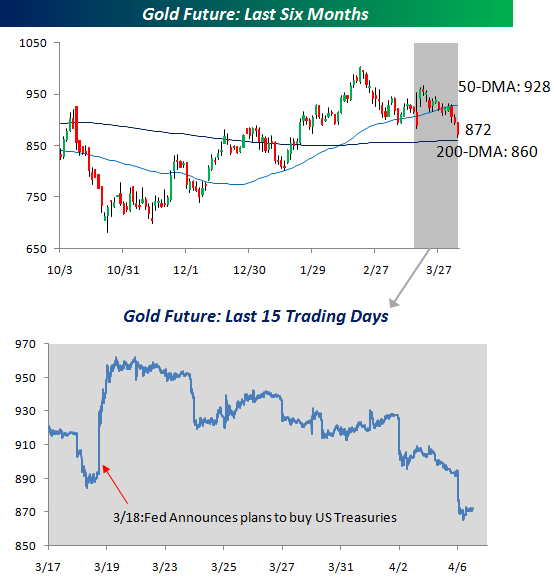
Conversly for Gold the first test is $900 with $928 being the next level. If Gold breaks thes two then it will test $980, then $1000 again. This time it’s going to break thru and set new all time highs. I am still looking for minmum of $1250 – $1500 by the end of this year. It will be much higher prices if some of the things I have mentioned before occur. Then Gold Prices could easily top $2500 and higher.

Today’s articles are not meant to scare you (well maybe!), they are me screaming at you “wake up”! Have a Great Evening! – Good Investing! – jschulmansr

Follow Me on Twitter and be notified whenever I make a new post!

===================================================

A new site that is in pre-launch state that will become a virtual world – chat, shop, play, videos, etc. Anyways they are giving free shares (that should become actual company shares) to anyone who signs up and more shares if you refer people.

===================================================

Here’s your chance to analyze that stock you have been thinking about adding to your portfolio. Just enter the ticker of any company, name of a commodity, or forex pair and get your complimentary technical analysis. It cost you nothing and and no payment info will ever be requested.

Click Here To Enter Your Symbol/s

===================================================

Claim a gram of FREE GOLD today, plus a special 18-page PDF report;

Exposed! Five Myths of the Gold Market and find out:

· Who’s been driving this record bull-run in gold?

· What Happens When Inflation Kicks In?

· Why most investors are WRONG about gold…

· When and How to buy gold — at low cost with no hassle!

Get this in-depth report now, plus a gram of free gold, at BullionVault

====================================================

Jefferey Christian: Gold and Dollar Safe Havens – Hard Assets Investor

Source: Hard Assets Investor

Nothing in today’s post should be considered as an offer to buy or sell any securities or other investments; it is presented for informational purposes only. As a good investor, consult your Investment Advisor/s, Do Your Due Diligence, Read All Prospectus/s and related information carefully before you make any investing decisions and/or investments. – jschulmansr

Mike Norman, anchor, HardAssetsInvestor.com (Norman): Welcome back folks, to the second half of my interview with Jeffrey Christian, managing director of CPM Group. Jeffrey, the last interview was sort of a macro overview. I think you said that for the remainder, maybe stable prices, but then we’re looking longer term for a resumption of probably a powerful bull market again in commodities.

Let’s look at some specific commodities. I want to talk about gold. Gold has garnered a lot of attention, particularly now that we’ve seen aggressive action taken by the Fed and other central banks to support the economy – some people say a lot of money printing. What is your outlook for gold?


View Part I

<!–Download to MP3 player–>

Jeffrey Christian, managing director, CPM Group (Christian): Gold is somewhat different from other commodities: Gold is really a financial asset. So we think gold might do very well this year, possibly make a new record high late in March or in early April, then come off a little bit, we think, in the second and third quarters. The economic outlook may be that we’re sort of bottoming out, moving toward a recovery; and in that kind of situation, gold could come off to 8 or 850 and then probably move higher.

We’re looking at gold on a long-term perspective, and you have seen more investors buy more gold for a longer period of time in more parts of the world over the last eight years than ever before in history, and we’ve been doing a lot of thinking about it, and what you’re seeing is really a rehabilitation of gold as a financial asset.

So investors have looked at not just the most recent crisis but the fact that over the last eight years, we’ve had a series of financial, economic and political crises and problems, and they’ve simply said, I no longer want to have 0.2% of my assets in gold, I’d rather have 1%. So I think you’re seeing this long-term secular increase in investment demand, which is going to be around for a long time.

Norman: Let me ask you this, because in certain countries traditionally, historically – take India for example – silver; it’s a form of money, it always has been. But as their economy evolves and becomes more like ours – more modern – won’t they move to more of sort of a credit money-based system, whereas before, it was basically silver or gold considered money? And if they do, doesn’t that diminish the role of gold as money for these nations?

Christian: A couple points. First off, they are moving to a more diversified portfolio. If you go back to India 10 years ago, it was gold and silver, and that was your foremost savings. Today they’re reducing their exposure to gold and silver, they’re increasing their exposure to other assets; and what you find is it looks like it’s a diametric move compared to what you’re seeing in Europe and the United States, where people are moving away from financial assets to go over to gold and silver.

But in fact it’s the same impulse: I want to diversify portfolio. Whereas the Americans and the Europeans are saying, I want to diversify portfolio which includes some gold and silver, the Indians are saying, I want to diversify portfolio which includes some financial assets. That’s the longer-term issue.

On a short-term basis, the financial crisis of the last two years has driven home to a lot of Indians that they were right to focus on gold and silver all along, and they’ve been very happy that they didn’t take all of their gold and silver assets and move them into stocks and bonds.

Norman: I want to move on, but first I’ve got one quick question I want to ask you: the link between the dollar and gold. The dollar – since 2002 until probably the midpoint or late last year – was in a decline, but it’s been going up. Would that change your outlook if the dollar continued to rise?

Christian: It depends on how far it continues to rise. It’s a myth that gold trade against the dollar, and if you look at past financial crises – ’73, ’74, ’79, ’80 – gold and the dollar were rising together the same way they have been since the middle of 2008; and the fact of the matter is they’re both safe havens. So the fact that the dollar is rising … and I think it’s going to strengthen further over the next year or two …

Norman: You do?


Christian: …Yeah, I’m a dollar bull for the next year or two. I think it’s going to be very volatile but with an upward bias, because of a couple things. First off, investors like the Treasury. Investors have lost faith in the Treasury, but they still have more faith in the Treasury than they do in the ECB; that’s the bottom line. So I think that you can see the dollar rise simultaneous to gold the same way you saw it in 1979.

Norman: All right. A big story last year of course was oil: 150, all the way down almost to 30. We’re just back above 50 again, but we’ve got OPEC cutting back production significantly; you have the Russian factor in there; a tendency toward monopolistic forces in the oil market. Do we go back up again?

Christian: I think oil will probably get up around $60 yet this year. We were thinking that oil would get toward $60 late this year, but that was three weeks ago and the price was 45. It’s now 53, so it’s almost there already. It may overshoot that, but I think 60, 65 is a reasonable target for late this year, but then you go out two or three years from now and the oil and energy market in total is absolutely frightening.

Once we get into an economic recovery on a global basis – and I say that because I think that the world economy will be stronger and healthier than the U.S. economy on a long-term basis – but once we get into an economic recovery on a global basis, there is not enough energy to supply what is anticipated in terms of real GDP, and that means that oil prices go back over $100 in the three- to five-year time frame, and possibly a lot farther.

Norman: I was going to ask you what, if any, impact – it doesn’t seem like very much – all this push toward alternative energy … does that, even at the margin, diminish the demand for petroleum?

Christian: At the margin, it diminishes the demand for petroleum, but it will only be marginal. If you look at wind power, solar power and a lot of these things, they will not be significant. Nuclear power could be, but that’s something that’s going to take 10 or 20 years to really come into effect.

If you look at the International Energy Agency’s long-term energy outlook, it’s very scary from a long-term perspective, because, as I say, conventional oil and gas, nonconventional oil and gas, alternative energies – you put them all together, you come up with your best scenario for supply of those things, and it’s insufficient to meet the world’s demand for energy.

Norman: All right. Let’s talk now about maybe copper, some base metals, and particularly in light of infrastructure, infrastructure now here as part of the fiscal stimulus in the United States and also in China. Is that what you need to be focused on?

Christian: I like the base metals: aluminum, copper, because of the infrastructure bill; molybdenum, because it goes into the steel which is used in gas and oil transmission pipelines and deep sea drilling. I think there are a lot of these things that will do very well because of the infrastructure bill. You have to be careful; I think the markets have gotten a little overly enthusiastic.

Because you do have this buildup in inventories, you are still running supply/demand surpluses this year. If you look back at the 1980s, the markets moved into deficits around 1983, but the prices didn’t respond until ’87 because you had these large inventories. It probably won’t take that long this time, but you will have a lag because of the damage done to the market.

Norman: All right. Well, there you have it folks: Jeff Christian, managing director of CPM Group. Jeff, thanks very much for coming by. Stop by this Web site often where you have our interview series continuing as always. This is Mike Norman for now. Take care, bye bye.

===================================================

Will New Fed “Tools” Avert Hyperinflation? – Daily Reckoning

By: Robert Murphy of Free Advice

04/22/09 Nashville, Tennessee People often accuse me of making “irresponsible” forecasts of massive price inflation. Even though they know that history is replete with examples of central banks ruining their currencies, these critics are sure that “it can’t happen here.” So in the present article I’d like to make the brief case for why we should all be very alarmed about the prospects for the U.S. dollar.

First, let’s look at what those penny pinchers in the federal government are up to. The Congressional Budget Office (CBO) recently released its analysis of the Obama Administration’s ten-year budget proposal. The projected deficit for (fiscal year) 2009 is a whopping $1.8 trillion. Now the president has said, in effect, that you need to spend money to save money, but the CBO projects deficits once again exceeding $1 trillion by 2018. In fact, over the whole CBO forecast from 2009-2019, the lowest the deficit ever goes is $658 billion.

This should be rather surprising to anyone who actually took Obama at his word when he promised to restore fiscal discipline to Washington. In fact, the CBO projects that the outstanding federal debt held by the public will increase from 40.8% of GDP in 2008 to 82.4% in 2019. In other words, the CBO predicts a doubling of the national debt in a mere decade.

One last thing to give you chills (and not the good kind): The CBO is not exactly a doom-and-gloom forecasting service. They’re run by the government, for crying out loud. This is the same CBO that projected at the start of the Bush Administration ten years of an accumulated $5.6 trillion in budget surpluses.

I would caution readers not to dismiss all CBO numbers as obviously meaningless. On the contrary, I think we will see the same pattern play out under Obama as under Bush: Because the CBO in both cases is grossly overstating future tax receipts, its projections for the Obama proposal are going to turn out just as rosy as they did back in 2001. Besides anemic tax receipts, if mortgage defaults continue to increase, the CBO projections on losses from the Treasury’s numerous “rescue” measures will also be far too optimistic.

In short, I think we should view the doubling of the national debt (as a share of the overall economy) over the next decade as a naïve best-case scenario.

If fiscal policy is a disaster, monetary policy is even worse. Unfortunately, the issues here get very complicated, and so it’s difficult for the layman to know whom to trust. Not only do left-wingers like Paul Krugman say that we need more inflation, but even (alleged) right-wingers like Greg Mankiw are saying the exact same thing. With all due respect, those guys are crazy.

Normally, I do my best unshaved-guy-wearing-a-sandwich-board routine by showing the scary Fed chart of the monetary base. But every time I do that, some wise guy argues that I don’t understand how our banking system works, and that because of “deleveraging” we are actually experiencing a shrinking money supply.

No, we aren’t. It’s true that there are forces tending to shrink the money supply, but Bernanke has more than overwhelmed them. All of the standard measures of the money stock went way up during 2008, even though prices (as measured by the CPI) fell in some months. For example, the monetary aggregate M1 consists of very liquid items such as actual currency held by the public, and checking account deposits. It does not include the monetary base (which we know has exploded through the roof). Even so, look at the annual percentage graph of M1 recently; it’s grown at almost a record rate:

phpdxpYpJ

Now the reason prices haven’t exploded is that the demand to hold U.S. dollars has also increased dramatically. (That’s also what happened in the 1980s: the Reagan tax cuts and Volcker’s squelching of severe price inflation made it much more attractive to hold dollars, and so the Fed got away with printing a bunch even though the CPI didn’t increase wildly.)

Once people get over the shock of the financial crisis, the new money Bernanke has pumped into the system will begin pushing up prices. Others have used this analogy before me, but it’s still apt: The U.S. economy right now is like Wile E. Coyote right after he runs off a cliff but hasn’t yet looked down. Once the spell of a “deflationary spiral” is broken by a full quarter of significant price hikes, there will be an avalanche as people come to their senses.

Some analysts concede that the traditional Fed policies have indeed left the dollar vulnerable to serious devaluation, but they think the central bank wizards can save the day by acquiring new “tools.” For example, San Francisco Fed president Janet Yellen has been arguing that the Fed should be able to issue its own debt, to give the Fed more flexibility. The idea is that when the time comes for the Fed to sop up the excess reserves it has pumped into the banking system, it would be devastating to the incipient economic recovery if the Fed has to dump a bunch of mortgage-backed securities, or Treasury bonds, back onto the market. This would ruin the banks with MBS on their balance sheets, and/or it would push up interest rates for the government. Thus, the Fed would have painted itself into a corner, and it would have to choose between massive CPI hikes or a renewed recession. To avoid that nasty tradeoff, Yellen argues that if the Fed could sell its own debt, then it could drain reserves out of the banking system without unloading its own balance sheet.

For a different idea, economists Woodward and Hall think the Fed just needs the ability to charge banks for holding reserves. The Fed already (recently) obtained the right to pay interest on reserves, and so Woodward and Hall think the Fed should also have the ability to do the opposite, i.e. to be able to pay a negative interest rate on reserves that banks hold on deposit with the Fed.

How does this avert the threat of hyperinflation? Simple, according to Woodward and Hall. If banks ever start loaning out too much of their (now massive) excess reserves, and thereby start causing large price inflation, then the Fed can simply raise the interest rate it pays on reserves. Banks would then find it more profitable to lend to the Fed, as it were, rather than lending reserves out to homebuyers and other borrowers in the private sector. Voila! Problem solved.

Obviously these tricks can’t avoid the consequences of Bernanke’s mad money printing spree. At best, they would merely push back the day of reckoning, while ensuring that it grows exponentially (quite literally).

A quick numerical example: Let’s say the Fed wants to drain $100 billion in reserves out of the banking system, in order to cool off rising prices. But it doesn’t want to sell off some of its assets on its balance sheet (like “toxic” mortgage-backed securities), so instead the Fed sells $100 billion worth of the brand new “Fed bonds,” as Yellen hopes.

In the beginning, this will indeed solve the problem. When people in the private sector buy the Fed-issued bonds, they write checks on their banks and ultimately those banks see their reserves go down at the Fed. There is less money held by the public, and so prices don’t rise as quickly.

But what happens when the Fed bonds mature? For example, if the Fed sold a 12-month bond paying 1% interest, then after the year has passed our private sector buyers will hand over the securities and now their checking accounts will be credited with $101 billion. At that point, the economy would be in the same position as before, only worse: there would be an extra billion in newly created reserves (because of interest on the Fed debt).

The financial gurus running our financial system and advising our political leaders aren’t even thinking two steps ahead when making their cockamamie recommendations. For those readers who share my skepticism, the solution seems clear: You need to transfer your wealth out of assets denominated in fixed streams of U.S. dollars, and switch to something that responds to large price inflation. In short, sell your corporate and government bonds, and start stocking up on precious metals.

Regards,

Robert Murphy
for The Daily Reckoning

===================================================

Claim a gram of FREE GOLD today, plus a special 18-page PDF report;

Exposed! Five Myths of the Gold Market and find out:

· Who’s been driving this record bull-run in gold?

· What Happens When Inflation Kicks In?

· Why most investors are WRONG about gold…

· When and How to buy gold — at low cost with no hassle!

Get this in-depth report now, plus a gram of free gold, at BullionVault

====================================================

Nothing in today’s post should be considered as an offer to buy or sell any securities or other investments; it is presented for informational purposes only. As a good investor, consult your Investment Advisor/s, Do Your Due Diligence, Read All Prospectus/s and related information carefully before you make any investing decisions and/or investments. – jschulmansr

Share this:

  • Click to share on Reddit (Opens in new window) Reddit
  • Click to share on Facebook (Opens in new window) Facebook
  • Click to share on LinkedIn (Opens in new window) LinkedIn
  • More
  • Click to share on X (Opens in new window) X
  • Click to share on Pinterest (Opens in new window) Pinterest
  • Click to share on Tumblr (Opens in new window) Tumblr
  • Click to print (Opens in new window) Print
  • Click to email a link to a friend (Opens in new window) Email
Like Loading...

The Bear is Growling – Stocks to Be Devoured!

21 Tuesday Apr 2009

Posted by jschulmansr in Austrian school, banking crisis, banks, bear market, bull market, central banks, deflation, depression, economic, economic trends, economy, financial, futures, gold, inflation, market crash, Markets, physical gold, platinum, precious metals, price, price manipulation, protection, recession, risk, run on banks, safety, silver, sovereign, spot, spot price

≈ Comments Off on The Bear is Growling – Stocks to Be Devoured!

Tags

ANV, Austrian school, AUY, Bailout News, banking crisis, banks, bear market, Bollinger Bands Saudi Arabia, bonds, Brian Tang, bull market, CDE, CEF, central banks, China, Comex, commodities, Copper, crash, Currencies, currency, Currency and Currencies, deflation, Dennis Gartman, depression, DGP, dollar denominated, dollar denominated investments, Doug Casey, economic, economic trends, economy, EGO, Federal Deficit, financial, Forex, FRG, futures, futures markets, gata, GDX, GG, GLD, gold, Gold Bullion, Gold Investments, gold miners, Gold Price Manipulation, GTU, hard assets, HL, hyper-inflation, IAU, India, inflation, investments, Jeffrey Nichols, Jim Rogers, John Embry, Keith Fitz-Gerald, majors, Marc Faber, market crash, Markets, Michael Zielinski, mid-tier, mining companies, monetization, Moving Averages, NAK, NGC, NXG, PAL, palladium, Peter Grandich, Peter Schiff, physical gold, platinum, platinum miners, precious metals, price, price manipulation, prices, producers, production, protection, recession, risk, run on banks, safety, Sean Rakhimov, silver, silver miners, SLW, small caps, sovereign, spot, spot price, stagflation, SWC, Technical Analysis, TIPS, U.S., U.S. Dollar, volatility, warrants, XAU

Yes, my friends the Bear is hungry and growling, take your profits on regular stacks and financials now. Even if there is one more last spike up, you’ll be out and protected. I have taken positions in (SKF) and (SRS), first I don’t believe the banking industry is anywhere close to recovery, and in real estate the other shoe is about to drop. Iam also continuing to accumulate more Gold and Silver producers along with a few exploration companies. Gold on a technical basis is looking more and more like a major breakout to the upside. Volatiliy is increasing again and most of the scared crowd has been brought back into the markets; yes the Bear is hungry and growling. See Ya Tomorrow! – Good Investing! -jschulmansr

Follow Me on Twitter and be notified whenever I make a new post!


===================================================
Claim a gram of FREE GOLD today, plus a special 18-page PDF report;
Exposed! Five Myths of the Gold Market and find out:


·        Who’s been driving this record bull-run in gold?

·        What Happens When Inflation Kicks In?

·        Why most investors are WRONG about gold…

·        When and How to buy gold — at low cost with no hassle!

Get this in-depth report now, plus a gram of free gold, at BullionVault

====================================================

 Gold Set For a Huge Rally – Seeking Alpha

 By: Peter Cooper of Arabian Money.net

 The gold price is poised to break through $1,000 an ounce this week and could reach $1,500 before a price consolidation. On Monday gold and silver closed higher while global stock markets fell as the five-week rally ended.

 This is an important trend reversal and marks a shift by investors to safe haven assets in advance of another plunge in equity values.The US dollar also strengthened across the board and bond prices rose. It is unusual to see both gold and the dollar rising together but again this normally signals an important trend reversal.

Money supply growth

The fundamental case for investment in precious metals has also become overpowering. Global bank bailout and stimulus packages have resulted in a huge increase in global money supply that has never had any effect except inflation in all history.

The gold supply by contrast is relatively fixed and production is actually falling. Supply is even tighter for silver – where stock levels are a hundredth of gold – and that is reason enough to expect the established pattern of silver outperforming gold will be repeated again.

As investors rotate their assets out of stocks and into alternative asset classes the best returns are therefore likely in precious metals, and such information tends to be self-fulfilling.

There are all sorts of minor trends supporting this basic trend, and like any true bull market there will be a compounding of supporting evidence: from a shortage of gold available for bank leasing to UK Prime Minister Gordon Brown’s call for IMF sales, often seen as a contrary indicator as his previous calls boosted gold prices.

Trend is your friend

However, in all investment markets it is the trend that is really your friend. The next dilemma will be how to best leverage the upside to the gold price.

This will start with a debate about silver as a better alternative. But then gold and silver stocks will come under the microscope, and the value of the bombed-out junior stocks brought into focus.

It can be little consolation that great days lie ahead for gold for this signals the failure of the conventional investment universe, and that means further horrors ahead for currencies, stocks, bonds and real estate.

====================================================

Focus on the Prospect Generators – The Gold Report

Source: The Gold Report

According to Matt Badiali, editor of S&A Oil Report, prospect generators represent the best opportunities in the mining sector. Instead of being cash-burning machines that dilute shareholder equity, they put up the initial investment on a property, “do the science,” and then turn it over to a partner who puts up the money to drill the projects. He calls the power of the prospect-generating model “astonishing,” and names some companies that he considers top-flight in the sector.

The Gold Report: Matt, even though you are the Editor of S&A Oil Report, you have said that as a geologist, you focus on other natural resources as well, including gold, silver, uranium, copper, natural gas, and water. Can you give us some insights into some of your favorites in the mining sector?

Matt Badiali: Right now juniors are my favorite group of the mining companies, and there are a couple of groups that I really like that have projects that are near-term, so a big mining company can swoop in and basically build the mine and start producing pretty quickly.

There has been about $3 to $4 billion raised in equity over the past couple of months among the big mining companies, and that to me is an astonishing amount. This is money that mining companies could not have borrowed; they couldn’t have gone to a bank and said, “I’d like to borrow a billion dollars to build a mine in Chile.” The bank would have said to them, “What are the risks? Go see somebody else.” So they went to the market, and the market said, “Sure. You’re going to build a gold mine? Here’s $4 billion.”

That’s pretty amazing. So, now they have cash, and it’s basically burning a hole in their pocket, and they’re looking around for something to do with it. And I think that the smart companies, the big companies, are going to look for projects that they can build that are actually 12 to 18 months away from pouring gold. And there are a couple in Africa that are interesting.

One is a company called Centamin Egypt Ltd. (TSX:CEE) (ASX:CNT), which is in partnership with the Egyptian government. This is a beautiful giant gold mine. I have been following these guys for several years now because the story is so great. The geologist actually used a map from the Pharaohs to find this. And what’s even better, the project just keeps getting bigger and bigger.

Another one that I’m following is Eurasian Minerals Inc. (TSX.V:EMX); it’s a tiny, tiny little company. They have a project in Haiti, which is an astonishing place. I think the United Nations was there in the ’70s and found all kinds of minerals. And then there was a coup, and a bunch of people were killed, and the UN left. Then, Newmont Mining Corp. (NYSE:NEM) came in and they explored, and then there was another coup, and they killed a bunch of people, and Newmont left.

And nobody has been back, but this little company, Eurasian Minerals, went back. They hired the economic geology professor from the University of Port-au-Prince, a world-renowned authority on economic geology and on Haiti, and he brought his graduate students with him to work, and they made some tremendous discoveries. And Newmont agreed to partner up with this little tiny company. So, you have massive Newmont partnering up with this $23 million junior that’s listed on the Toronto Venture Exchange.

A gentleman named David Cole runs Eurasian Minerals. Cole worked for Newmont for years and years, and he knew he could do it better, and he is. And Newmont is now his partner down in Haiti. The business model is far different from your traditional junior mining company, because these guys do the groundwork. So, they go out and they do mapping, and they do fundamental geology—field sampling, staking the ground—which doesn’t cost a lot of money.

So, they’ll spend $500,000 to make a discovery, but there’s all these junior mining companies out there who are what we call drill bit plays who need a good project to raise money around, to put the drill in the ground. They want to sell the story to investors, and the odds of making a discovery that’s going to become a mine is about one in three thousand. Your odds of buying the next Barrick in a drill bit play are really, really slim. So, what the prospect generators do is they make a discovery on the surface; they go into junior miners or in some cases they go into the majors, and they say, “Hey, look, this is the geology; this is the discovery; this is the geologic style. We’re looking for a partner to drill it.”

So, the partner company’s role is they have to pay cash or shares to own half of the project, and then they have to fund the exploration work for the next couple of years. So for a prospect generator, he puts out $300,000 – $400,000 -$500,000 to make the initial discovery, and then does the science, basically. Then they turn it over to a partner who puts up the $1 million or $2 million a year to drill these projects for the chance to make a discovery.

It takes a lot of time to develop a project. So, for the prospect generators, the more they find of these projects and partner off, the more likely they are to make and participate in a big discovery.

TGR: Can you share with us the names of some other prospect generators you find interesting?

MB: Sure. Altius Minerals Corporation (TSX.V:ALS) is the blueprint for the prospect-generating company. They invested $600,000 in a little uranium project that they joint-ventured with a partner. The partner made a massive discovery when they were drilling. Altius then liquidated its shares for $200 million. So they took a $600,000 investment and turned it into $200 million. That’s the power of the prospect-generating model. It’s astonishing.

Two other prospect generators I follow are Miranda Gold Corp. (TSX.V:MAD) and Rimfire Minerals Corp. (TSX.V:RFM). I spent several days in the field in Nevada with the Miranda team. They are among the finest geologists I’ve met. They don’t spend a lot of money keeping the lights on and they have just under $12 million in the bank. More importantly, CEO Ken Cunningham put together an experienced staff.

I traveled to Nevada because of the frequency of giant gold deposits all around Miranda’s properties. This is a tiny company looking for elephants in elephant country. While I was there, the geologists showed me a conceptual model of a potential deposit on one of their projects. They showed me gravity surveys, a drill core, and assay results to support their hypothesis. They have the right people in the right area. One successful drill hole will make shareholders ten times their money, practically overnight.

Rimfire Minerals also follows the prospect generator model (I need to disclose that I personally own shares of Rimfire.) Rimfire employs another fantastic group of exploration geologists. These are “boots on the ground” geologists. Teams are in the field looking for projects from scratch. That helps keep costs down and increases the company’s knowledge and understanding of the geology. That kind of preparation makes the projects highly desirable to partners.

Rimfire branched out into Australia while testing out a kind of “smart map.” A group of ex-Newmont geoscientists designed and developed a proprietary computerized exploration system, called a neural network. In simple terms this is many layers of geologic information—satellite imagery, land cover, geophysical data, geochemical data, and drilling information on one computerized map. Then, they used the computer to figure out what combination of data coincided with giant gold deposits.

Today, they are testing targets that the smart map found in the Lachlan Fold Belt of Australia. This is a prolific copper and gold region in New South Wales. It holds the Cadia Valley complex, which holds some 28.5 million ounces of gold and 3.8 million tons of copper.

The area holds giant deposit potential and Rimfire has a brand new technology to use there. That’s a popular technique in the oil industry—you bring new information to a proven oil region. As with Miranda, a multi-million ounce discovery would send Rimfire’s shares into orbit.

In the last three years, Rimfire has spent more than $20 million on exploration—85% funded by its partners. That means for every dollar the company spent looking for gold it only used 15¢ of its own money. Over the life of the company, partners funded 84% of the exploration costs. That is the power of the joint venture model at work—funding exploration with other people’s money. Today the company has 15 projects, 8 of which have partners working on them.

So, to contrast that to your standard junior mining company model, the junior miner has a project; they have something they want to drill. They have no income; they’re basically a cash-burning machine. These guys have to go out and raise more money to do the next round of drilling. The only thing they have to sell is part of your stake in the company. So, say their shares are 10 cents, they need to raise a million dollars, they have to double the amount of shares they have out. So your slice of the pie just got smaller by half. That’s the problem with being an early investor in these junior mining companies: you’re going to be diluted and diluted and diluted, as opposed to prospect generators, where they’re actually generating money. They’re not diluting their shareholders.

TGR: Any other comments on companies that you are following?

MB: I recently recommended a company called Northern Dynasty Minerals Ltd. (TSX:NDM) (NYSE.A:NAK). Northern Dynasty is a really interesting company because they’re one of the Hunter-Dickinson Group, and Hunter-Dickinson has this history of finding these projects, or buying these projects at an early stage, developing them, and selling them. And so the investors in Hunter-Dickinson projects often make 800% to 1500% on their investments.

And the interesting thing to me is these guys own half of the Pebble Project, which is a giant copper-gold project in Alaska, a mining friendly state. This is not up in the mountains far from anything. It is actually close to the tidewater, so it’s not going to be hard to build a road to get the ore out. And they have a partner that promised to spend $1.5 billion before Northern Dynasty has to spend another cent. Now, when I first started looking at Northern Dynasty, their share price was $4, and the market cap, I think, was $300 million, and they were going to own half an asset that another company had promised to spend $1.5 billion on. So, in terms of book value, the market said half of that project was worth the $750 million that the partnering company said it was worth. So these guys were going to own half of the cash spent on developing this project.

It looked like just an incredibly good opportunity for investors, and since then we bought it at $4, Northern Dynasty rode the rising gold price up to $7 and change recently. It’s come back down to $6.50 a share. So, we’ve already made pretty good money. But I still think that company’s going to be bought out at a premium, and we’re going to make at least double our money.

That’s one of several examples. I went out to visit another project in British Columbia, owned by Seabridge Gold Inc. (TSX:SEA) (NYSE.A:SA). They actually had a business model where they were buying gold projects that were not economic below $400/oz. gold, and they were willing to invest the time and money in pruning up a project and waiting for the price of gold to come up. Because that was always their thesis, that gold price had to come up.

And they were right in the gold price, and they were lucky in the projects. I think this was partly good geologic assessment and partly they really hit it big, but they have a project called Kerr-Sulphurets-Mitchell; they call it the KSM project. I’m a geologist by training, and from a geological perspective Mitchell is one of the coolest deposits I have ever visited because it was glaciated, and the glacier has retreated, but you haven’t had a chance for big trees to grow up and cover everything yet because the growing season up there is so short.

And so when you stand in the valley, you’re standing in the middle of a giant gold and copper deposit. It’s astonishing. I think they’ve come up with 30 million ounces of gold so far. It’s just an enormous deposit.

So, for me, for the investments that I’m looking at, these projects are interesting. I think there are some good values out there when you can get them very cheaply like we did with Northern Dynasty. But in terms of projects that are actually going to become a mine, I’m looking at smaller projects that have high grade, low infrastructure costs, and are going to be producing.

Another company I like is Royal Gold Inc. (Nasdaq:RGLD), a fantastic company from an intellectual point of view because it’s basically a cash flow of gold from mine. This is a company where miners spend all the money; they blast the rock and muck it out. They run it through a big mill and crush it down into dust, and then they treat it with chemicals that pull out the gold. And when they go to pick up the gold from the smelters, there are the guys from Royal Gold with their hands out. And they have to give Royal Gold a percent or two of all of the gold that they just worked to get. Because Royal Gold is smart enough to go to mining companies when they’re desperate.

So, you’re a mining company, and your mine is almost built, and you just need that little extra $150 million or $300 million to get you over the hump, and you have nothing to sell but your own shares. And all you’ve done all along is sell shares and sell shares, and the market is finally looking at you with kind of a jaundice eye. “You’re going to come to us again and try to finance again?” And Royal Gold rolls up with a checkbook and says, “We’ll give you that money; you just have to agree to give us 2% or 3% of the gold that you make and 2% or 3% that you make on all the land that you own all around this mine.” And the mining companies say yes.

I love Royal Gold. But the great thing about Royal Gold is when you do a back-of-the-envelope calculation about how much gold they have rights to, you can value it using a combination of the share price and the price of gold. You can see when the market is really excited about gold, gold share prices go through the roof. They get a really high price for their gold, and then when the market sentiment is low on the gold price, then you see Royal Gold shares price fall. The amount of gold really doesn’t change that much, so it’s really a measure of sentiment.

In the last couple of weeks, Royal Gold prices soared up to $47 at one point, and came back down to under $40. And so it’s very easy to figure out what the fair price is to pay for Royal Gold shares and then to sell covered calls against it. I predicted to my readers we could make 88% this year doing nothing but selling short-term covered calls on Royal Gold because the market is so volatile right now.

TGR: Thanks Matt. This has been very insightful. Much appreciated.

Matt Badiali is the editor of the S&A Oil Report , a monthly investment advisory that focuses on natural resources—from small exploration outfits, to equipment companies, to the biggest commodity companies in the world. In Matt’s own words, “as a geologist, I focus on all natural resources including silver, uranium, copper, natural gas, oil, water, and gold, just to name a few.” He’s also a regular contributor to Growth Stock Wire , a free pre-market briefing on the day’s most profitable trading opportunities. Matt has real-world experience as a hydrologist, geologist, and a consultant to the oil industry and he holds a master’s in geology from Florida Atlantic University

 ===================================================

Buyer Beware: The 30 Biggest Bankruptcy Risks – Seeking Alpha

By: Thomas Smicklas of Investing From The Right

The following companies are listed in order, based upon the credit-default swap spreads on five-year corporate bonds as of early April. The list is compiled from research provided publicly through MSN Money.

AbitibiBowater (declared bankruptcy on Friday) (ABH)
R. H Donnelly (
RHDC.PK)
Visteon (
VC)
General Motors (
GM)
Six Flags (
SIX)
Financial Guaranty Insurance
Hawker Beechcraft
Ineos Group
NXP Semiconductors
McClatchy (
MNI)
Unisys (
UIS)
CC Media
Beazer Homes USA (
BZH)
YRC Worldwide (
YRCW)
Hellas Telecommunications II
Lear (
LEA)
Ono Finance
American Axle and Manufacturing (
AXL)
Harrah’s Entertainment
Truvo Subsidiary
Ford Motor (
F)
Rite Aid (
RAD)
MBIA (
MBI)
Freescale Semiconductor
Univision Communications
Arvin Motor (
ARM)
Pioneer Electronics
Travelport

A very interesting, prioritized list of companies that may not be on any list one year hence.

 ===================================================

 Claim a gram of FREE GOLD today, plus a special 18-page PDF report;

Exposed! Five Myths of the Gold Market and find out:

·        Who’s been driving this record bull-run in gold?

·        What Happens When Inflation Kicks In?

·        Why most investors are WRONG about gold…

·        When and How to buy gold — at low cost with no hassle!

Get this in-depth report now, plus a gram of free gold, at BullionVault

====================================================

 My Note:  I use this site to do my analysis and it offers so much for the trader,

Check It Out you’ll love what you see! -jschulmansr

 There are only a few quality sites out there that provide high quality trading content, but they are often hard to find and are usually littered with banners and ads. So when I found this page from MarketClub I knew it would be something I bookmarked and wanted to share with you. This page is loaded with educational videos on current markets (stocks, futures, and forex), latest blog posts on the market, and helpful insight into current trends. Visit the page here: 


INO MARKET CLUB 


Take some time and check it out as I’ve bookmarked the page and check it daily for new videos and postings, and I recommend you do the same! 

Thanks for your time and I’ll keep an eye out for more quality tools for you…


INO MARKET CLUB

jschulmansr


 ====================================================

Nothing in today’s post should be considered as an offer to buy or sell any securities or other investments; it is presented for informational purposes only. As a good investor, consult your Investment Advisor/s, Do Your Due Diligence, Read All Prospectus/s and related information carefully before you make any investing decisions and/or investments. –  jschulmansr

Share this:

  • Click to share on Reddit (Opens in new window) Reddit
  • Click to share on Facebook (Opens in new window) Facebook
  • Click to share on LinkedIn (Opens in new window) LinkedIn
  • More
  • Click to share on X (Opens in new window) X
  • Click to share on Pinterest (Opens in new window) Pinterest
  • Click to share on Tumblr (Opens in new window) Tumblr
  • Click to print (Opens in new window) Print
  • Click to email a link to a friend (Opens in new window) Email
Like Loading...

Are You Ready For This? – Stocks at Risk and Gold to Soar?

20 Monday Apr 2009

Posted by jschulmansr in ANV, Austrian school, AUY, Bailout News, banking crisis, banks, bear market, Bollinger Bands Saudi Arabia, bonds, Brian Tang, bull market, CDE, CEF, central banks, China, Comex, commodities, Copper, crash, Currencies, currency, Currency and Currencies, deflation, Dennis Gartman, depression, DGP, dollar denominated, dollar denominated investments, Doug Casey, economic, economic trends, economy, EGO, Federal Deficit, financial, Forex, FRG, futures, futures markets, gata, GDX, GG, GLD, gold, Gold Bullion, Gold Investments, gold miners, Gold Price Manipulation, GTU, hard assets, HL, hyper-inflation, IAU, India, inflation, investments, Jeffrey Nichols, Jim Rogers, John Embry, Keith Fitz-Gerald, majors, Marc Faber, market crash, Markets, Michael Zielinski, mid-tier, mining companies, monetization, Moving Averages, NAK, NGC, NXG, PAL, palladium, Peter Grandich, Peter Schiff, physical gold, platinum, platinum miners, precious metals, price, price manipulation, prices, producers, production, protection, recession, risk, run on banks, safety, Sean Rakhimov, silver, silver miners, SLW, small caps, sovereign, spot, spot price, stagflation, SWC, Technical Analysis, TIPS, U.S., U.S. Dollar, volatility, warrants, XAU

≈ Comments Off on Are You Ready For This? – Stocks at Risk and Gold to Soar?

Tags

ANV, Austrian school, AUY, Bailout News, banking crisis, banks, bear market, Bollinger Bands Saudi Arabia, bonds, Brian Tang, bull market, CDE, CEF, central banks, China, Comex, commodities, Copper, crash, Currencies, currency, Currency and Currencies, deflation, Dennis Gartman, depression, DGP, dollar denominated, dollar denominated investments, Doug Casey, economic, economic trends, economy, EGO, Federal Deficit, financial, Forex, FRG, futures, futures markets, gata, GDX, GG, GLD, gold, Gold Bullion, Gold Investments, gold miners, Gold Price Manipulation, GTU, hard assets, HL, hyper-inflation, IAU, India, inflation, investments, Jeffrey Nichols, Jim Rogers, John Embry, Keith Fitz-Gerald, majors, Marc Faber, market crash, Markets, Michael Zielinski, mid-tier, mining companies, monetization, Moving Averages, NAK, NGC, NXG, PAL, palladium, Peter Grandich, Peter Schiff, physical gold, platinum, platinum miners, precious metals, price, price manipulation, prices, producers, production, protection, recession, risk, run on banks, safety, Sean Rakhimov, silver, silver miners, SLW, small caps, sovereign, spot, spot price, stagflation, SWC, Technical Analysis, TIPS, U.S., U.S. Dollar, volatility, warrants, XAU

Well I was a few days off but right nevertheless. Hope you took some profits on Thurs-Fri of last week in your non-precious metals stocks. It now appears that intermediate wave has ended and the downward spiral to begin. For the Dow I don’t see any real strong support until 7500, however the 7800 level is featuring a crossover of the moving averages so we may see a little support there. If 7800 and 7500 are breached then we will be testing the recent bottom at 6500 level very quickly. Gold jumped nicely today and I hope you were able to accumulate more of the “shiny” stuff in whatever form. I did pick up a further position in (DGP) last Fri. to catch the next ride to at least $950-$980. Longer term I am still sticking with my call of Gold $1250-$1500 by year end, even higher, way higher if the middleast explodes. Did you notice that Ahmadinejad practically thumbed his nose at the whole world today, especially Isreal? It is like he is “daring” anybody to do something about it. Isreal is being put into a position of having to strike for its’ very survival, especially since Mr. Obama is not really standing up and doing anything about Iran. Big trouble brewing and if the war happens big shock to Stocks, Oil, and Precious metals. You can feel the “calm” before the storm right now. Take heed put yourself in a position to be protected should/ no, when this happens. On the home front, I hope you were able to catch on Twitter my live reporting (tweetup) of the Arizona Tea Party held at the state capital. It was awesome and for the first time in a long time, it was a gathering of young and old, republicans and democrats, libertarians and independents, all united together as Americans! For all the incumbents out there… look out next election you’re going down! Have a Great Evening and Good Investing! – jschulmansr

Follow Me on Twitter and be notified whenever I make a new post!


===================================================

Claim a gram of FREE GOLD today, plus a special 18-page PDF report;

Exposed! Five Myths of the Gold Market and find out:

·        Who’s been driving this record bull-run in gold?

·        What Happens When Inflation Kicks In?

·        Why most investors are WRONG about gold…

·        When and How to buy gold — at low cost with no hassle!

Get this in-depth report now, plus a gram of free gold, at BullionVault

====================================================

A Gold Market Squeeze – Seeking Alpha

By: Tim Iacono of The Mess That Greenspan Made

A lot has happened since the yellow metal was last talked about here. The flow of gold bars into the ETFs has reversed direction and, after a surge in scrap supplies and a buying strike, bullion has stopped moving out of India and imports have resumed.

As might be expected, prices have plunged, but things are looking up today. In this Business Bullet from the Telegraph, at least a few analysts think higher prices might be ahead.

Ambrose Evans-Pritchard files this report on a possible gold market squeeze, although there appears to be something wrong with that “inflation-adjusted” gold price of $1,560 in the second paragraph – based on U.S. inflation, the figure is closer to $2,200.

Charles Gibson, a gold expert at Edison Investment Research, argues in a new report that negative real interest rates (below inflation) in the US and beyond has upset the “leasing” machinery in the gold industry and led to a sustained market squeeze.

This is what occurred in the late 1970s, driving gold prices to $850 and ounce – roughly $1,560 in today’s terms. Gold finished last week at $870.

Mr Gibson said the powerful dynamic could lead to a second leg of this gold bull market, even though the metal has already enjoyed a torrid run over the last eight years.

In normal times, gold mining companies sell – or “hedge” – a chunk of their output in advance through bullion banks. These banks cover their positions by leasing gold from central banks. This bread-and-butter trade created excess supply of 500 tonnes each year until the start of this decade.

Low real interest rates have caused the process to reverse, creating a shortfall of about 500 tonnes. The process accelerates as rates turn negative, leading to a scramble by market players to find physical gold.

The gold market needs something to revive it these days.

===================================================

Inflationary Prognosis Leads Us Back To Gold- Seeking Alpha

By: Horatio Marquez of Monday Morning

For many millenniums, gold has been a barometer of financial health and the ultimate store of value. It’s long been considered the ultimate safe haven investment when all else fails, or when economic conditions seem too good to be true.

So now that gold has made a second major run – shooting from $600 an ounce to $900 an ounce after punching through the $1,000 plateau last year – is the “yellow metal” still a prudent profit play, or is it an investment that’s already played out?

To answer that question, we must first ask another: Is the global monetary mirage going to keep inflating, or are we already on a sound monetary footing?

Let’s find out.

The global financial crisis has all the world’s major currencies (the U.S. dollar, the euro and the Japanese yen) racing to devalue against each other. This phenomenon of competitive devaluations occurs when inefficiencies in one country weigh down its economy. Devaluing the currency is an old macroeconomic trick to quickly attain competitiveness against other trading partners. It’s a way of borrowing growth from a neighbor, taxing imports and subsidizing exports.

But this newfound competitiveness is short-lived if the devaluing country does not fix the underlying reasons that gave rise to the currency devaluation in the first place. Devaluing the currency makes imports more expensive, especially commodities. And higher commodity prices and less competition from imported goods gradually feed inflationary pressures into the system.

Those inflationary pressures eventually “eat up” the value of the devaluation. And at the end of this cycle, you are left not where you began, but poorer, because you have made the income and monetary savings of your population less valuable.

The U.S. Economy’s Uphill Climb

No doubt, we are facing a unique set of circumstances in the markets. We are facing a global recession that actually teetered on the brink of a depression.

While some might think that just recapitalizing the banks will allow the lenders to get back into the business of aiding growth by providing credit, the reality is that the financial blowup is a symptom of structural conditions that keep generating these imbalances over time.

Let me be more specific.

There are three important structural conditions afflicting the long-term economic health of America:

  • The U.S. auto industry has fallen to international competitors.
  • Huge Social Security imbalances and an out-of-control medical care system figure to siphon an increasing amount of capital out of the economy.
  • And the onerous and incomprehensible U.S. corporate tax system will cause enough friction to slow economic growth.

When the United States couldn’t sell cars and other products abroad, it stimulated its internal consumption in order to keep the economy going. The U.S. auto industry barely subsisted while the rest of America subsidized it with abnormally low interest rates and overpriced cars. Foreign carmakers could underprice them – and with better cars to offer – helping them book large profits, even when manufacturing in the United States.

Over time, the falling market share – in an industry where economies of scale are the name of the game – kept increasing the financial pressure on the U.S. car industry, which was technically insolvent by the year 2000. And up until recently, members of the U.S. industry declined to take the hard medicine and restructure their failing business models.

All the government money in the world couldn’t help the U.S. auto industry without a vital restructuring. The end result will be a trimmed-down, leaner industry whose workers will have less purchasing power. That is a strong change that will not be reversed.

Likewise with the banking industry, capital alone won’t do the trick unless the banks remove the cancer that is eating away at the very foundations of this country’s economic system. Therefore, we’ll see a pared-down, de-leveraged financial system that will produce less secular growth, lower profits and lower employment than its inflated predecessor.

In addition, although the industry has been “stabilized” with massive subsidies (zero interest rates, wide open discount windows and U.S. Federal Reserve programs designed to bolster asset values), significant losses are still ahead, which will continue to be painful.

There’s one last problem: The U.S. government has yet to address the elephants in the bazaar: The massive inter-generational Ponzi scheme of Social Security and the massive and unsustainable healthcare system.

If we do not address these two problems seriously, without political pandering and without making the very tough choices we need to make, let the last one leaving the U.S. turn off the lights, because the population pyramid is too narrow at its base to sustain the millions of baby boomers retiring.

The Obama administration is being proactive in addressing these problems, but the measures it is employing are inflationary.

The Government’s Inflationary Arsenal

In order to prevent a widespread economic depression from fully unfolding, the U.S. government and the Federal Reserve have resorted to a battery of very powerful measures.

These measures prevent the normal course that would have followed the blow-up of the huge unsustainable imbalances built over decades in the U.S. car industry, in the U.S. real estate market and more importantly in the Social Security and Medical Care systems.

In short, the Federal Reserve has resorted to:

  • Lowering interest rates to near a range of 0%-0.25%. This effectively is a subsidy from savers to the financial institutions.
  • “Quantitative easing.” That is, the Fed is buying U.S. Treasuries to drive their rates lower and to increase the money supply.

These are both merely ways of devaluing the dollar. Of course, the justification of engineering inflation is saving the U.S. banking industry and avoiding a dreaded deflationary spiral, a la Japan in the 1990s, which would mire us in 10 years of economic paralysis.

In effect, the U.S. government is trying to put out the fire with gasoline: Spending unconscionable amounts of money that it does not have, and financing that spending with record levels of debt. The short-term results of a boost in activity will be extremely costly.

Under this scenario, with a depression not in the cards, the market is rallying to adjust to mere recession pricing. But are we out of the woods? The rampant spending and overzealous monetary easing will result in – you guessed it – inflation.

The Fed’s claims that it is ready and willing to act quickly in order to contain inflation when it finally appears just don’t seem realistic at this point. As a central bank that had to resort to such extraordinary measures just to sidestep the death spiral, could you really risk tightening the reins too much and too soon? No way. The Fed will have to be very slow in taking back the liquidity with which it has just flooded the market.

After all, it is much easier to spike rates later to stop inflation than to deal once more with a crumbling financial system.

Monetary management is more of an art than a science. The Fed doesn’t really know how much time – and to what extent – it will take for their measures to impact economic activity. It is driving while looking into its rearview mirror. And with this amount of financial adrenalin and imbalances being corrected in the system, the likelihood of a monetary “soft landing” is slim to none.

This brings us back to gold.

With this prognosis, we know that the government’s policies will succeed in achieving what it truly intended: Creating inflation.

Therefore, gold is a necessary component of almost any portfolio. The problem is that the iShares SPDR Gold Trust ETF (NYSE: GLD) already has accumulated more gold than the rich countries of Switzerland or China. That means any move from the masses of investors to leave the metal will have a huge downward effect on it.

But, knowing this important technical risk, I would still be ready to invest if gold pulls back to the $800 an ounce level. From there, I’d keep building a prudent position, as we should see a price spike once inflation starts showing up in 12 months to 18 months.

Disclosure: Horacio Marquez holds no interest in iShares SPDR Gold Trust ETF.

Original post


===================================================

Claim a gram of FREE GOLD today, plus a special 18-page PDF report;

Exposed! Five Myths of the Gold Market and find out:

·        Who’s been driving this record bull-run in gold?

·        What Happens When Inflation Kicks In?

·        Why most investors are WRONG about gold…

·        When and How to buy gold — at low cost with no hassle!

Get this in-depth report now, plus a gram of free gold, at BullionVault

====================================================

Nothing in today’s post should be considered as an offer to buy or sell any securities or other investments; it is presented for informational purposes only. As a good investor, consult your Investment Advisor/s, Do Your Due Diligence, Read All Prospectus/s and related information carefully before you make any investing decisions and/or investments. –  jschulmansr

Share this:

  • Click to share on Reddit (Opens in new window) Reddit
  • Click to share on Facebook (Opens in new window) Facebook
  • Click to share on LinkedIn (Opens in new window) LinkedIn
  • More
  • Click to share on X (Opens in new window) X
  • Click to share on Pinterest (Opens in new window) Pinterest
  • Click to share on Tumblr (Opens in new window) Tumblr
  • Click to print (Opens in new window) Print
  • Click to email a link to a friend (Opens in new window) Email
Like Loading...

The Swan Dive- Next For Stocks?

14 Tuesday Apr 2009

Posted by jschulmansr in 10 year Treasuries, 20 yr Treasuries, agricultural commodities, ANV, Austrian school, AUY, Bailout News, banking crisis, banks, Barack Obama, bear market, Bear Trap, bilderbergers, Bollinger Bands, Bollinger Bands Saudi Arabia, bonds, Brian Tang, bull market, CDE, CEF, central banks, China, Comex, commodities, Contrarian, Copper, crash, Credit Default, Currencies, currency, Currency and Currencies, deflation, Dennis Gartman, depression, DGP, dollar denominated, dollar denominated investments, Doug Casey, Dow Industrials, economic, Economic Recovery, economic trends, economy, EGO, Fed Fund Rate, Federal Deficit, federal reserve, Finance, financial, follow the money, follow the news, Forex, FRG, Fundamental Analysis, futures, futures markets, G-20, gata, GDX, GG, GLD, gold, Gold Bullion, Gold Investments, gold miners, Gold Price Manipulation, GTU, hard assets, heating oil, HL, How To Invest, How To Make Money, hyper-inflation, IAU, India, inflation, investments, Jeffrey Nichols, Jim Rogers, John Embry, Jschulmansr, Junior Gold Miners, Keith Fitz-Gerald, Latest News, majors, Make Money Investing, Marc Faber, market crash, Markets, Michael Zielinski, mid-tier, mining companies, mining stocks, monetization, Moving Averages, NAK, natural gas, NGC, NXG, oil, PAL, palladium, Peter Grandich, Peter Schiff, physical gold, platinum, platinum miners, precious metals, price, price manipulation, prices, producers, production, protection, recession, risk, run on banks, S&P 500, safety, Sean Rakhimov, silver, silver miners, SLW, small caps, sovereign, spot, spot price, stagflation, Stimulus, stock market, Stocks, SWC, TARP, Technical Analysis, The Fed, Tier 1, Tier 2, Tier 3, TIPS, U.S., U.S. Dollar, volatility, warrants, XAU

≈ Comments Off on The Swan Dive- Next For Stocks?

Tags

ANV, Austrian school, AUY, Bailout News, banking crisis, banks, bear market, Bollinger Bands Saudi Arabia, bonds, Brian Tang, bull market, CDE, CEF, central banks, China, Comex, commodities, Copper, crash, Currencies, currency, Currency and Currencies, deflation, Dennis Gartman, depression, DGP, dollar denominated, dollar denominated investments, Doug Casey, economic, economic trends, economy, EGO, Federal Deficit, financial, Forex, FRG, futures, futures markets, gata, GDX, GG, GLD, gold, Gold Bullion, Gold Investments, gold miners, Gold Price Manipulation, GTU, hard assets, HL, hyper-inflation, IAU, India, inflation, investments, Jeffrey Nichols, Jim Rogers, John Embry, Keith Fitz-Gerald, majors, Marc Faber, market crash, Markets, Michael Zielinski, mid-tier, mining companies, monetization, Moving Averages, NAK, NGC, NXG, PAL, palladium, Peter Grandich, Peter Schiff, physical gold, platinum, platinum miners, precious metals, price, price manipulation, prices, producers, production, protection, recession, risk, run on banks, safety, Sean Rakhimov, silver, silver miners, SLW, small caps, sovereign, spot, spot price, stagflation, SWC, Technical Analysis, TIPS, U.S., U.S. Dollar, volatility, warrants, XAU

Well Mr. Obama said the same old, same old today and didn’t help the market at all… ANY of them! Mr. Obama what do you have against the market? I mean like your whole cabinet are all Good Ole Wall Street Boys!?! The Dow failed to maintain above 8000 today and that is a very bad sign or good depending which side of market you are on. It appears now the the intermediate wave (Elliott) is finished and stocks have climbed to the top of the diving platform. 1st attemp at a swan dive- difficulty easy. So wil it be a perfect 10 or a belly flop? Either Way the Dow is going down! My first target 7200-7500 and then a test of the 6500 level lows, (Called The “Bottom” recently). Gold and Precious Metals continue to consolidate getting ready to launch for a new test of $920, then $980, then the all time high. I think the news is going to be that bad and that dramatic. The Middle East is about to explode, N. Korea just threw out the inspectors, even the pirates are snubbing their noses at you Mr. Obama. So now the question is are you a man or a mouse? Squeak up! Copper is quietly having a nice rally, China is buying up all of our soybeans, and oil is getting ready to explode to the upside. Keep accumulating Gold and Precious Metals in any form, buy producers with production, you should jump into (DGP) with a little risk money too! In currencies my pick is the Aussie dollar, accumulate on dips because as Gold goes so will the Aussie Dollar. Good Investing! – jschulmansr

Follow Me on Twitter and be notified whenever I make a new post!


===================================================
Claim a gram of FREE GOLD today, plus a special 18-page PDF report;
Exposed! Five Myths of the Gold Market and find out:

·        Who’s been driving this record bull-run in gold?

·        What Happens When Inflation Kicks In?

·        Why most investors are WRONG about gold…

·        When and How to buy gold — at low cost with no hassle!

Get this in-depth report now, plus a gram of free gold, at BullionVault


===================================================

My Note: I use these tools and they are great and they work! – jschulmansr

Subject: Two trending markets revisited and analyzed for you


Last week I watched a video analysis of the S&P and Crude Oil markets. The technical analysis was right on at the time, but those markets have changed quite a bit in the last few days. The S&P had a huge rally and Crude seemed to steady out, so what’s the new analysis? Glad you asked!

Below are two free videos, one on Crude Oil and one on the S&P, that gives us an indepth technical look into these markets. Again the videos are free and very informatitive. Just Click on the Links Below…

          S&P Video Analysis:                                                    Crude Oil Projections:

Here’s your chance to analyze that stock you have been thinking about adding to your portfolio. Just enter the ticker of any company, name of a commodity, or forex pair and get your complimentary technical analysis. It cost you nothing and and no payment info will ever be requested.

Click Here To Enter Your Symbol/s

My Note: I use these tools and they are great and they work! – jschulmansr


===================================================

Pros Say: Sharp Market Pullback This Week – CNBC

Source: CNBC.com

Encouraging numbers from an investment banking giant dominated discussion among the pros, who tied them to massive government stimulus efforts — and doubted they would carry ahead to economic numbers, or even to results from other investment banks. 

Financials Show Surprising Strength; Consumers Still Look Weak

Scott Brown of Raymond James said there has been a real change in the attitudes and behavior of consumers, with fear now dominant. That is likely to be reflected in retail data this week, and there’s no likelihood that consumer spending will rebound any time soon.  (click to watch the video).

Stocks ended near their session lows Tuesday after a report showed retail sales unexpectedly dropped in March and as worries about banks simmered ahead of some key earnings.

The Dow Jones Industrial Average tumbled 137.63, or 1.7 percent, to close at 7,920.18. The S&P 500 lost 2 percent, while the Nasdaq skidded 1.7 percent.


Retail sales tumbled 1.1 percent

last month, a big disappointment as economists polled by Reuters had expected a 0.3-percent increase. Excluding the volatile auto component, sales fell 0.9 percent. The two prior months were revised upward, offering some consolation, but the unexpected sharp drop rattled the market.

“The inescapable fact is that the U.S. consumer is faced with daunting fundamentals: Wage and salary income growth has evaporated, credit is very tight, home prices continue to decline … [which] makes it very likely that the U.S. consumer will remain a drag on economic activity in coming quarters,” MFR economist Joshua Shapiro wrote in a note to clients. “Fiscal stimulus will help to blunt this, but is unlikely to turn the tide completely.”

Markets are Overbought; Retail Numbers = Long Way to Go

Disappointing retail sales numbers in March, after two stronger-than-expected months, show the consumer has not turned the corner after all, and may “go back in his cocoon,” according to Art Cashin of UBS.  The market is overbought and vulnerable to a pullback — perhaps even a sharp pullback over the next three days — with option expiration built in.  He is hopeful we have set the lows for the cycle, although those lows may be tested, and he foresees a lot of “sideways churning for maybe months.

My Note: Unfortunately if sideways churning includes testing those lows then I absolutely agree if those lows hold. Unfortunately, I don’t think they will, can you say DOW 4500? – jschulmansr

===================================================

Oil and Gold to Figure Large This Week – Seeking Alpha

By: Brad Zigler of Hard Assets Investor

Real-time Monetary Inflation (per annum): 7.9%


Easter Mondays leave Yanks more time to leisurely ponder the week’s trading prospects, as many global bourses are closed. We get to trade – and talk, as Linda Richman used to suggest – amongst ourselves.

Gold and oil naturally figure large in this week’s scenario. Particularly, oil over gold, if you’ve been listening to commodity maven Jim Rogers. Rogers thinks the International Monetary Fund [IMF] is a likely seller of some of its 3,200-ton metal stash, so he’s talking up black gold over yellow.

It’s not as if the world finds this surprising. Whether the IMF sales take place or not, the world’s been spoiling for a showdown between the two commodities.

Let’s look at oil first. The nearby crude contract gathered strength in its 50% retracement of the February-March rally, and is now poised to challenge the run-up’s $54.64 high.

Nearby NYMEX WTI Crude

Nearby NYMEX WTI Crude

True, near-term fundamentals still indicate oversupply. The re-growth in the contango tells you that. The quarterly carry trade was pinched to 80 cents a barrel a month ago; now it’s in the $4-5 range. If you’ve got a carrying charge market, you’ve got commodity enough to carry into future deliveries.

No, this has been a rally built more on expectations of improving economic prospects – hand-in-hand with the equity market rally – than on a supply retraction. Oil inventories at the Cushing, Okla., terminus may be down from their peak, but supplies in other regions have ballooned to more than compensate for the off-take.

Now, about gold …

Momentum and sentiment have turned sour for the yellow metal. But you probably suspected that, right? The recent 30,000-contract downdraft in COMEX open interest was led mostly by fund sellers. Net long positions held by large speculators tumbled more than 18% last week.

COMEX Nearby Gold

COMEX Nearby Gold

Technically, gold’s very vulnerable. Pushed to test its 100-day moving average on the downside and weighed down by overhead resistance at the $888 level – formerly support for the February-March topping action – the nearby market’s squeezed. Gold spreads (as mentioned in “Another ‘Make It Or Break It’ Hurdle For Gold“) indicate plenty of liquidity in the lease market. Supply’s not the issue for gold either. At least not yet.

Oil’s technical strength over gold is readily apparent in the gold/oil ratio. A rising ratio, meaning gold’s price is gaining on oil’s, is indicative of poorer economic conditions to come. A decline, not surprising, signals the market’s forecast of better prospects. The ratio’s been testing the 17-to-1 level over the past couple of weeks. An oil breakout could put this indicator on course to look for support at the 15-to-1 level.

Gold/Oil Ratio

Gold/Oil Ratio

It seems traders are essentially anticipating a reflation trade by making one of the primary engines of inflation, oil, their target rather than gold, inflation’s classic beneficiary.

This should be an interesting week.

===================================================

My Note: Brad you need to remember this time the Miner’s have started to begin the rally not the bullion market. When that happens Gold always rises. But with the producer’s/miner’s leading we will have a much stronger and deeper rally this time, I’m looking for $1200 – $1500 by year’s end! Have a Great Evening, don’t forget tomorrow is National Tea Party Day! – jschulmansr

===================================================

Nothing in today’s post should be considered as an offer to buy or sell any securities or other investments; it is presented for informational purposes only. As a good investor, consult your Investment Advisor/s, Do Your Due Diligence, Read All Prospectus/s and related information carefully before you make any investing decisions and/or investments. –  jschulmansr

Share this:

  • Click to share on Reddit (Opens in new window) Reddit
  • Click to share on Facebook (Opens in new window) Facebook
  • Click to share on LinkedIn (Opens in new window) LinkedIn
  • More
  • Click to share on X (Opens in new window) X
  • Click to share on Pinterest (Opens in new window) Pinterest
  • Click to share on Tumblr (Opens in new window) Tumblr
  • Click to print (Opens in new window) Print
  • Click to email a link to a friend (Opens in new window) Email
Like Loading...

Key Test for Stocks and Precious Metals on Monday!

10 Friday Apr 2009

Posted by jschulmansr in 10 year Treasuries, 20 yr Treasuries, Austrian school, banking crisis, banks, bear market, Bear Trap, bonds, Brad Zigler, bull market, CDE, CEF, central banks, CFR, China, commodities, Contrarian, Copper, Currencies, currency, Currency and Currencies, deflation, depression, DGP, DGZ, dollar denominated, dollar denominated investments, Dow Industrials, economic, Economic Recovery, economic trends, economy, EGO, Fed Fund Rate, Federal Deficit, federal reserve, Finance, financial, follow the money, follow the news, Forex, FRG, Fundamental Analysis, futures, futures markets, G-20, gata, GDX, GG, GLD, gold, Gold Bullion, Gold Investments, gold miners, Gold Price Manipulation, hard assets, How To Invest, How To Make Money, IAU, IMF, India, inflation, Investing, investments, Make Money Investing, market crash, Markets, mid-tier, mining companies, mining stocks, NAK, NASDQ, natural gas, oil, palladium, Peter Schiff, physical gold, platinum, precious metals, price, price manipulation, prices, protection, recession, risk, run on banks, safety, Short Bonds, silver, silver miners, small caps, sovereign, spot, spot price, stagflation, Stimulus, stock market, Stocks, SWC, TARP, Technical Analysis, The Fed, U.S. Dollar, volatility

≈ 2 Comments

Tags

ANV, Austrian school, AUY, Bailout News, banking crisis, banks, bear market, Bollinger Bands Saudi Arabia, bonds, Brian Tang, bull market, CDE, CEF, central banks, China, Comex, commodities, Copper, crash, Currencies, currency, Currency and Currencies, deflation, Dennis Gartman, depression, DGP, dollar denominated, dollar denominated investments, Doug Casey, economic, economic trends, economy, EGO, Federal Deficit, financial, Forex, FRG, futures, futures markets, gata, GDX, GG, GLD, gold, Gold Bullion, Gold Investments, gold miners, Gold Price Manipulation, GTU, hard assets, HL, hyper-inflation, IAU, India, inflation, investments, Jeffrey Nichols, Jim Rogers, John Embry, Keith Fitz-Gerald, majors, Marc Faber, market crash, Markets, Michael Zielinski, mid-tier, mining companies, monetization, Moving Averages, NAK, NGC, NXG, PAL, palladium, Peter Grandich, Peter Schiff, physical gold, platinum, platinum miners, precious metals, price, price manipulation, prices, producers, production, protection, recession, risk, run on banks, safety, Sean Rakhimov, silver, silver miners, SLW, small caps, sovereign, spot, spot price, stagflation, SWC, Technical Analysis, TIPS, U.S., U.S. Dollar, volatility, warrants, XAU

After having trading markets today closed for trading on Good Friday, stocks and precious metals are facing big tests on Monday and the Following Week. For the Dow, Must maintain and push a little higher over 8000 and extend the secondary Elliot Wave Rally. If it does next real test will be 8500 for the Dow. If it fails here and closses back beneath 8000 then lookout for a swan dive! For Gold and Precious Metals, Gold must maintain and close above the $880-$890 level. To confirm botttom in place from the retracement a close over $920 will be required. A close beneath $860 and we’ll see a definite test of  $850. Personally with all that is happening, I would much rather be in Precious Metals than Stocks at this moment. Today’s articles feature Peter Schiff, Brad Zigler, Peter Cooper and Adrian Ash

 -Have a Happy Easter!-jschulmansr

Follow Me on Twitter and be notified whenever I make a new post!


===================================================

Claim a gram of FREE GOLD today, plus a special 18-page PDF report;

Exposed! Five Myths of the Gold Market and find out:

·        Who’s been driving this record bull-run in gold?

·        What Happens When Inflation Kicks In?

·        Why most investors are WRONG about gold…

·        When and How to buy gold — at low cost with no hassle!

Get this in-depth report now, plus a gram of free gold, at BullionVault

====================================================

 A new site that is in pre-launch state that will become a virtual world – chat, shop, play, videos, etc. Anyways they are giving free shares (that should become actual company shares) to anyone who signs up and more shares if you refer people

====================================================

Peter Schiff: Reflating The Bubble- The Gold Report

Source: The Gold Report


Amid an “inflationary depression” in the U.S., Peter Schiff, president and chief global strategist of Euro Pacific Capital, sees opportunities in the maelstrom. Facing a massive redistribution of wealth, he advises investors to act quickly and “divest U.S. dollar assets into physical precious metals, other currencies and equities outside the United States.” In this exclusive interview with The Gold Report, the widely-quoted expert on money, economic theory and international investing discusses what led up to our current “phony economy” and how investors can actually profit from the crisis.

The Gold Report: Peter, you were one of few people to predict financial crisis that the U.S. and the world is now in the midst of. At a recent conference, you called the conditions that we’re facing “an inflationary depression.” Can you describe what you mean by that?

Peter Schiff: Well, basically, that is the condition that the government is creating here in the United States, and an inflationary depression is going to be a protracted period of economic decline accompanied by rapid increases in consumer prices. So, it’s going to be something like the stagflation of the 1970s, only much more stagnation, or outright contraction of the economy, with the cost of living increasing even more rapidly than it did then.

TGR: As we look at some of the things that Obama’s trying to put into place, is there anything the government could do now to avoid this?

PS: There’s nothing the government can do to avoid some serious short-term pain. The country is in a lot of trouble because of all of the monetary mismanagement of the past, the reckless government spending and the money creation that led to the phony economy.

We’ve spent a long time squandering wealth in this country. We’ve borrowed a lot of money and foolishly used it to consume. We’ve allowed our industrial base to disintegrate, and it’s going to be difficult to rebuild a viable economy. But we’re never going to rebuild one if the government stands in the way. What the government is doing now with their polices is trying to reflate the bubble; they’re trying to get Americans to borrow and spend even more money when we’re broke from the money that we shouldn’t have borrowed and spent in the first place. And the government is trying to get itself bigger. The government is trying to grow its size at a time when it needs to contract because we’re really too broke to afford a bloated government.

It was bad in the past—it was making us less competitive, but at least we could afford it; now we clearly can’t. So, we need less government. We need sound monetary policy. We need higher interest rates. We need to allow businesses to fail. We need to allow companies to go out of business or bankrupt. We need to allow foreclosures to take place. We need to allow people to lose certain jobs. We can’t try and interfere with that. And to the extent that we do, we’re going to create this depression; and if we keep printing money, we’re going to have massive inflation on top of it.

TGR: In your talks, you’ve said that printing money will cause massive inflation and the collapse of the U.S. dollar. Can you speak to that?

PS: People think you just create money and use it to spend. But when you create money you don’t create purchasing power. So, what happens is you have to pay more money; you create inflation. The way you get increased purchasing power is through increased production, and simply printing money doesn’t cause factories to appear. It doesn’t cause consumer goods to appear.

In order to have real increased consumption, we need to produce more, which means we need more savings and investment—and the government is discouraging that with its policy, not promoting it.

TGR: Will the government bailouts help increase production and ultimately purchasing power?

PS: No, no, the bailouts are destructive to the economy because the government is bailing out industries and companies that should be failing. They’re keeping nonproductive companies in business, which ultimately undermines the competitiveness and the productivity of our economy.

Bankruptcy is like when a body has an infection. It fights it off, and that’s what the free market is doing by trying to kill off noncompetitive companies. Bankruptcy is a positive force in an economy. Maybe it’s not positive for the entity going bankrupt, but it is positive for the economy as a whole because it’s purging from the body of the economy nonviable companies that are squandering our resources.

We need companies to fail so that more prosperous companies can succeed. By keeping certain businesses around, the government is preventing others from coming into existence that would have been more productive.

TGR: So, if the government would step back and let the free market systems work, how much sooner would they be able to make the turnaround, rather than having the government do it?

PS: We’re not going to turn around at all as a result of what the government is doing. We’d turn around a lot sooner if they would let free market systems work, but it wouldn’t be instantaneous. We’ve got to dismantle the phony economy before we can rebuild the viable economy. We’re going to have this transitionary pain. We have to get over all the damage that has already been done in response to the government and bad monetary fiscal policy. We had a bubble economy; we had an economy based on Americans spending money they didn’t have and buying products they couldn’t afford or that they didn’t make. We had an economy built on debt, consumer debt, and financial engineering, and our companies were generating profits from accounting rather than from production. And the whole thing was phony; the prosperity was phony. We need to address those problems, and get back on the road to economic viability.

TGR: Is this a U.S. phenomenon or is this worldwide?

PS: Well, it exists to lesser degrees in other countries, and certainly other countries are affected because they’re producing the goods that we’re consuming and they’re lending us the money to pay for it and, ultimately, we can’t pay them back. And so their economies are going to suffer as a result of all the wealth that has been squandered and all the resources that have been wasted on production for American consumers because we can’t afford to pay.

TGR: The government is printing money. What is going to be the impact of all that money coming into the economy?

PS: Well, it’s going to force up prices. Eventually real estate prices will start to rise, stock prices will start to rise; but Americans aren’t going to be richer because the cost of living is going to rise a lot faster. The price of food and the price of energy are going to rise much faster than the price of stocks or real estate.

TGR: Do you see a pending collapse in the U.S. dollar?

PS: I do see a collapse in the dollar. The dollar is already been losing value, but I think it’s going to lose a lot more.

TGR: What should investors be looking at as a safe haven for the money that they have now?

PS: Well, they should be looking at the traditional safe havens like gold and silver; they should also be looking at other commodities and at investments outside the United States. There are a lot of opportunities around the world. There are a lot of stocks that are extremely inexpensive, in my opinion, particularly in the Asian markets and the natural resource space.

There are a lot of stocks trading at valuations I have never seen; there’s a lot of pessimism built into the global markets right now, and there are fire sale prices. The world has overreacted to our problems and the way our problems have affected their economies. And in this market environment of de-leveraging and asset liquidation, prudent investors who do have cash can find tremendous bargains around the world. They can preserve their wealth and actually profit from what’s going on.

TGR: Can you share with us some sectors people might consider?

PS: In general, the productive sectors of the economy have companies that are manufacturing products and have good balance sheets, companies that operate within a resource sector that has tremendous reserves—whether it’s mining reserves or energy reserves—or companies that operate in various forms of agriculture. There are great opportunities there. Stocks are trading for very low, single-digit multiples off of depressed earnings. And you have a lot of companies offering dividend yields north of 10%, and these are real dividends paid from earnings. But, as an investor, you have to do your homework to find them. Bond rates are so low we can get incredible yields on equities, and this is a great opportunity, especially if those yields are going to be paid to us in currencies that I expect to strengthen significantly against the U.S. dollar.

TGR: What countries and currencies do you see emerging first from the recession?

PS: Well, ultimately, a lot of the currencies that are currently pegged to the U.S. dollar will be very strong, a lot of the Asian currencies. We already see a lot of the resource currencies starting to move back. We have seen rather substantial strength in the Australian and the New Zealand dollars in the past few weeks. I do think you’re going to see strength also in the Euro, as the Euro seems to be a good alternative to the dollar as far as a reserve-type currency. And the Europeans’ monetary policy is not nearly as bad as ours, so more of that type money will be attracted to the Euro and will probably benefit other Euro-zone type currencies—Scandinavian currencies, the Swiss Franc—those currencies will benefit, as well.

TGR: China and Russia and some other OPEC nations are calling for the IMF to come in with an international currency. I think they’re calling it special drawing rights.

PS: Yes, China was talking about trying to look for alternative reserve currencies to the dollar, and they’re floating a balloon of special drawing rights issued by the IMF. I don’t think that’s a good idea. Ultimately, China does indeed need to convince the world to look for another standard. China needs to find another reserve on its own and it can do that. The Chinese should start divesting U.S. dollars now. They can choose any currency they want as their reserve currency. When they do start divesting dollars it will impact the value of the dollar.

TGR: Will we see a return to a gold standard?

PS: Currencies need to have value and paper is not value. No fiat currency in history has ever survived. Everyone says this one is going fine but we’ve only been off the gold standard since 1971—it’s too soon to tell, but it’s sure not looking good.

TGR: Will you see a return to the gold standard in your lifetime?

PS: Yes, I will—it has to happen.

TGR: What investment advice do you have for our readers?

PS: Investors need to act quickly and take charge of their financial destiny. We’re facing the largest redistribution of wealth through inflation.

The hardest hit will be the savers and investors who will see their savings wiped out if they are kept in U.S. dollars. Dollars will be stolen from the savers to pay for these huge government-spending policies—for health care, education and the bailout.

I would divest U.S. dollar assets into physical precious metals, other currencies and equities outside the United States, and focus on companies that own real things that have a demand.

Peter Schiff is President & Chief Global Strategist of Euro Pacific Capital in Darien, CT. Mr. Schiff began his investment career as a financial consultant with Shearson Lehman Brothers, after having earned a degree in finance and accounting from U.C. Berkeley in 1987. A widely-quoted expert on money, economic theory, and international investing, Peter has appeared in the Wall Street Journal, New York Times, L.A. Times, Barron’s, Business Week, Time and Fortune. His broadcast credits include regular guest appearances on CNBC, Fox Business, CNN, MSNBC, and Fox News Channel. He also served as an economic advisor to the 2008 Ron Paul presidential campaign. His best-selling book, “Crash Proof: How to Profit from the Coming Economic Collapse” was published by Wiley & Sons in February of 2007. His second book, “The Little Book of Bull Moves in Bear Markets: How to Keep your Portfolio Up When the Market is Down” was published by Wiley & Sons in October of 2008.

====================================================

Another ‘Make It or Break It Hurdle For Gold- Seeking Alpha

By: Brad Zigler of Hard Assets Investor

Real-time Monetary Inflation (per annum): 8.1%

There’s a continuous – no, let me rephrase that – there’s an unending battle over the merits of technical analysis among traders. Those who forecast price trends using market fundamentals often think chartists are using the equivalent of chicken entrails to predict a commodity’s future.

I’m not going to step into the line of fire in this battle.

Suffice it to say that a market in which fundamentals are – how shall I put it? – screwy, technical analysis may provide the only reliable road map.

Take gold, for example. There are lots of reasons the price of the metal “should” be higher if one looks solely at the fundamentals. But there are forces holding the metal’s price in check.

Readers of this column know at least one chart is usually published with each day’s offering (today will be no different). Many of those charts, however, track fundamental elements of supply and demand. We figure there are benefits and drawbacks to both styles of analysis. For those times when fundamentals are murky, you must refrain from making market moves or try to glean insight from the charts. Obviously, some traders have to be in the market. Market makers, for instance.

Gold’s chart indicates that some serious technical damage has been inflicted in recent days. Just this week, we mentioned increased odds that the metal’s 100-day moving average would be tested (see “Gold’s Price Decline Brings Out Buyers“). That test is nigh, but the support previously provided at the nearby contract’s March low of $888 has now turned to overhead resistance.

COMEX Nearby Gold

COMEX Nearby Gold

Gold bears have the technical edge over the near term. They have the January low of $808 in sight, but need a spot close today under $874 to really grease the skids. April COMEX gold has weakened today, but has so far recovered from a dip to the $874 level.

Now, on the fundamental side are the clues offered by the London forward market. Three-month leases are down to 10 basis points (0.10%), brought low, however, more by an easing in LIBOR than in a nudging up of the metal’s forward rate. Still, the implication to be drawn is that there’s plenty of gold liquidity among commercial dealers, at least in the critical three-month lease segment.

For gold bulls, a close above $919 in the spot market is needed to marshal strength for an assault on the $956 resistance bump.

Traders will be closely watching key outside markets, i.e., U.S. dollar cross rates, crude oil prices and equities for further hints about gold’s near-term prospects.


====================================================

Will Silver Start to Outperform Gold? – Seeking Alpha

By: Peter Cooper of Arabian Money.net

Precious metal fans face a conundrum in choosing to buy silver rather than gold: silver prices are more volatile but have always outperformed gold prices in previous financial crises.

So you might sleep better as an investor in gold but ultimately lose out to silver. An equal split asset allocation is one way of hedging sleep and performance.

It is notable, for example, that the correction in silver prices since the peak of March 2008 has been larger than gold. Silver more than halved before rebounding while gold lost a third in price before coming back.

Looking forward

Then again if you had bought at the bottom point for both metals over the past year gold is now much closer to its March 2008 peak price than silver, and you would have made more money. What to do going forward?

The gold-to-silver price ratio is now 70 compared with a range of 30-100 over the past three decades, although it has been as low as 15 during periods when silver was used as money.

Given that currency competitive devaluations and inflation are the likely drivers of higher precious metal prices over the next few years that would seem to give the advantage to silver. It does tend to become a ‘poor man’s gold’ as gold prices rise, and in India there is already some evidence of this happening.

The real test for gold and silver will come in the next down leg of this bear stock market towards a capitulation phase. Will those finally giving up on equities shift their money into precious metals if they fear inflation is about to hit bonds?

Judgment call

It is possible, or there might be an intermediate phase in which gold and silver are temporarily sold down in a market crash – like last autumn – and only later find their role as a bond replacement.

However, history suggests silver will be the better performer, and stocks of silver are reckoned to be less than one-hundredth the size of gold reserves, so the supply and demand equation is already stacked in favor of silver. Monetize gold and silver and there will not be enough silver available and the price will go up.

There is a risk that gold and silver prices will fall as equity markets fall, or even a risk that foolish investors might send the stock market rally a little higher, but probably the biggest risk is being caught short of both precious metals when prices take off.

===================================================

====================================================

What MC Hammer Did To Gold – The Gold Report

By: Adrian Ash of Bullion Vault

 “U can’t touch $1,000 says the Hammer. But everyone’s got their deal price…”

“INVESTORS will drive the next leg of this bull market in gold,” said Philip Klapwijk, chairman of GFMS, at the London-based research consultancy’s Gold Survey launch in Canary Wharf on Tuesday, “setting a new high above $1,000 in 2009 and with a real possibility of $1,100 per ounce.”

Anyone pitching for $1,100 in short order, however, might have their work cut out for them. And all thanks to MC Hammer.

“We have seen people in Europe Buying Gold in quantities more typical of the Middle East and Asia…particularly in Germany and Switzerland,” Klapwijk went on. Because “Inflation is the inevitable consequence of today’s rapid money-supply growth and quantitative easing.” All told, reckons GFMS, the monetary response to the financial crisis will prove “extremely powerful medicine for Gold Investment.”

So far, so bullish. But why no new high, therefore, in the gold price already this year? Philip Klapwijk attributes gold’s failure at $1,000 back in February to the “astounding” flow of scrap metal coming from cash-strapped consumers worldwide. And GFMS’s raw numbers would suggest he’s right.

Scrap supplies previously lagged both gold-mining output and central-bank sales by a wide margin each year. But recycled tonnage actually overtook new jewelry demand worldwide at the start of 2009 according to GFMS’s analysis. That was after rising 27% in full-year 2008 to more than 1,200 tonnes.

Gold mining output, for comparison, came in at barely 2,500 tonnes, down yet again year-on-year despite the on-going rise in prices.

Come Q1 2009 and scrap supply surged further still, reaching above a massive 500 tonnes according to GFMS’s research. New jewelry demand, in contrast, halved to just 420 tonnes, as traditional importers – such as former world No.2 Turkey – became gold exporters in a shocking about-turn.

One attendee at the GFMS presentation even thought they under-played it, putting the flow of scrap metal far higher – and dwarfing world mining output – at perhaps 1,000 tonnes during the first quarter alone. Absurd as that sounds, world No.1 importer India took in next-to-no new gold at all between Jan. and March as the Bombay Bullion Association has reported.

That’s an event not seen since the Great Depression of the 1930s according to gold-market historian Timothy Green, also chipping into the Q&A at Tuesday’s GFMS presentation.

Most crucially for the new dynamic of gold demand-and-supply, the industrialized West has seen high-margin operations led by Cash4Gold – whose advert during this year’s Superbowl hardly needs spoofing, featuring as it did MC Hammer and former Tonight Show sidekick Ed MacMahon spoofing themselves – make selling gold much easier for cash-strapped consumers.

“I can get cash for this gold medallion of me wearing a gold medallion!” gasped the Hammer in Cash4Gold’s typically gag-laden Superbowl slot. The airtime alone reputedly cost $3 million, so based on the scrap market’s average mark-up of 40% – if not the 60% to 80% mark-ups reported in this “consumer crusade” against America’s No.1 – you’d have to guess they brought in a chunk of change…as did everyone else touting for scrap metal as the Christmas heating bills came due between Jan. and March.

Hence the “roadblock”, or so Klapwijk reckons, on gold breaking above $1,000 an ounce in late February. But we’re not so sure here at BullionVault.

First, Cash4Gold’s parent company, Albar Precious Metals, reports 775% growth for the last three years. So why the sudden impact on gold prices – an impact regularly dismissed in 2008 in favor of de-leveraged by crisis-hit hedge funds fleeing the futures and options market? More crucially, back in Feb. this year, gold still broke new all-time highs vs. the Euro, Sterling, Swiss Franc, Indian Rupee, Turkish Lira and pretty much everything else bar the Dollar and Yen. Which would suggest the failure at $1,000 was more currency-capped than supply-driven.

More critically still for gold-market analysts, how can we draw a line between “investment” and “jewelry” for those two billion Asians still without Main Street banks in which to keep their savings?

Either way, gold investors might still want to beware the Hammer. Because the only cap on Middle Eastern gold sales after the Jan. 1980 top, as Timothy Green recalled from his experience in Kuwait and Dubai, was the inability of jewelers to raise enough cash each day to buy all the scrap gold offered daily. Whereas Cash4Gold, the leading US scrap buyer, also runs its own refineries as well as collecting scrap metal by post and touting for metal online and on TV.

Looking ahead, an estimated 82,000 tonnes of gold exists as privately-owned jewelry worldwide, some 52% of the total above-ground supply. The vast bulk of recent tonnage has been added by emerging-market consumers, most often in the form of lumpy “investment jewelry” that carries little added-value from fabrication, but which can still lose 10-15% in dealing fees when it’s sold to raise cash. So how much of the 2008 and early-09 supply represented forced sales by truly cash-strapped gold hoarders – and how much represented “easy scrap” sales? You know, the really ugly old-fashioned stuff inherited from maiden aunts that the owners never much cared for, similar to that “rabbit gold” buried by generations of Frenchmen fearing (yet another) German invasion but now dishoarded by their grandchildren each year.

In the same way the earth yields up “easy gold” to open-cast mines, before forcing miners to start digging…and digging…down as far as four and even five kilometers below the surface in South Africa, the world’s former No.1 gold-mining nation…perhaps the emerging markets are now racing through their “easy scrap” gold. Or perhaps the decision to sell has already been tough, “spurred by losing your job, losing money in the stock market, bad luck, or just needing some extra cash for holiday spending,” as Cash4Gold laments on its website.

On the other side of the trade, meantime, GFMS now expects “concentrated buying” on any price dip to $800-850 per ounce. Down there, the consultancy says, pent-up demand will surge while scrap sales fall sharply, just as we’ve seen right throughout this bull market to date, with Indian jewelry demand triggered at ever-higher dips in the price.

And as Philip Klapwijk noted in London on Tuesday, if it weren’t for a surprise jump in gold-jewelry demand during the plunge to $700 an ounce and below in Oct. 2008, “it’s undoubtable that gold would have fallen further…down to $650 or lower.”

Everyone’s got their “deal price” in short – that level at which they’re either a buyer or seller, depending on where they last bought or sold. And also depending, of course, on their outlook for inflation from here.

Adrian Ash
BullionVault

Formerly City correspondent for The Daily Reckoning in London and head of editorial at the UK’s leading financial advisory for private investors, Adrian Ash is the editor of Gold News and head of research at BullionVault – where you can Buy Gold Today vaulted in Zurich on $3 spreads and 0.8% dealing fees.

(c) BullionVault 2009

Please Note: This article is to inform your thinking, not lead it. Only you can decide the best place for your money, and any decision you make will put your money at risk. Information or data included here may have already been overtaken by events – and must be verified elsewhere – should you choose to act on it.

====================================================

Subject: Two trending markets revisited and analyzed for you

Last week I watched a video analysis of the S&P and Crude Oil markets. The technical analysis was right on at the time, but those markets have changed quite a bit in the last few days. The S&P had a huge rally and Crude seemed to steady out, so what’s the new analysis? Glad you asked!

Below are two free videos, one on Crude Oil and one on the S&P, that gives us an indepth technical look into these markets. Again the videos are free and very informatitive. Just Click on the Links Below…

          S&P Video Analysis:                                                    Crude Oil Projections:

Here’s your chance to analyze that stock you have been thinking about adding to your portfolio. Just enter the ticker of any company, name of a commodity, or forex pair and get your complimentary technical analysis. It cost you nothing and and no payment info will ever be requested.

Click Here To Enter Your Symbol/s

 ====================================================

Claim a gram of FREE GOLD today, plus a special 18-page PDF report;

Exposed! Five Myths of the Gold Market and find out:

·        Who’s been driving this record bull-run in gold?

·        What Happens When Inflation Kicks In?

·        Why most investors are WRONG about gold…

·        When and How to buy gold — at low cost with no hassle!

Get this in-depth report now, plus a gram of free gold, at BullionVault

====================================================

Nothing in today’s post should be considered as an offer to buy or sell any securities or other investments; it is presented for informational purposes only. As a good investor, consult your Investment Advisor/s, Do Your Due Diligence, Read All Prospectus/s and related information carefully before you make any investing decisions and/or investments. –  jschulmansr


Share this:

  • Click to share on Reddit (Opens in new window) Reddit
  • Click to share on Facebook (Opens in new window) Facebook
  • Click to share on LinkedIn (Opens in new window) LinkedIn
  • More
  • Click to share on X (Opens in new window) X
  • Click to share on Pinterest (Opens in new window) Pinterest
  • Click to share on Tumblr (Opens in new window) Tumblr
  • Click to print (Opens in new window) Print
  • Click to email a link to a friend (Opens in new window) Email
Like Loading...

Investor Beware! – Stocks vs Gold

08 Wednesday Apr 2009

Posted by jschulmansr in Austrian school, banking crisis, banks, bear market, bull market, central banks, China, Comex, commodities, Copper, Currencies, currency, deflation, depression, dollar denominated, dollar denominated investments, economic, economic trends, economy, financial, Forex, futures, futures markets, gold, gold miners, hard assets, India, inflation, investments, market crash, Markets, mining companies, palladium, physical gold, platinum, platinum miners, precious metals, price, price manipulation, prices, producers, production, protection, recession, risk, run on banks, safety, silver, silver miners, sovereign, spot, spot price, stagflation, U.S. Dollar, volatility

≈ Comments Off on Investor Beware! – Stocks vs Gold

Tags

ANV, Austrian school, AUY, Bailout News, banking crisis, banks, bear market, Bollinger Bands Saudi Arabia, bonds, Brian Tang, bull market, CDE, CEF, central banks, China, Comex, commodities, Copper, crash, Currencies, currency, Currency and Currencies, deflation, Dennis Gartman, depression, DGP, dollar denominated, dollar denominated investments, Doug Casey, economic, economic trends, economy, EGO, Federal Deficit, financial, Forex, FRG, futures, futures markets, gata, GDX, GG, GLD, gold, Gold Bullion, Gold Investments, gold miners, Gold Price Manipulation, GTU, hard assets, HL, hyper-inflation, IAU, India, inflation, investments, Jeffrey Nichols, Jim Rogers, John Embry, Keith Fitz-Gerald, majors, Marc Faber, market crash, Markets, Michael Zielinski, mid-tier, mining companies, monetization, Moving Averages, NAK, NGC, NXG, PAL, palladium, Peter Grandich, Peter Schiff, physical gold, platinum, platinum miners, precious metals, price, price manipulation, prices, producers, production, protection, recession, risk, run on banks, safety, Sean Rakhimov, silver, silver miners, SLW, small caps, sovereign, spot, spot price, stagflation, SWC, Technical Analysis, TIPS, U.S., U.S. Dollar, volatility, warrants, XAU

Very Interesting day today especially for stocks. My question is how long are the “sheeple” going to believe that the bottom for stocks is in place? Even the Fed in it’s latest minutes said the economy is in a mess, and that was what prompted them to start buying treasuries. The bought more Bonds again today, once again with newly printed dollars. They say that Inflation is not high enough yet to propel the economy, that we face a real danger of futher disintergration. My outlook is still this 8000 for the Dow is the magic number. If it breaks and can successfully stay aboove that level then yes we’ll see another thrust to 8500. However in the face of the earnings season reporting starting with Alcoa, I don’t think enough fuel is there to launch much past 8000. I do think there could be one more try but I feel the odds are a lot greater that the market is like a drunk reeling closer and closer to the edge of a very steep cliff. I actually think we will see a test of the recent 6500 temporary bottom before we will ever see 9000 again. Now for Oil, it has creeped right back around to $50 barrel level and trade in the next few weeks between $45 and $55 barrel. Gold and Silver chart patterns are coiling tighter and tighter like a Jack in the Box about to pop! Keep accumulating all forms of precious metals since we definitely will see new all time records set again in pricing especially for Gold. Gold and Silver Stocks by the way (the producers), are moving up and I think regain their position as the leader offering better returns than bullion. However, you absolutely should be keeping at least 5-10% in Bullion for protection. After all George Soros (remember him) has just stated that Gold is a good place to be invested in. In light of all the manipulation wouldn’t it be very interesting if some big buyers came forth and started taking delivery of Gold and especially Silver. Can you say Short Squeeze? – See Ya Tomorrow – Good Investing! – jschulmansr

Follow Me on Twitter and be notified whenever I make a new post!

===================================================

Claim a gram of FREE GOLD today, plus a special 18-page PDF report;

Exposed! Five Myths of the Gold Market and find out:

·        Who’s been driving this record bull-run in gold?

·        What Happens When Inflation Kicks In?

·        Why most investors are WRONG about gold…

·        When and How to buy gold — at low cost with no hassle!

Get this in-depth report now, plus a gram of free gold, at BullionVault

====================================================

 Worsening economy forced FOMC’s hand: Minutes – Market Watch

By Rex Nutting, MarketWatch.com

WASHINGTON (MarketWatch) — A significantly worsening economic outlook forced the Federal Reserve’s hand in mid-March, leading the Federal Open Market Committee to commit to buy up to $1.25 trillion in long-term assets to goose the economy and prevent a slide into deflation, according to minutes of the March 17-18 meeting released Wednesday.


The summary of the meeting indicates little debate among the FOMC members on the question of buying longer-term Treasurys, with the major disagreement coming over how much to buy. Read the minutes.
All members of the committee agreed that “substantial additional purchases of longer-term assets … would be appropriate,” the minutes said. “Members agree that the monetary base was likely to grow significantly.”
Some members said that the worsening economic outlook and the specter of deflation argued for “very substantial purchases of longer-term assets,” while others said some of the heavy lifting could be accomplished by other Fed programs, particularly the new Term Asset-Backed Securities Loan Facility (or TALF).
Ahead of the meeting, most market participants believed the FOMC would not announce a plan to include Treasurys in its purchases.
Almost all members of the policy-setting committee of the U.S. central bank said risks were rising that the economy would worsen more than forecast, and they all agreed that inflationary pressures would remain subdued for some time, according to the heavily edited minutes.
“Several expressed the view that inflation was likely to persist below desirable levels,” the minutes said, a euphemism for disinflation or deflation.
The most notable development in the economic outlook since the January meeting was the “degree and pervasiveness of the decline in foreign economic activity.”
The staff economists at the Fed lowered their forecast for economic growth this year and next, raised their forecast for unemployment, and lowered their inflation forecast, the minutes said.
Some members of the committee noted some stability in some economic data, including housing starts and consumer spending. However, others said “strains on household balance sheets,” reduced credit and “the fear of unemployment” could lead consumers to increase their savings and thus reduce their spending. The predominant risks were on the downside, they said.
====================================================
From JSMineset.com
“Risk” came back into vogue today and with it up went the Euro, crude oil, most commodities and also gold. Down went the Dollar and up went the Yen as carry trades were favored. Copper topped $2.00 once again although it could not hold above that level on the close. Even lowly natural gas moved higher. Poor ol’ pork bellies were left out of the party however (folks – eat more bacon!).


Gold bulls have managed to push prices back above the broken neckline of the short-term bearish head and shoulders pattern shown on the daily chart. That is a minor victory but they will need to continue their push to get it back above $900 to give themselves a bit of breathing room. That would allow some chart interpreters to see a consolidation range trade set up especially after price bounced off of the 100 day moving average.


Gold is still caught in the tug of war between risk and risk aversion with traders unsure exactly how to trade it. Physical buying of gold from overseas, especially India, is strong below the $900 level but that is insufficient in and of itself to push prices higher. It can serve to put a floor under the market but to take gold higher, it is going to require strong investment interest. Interestingly enough, the reported holdings of the gold ETF, GLD, have remain fixed for some time now.


A side note here is that a case can be made for gold forming a bullish head and shoulders pattern on the longer-term weekly charts. That would requires a close above the $1000 level, preferably nearer the $1030 level. That would provide a target near the $1360 level. Of course before that could happen, gold would first have to get back above $930 so do not get too excited if you are a bull. Plenty of technical work remains for gold bulls as bears are still in charge of the market for the short term as there is always the risk of further long liquidation if gold were to move below the 100 day moving average.


There were no deliveries for April gold reported today.


Silver drawdowns out of the Comex continue on their torrid pace with another 2 million ounces coming out yesterday. Whoever is taking the silver out of the HSBC warehouses has managed to draw down stocks from near the 80 million ounce mark (registered category) in December of last year to yesterday’s 63 million ounce mark. That is no small feat. I think it no coincidence that the reported holdings of the silver ETF, SLV, have also shown a reported increase since the first of this year of some 52 million ounces. If SLV is sourcing silver from the Comex warehouses, the paper silver shorts at the Comex would do well to begin getting nervous.  Still, silver is not yet acting like any of the shorts at the Comex are concerned – yet! This is a fascinating development to monitor. Keep in mind that the only way to effectively break the back of the paper shorts at the Comex is to strip the metal out of the warehouses. If this continues for silver, and that is a big “IF”, we are going to see just how effective that strategy will be. Only the risk of having to stand and deliver can force the shorts out of the game. They do not fear regulators.”- Dan Norcini, More at JSMineset.com


===================================================

Claim a gram of FREE GOLD today, plus a special 18-page PDF report;

Exposed! Five Myths of the Gold Market and find out:

·        Who’s been driving this record bull-run in gold?

·        What Happens When Inflation Kicks In?

·        Why most investors are WRONG about gold…

·        When and How to buy gold — at low cost with no hassle!

Get this in-depth report now, plus a gram of free gold, at BullionVault

====================================================

 My Note: Did I say Buy Gold? Please do yourself and your loved ones a favor Buy Gold, Silver, and Precious Metals in any form and in any way YOU CAN!-jschulmansr

====================================================

Subject: Two trending markets revisited and analyzed for you

Last week I watched a video analysis of the S&P and Crude Oil markets. The technical analysis was right on at the time, but those markets have changed quite a bit in the last few days. The S&P had a huge rally and Crude seemed to steady out, so what’s the new analysis? Glad you asked!

Below are two free videos, one on Crude Oil and one on the S&P, that gives us an indepth technical look into these markets. Again the videos are free and very informatitive. Just Click on the Links Below…

          S&P Video Analysis:                                                    Crude Oil Projections:

Here’s your chance to analyze that stock you have been thinking about adding to your portfolio. Just enter the ticker of any company, name of a commodity, or forex pair and get your complimentary technical analysis. It cost you nothing and and no payment info will ever be requested.

Click Here To Enter Your Symbol/s

==========================================

Nothing in today’s post should be considered as an offer to buy or sell any securities or other investments; it is presented for informational purposes only. As a good investor, consult your Investment Advisor/s, Do Your Due Diligence, Read All Prospectus/s and related information carefully before you make any investing decisions and/or investments. –  jschulmansr

Share this:

  • Click to share on Reddit (Opens in new window) Reddit
  • Click to share on Facebook (Opens in new window) Facebook
  • Click to share on LinkedIn (Opens in new window) LinkedIn
  • More
  • Click to share on X (Opens in new window) X
  • Click to share on Pinterest (Opens in new window) Pinterest
  • Click to share on Tumblr (Opens in new window) Tumblr
  • Click to print (Opens in new window) Print
  • Click to email a link to a friend (Opens in new window) Email
Like Loading...

Ouch! What’s Going on With Gold?

06 Monday Apr 2009

Posted by jschulmansr in Austrian school, Bailout News, banking crisis, banks, bear market, Bollinger Bands Saudi Arabia, Brian Tang, bull market, central banks, China, Comex, commodities, Copper, Currencies, currency, deflation, Dennis Gartman, depression, DGP, dollar denominated, dollar denominated investments, Doug Casey, economic, economic trends, economy, Federal Deficit, financial, Forex, Fundamental Analysis, futures, futures markets, gata, GDX, GLD, gold, Gold Bullion, gold miners, hard assets, hyper-inflation, IAU, India, inflation, investments, Jeffrey Nichols, Jim Rogers, Junior Gold Miners, Keith Fitz-Gerald, Latest News, majors, Make Money Investing, Marc Faber, market crash, Markets, Michael Zielinski, mid-tier, mining companies, monetization, Moving Averages, palladium, Peter Grandich, Peter Schiff, physical gold, platinum, platinum miners, precious metals, price, price manipulation, prices, producers, production, protection, recession, risk, run on banks, safety, Sean Rakhimov, silver, silver miners, SLW, small caps, sovereign, spot, spot price, stagflation, Technical Analysis, TIPS, Today, U.S., U.S. Dollar, volatility, warrants, XAU

≈ Comments Off on Ouch! What’s Going on With Gold?

Tags

ANV, Austrian school, AUY, Bailout News, banking crisis, banks, bear market, Bollinger Bands Saudi Arabia, bonds, Brian Tang, bull market, CDE, CEF, central banks, China, Comex, commodities, Copper, crash, Currencies, currency, Currency and Currencies, deflation, Dennis Gartman, depression, DGP, dollar denominated, dollar denominated investments, Doug Casey, economic, economic trends, economy, EGO, Federal Deficit, financial, Forex, FRG, futures, futures markets, gata, GDX, GG, GLD, gold, Gold Bullion, Gold Investments, gold miners, Gold Price Manipulation, GTU, hard assets, HL, hyper-inflation, IAU, India, inflation, investments, Jeffrey Nichols, Jim Rogers, John Embry, Keith Fitz-Gerald, majors, Marc Faber, market crash, Markets, Michael Zielinski, mid-tier, mining companies, monetization, Moving Averages, NAK, NGC, NXG, PAL, palladium, Peter Grandich, Peter Schiff, physical gold, platinum, platinum miners, precious metals, price, price manipulation, prices, producers, production, protection, recession, risk, run on banks, safety, Sean Rakhimov, silver, silver miners, SLW, small caps, sovereign, spot, spot price, stagflation, SWC, Technical Analysis, TIPS, U.S., U.S. Dollar, volatility, warrants, XAU

Ouch! Gold had a little mis-step today. Gold closed down $24.50 to close at $872.80. So what happened? Todays Articles will help show why and what to expect in the days ahead. First, Gold had to fill a gap created about 39 tradings sessions ago, gap filled and Gold held at the $865 level. Gold has 2 more strong resistance levels, first at $855 the 200day moving average and then at $845 which represents a 50% retracement of the last Bull run up to $1007 from $680.75 low in Oct 08. The market is starting to become very oversold and “the sheeple” are starting to give up on Gold. I personally added a little more (DGP) late today and if Gold is temporarily driven down to the next major support at $820-$825 will add even more. Long term all of the fundamentals are looking good for Gold although on a seasonal basis, barring any dramatic unforseen events, Gold will probably be locked in a $850 to $1000 sideways market range until the end of Aug. For stocks we have almost finished with secondary upward wave, we may see a burst for the DJIA to potentially 9000, then look out below! My calls, 1st 6500 then potentially as low as 4500; all based on Elliot Wave Theory. Right now the higher they push stocks up the more they will fall. It almost seems like everyone has forgotten about Oil which is still trading above $50 barrel. However once again barring any dramatic news, seasonally Oil will also probably trade in a sideways range between $40- $60 barrel. I am still adding more mid-tier and Junior Gold and Precious metals producers, look carefully there are still good bargains out there. For all the Gold bugs out there Don’t Give Up!, good, no awesome returns are coming as early as the end of this year, maybe sooner! I think we will hold at the 200  day moving average and then sideways between $850 to $1000 until Aug. Then Gold is going to take off. This prediction is also predicated on NO new bad news or crisis’s popping up, a purely seasonal prediction play. If we have majors news then Gold will take off much earlier and either way set new all time highs as it begins it’s next leg of Gold’s major Bull Market Run! – Good Investing! – jschulmansr

Follow Me on Twitter and be notified whenever I make a new post!


===================================================

A new site that is in pre-launch state that will become a virtual world – chat, shop, play, videos, etc. Anyways they are giving free shares (that should become actual company shares) to anyone who signs up and more shares if you refer people.

===================================================

Claim a gram of FREE GOLD today, plus a special 18-page PDF report;

Exposed! Five Myths of the Gold Market and find out:

·        Who’s been driving this record bull-run in gold?

·        What Happens When Inflation Kicks In?

·        Why most investors are WRONG about gold…

·        When and How to buy gold — at low cost with no hassle!

Get this in-depth report now, plus a gram of free gold, at BullionVault

====================================================

Subject: Two trending markets, S&P and Crude Oil; revisited and analyzed for you…

Last week I watched a video analysis of the S&P and Crude Oil markets. The technical analysis was right on at the time, but those markets have changed quite a bit in the last few days. The S&P had a huge rally and Crude seemed to steady out, so what’s the new analysis? Glad you asked!

Below are two free videos, one on Crude Oil and one on the S&P, that gives us an indepth technical look into these markets. Again the videos are free and very informatitive. Just Click on the Links Below…

S&P Video Analysis:  Crude Oil Projections:

Here’s your chance to analyze that stock you have been thinking about adding to your portfolio. Just enter the ticker of any company, name of a commodity, or forex pair and get your complimentary technical analysis. It cost you nothing and and no payment info will ever be requested. This is an Awesome Free Service!

Click Here To Enter Your Symbol/s

====================================================

Gold Falls below $870 on possible IMF gold sales, rising dollar – Marketwatch

By: Morning Zhou of MarketWatch

NEW YORK (MarketWatch) — Gold futures fell Monday for a third straight session to end near $870 an ounce, wiping out their yearly gains as traders shaved positions on worries that the 403 tons of gold sales by the International Monetary Fund will increase supply and depress gold prices.

Meanwhile, a stronger U.S. dollar also added downward pressures on gold prices.
“There is still this fear of a lot of selling coming from different central banks and the IMF,” said George Gero, a precious metals trader for RBC Capital Markets. “The perception is that ‘I am getting out of the way until all the sales are completed and let’s see how it’s absorbed.'”
Gold for April delivery fell $24.10, or 2.7%, to end at $871.50 an ounce in North American electronic trading. It dropped to as low as $865.10 earlier. The more active June contract also fell Monday, down 3.2% at $868.50.
Gold has lost nearly 6% since April 1 and is now down 1.4% for the year, partly out of optimism that collective actions by leaders of the world’s major nations may stem the global economic crisis.
In spot trading, the benchmark London afternoon gold-fixing price stood at $870.25 an ounce Monday, down $34.75, or 3.8%, from the previous day.
 
In other metals futures, silver for May delivery fell 4.9% to $12.11 an ounce. June palladium was up 0.4% at $225.75 an ounce, while April platinum fell 1.2% to $1,145.70 an ounce.
May copper dropped 2.1% to $1.959 a pound.
IMF gold sales
Leaders from the Group of 20 nations said last Thursday they endorse 403 tons of gold sales by the IMF. The proceeds will be used to provide finance for the poorest countries over the next two to three years.
The announcement came one day after the European Central Bank said it had completed the sale of 35.5 tons of gold.
The IMF’s plan to sell the gold still needs to be approved by an 85% majority vote from its 185 members. The U.S., which has 17% voting power in the fund, essentially holds veto power. See full story on IMF gold sales.
If the plan is approved, the gold selling will be implemented in coordination with major central banks to minimize the impact on the market, the IMF said.
The possible IMF gold sales helped gold prices move lower in the short turn, said Hussein Allidina, an analyst at Morgan Stanley. But he added he sees “any weakness in price as a buying opportunity as the sale would occur over years and be under the CBGA limit.”
The second Central Banks Gold Agreement, or CBGA, caps total gold sales of the signatories at 500 tons a year and expires in September. A third CBGA is expected to be signed before September. See related story about central bank gold selling.
Also helping gold move lower Monday, the U.S. dollar rose against most of its major rivals Monday, with the dollar index (DXY: 84.64, +0.48, +0.6%) up nearly 1% at 84.767. See Currencies.
A stronger greenback tends to push down dollar-denominated prices of commodities such as gold and crude. Crude futures fell nearly 4% Monday.
Falling ETF investment
Investment in gold exchange-traded funds also stalled recently. Holdings in SPDR Gold Shares (GLD 85.27, -2.32, -2.6%) , the biggest gold exchange-traded fund, stood at 1,127.37 tons Friday, down slightly from a day ago, according to latest data from the fund.
It’s the first drop in SPDR holdings in one month. The SPDR lost 2.2% to $85.68 on Monday.
Investors seeking investment safe haven had been buying gold earlier this year as deepening troubles in the economy pushed stocks to their lowest level in decades. But actions from the world’s major nations has boosted investment sentiment and reduced gold’s safe-haven appeal.
The U.S. government and the Federal Reserve have spent, lent or committed more than $10 trillion to stem the economic downturn since the financial crisis began. Fed Chairman Ben Bernanke said in a speech Friday that he expects the gradual resumption of sustainable economic growth is coming.
The recent weakness in gold prices is “a sure sign risk appetite has increased further following the actions of various governments and central banks as well as the combined efforts of the G20 nations last week,” said James Moore, a precious metals analyst at TheBullionDesk.com End of Story
Moming Zhou is a MarketWatch reporter based in New York.
====================================================
Gold Approaching 200-Day Moving Average – Seeking Alpha
Source: Bespoke Investment Group
With a decline of 3% today, gold is on the verge of testing its 200-day moving average for the first time since early January. With the exception of a one-day spike on the day the Fed said it would buy US Treasuries (3/18), gold has pretty much traded down in a straight line. Even though most observers said the Fed’s action would lead to inflation down the road, the price of gold is now lower today than it was before the announcement.

click to enlarge

====================================================

My Note: think we will hold at the 200  day moving average and then sideways between $850 to $1000 until Aug. Then Gold is going to take off. This prediction is also predicated on NO new bad news or crisis’s popping up, a purely seasonal prediction play. If we have majors news then Gold will take off much earlier and either way set new all time highs as it begins it’s next leg of Gold’s major Bull Market Run! – Jschulmansr

====================================================
Low Gold Price a Buying Opportunity – Seeking Alpha
By: Brad Zigler of Hard Assets Investor
Real-time Monetary Inflation (per annum): 8.1%

You could just see things ending badly for gold Friday. April COMEX gold settled at $895.60, near the low of the day, after near-term momentum turned bearish. This morning’s trade looks weaker still after London dealers marked bullion at $879.50.

Another soft New York close will likely set up a test of longer-term support at the 100-day moving average, now at $869.70.

COMEX Spot Gold

COMEX Spot Gold

London’s gold spreads, too, are painting a rather dreary tableau for bullion. The 12-month contango is shrinking against that of three-month forwards after gold’s previous run-up yielded only modest gains for bull spreaders.

Throw in the narrowing of credit spreads and the current resurgence of the equities market and the indifference to the metal is palpable. The three-month TED spread – that is, the difference between U.S. Treasuries and the London Interbank Offered Rate [LIBOR] – dipped below 100 basis points (1%) last week for the first time since February 26. The spread’s downward momentum through the week reflected an easing of the worries that had driven so much capital to seek the shelter of gold.

London Gold Forward Spread (3-Month Vs. 12-Month)

London Gold Forward Spread (3-Month Vs. 12-Month)


That’s not to say that gold’s run is over or that we’ve finally turned the corner on the financial crisis. There’s an ebb and flow to any market, even those that are strongly trending.

A market like this, in fact, seems to be providing opportunities for gold buyers with modestly bullish sentiments. Some were seen this morning trading gold puts on June COMEX contracts.

With June gold at $880, the $850 puts changed hands at $26 an ounce. Put sellers gave buyers the right to put, or to sell, June gold futures at $850 through May 26. For taking that right, put buyers paid a per-contract premium of $2,600.

Here’s the reason the put sellers took on the risk. It’s unlikely that the puts would be exercised until, and unless, June gold dipped below the puts’ $850 strike price, so the put sellers either hold a conviction that prices will remain above that level, or, if they in fact sink through it, that the excursion will be short-lived.

If the puts remain out-of-the-money for the next month, the sellers get to keep the premium and the put expires unexercised. If futures are instead put to the option grantors, they’d end up with a long position at an effective purchase price of $824. Subsequent price advances in June futures above $824, if they occur, would engender gains for the option writers. Of course, losses would be open-ended if prices collapse.

More glass-half-full optimism brought to you by your friendly neighborhood options marketplace.

==============================================

Claim a gram of FREE GOLD today, plus a special 18-page PDF report;

Exposed! Five Myths of the Gold Market and find out:

·        Who’s been driving this record bull-run in gold?

·        What Happens When Inflation Kicks In?

·        Why most investors are WRONG about gold…

·        When and How to buy gold — at low cost with no hassle!

Get this in-depth report now, plus a gram of free gold, at BullionVault

================================================

Have A Great Afternoon & Good Investing! – jschulmansr

================================================

Nothing in today’s post should be considered as an offer to buy or sell any securities or other investments; it is presented for informational purposes only. As a good investor, consult your Investment Advisor/s, Do Your Due Diligence, Read All Prospectus/s and related information carefully before you make any investing decisions and/or investments. –  jschulmansr

Share this:

  • Click to share on Reddit (Opens in new window) Reddit
  • Click to share on Facebook (Opens in new window) Facebook
  • Click to share on LinkedIn (Opens in new window) LinkedIn
  • More
  • Click to share on X (Opens in new window) X
  • Click to share on Pinterest (Opens in new window) Pinterest
  • Click to share on Tumblr (Opens in new window) Tumblr
  • Click to print (Opens in new window) Print
  • Click to email a link to a friend (Opens in new window) Email
Like Loading...

Is The Party Over For Stocks? Part 3 –

02 Thursday Apr 2009

Posted by jschulmansr in 10 year Treasuries, 17898337, 20 yr Treasuries, ANV, Austrian school, AUY, Bailout News, banking crisis, banks, bear market, Bollinger Bands Saudi Arabia, bonds, Brian Tang, bull market, capitalism, CDE, CEF, central banks, China, Comex, commodities, Contrarian, Copper, crash, Currencies, currency, Currency and Currencies, deflation, Dennis Gartman, depression, DGP, dollar denominated, dollar denominated investments, Doug Casey, Dow Industrials, economic, Economic Recovery, economic trends, economy, EGO, Fed Fund Rate, Federal Deficit, federal reserve, Finance, financial, Forex, fraud, FRG, Fundamental Analysis, futures, futures markets, G-20, gata, GDX, GG, GLD, gold, Gold Bullion, Gold Investments, gold miners, Gold Price Manipulation, GTU, hard assets, HL, How To Invest, How To Make Money, hyper-inflation, IAU, IMF, India, inflation, Investing, investments, Jeffrey Nichols, Jim Rogers, John Embry, Jschulmansr, Keith Fitz-Gerald, majors, Make Money Investing, manipulation, Marc Faber, market crash, Markets, Michael Zielinski, mid-tier, mining companies, mining stocks, monetization, Moving Averages, NAK, NASDQ, NGC, NXG, oil, PAL, palladium, Peter Grandich, Peter Schiff, physical gold, platinum, platinum miners, precious metals, price, price manipulation, prices, producers, production, protection, recession, risk, run on banks, safety, Sean Rakhimov, silver, silver miners, Silver Price Manipulation, SLW, small caps, sovereign, spot, spot price, stagflation, Stimulus, stock market, Stocks, SWC, Technical Analysis, The Fed, TIPS, Today, U.S., U.S. Dollar, volatility, warrants, XAU

≈ Comments Off on Is The Party Over For Stocks? Part 3 –

Tags

ANV, Austrian school, AUY, Bailout News, banking crisis, banks, bear market, Bollinger Bands Saudi Arabia, bonds, Brian Tang, bull market, CDE, CEF, central banks, China, Comex, commodities, Copper, crash, Currencies, currency, Currency and Currencies, deflation, Dennis Gartman, depression, DGP, dollar denominated, dollar denominated investments, Doug Casey, economic, economic trends, economy, EGO, Federal Deficit, financial, Forex, FRG, futures, futures markets, gata, GDX, GG, GLD, gold, Gold Bullion, Gold Investments, gold miners, Gold Price Manipulation, GTU, hard assets, HL, hyper-inflation, IAU, India, inflation, investments, Jeffrey Nichols, Jim Rogers, John Embry, Keith Fitz-Gerald, majors, Marc Faber, market crash, Markets, Michael Zielinski, mid-tier, mining companies, monetization, Moving Averages, NAK, NGC, NXG, PAL, palladium, Peter Grandich, Peter Schiff, physical gold, platinum, platinum miners, precious metals, price, price manipulation, prices, producers, production, protection, recession, risk, run on banks, safety, Sean Rakhimov, silver, silver miners, SLW, small caps, sovereign, spot, spot price, stagflation, SWC, Technical Analysis, TIPS, U.S., U.S. Dollar, volatility, warrants, XAU

In today’s post you’ll find out what really started this upward move for the temporary bottom put in place around 6500 on the Dow. Plus you will find out why long term how dangerous this is for us as American Taxpayers! Otherwise, today is the big test day, is this the exhaustion push of the bear market rally or is it confirmation of the beginning of a new bull market? Could it simply be window dressing fir the end of the first Quarter? Fundamentally speaking we have some slight (very slight) signs of recovery for the economy. After all pumping in over 3 Trillion dollars into the economy you’d think we would be seeing more. Inflation is continuing to rise. If you don’t believe me go buy some groceries everything is at least $1 higher than 1 month ago There are also some serious rifts growing in the G-20. Who would have ever thought that our European allies would be lecturing us on economics. China is continuing to grow more nervous and is seeking more collateral  for their loans to us. Here’s my take, today is the 3rd test at 8000, if we can successfully close over that mark then the next real test will be at 8500. Conversely, failure to hold this level will not bode well at all for stocks. and I think we will go back and test the lows in the 6500 levels. The “shorts” have sucked the “sheeples” money in. Once again my contrarian instinct is taking over as all of the talk is about this is it! “We have now begun the next great rally for stocks.” Even though you are not hearing much about it Inflation is already here and with the U.S. Dollar printing presses still running full steam and overtime, I believe that very soon we will be talking about not just inflation; but hyper-inflation. However with all the news machines telling you to get into stocks now or you will miss it;  people are even pouring out of Gold currently $899 – $902oz. However if you push euphoria and hope aside, all of the fundamentals for stocks looks very grim indeed. I am continuing to load up on more Precious Metals producers mining stocks, have re-entered (DGP), and am in process of purchasing more physical gold. From a risk to reward ratio shorting the S&P 500 and Dow Indy’s is looking very interesting right now.  Don’t get suckered into regular stocks unless they are in Oil and Precious Metals. Both markets have some exceptional companies selling for very cheap levels. If I am wrong, obviously the market will tell; but I can honestly say I am putting my own money where my mouth is… Good Investing! -jschulmansr

Follow Me on Twitter and be notified whenever I make a new post!

Subject: Two trending markets revisited and analyzed for you

Last week I watched a video analysis of the S&P and Crude Oil markets. The technical analysis was right on at the time, but those markets have changed quite a bit in the last few days. The S&P had a huge rally and Crude seemed to steady out, so what’s the new analysis? Glad you asked!

Below are two free videos, one on Crude Oil and one on the S&P, that gives us an indepth technical look into these markets. Again the videos are free and very informatitive. Just Click on the Links Below…

S&P Video Analysis:  Crude Oil Projections:

Here’s your chance to analyze that stock you have been thinking about adding to your portfolio. Just enter the ticker of any company, name of a commodity, or forex pair and get your complimentary technical analysis. It cost you nothing and and no payment info will ever be requested.

Click Here To Enter Your Symbol/s

=========================================================

Claim a gram of FREE GOLD today, plus a special 18-page PDF report;

Exposed! Five Myths of the Gold Market

Find out:

· Who’s been driving this record bull-run in gold?

· What Happens When Inflation Kicks In?

· Why most investors are WRONG about gold…

· When and How to buy gold — at low cost with no hassle!

Get this in-depth report now, plus a gram of free gold, at BullionVault

========================================================

In the article that follows it is actually a report done on an article in the New York Times by Nobel Laureate Joseph Stiglitz a Nobel Prize winning economist. I highly reccomend that you read the complete article. But what follows below is an excellent synopsis with good commentary. This is the real reason why this rally has occured, Geitner’s Banking Plan is excellent for Wall Street and the Banks, for Investors, at the expense of U.S. Taxpayers! Read On… -jschulmansr

Nobel Laureate Stiglitz: The Administration’s Ersatz Capitalism – Seeking Alpha

By: Paul Haruni of Wall Street Pit

Nobel laureate in economics Joseph Stiglitz writes in The New York Times that Treasury Geithner’s $500 billion or more proposal to fix America’s ailing banks, described by some in the financial markets as a win-win-win situation, it’s actually a win-win-lose proposal: the banks win, investors win — and taxpayers lose.

The Treasury, argues the professor of economics at Columbia Univesity – hopes to get us out of the mess by replicating the flawed system that the private sector used to bring the world crashing down, with a proposal that has overleveraging in the public sector, excessive complexity, poor incentives and a lack of transparency.

In theory, the administration’s plan, continues Mr. Stiglitz, is based on letting the market determine the prices of the banks’ “toxic assets” — including outstanding house loans and securities based on those loans. The reality, though, is that the market will not be pricing the toxic assets themselves, but options on those assets.

Mr. Stiglitz uses the example of an asset that has a 50-50 chance of being worth either zero or $200 in a year’s time. The average “value” of the asset is $100. Ignoring interest, this is what the asset would sell for in a competitive market. It is what the asset is “worth.” Under the plan by Treasury Secretary Timothy Geithner, the government would provide about 92% of the money to buy the asset but would stand to receive only 50% of any gains, and would absorb almost all of the losses, Mr. Stiglitz says. Some partnership!

What the Obama administration is doing is far worse than nationalization: it is ersatz capitalism, the privatizing of gains and the socializing of losses. It is a “partnership” in which one partner robs the other. And such partnerships — with the private sector in control — have perverse incentives, worse even than the ones that got us into the mess.

Paying fair market values for the assets will not work. Only by overpaying for the assets will the banks be adequately recapitalized. But overpaying for the assets simply shifts the losses to the government. In other words, the Geithner plan works only if and when the taxpayer loses big time.

So what is the appeal of a proposal like this? Perhaps it’s the kind of Rube Goldberg device that Wall Street loves — clever, complex and nontransparent, allowing huge transfers of wealth to the financial markets. It has allowed the administration to avoid going back to Congress to ask for the money needed to fix our banks, and it provided a way to avoid nationalization.

But we are already suffering from a crisis of confidence. When the high costs of the administration’s plan become apparent, confidence will be eroded further. At that point the task of recreating a vibrant financial sector, and resuscitating the economy, will be even harder.

Essentially Stiglitz’s point is that Treasury Geithner, Wall Street’s new main operative after Paulson, and the administration itself for that matter want to bribe investors to buy up “toxic (junk, trash) assets” and guarantee their losses with taxpayer money. A calculative move since it would facilitate a vast and unprecedented transfer of wealth from the great majority of taxpayers (the working class) to the banks, bondholders and the wealthy.

Joseph E. Stiglitz, a professor of economics at Columbia who was chairman of the Council of Economic Advisers from 1995 to 1997, was awarded the Nobel prize in economics in 2001.

After Paul Krugman, Prof. Stiglitz is the second Nobel prize-winning economists to rightly criticize the administration’s plan for what it is. A massive, disguised theft.

=========================================================

Hyper-Inflation: Central Banks Gone Wild – Investment U

By: Micheal Checkan of Asset Strategies International

Editor’s Note: Many of our long-time readers will remember our old friend and colleague Michael Checkan at Asset Strategies International, Inc. A specialist in precious metals and foreign currencies, today he takes a look at a unique “hyper-inflationary” economy and the havoc it plays on foreign currencies.
With the U.S. Government printing money like never before, the whispers of inflation float over the currency and bond markets. In fact, inflation has dropped to almost nothing after hitting a high of 5.6% in July of last year.

Within the past two weeks the Fed created one trillion dollars out of thin air. Apart from left or right wing rhetoric, this is reality.

History has taught us that governments can take a perfectly good piece of paper, put some ink on it, and make it totally worthless.

It happened in Hungary in 1946, Argentina in 1988 and today in Zimbabwe.

Since entering the foreign currency and precious metals business in the 1960’s, I’ve seen it happen more than a few times. But extreme examples of currency devaluation are rare. It can be compared to a slow motion train wreck you just can’t keep your eyes off.

Today, Zimbabwe looks to take its place in history with the most corrupt government and devalued currency for the record books. Apart from being just another economic disaster and newspaper headline, we can learn something from these extreme examples of central banks gone wild and why inflation is so important.

What is Hyper-Inflation?

I saw hyper-inflation first hand when I visited Argentina in 1988. At the time, their government was using the Austral as their currency and inflation was running at 387.7%.

Afterwards, the currency name was changed to the Peso and eventually the hard or new Peso. Visiting last year I still found a questionable government dealing with political, economic and social unrest. Unfortunately, currency devaluation is just one of their issues.

You can expect to see more changes in their currency in the years ahead.

Inflation is the rising cost of daily goods and services – usually based off the Consumer Price Index. There’s a humorous quote that says, “With inflation, everything gets more valuable except money.” But it’s a great way to explain why inflation needs to be managed. Hyper-inflation is simply runaway inflation.

Imagine a $2.00 gallon of milk spiking to $775.40 within a year – like in Argentina, 1988.

That’s no April Fool’s joke.

Some inflation is necessary for individuals to see a reason for investing their money. If your dollar was going to be worth a dollar “tomorrow,” you would be less inclined to risk it in an investment. Inflation eats away at purchasing power.

Central Banks and governments have a number of other tools at their disposal to influence inflation, but their main tools are to shrink the money supply and raise interest rates. On average the United States sees inflation at around 3-4%.

Argentina’s troubles are nothing compared to the state of Zimbabwean currency.

“The death knell for the Zimbabwean dollar came as it does for currencies in all hyper-inflationary markets. That is, people just refuse to use the money. It really is a nuisance. So it just disappears on you,” said Steve H. Hanke, a professor of applied economics at Johns Hopkins University.

Officially, Zimbabwe’s monthly inflation is an unfathomable 231 million percent.

And while outrageous, that figure may be far too small. In November, the last time reliable data was available, Hanke calculated it at 79.6 billion percent and proclaimed Zimbabwe “second place in the world hyper-inflation record books.” Currently, the largest note in circulation is a $100 trillion note.

Hyper-Inflation & The Zimbabwe Banknote – Collecting Funny Money

My good friend, David who also deals in banknotes and coins says,

“The situation with the Zimbabwe banknote is complicated because the new notes so rapidly become worthless it seems the Central Bank does not produce as many.

In any case I’ve managed to accumulate some and I am constantly working at it. You are aware that last August after getting up to 100 billion they started the new currency. The new currency has now had a short life. It is now being replaced with the “new” new currency.

I saw on the web site of the Reserve Bank of Zimbabwe the new, new, new banknotes. The only question is how long it will take before they get up to a quadrillion?”

Of course in these situations there’s always profit to be made. In this case, it’s exploiting the value of the physical coins and the value of the hyper-inflated notes.

“I happen to have a lot of one-cent coins from a few years back. The basic idea is to go to the bank with a 100 billion dollar note and request the 10 trillion 1 cent coins. Because the coin weighs about two grams, one would expect to receive 20 trillion grams of coins, which is 20 billion kilos or 20 million tons. The coin is made of steel with a copper coating. That is a lot of metal.”

It’s a physical impossibility for Zimbabwe to make good on their printing presses’ obligations in coins. From a far worse perspective, they are destroying their economy and global investment interest.

David tells me the Zimbabwean banknotes may be monetarily worthless, but they do have collector value. Some currency collectors are rushing to pick up as many of these “super-notes” as possible.

How many Americans can say they’ve held a 100 trillion dollar note? I prefer to think that a “trillionaire” should reach that status because of hard work and luck, not because their government can’t keep its hands off the printing presses.

It’s a sobering lesson on the dangers of too much money.

Good investing,

Michael Checkan

Editor’s Note: Michael is the President of Asset Strategies International and has been a Pillar One Partner with The Oxford Club for more than a decade. Asset Strategies is a consulting and broker/dealer investment firm specializing in precious metals, offshore wealth protection, inter-bank foreign currency transactions and banknote trading. To find out more about his free Information Line newsletter, go here.

=========================================================

Next- More Evidence of Massive Collaberation and Central Banks Suppression of Gold Prices and actual Fraud? Securities lawyer Avery Goodman, writing today at Seeking Alpha, notes the coincidence of huge gold offtake at the Comex and a sudden huge sale of gold by the European Central Bank. He adds that evidence of gold market manipulation is so great that the authorities should start investigating it. But of course the manipulation is DONE by the authorities, so the investigation will have to be done by the financial press. (It would be nice if someone invented such a press soon.) Read On… – Can You Say “Short Squeeze” in the making! – jschulmansr

Did the ECB Save COMEX from Gold Default? – Seeking Alpha

By: Avery Goodman

On Tuesday morning, gold derivatives dealers, who had sold short in the face of a fast rising gold price, faced a serious predicament. Some 27,000 + contracts, representing about 15% of the April COMEX gold futures contracts remained open. Technically, short sellers are required to give “notice” of delivery to long buyers. However, in reality, buyers are the ones who control the amount of gold to be delivered. They “demand” delivery of physical gold by holding futures contracts past the expiration date. This time, long buyers were demanding in droves.

In normal times, very few people do this. Only about 1% or less of gold contracts must be delivered. The lack of delivery demand allows the casino-like world of paper gold futures contracts to operate. Very few short sellers actually expect or intend to deliver real gold. They are, mostly, merely playing with paper. It was amazing, therefore, when March 30, 2009 came and passed, and so many people stood for delivery, refusing to part with their long gold futures positions.

On Tuesday, March 31st, Deutsche Bank (DB) amazed everyone even more, by delivering a massive 850,000 ounces, or 850 contracts worth of the yellow metal. By the close of business, even after this massive delivery, about 15,050 April contracts, or 1.5 million ounces, still remained to be delivered. Most of these, of course, are unlikely to be the obligations of Deutsche Bank. But, the fact that this particular bank turned out to be one of the biggest short sellers of gold, is a surprise. Most people presumed that the big COMEX gold short sellers are HSBC (HBC) and/or JP Morgan Chase (JPM). That may be true. However, it is abundantly clear that they are not the only game in town.

Closely connected institutions, it seems, do not have to worry about acting irresponsibly, in taking on more obligations than they can fulfill. Mysteriously, on the very same day that gold was due to be delivered to COMEX long buyers, at almost the very same moment that Deutsche Bank was giving notice of its deliveries, the ECB happened to have “sold” 35.5 tons, or a total of 1,141,351 ounces of gold, on March 31, 2009. Convenient, isn’t it? Deutsche Bank had to deliver 850,000 ounces of physical gold on that day, and miraculously, the gold appeared out of nowhere.

The announcement of the ECB sale was made, as usual, dryly, without further comment. There was little more than a notation of a sale, as if it were a meaningless blip in the daily activity of the central bank. But, it was anything but meaningless. It may have saved a major clearing member of the COMEX futures exchange from defaulting on a huge derivatives position. We don’t know who the buyer(s) was, but we don’t leave our common sense at home. The ECB simply states that 35.5 tons were sold, and doesn’t name any names. Common sense, logic and reason tells us that the buyer was Deutsche Bank, and that the European Central Bank probably saved the bank and COMEX from a huge problem. What about the balance, above 850,000 ounces? What will happen to that? I am willing to bet that Deutsche Bank will use it, in June, to close out remaining short positions, or that it will be sold into the market, at an opportune time, if it hasn’t already been sold on Tuesday, to try to control the inevitable rise of the price of gold.

Circumstantial evidence has always been a powerful force in the law. It allows police, investigators, lawyers and judges to ferret out the truth. Circumstantial evidence is admissible in any court of law to prove a fact. It is used all the time, both when we initiate investigations, and once we seek indictments and convictions. We do this because we deal in a corrupt world, filled with suspicious actions and lies, and the circumstances are often suspicious enough to give rise to a strong inference that something is amiss. Most of the time, when the direct evidence is insufficient to prove a case beyond a reasonable doubt, or even by a preponderance of direct evidence, circumstantial evidence fills the void, and gives us the conviction. We even admit evidence of the circumstances to prove murder cases. In light of that, it certainly seems appropriate to use circumstantial evidence in evaluating possible regulatory violations. The size and timing of the delivery of Deutsche Bank’s COMEX obligation is suspicious, to say the least, when taken in conjunction with the size and timing of the ECB’s gold sale. It is circumstantial evidence that the gold used by Deutsche Bank to deliver and fulfill its COMEX obligations, came directly or indirectly, from the ECB.

I’d sure like to know what the ECB’s “alibi” is. If I were an investigator for the Commodities Futures Trading Commission (CFTC), assigned to determine whether or not gold short sellers are knowingly violating the 90% cover rule, I’d be questioning the hell out of the ECB staffers, as well as employees in the futures trading division of Deutsche Bank. There is certainly enough evidence to raise “reasonable suspicion”. Reasonable suspicion is all that one needs to start a criminal investigation. It should be more than sufficient to prompt the CFTC, as well as European market regulators, to start a commercial investigation of the potential violation of regulatory rules by both the ECB and one of the world’s major banking institutions. That is, of course, if and only if, the CFTC staff really wants to regulate, rather than simply position themselves for more lucrative jobs inside the industry they are supposed to be regulating, after they leave government service.

It is quite important to determine whether or not Deutsche Bank was bailed out by the ECB because that will answer a lot of questions about allegations of naked short selling on the COMEX. If the ECB knew that its gold would be used as post ipso facto “cover” for uncovered shorting, staffers at the central bank might be co-conspirators. At any rate, if the German bank did sell short on futures contracts without having enough vaulted gold it sold a naked short. It also means that the ECB has facilitated a major rule violation in a jurisdiction (the USA) with which Europe is supposed to have extensive joint regulatory agreements, any number of which may have been violated by this action of the ECB. At the very least, naked short selling is a blatant violation of CFTC regulations, which require 90% cover of all deliverable metals contracts. If the delivered gold came directly, or indirectly, from the ECB, it means that Deutsche Bank’s gold short contracts were “naked” at the time they were entered into.

The 90% cover rule is very old rule, designed to prevent fraud on the futures markets. Its origin dates back into the 19th century. Farmers, in that simpler age, were complaining that big bank speculators were downwardly manipulating grain prices on the futures exchanges. Nowadays, the CFTC has a predilection toward categorizing banks as so-called “commercials” or “hedgers”, rather than as the speculators that they really are. Traditionally, only miners and gold dealers whose business involves a majority of PHYSICAL trade in gold should qualify as commercials. However, the CFTC has ignored this for a long time, and qualified numerous banks and other financial institutions, whose main gold business is derivatives, as “commercial” entities, immunizing them from position limits and other constraints. As a result, just like the farmers of the 19th century, today’s gold “cartel” conspiracy theorists revolve their theory around an allegation of downward manipulation, and heavy short selling concentration.

Manipulation can only take place when there is a disconnect between supply, demand, and trading activity on the futures exchanges. The 90% cover rule attempts to force a direct tie between the futures market and the availability of particular commodities, so that supply and demand become primary even on paper based futures markets, just as it is in trading the real commodity. Unfortunately, the modern CFTC has ignored or misinterpreted the purpose of the 90% cover rule for a very long time. This regulatory failure has allowed the current free-for-all “casino-like” atmosphere that now prevails at futures exchanges.

It would be helpful if some of my colleagues, within the public prosecutor and securities regulatory offices, in Europe, as well as the CFTC in America, filed complaints for discovery, to ferret out the truth. In the interest of transparent markets, the ECB should be forced to disclose who purchased the gold they sold in the morning of March 31, 2008 and why the sale was timed in a way that corresponded to the exact moment in time that Deutsche Bank had a desperate need for gold bullion.

Was it yet another bank bailout? Has another bank sucked up precious resources belonging, in this case, to the people of Europe? Gold is needed to bring confidence to the Euro currency, as often noted by Germany’s Bundesbank, which seems to be less kind to German banks than the ECB. Why should the ECB be permitted to sell gold to closely connected derivatives dealers, if the primary purpose is to save those dealers from the bad decisions they have made, and the end result is to reinforce moral hazard? Should banks like Deutsche Bank be allowed to take on more derivative risk than they can afford without involving publicly owned assets? Did Deutsche Bank issue naked short positions? Have innocent European citizens now had their currency placed at more risk, and some of their gold stolen from them, simply to enrich private hands? All of these questions are begging for answers.

European regulators are quick to condemn the Federal Reserve for its incestuous relationship to client “primary dealer” banks, special treatment of favored institutions at the expense of other non-favored institutions, propensity toward injecting dollars to artificially stimulate the stock market, seemingly endless bailouts of closely connected banks, and, now, the seemingly unlimited printing of new dollars. I’ll not attempt to excuse the Fed for its failures. Indeed, I believe that it is in the best interest of the American people to close down that malevolent institution, permanently. However, if any of the questions I have posed are answered in the positive, people might begin to understand that special favors, nepotism, corruption, and a failure to properly regulate are not confined to America. The real estate bubble, for example, was allowed to become much bigger in the U.K., Ireland, Spain, and eastern Europe, than it ever was in the USA. The collapse of real estate, in those countries, is going to be more severe, even though it is more recent in origin than the pullback in the USA. America happened to be the first nation affected, but it did not cause the world economic collapse. That was caused by the joint irresponsible policies in almost every major nation in the world.

Those who rely on the good faith of Angela Merkel, to keep the Euro inviolate, certainly have a right to get answers from the ECB and from Deutsche Bank. The answers will tell us a lot about the real proclivities of the ECB. As the U.S. dollar is progressively debased, in coming years, will the Euro be any better? Is the ECB merely a European copy of the Federal Reserve “slush fund”, utilized by well connected European banks, for the purpose of private financial gain, much as the Federal Reserve’s assets are utilized by its primary dealers? If the ECB is willing to bail out a major trading institution from the mismanagement of its derivatives operations, who could honestly claim that it would hesitate to competitively debase the Euro against the dollar? Having the answers to the questions I have posed would give everyone the knowledge needed to make important decisions. That is exactly the reason that, in all likelihood, we will never get these answers. Maybe, Europeans and others ought to be dumping Euros just as fast as they are now dumping dollars, and buy gold and silver, instead.

Aside from the regulatory issues, if we did discover that Deutsche Bank got its gold from the ECB, one glaringly strong inference arises. When a major derivatives dealer goes begging for gold, to the ECB, it is very strong circumstantial evidence that not enough physical gold is available for purchase on the OTC wholesale market. Up until now, bearish gold commentators have steadfastly denied that wholesale gold shortages exist. Instead, they have insisted that all shortages are confined to retail forms of gold. Now, when combined with the circumstantial evidence, however, common sense tells us that they are wrong.

Decision: There is sufficient evidence for this case to go to a full scale investigation. The CFTC and similar securities regulators in Europe need to properly investigate the gold conspiracy allegations. That has never been done to date. They must determine who is buying central bank gold and whether or not it is simply being sold into the open market, or channeled into the hands of favored financial institutions who then use it to cover naked short selling. The investigation must include detailed vault audits and explore all paper trails.

Disclosure: Long on gold.

=========================================================

My Final Note: Did I say buy Gold? Do It Now in any form or investment, be patient and you will be REWARDED! – Good Investing – jschulmansr

Follow Me on Twitter and be notified whenever I make a new post!

=========================================================

Claim a gram of FREE GOLD today, plus a special 18-page PDF report; Exposed! Five Myths of the Gold Market and find out:

· Who’s been driving this record bull-run in gold?

· What Happens When Inflation Kicks In?

· Why most investors are WRONG about gold…

· When and How to buy gold — at low cost with no hassle!

Get this in-depth report now, plus a gram of free gold, at BullionVault

=========================================================

Nothing in today’s post should be considered as an offer to buy or sell any securities or other investments; it is presented for informational purposes only. As a good investor, consult your Investment Advisor/s, Do Your Due Diligence, Read All Prospectus/s and related information carefully before you make any investing decisions and/or investments. – jschulmansr

Share this:

  • Click to share on Reddit (Opens in new window) Reddit
  • Click to share on Facebook (Opens in new window) Facebook
  • Click to share on LinkedIn (Opens in new window) LinkedIn
  • More
  • Click to share on X (Opens in new window) X
  • Click to share on Pinterest (Opens in new window) Pinterest
  • Click to share on Tumblr (Opens in new window) Tumblr
  • Click to print (Opens in new window) Print
  • Click to email a link to a friend (Opens in new window) Email
Like Loading...
Newer posts →

Authors

  • jschulmansr's avatar jschulmansr
    • Free Crypto!
    • Free Crypto Currency
    • This is Blessed!
    • Trump Rally Charleston
    • Trump Rally Charleston

Blog at WordPress.com.

Privacy & Cookies: This site uses cookies. By continuing to use this website, you agree to their use.
To find out more, including how to control cookies, see here: Cookie Policy
  • Subscribe Subscribed
    • Dare Something Worthy Today Too!
    • Already have a WordPress.com account? Log in now.
    • Dare Something Worthy Today Too!
    • Subscribe Subscribed
    • Sign up
    • Log in
    • Report this content
    • View site in Reader
    • Manage subscriptions
    • Collapse this bar
%d