• Recommended Sites & Links
  • About

Dare Something Worthy Today Too!

~ FreeCryptoBitCoins, Cryptocurrency, BitCoin, Ethereum, BitCoin Cash, Ethereum Classic, LiteCoin, DogeCoin, Gold & Precious Metals, Investing & Investments, Stocks and Stock Markets, Financial Markets & Market Timing, Technical Analysis, Oil and Energy Markets, Hard Assets Investing, BlockChain, Airdrops, Earn Free Bitcoin…

Dare Something Worthy Today Too!

Category Archives: rare earth metals

It’s Jiffy Pop Time! Gold and Stock Markets Weekly Wrap Up

11 Friday Sep 2009

Posted by jschulmansr in 10 year Treasuries, 20 yr Treasuries, AUY, Bailout News, banking crisis, banks, bear market, bilderbergers, bonds, central banks, China, Comex, commodities, Contrarian, Copper, crash, Credit Default, Crude Oil, Currencies, currency, Currency and Currencies, deflation, DGP, DGZ, dollar denominated, dollar denominated investments, Dow Industrials, economic, Economic Recovery, economic trends, economy, Fed Fund Rate, Federal Deficit, federal reserve, Finance, financial, follow the money, follow the news, Forex, Fundamental Analysis, futures, futures markets, G-20, gata, GLD, gold, Gold Bubble, Gold Bullion, Gold Investments, gold miners, Gold Price Manipulation, heating oil, how to change, How To Invest, hyper-inflation, India, inflation, Investing, investments, Jeffrey Nichols, Jschulmansr, Junior Gold Miners, Latest News, Make Money Investing, manipulation, market crash, Markets, mid-tier, mining companies, mining stocks, monetization, Moving Averages, NASDQ, natural gas, Natural Resources, oil, physical gold, platinum, platinum miners, precious metals, price, price manipulation, prices, producers, production, rare earth metals, resistance, run on banks, S&P 500, silver, silver miners, Silver Price Manipulation, SLV, sovereign, spot, spot price, stagflation, Stimulus, stock market, Stocks, Strategic Metals, Strategic Minerals, Strategic Resources, TARP, Technical Analysis, The Fed, Tier 1, Tier 2, Tier 3, Today, Treasury, U.S., u.s. constitution, U.S. Dollar, U.S. Government unfunded Debt, U.S. Treasury Dept

≈ Comments Off on It’s Jiffy Pop Time! Gold and Stock Markets Weekly Wrap Up

Tags

ANV, Austrian school, AUY, Bailout News, banking crisis, banks, bear market, Bollinger Bands Saudi Arabia, bonds, Brian Tang, bull market, CDE, CEF, central banks, China, cobalt, Comex, Copper, crash, Currencies, currency, Currency and Currencies, Dennis Gartman, DGP, dollar denominated, dollar denominated investments, Doug Casey, EGO, Federal Deficit, Forex, FRG, gata, GDX, geothermal, GG, GLD, Gold Bullion, Gold Investments, gold miners, Gold Price Manipulation, Green Energy, GTU, HL, hyper-inflation, IAU, India, investments, Jeffrey Nichols, Jim Rogers, John Embry, Jschulmansr, Keith Fitz-Gerald, majors, Marc Faber, Michael Zielinski, mid-tier, mining companies, monetization, Moving Averages, NAK, NGC, NXG, PAL, Peter Grandich, Peter Schiff, platinum miners, power, prices, producers, production, Sean Rakhimov, silver miners, SLW, small caps, stagflation, SWC, Technical Analysis, TIPS, U.S., U.S. Dollar, volatility, warrants, XAU

It’s Jiffy Pop Time and the Gold market is just starting to pop, pop, pop. The heat is being generated by the whirring printing presses at the U.S. Treasury; which are running full steam ahead, unabated, and with no prospect of turning them off. This forms the stove with Inflation, (soon to be Hyper-Inflation) are the burners, blazing red hot. Extra energy is coming from the falling dollar and rising prices/Inflation regardless of what the manipulated Government reports may say. True Inflation right now is approximately 18%+. The tin foil on the Jiffy Pop is starting to rise and Gold has closed today at an 18 month high. We are moving out of the deflation stage and into the inflation stage, if Bernanke is truly dedicated to saving the U.S. economy the he need to tell Geitner to turn off the presses now. We have already doubled, no almost tripled the amount of dollars in circulation now; just in the last 8 months.

The popping is growing louder and mmm- the smell of fresh popped Jiffy Pop Popcorn. The heat is high and I hope you are on the right side of the markets- especially Gold and Precious Metals and in Stocks. For Gold in the coming week I fully expect we will take out the $1033 high. I would not be upset if we built a base down here around $1000 –  $1015 during the next few days and closing out next week at $1025 – $1040. This thrust will take us up to $1075- $1100 Then a retracement to back to $1025-$1033 before taking out $1100; and then getting to $1250 – $1300 by the end of the year. We will see a futile attempt to prop up the U.S. Dollar but there is nothing they can do short of raising Interest rates which will sink the fledgling recovery. Oil wil come back and take out first $75 a barrel and then $100 a barrel by the end of the year.

On stocks, I made a mistake on the wave/formation pattern, I still feel we are in the process of creating a head and shoulders top, the exception is that we are still forming the head. I think we will top out the head at DJI 9750- 9800. From there it will be a vicious drop off the cliff preceded by a short right shoulder buildup. I think the big crash is going to occur very soon in the next few weeks. Keep your stops very tight and get ready to play the downside.

I initiated two positions Thurs late afternoon, I bought (DGP) at 2245 and I sold (DGZ) at $22.60. I am getting ready to buy Dec call options for (GLD) and (RGLD) on Monday. You can follow my trades on twitter right after I initiate them.

Have a Great Investing Day! –

Follow Me on Twitter and be notified whenever I make a new post!

===================================================

Claim a gram of FREE GOLD today, plus a special 18-page PDF report;

Exposed! Five Myths of the Gold Market and find out:

  • · Who’s been driving this record bull-run in gold?
  • · What Happens When Inflation Kicks In?
  • · Why most investors are WRONG about gold…
  • · When and How to buy gold — at low cost with no hassle!

Get this in-depth report now, plus a gram of free gold, at BullionVault

===================================================

Four Keys To Gold’s Next Move – Seeking Alpha

By Jeffrey Nichols of Nichols On Gold

Gold may have moved too high too soon . . . but whether or not the metal manages to recoup and hold onto recent gains near or above the $1000 an ounce level in the days immediately ahead . . . we are nevertheless looking for new highs (above $1032) in the closing months of the year with gold possibly at $1200 or $1300 before the New Year.

Key One: India

I’ve just returned from India, one of the most crucial markets for gold with a long history and big appetite for the yellow metal. What happens next for gold may depend most on the strength — or weakness — of Indian buying. And, Indian buying is both price sensitive and in sync with various holidays, festivals, and the wedding seasons.

With current rupee-denominated prices near historic highs, many are waiting either for a correction or evidence of staying power before returning to the market for new purchases. And while festival and wedding-related buying is expected later this month, the two-week period up to September 19th is considered inauspicious for gold purchases and many potential buyers will wait until later in the month.

If gold can remain near $1000 for the next week or two, giving Indians a sense of confidence that the price is not about to retreat, we can imagine stronger buying interest sufficient to get the price moving toward its previous historic peak and beyond into uncharted territory.

Key Two: China

Official — but unreported — buying on behalf of the central bank and possibly the country’s sovereign wealth fund, the China Investment Corporation, is being joined by growing private-sector demand for both investment bars and jewelry.

Press reports suggest that the Chinese government has adopted a new — more positive — attitude toward private-sector buying of both gold and silver. With China now the number one gold-mining country, it is in their interest to see a higher gold price as long as demand can be satisfied by domestic mine production and scrap reflows. Additionally, it has been suggested that the new pro-gold policy is intended to channel speculative funds away from real estate and equity investments.

The recently announced agreement for the People’s Bank of China to purchase from the International Monetary Fund about $50 billion in SDR-denominated, IMF-issued interest-bearing securities has also contributed to the latest round of dollar selling . . . and, to the extent that dollar weakness is a plus for gold, this has also supported the early September gold rally.

Key Three: Barrick

Barrick Gold’s (ABX) smart move to buy back its gold hedge position provided a temporary booster shot that helped propel the yellow metal through the $1000 an ounce barrier.

If I remember correctly, as of midyear, Barrick — the world’s largest gold-mine producer — had about 168 tons of gold outstanding on its hedge book . . . and would have to buy back this quantity to regain full exposure to future gold-price moves.

Anticipating an announcement effect, Barrick most likely accelerated its gold repurchase program in the days leading up to the September 7th announcement and probably paused to let the market recover from the news and prices to back off a bit before it resumes its repurchase program. With another tranche still to be repurchased in the months ahead, I expect Barrick to buy into price weakness, helping to underpin the price at moments of weakness.

Key Four: Monetary Factors

Of course, clients and readers of NicholsOnGold know that we think U.S. monetary policy and money supply growth are the primary determinants of U.S. price inflation, U.S. dollar performance, and the future price of gold. Last weekend’s communique from the G20 Finance Ministers and Central Bank Governors was a reminder that monetary stimulus is likely to stay for some time. This — along with last week’s report from the United Nations critical of the U.S. dollar’s roll as a global reserve asset — has pushed the dollar lower in foreign-exchange markets to the benefit of gold.

If you haven’t already read the full text of my speech to the 6th Annual India International Gold Convention in Goa, India last week, I suggest you take a look for more about gold’s supply/demand situation, important changes in central bank gold policies, and implications of U.S. monetary policy.

===================================================

How to Trade Natural Gas, Crude Oil and Gold ETF Funds – Seeking Alpha

By: Chris Vermeulen of The Gold and Oil Guy

How to trade hot commodities like natural gas, oil and gold? We should see big moves in the coming weeks as gas bottoms, and oil and gold breakout or breakdown. A lot of money is going to be exchanging hands quickly and the key is to be on the receiving end of things. Below are some charts showing where these commodities are trading.

How to Trade Gold – Weekly Chart

How I trade gold is relatively straight forward. I use a simple trading model which allows me to identify the down side risk for a potential gold trade. I also use the same model for trading oil, gas and silver.

Beyond finding good entry points, it is crucial to know when to take some profits off the table. The weekly gold chart clearly shows gold trading at a resistance level which means there are going to be more sellers than buyers, hence the reason it is called resistance.

To trade gold I enter with my low risk entry points and sell half my position once I reach a resistance level. Thursday for example gold moved up into this long term resistance level and then started to head south. We took some profits off the table before gold dipped in the late afternoon for a healthy gain. Taking profits is a must or you’ll simply hold onto winning positions until they eventually turn into a loser.

Gold Resistance Level

How to Trade Crude Oil – Weekly Chart

Trading crude oil is exciting because it moves much faster than gold. How to trade crude oil with low risk can be done by using my simple trading model which is a combination of indicators like momentum, support & resistance, volume, price patterns and media coverage. All these things combined allow for highly accurate trades with minimal down side risk.

Crude oil looks ready to make a big move. The odds are pointing to higher prices because oil has a multi month bullish price action and the falling US dollar helps increase the price of oil. I can see oil breakout and rally into the $95 per barrel level if things go that way in the coming weeks.

Crude Oil Trading Newsletter

How to Trade Oil (USO Fund) – Weekly Chart

USO tracks similarly to the price of crude oil and it provides some great trades for both swing traders and day traders. I focus on trades that bounce off support with low downside risks, which occur on both the daily and weekly charts.

How to trade USO

How to Trade Natural Gas – Weekly Chart

Natural gas is looking ready to bottom here. If you go back to the early 90’s the $2-3 range is a major support level. While I don’t generally try to pick bottoms, there are some signature price patterns and volume patterns that have proven to be very profitable for catching sharp bounces.

How to trade Natural Gas

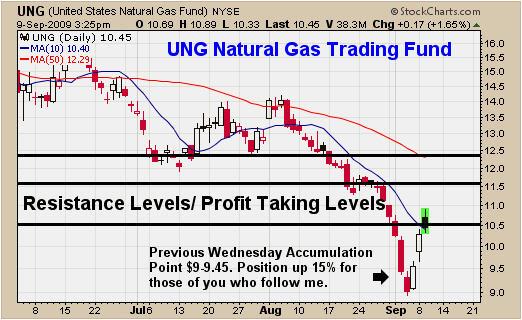
How to Trade Natural Gas – Daily Chart

The daily chart shows a perfect waterfall sell off with the price of natural gas dropping to a long term support level. This pattern combination shows panic selling which indicates a short term bottom is close.

The extreme panic selling and sharp decline in price, removes much of the down side risk. Scaling into a position over a few days, if the price continues to move lower, is important for this strategy to work its magic.

The black horizontal lines show my resistance levels for taking profits. If the price were to drop below $10 then I would exit the second half of the position to lock in the rest of the profit.

How to trade UNG

How to Trade Commodities Conclusion:

Trading commodities is very simple with all the ETFs and funds available. The energy funds like oil and gas have some issues with following the prices of their underlying commodity but I do not find it a problem with my style of trading.

I would really like to know the entire story about what is going on with the oil and nat gas funds which have crazy contango issues. Why do other commodity funds like GLD (gold bullion) and SLV (silver bullion) not have these issues? Why can’t they make a fund which follows oil and gas properly? All I know is that there are a lot of dishonest people in the financial industry taking honest hard working peoples’ money.

Visit The Gold and Oil Guy

===============================================================

(9-11 Postscript): I salute the fallen hero’s of 9-11 – we will not forget you! Our prayers are still with the families of the fallen and the survivors. We will never forget…

===============================================================

I will be starting regular daily posts next week especially since the markets are heating up- Like I said it’s “Jiffy Pop” time! – Have a great weekend-jschulmansr

===============================================================

Nothing in today’s post should be considered as an offer to buy or sell any securities or other investments; it is presented for informational purposes only. As a good investor, consult your Investment Advisor/s, Do Your Due Diligence, Read All Prospectus/s and related information carefully before you make any investing decisions and/or investments. –  jschulmansr

Share this:

  • Click to share on Reddit (Opens in new window) Reddit
  • Click to share on Facebook (Opens in new window) Facebook
  • Click to share on LinkedIn (Opens in new window) LinkedIn
  • More
  • Click to share on X (Opens in new window) X
  • Click to share on Pinterest (Opens in new window) Pinterest
  • Click to share on Tumblr (Opens in new window) Tumblr
  • Click to print (Opens in new window) Print
  • Click to email a link to a friend (Opens in new window) Email
Like Loading...

A Sucker’s 2 day rally – New $725 Stock Tip!

16 Thursday Jul 2009

Posted by jschulmansr in agricultural commodities, alternate energy, Alternate Fuel Sources, alternative Energy, Austrian school, banking crisis banks bear market bull central deflation depression economic trends economy financial futures gold inflation crash Markets precious metals price protection recession safety silver plati, banks, bear market, Bear Trap, bonds, bull market, Comex, commodities, Copper, Crude Oil, Currencies, currency, Currency and Currencies, Dow Industrials, economic, Economic Recovery, economic trends, economy, Federal Deficit, federal reserve, Finance, financial, follow the money, follow the news, Forex, Fundamental Analysis, futures, futures markets, Geothermal Energy, GeoThermal Power, gold, Gold Bullion, Gold Investments, gold miners, Gold Price Manipulation, heating oil, How To Invest, How To Make Money, hyper-inflation, inflation, Investing, investments, Jschulmansr, Latest News, Long Bonds, Make Money Investing, market crash, Markets, mid-tier, mining companies, mining stocks, natural gas, Natural Resources, Nouriel Roubini, oil, PAL, Paladium, palladium, physical gold, platinum, platinum miners, precious metals, rare earth metals, S&P 500, Short Bonds, silver, silver miners, sovereign, spot, spot price, stagflation, Stimulus, stock market, Stocks, Strategic Metals, Strategic Minerals, Strategic Resources, Technical Analysis, The Fed, Tier 1, Tier 2, Tier 3, TIPS, Treasury, U.S. Dollar

≈ Comments Off on A Sucker’s 2 day rally – New $725 Stock Tip!

Tags

ANV, Austrian school, AUY, Bailout News, banking crisis, banks, bear market, Bollinger Bands Saudi Arabia, bonds, Brian Tang, bull market, CDE, CEF, central banks, China, cobalt, Comex, commodities, Copper, crash, Currencies, currency, Currency and Currencies, deflation, Dennis Gartman, depression, DGP, dollar denominated, dollar denominated investments, Doug Casey, economic, economic trends, economy, EGO, Federal Deficit, financial, Forex, FRG, futures, futures markets, gata, GDX, geothermal, GG, GLD, gold, Gold Bullion, Gold Investments, gold miners, Gold Price Manipulation, Green Energy, GTU, hard assets, HL, hyper-inflation, IAU, India, inflation, investments, Jeffrey Nichols, Jim Rogers, John Embry, Jschulmansr, Keith Fitz-Gerald, majors, Marc Faber, market crash, Markets, Michael Zielinski, mid-tier, mining companies, monetization, Moving Averages, NAK, NGC, Nouriel Roubini, NXG, Osisko Mining, PAL, palladium, Peter Grandich, Peter Schiff, physical gold, platinum, platinum miners, power, precious metals, price, price manipulation, prices, producers, production, protection, recession, risk, run on banks, safety, Sean Rakhimov, silver, silver miners, SLW, small caps, sovereign, spot, spot price, stagflation, SWC, Technical Analysis, TIPS, U.S., U.S. Dollar, volatility, warrants, XAU

I really hope you haven’t been fooled by this latest little upswing over the last couple of days in the Stock Markets. Please take your profits now and do it tomorrow! Turn that money over into resource based stocks especially Gold and Silver, Oil and Energy, and your basic foodstuff and base metal commodities. Wed. rally was to get rid of the weak shorts snatch their cash and today fool them to turn their positions and catch them with a whipsaw. Thurs. rally basically caused by Roubini semi positive remarks on the economy. How interesting, I wonder what tomorrow Fri. result will be when the markets hear about Roubini’s rebuttal (of course after market close!).

Follow Me on Twitter and be notified whenever I make a new post!

Auto follow, Auto Thankyou for follow mssgs, Auto tweet, Set And Forget It! Free SignUp! TweetLater.com http://linkbee.com/BDGKC

If you can’t wait scroll to bottom of the post for today’s free $725 value stock tip…

I wanted to take a minute and share with you some excellent links to INO.com Market Club. I am personally a member and I love their charting tools and their patented “Triangle Technology”. This is a “must have” for any serious trader. I’ve arranged for my readers a couple of special videos on the Dow Jones Industrial’s, the Dollar Index, the Aussie Dollar.

Watch them, look around Ino, Market Club, and sign up for the “free” stuff to check them out…

Important Dow Update, July 14th

In today’s short video I am going to be revisiting the Dow Jones Industrial index (DJI).

Dow Update

I think it’s very interesting to see what our “Trade Triangles” are doing as well as what our Talking Charts are saying about this market.

I’ll also be using MarketClub’s Fibonacci tool. If you have not seen this tool in action, I strongly recommend that you watch today’s video.

You can watch this video with my compliments and there is no registration requirements.

Exploring the Dollar Index

While the US dollar was supposed to lose ground against its counter parties, the market has remained surprisingly stubborn and trapped in a sideways trading range.

In today’s video I will explore what’s going on, and where I think this market is headed in the future.

You can watch this video with my compliments and there is no registration requirements.

Dollar Index

What’s up with the currency from down-under?

We are taking a trip down under today.

It has been sometime since we last looked at the relationship between the US dollar and the Australian dollar (USD/AUD). Today seemed like an opportune time to look at this cross and to figure out where it is headed using our “Trade Triangle” technology.

We’re also using MarketClub’s Fibonacci tool. If you have not seen this tool in action, I strongly recommend that you watch today’s video.

Aussie Dollar

All the best,

Adam Hewison
President, INO.com
Co-creator, MarketClub

======================================

Roubini refutes better outlook – MarketWatch

By Kate Gibson

NEW YORK (MarketWatch) — Economist Nouriel Roubini on Thursday refuted reports that he had improved his economic outlook, saying his comments at an investors conference earlier in the day were taken out of context. “I have said on numerous occasions that the recession would last roughly 24 months. Therefore, we are 19 months into that recession. If as I predicted the recession is over by year end, it will have lasted 24 months with a recovery only beginning in 2010,” Roubini said in a statement.

======================================

Roubini: I Was Taken Out of Context – The Street.Com

The following is a statement from Dr. Nouriel Roubini, chairman of RGE Monitor, and professor, New York University, Stern School of Business:

It has been widely reported today that I have stated that the recession will be over “this year” and that I have “improved” my economic outlook. Despite those reports — however — my views expressed today are no different than the views I have expressed previously. If anything, my views were taken out of context.

I have said on numerous occasions that the recession would last roughly 24 months. Therefore, we are 19 months into that recession. If as I predicted the recession is over by year-end, it will have lasted 24 months, with a recovery only beginning in 2010. Simply put, I am not forecasting economic growth before year’s end.

Indeed, last year I argued that this will be a long and deep and protracted U-shaped recession that would last 24 months. Meanwhile, the consensus argued that this would be a short and shallow V-shaped 8 months long recession (like those in 1990-91 and 2001). That debate is over today as we are in the 19th month of a severe recession; so the V is out of the window and we are in a deep U-shaped recession. If that recession were to be over by year-end — as I have consistently predicted — it would have lasted 24 months and thus been three times longer than the previous two and five times deeper — in terms of cumulative GDP contraction — than the previous two. So, there is nothing new in my remarks today about the recession being over at the end of this year.

I have also consistently argued — including in my remarks today — that while the consensus predicts that the U.S. economy will go back close to potential growth by next year, I see instead a shallow, below-par and below-trend recovery where growth will average about 1% in the next couple of years when potential is probably closer to 2.75%.

I have also consistently argued that there is a risk of a double-dip W-shaped recession toward the end of 2010, as a tough policy dilemma will emerge next year: on one side, early exit from monetary and fiscal easing would tip the economy into a new recession, as the recovery is anemic and deflationary pressures are dominant. On the other side, maintaining large budget deficits and continued monetization of such deficits would eventually increase long-term interest rates (because of concerns about medium term fiscal sustainability and because of an increase in expected inflation) and thus would lead to a crowding out of private demand.

While the recession will be over by the end of the year, the recovery will be weak, given the debt overhang in the household sector, the financial system and the corporate sector; and now there is also a massive releveraging of the public sector with unsustainable fiscal deficits and public debt accumulation.

Also, as I fleshed out in detail in recent remarks, the labor market is still very weak: I predict a peak unemployment rate of close to 11% in 2010. Such [a] large unemployment rate will have negative effects on labor income and consumption growth; will postpone the bottoming out of the housing sector; will lead to larger defaults and losses on bank loans (residential and commercial mortgages, credit cards, auto loans, leveraged loans); will increase the size of the budget deficit (even before any additional stimulus is implemented); and will increase protectionist pressures.

So, yes there is light at the end of the tunnel for the U.S. and the global economy; but as I have consistently argued. the recession will continue through the end of the year, and the recovery will be weak and at risk of a double dip, as the challenge of getting right the timing and size of the exit strategy for monetary and fiscal policy easing will be daunting.

RGE Monitor will soon release our updated U.S. and Global Economic Outlook. A preview of the U.S. Outlook is available on our website: www.rgemonitor.com

==================================

Now for the $725 "HOT" Stock Tip. Another leading newsletter is
offering to give the name of this new Gold Find the 7th largest
Gold deposit in North America. Surrounded by some very compelling
and excellent copywriting that I have seen, you are drawn into the 
story about renegade geologist and his team have uncovered one of 
the largest gold reserves in North America – over $10 billion dollars
worth.

All is now in place to begin mining the earth and getting the gold out 
of the ground and the mine into production. Equipment is already bought 
and being delivered. What’s even better is that this is an  opportunity 
that where this small company has so much gold that it’s about become a
mid-size gold producer in record time.

One thing I can tell you is this... The best time to "buy" gold is
before a single ounce comes out of the ground... while the shares
are still very cheap. Currently trading for around $6-$6.50, while
the gold alone is worth roughly $35 per share). 

Drum Roll Please... The name of the company Osisko Mining Corp. (OSKFF).

Enjoy and Good Investing! - jschulmansr

 ===============================================

Claim a gram of FREE GOLD today, plus a special 18-page PDF report; 
Exposed! Five Myths of the Gold Market and find out:
  • ·        Who’s been driving this record bull-run in gold?
  • ·        What Happens When Inflation Kicks In?
  • ·        Why most investors are WRONG about gold…
  • ·        When and How to buy gold — at low cost with no hassle!
Get this in-depth report now, plus a gram of free gold, at BullionVault 
===============================================
Nothing in today's post should be considered as an offer to buy or sell
any securities or other investments; it is presented for informational
purposes only. As a good investor, consult your Investment Advisor/s,
Do Your Due Diligence, Read All Prospectus/s and related information
carefully before you make any investing decisions and/or investments.
–  jschulmansr

Share this:

  • Click to share on Reddit (Opens in new window) Reddit
  • Click to share on Facebook (Opens in new window) Facebook
  • Click to share on LinkedIn (Opens in new window) LinkedIn
  • More
  • Click to share on X (Opens in new window) X
  • Click to share on Pinterest (Opens in new window) Pinterest
  • Click to share on Tumblr (Opens in new window) Tumblr
  • Click to print (Opens in new window) Print
  • Click to email a link to a friend (Opens in new window) Email
Like Loading...

Here We Go Again!

04 Thursday Jun 2009

Posted by jschulmansr in 10 year Treasuries, 20 yr Treasuries, Austrian school, banking crisis, banks, bear market, bonds, bull market, capitalism, central banks, commodities, deflation, depression, dollar denominated, dollar denominated investments, Dow Industrials, economic, economic trends, economy, Fed Fund Rate, Federal Deficit, federal reserve, Finance, financial, follow the money, follow the news, Forex, fraud, Fundamental Analysis, futures, futures markets, gata, GLD, gold, Gold Bullion, Gold Investments, gold miners, Gold Price Manipulation, hard assets, How To Make Money, hyper-inflation, inflation, Investing, investments, Jschulmansr, Make Money Investing, manipulation, market crash, Markets, mid-tier, mining companies, mining stocks, oil, Paladium, palladium, physical gold, platinum, platinum miners, precious metals, price, price manipulation, prices, producers, production, protection, rare earth metals, recession, risk, run on banks, S&P 500, safety, silver, silver miners, Silver Price Manipulation, sovereign, spot, spot price, stagflation, Stimulus, stock market, Stocks, Strategic Metals, Strategic Minerals, Strategic Resources, TARP, Technical Analysis, Ted Bultler, The Fed, Tier 1, Tier 2, Tier 3, TIPS, Today, U.S., U.S. Dollar, volatility

≈ Comments Off on Here We Go Again!

Tags

ANV, Austrian school, AUY, Bailout News, banking crisis, banks, bear market, Bollinger Bands Saudi Arabia, bonds, Brian Tang, bull market, CDE, CEF, central banks, China, cobalt, Comex, commodities, Copper, crash, Currencies, currency, Currency and Currencies, deflation, Dennis Gartman, depression, DGP, dollar denominated, dollar denominated investments, Doug Casey, economic, economic trends, economy, EGO, Federal Deficit, financial, Forex, FRG, futures, futures markets, gata, GDX, GG, GLD, gold, Gold Bullion, Gold Investments, gold miners, Gold Price Manipulation, GTU, hard assets, HL, hyper-inflation, IAU, India, inflation, investments, Jeffrey Nichols, Jim Rogers, John Embry, Keith Fitz-Gerald, majors, Marc Faber, market crash, Markets, Michael Zielinski, mid-tier, mining companies, monetization, Moving Averages, NAK, NGC, NXG, PAL, palladium, Peter Grandich, Peter Schiff, physical gold, platinum, platinum miners, precious metals, price, price manipulation, prices, producers, production, protection, recession, risk, run on banks, safety, Sean Rakhimov, silver, silver miners, SLW, small caps, sovereign, spot, spot price, stagflation, SWC, Technical Analysis, TIPS, U.S., U.S. Dollar, volatility, warrants, XAU

Here We Go Again! (DJI) Key make or break point 8750. The rah rah is working partially and so stocks continue to creep up. However after looking at Gold, Oil, and Treasuries we have to ask what is really about to happen. Here’s my take in one word… Inflation. Now let’s make that word a little bit more truer… Hyper-Inflation! Yes, my readers that is what is about to come up. You may now just be starting to hear the mainstream press talking about inflation fears, but still they have their heads in the sands and are going on ad nauseum about the glimmers of recover and how were are in a new Bull market for stocks. The only real Bull Market for Stocks are in the hard assests sectors i.e. Gold, Silver, Oil, and the like. Oh, don’t get me wrong, I think the (DJI) will make another stab at 9000 if it can successfully break thru the (DJI) 8750, (S&P 500) 975. Failure here means the beginning of the downward spiral all the way down to (DJI) 6500 again. The Dollar is doomed and is already on the way down. Just think what happens to your purchasing power with the Dollar going down and inflation kicking in? Definitely not a pretty picture!

Now for Gold and Silver is there any doubt? To the moon Alice! Do yourself a favor take your profits out now in Stocks and put them into hard assets.  The reason is simple, they tried to manipulate the prices yesterday by taking huge short and driving Gold down to $960 level. Then look what happened today Gold came screaming back. Gold will take out the $1007 barrier! There will be resistance and more huge short positions taken around $990 in a last vain attempt/manipulation to hold Gold back, but it will fail. Remember to preserve the purchasing power of your dollar is to buy Gold and Silver, especially Silver NOW! Get aboard the Precious Metals train now, it is leaving the station… Good Investing! – jschulmansr

ps- I promised a HOT Stock go to last section of today’s post.

Follow Me on Twitter and be notified whenever I make a new post!

Send Tweets when you are away and cant get on Twitter. Set up automatic Thank You For following…Message and More! Free Sign up! TweetLater.com

===================================================

Claim a gram of FREE GOLD today, plus a special 18-page PDF report;

Exposed! Five Myths of the Gold Market and find out: 

  • ·        Who’s been driving this record bull-run in gold?
  • ·        What Happens When Inflation Kicks In?
  • ·        Why most investors are WRONG about gold…
  • ·        When and How to buy gold — at low cost with no hassle!

Get this in-depth report now, plus a gram of free gold, at BullionVault

====================================================

Today only One Article – I know you just can’t wait for the Hot Tip, so if in a hurry scroll down to bottom/end of post. But then COME back and read this article and click on the links within the article to learn what is really going on with Precious Metals price manipulation. -jschulmansr

Will a ‘Silver Bullet’ Finally Kill the Metal Manipulators?- Seeking Alpha 

By: Jeff Nielson of Bullion Bulls Canada

In my previous commentary, “Silver market fundamentals DISTORTED by bullion-ETFs”, I pointed out how (so-called) “bullion-ETFs” were (with rare exceptions) merely a tool of the manipulators – with two primary purposes.

First of all, bullion-ETFs soak-up billions of investor-dollars each year, which would otherwise be invested in real bullion, or in the shares of precious metals miners. Naturally, this has helped to depress the price of silver, and severely depress the price of silver miners – since almost all of the diverted investor-dollars were diverted from the miners, and not bullion, itself. I also showed how these fraudulent investment vehicles have been used to artificially inflate the supposed inventory-levels of silver stockpiles.

Specifically, at a time when actual silver inventories are at their lowest level in centuries, the (supposed) amount of “bullion” these funds claim to hold has singlehandedly resulted in “official” inventory levels tripling in just three years – after plunging by 90%.

Today’s market price is based upon these phony “inventories” despite the fact that the bullion-banks who claim to hold all this silver are never subjected to audits, to determine that they are not only holding enough silver to cover their custodial agreements with the “bullion-ETFs” – but are also holding sufficient silver to cover the MUCH larger “short” positions of these Manipulators (see “Silver Manipulation the worst in history – Ted Butler”).

Unless and until there is such a full and complete audit, the only rational assumption for investors is this supposed “tripling”of inventories is totally illusory, which also means that the “bullion” that is claimed to be held by these bullion-ETFs is also illusory.

As I have also mentioned before, it is elementary economics than any “good” which is undervalued will be over-consumed (relative to its current price). Thus, we have TWO extremely important dynamics which are setting up this sector for a final “implosion” of the criminal conspiracy by the anti-precious metals cabal.

First, price-suppression means the (actual) tiny inventories of silver are still declining not increasing. It is simply absurd to claim that with record, investment demand and declining mine production (due to the dramatic cuts in base metals production) that inventories are increasing. The under-pricing of silver simply confirms this trend.

Secondly, with real inventories only 1/3rd of what is claimed by the Manipulators, continuing to under-price silver (through continued manipulation) must result in a supply “squeeze” which inevitably causes the price to “spike” (and begin to correct toward some sort of medium-term equilibrium). Given that there has been no similar depletion of gold stockpiles (merely the transfer of ownership), it is far more likely that the final defeat of the anti-gold cabal will be accomplished via a default in silver markets.

The BIG question in the minds of all precious metals “bulls” is when and how will this final victory occur?

Many commentators have pointed to the rigged Comex markets in New York as the place where the final destruction of the Manipulators will occur. However, with the short positions of the bullion-banks, and their (supposed) “custodial agreements” with the bullion-ETFs being “two sides of the same coin”, then implosion could originate in either component of this fraudulent manipulation.

A bullion-default at the Comex (or “Crimex”, as some like to call it) is a very simple scenario. The Comex is essentially selling its phony, “paper” futures for less than any other bullion market. Thus, at some point, large buyers will simply step into this market and continue relentless, heavy buying until default occurs.

Specifically, there would be a “failure to deliver” of bullion to a buyer (or buyers) – who chose to hold their futures contract until expiry, and thus take “physical” delivery of real bullion. As has been reported by several commentators, apparently such a default nearly occurred just weeks ago (see “Did ECB save Deutsche Bank from Comex gold-default?”).

There has been a great deal of frustration among the “gold bugs” (in particular) that such a final “show-down” has not already taken place. However, perhaps we would all be more patient in this respect if we were to try to put ourselves in the position of such big “players”.

Looking at silver, based on fundamentals, it is totally obvious that silver is headed for a spectacular explosion in its price. At a time of record demand for gold and silver, there are lower inventories of silver (relative to gold and in absolute terms) than at any time in centuries. Simultaneously, the gold/silver price ratio is more unfavorable for silver than at nearly any time in history, currently over 60:1. The long-term price ratio (over thousands of years) is 15:1. Additionally, as “elements” in the Earth’s crust, silver is only 17 times as plentiful as gold. Thus, a 60:1 ratio is not remotely sustainable, even over the medium term.

Therefore, armed with the knowledge that investing in silver will yield a huge windfall for all long-term investors, do you (as a large “player” in the silver market) force the inevitable implosion now (and “kill” the proverbial “goose that lays the silver eggs”) – or, do you patiently use the Manipulators game against them: buying as much grossly undervalued silver as you can from these criminals, before their inevitable self-destruction?

From this perspective, it is suddenly much less automatic that the demise of the Manipulators will occur at the Crimex.

I would remind people about an event which went practically unreported last year in North America: at the time of AIG‘s near-bankruptcy, the European bullion-ETFs “guaranteed” by AIG briefly plunged in value – to a price MUCH lower than the nominal price of the bullion they (supposedly) held. The reason? Investors were “betting” in a clearly visible manner that if AIG was forced into bankruptcy it would not be able to honour its “custodian agreements” with these bullion-ETFs – leaving the investors in these funds holding paper and not bullion.

Thus, the outrageously expensive bail-out of AIG (over $180 BILLION, and counting) was not undertaken solely in order to secretly funnel roughly $10 billion into the vaults of Goldman Sachs. It was also bailed-out to prevent a domino-like chain of events. All it will take is for one “bullion-ETF” to default, and then the entire scheme/scam of the Manipulators would inevitably collapse.

The sequence of events is obvious: after seeing one group of bullion-ETF investors wiped-out (or nearly so) by fraud, then obviously the unit-holders for all (so-called) bullion-ETFs would demand thorough and honest audits of the bullion-banks who are essentially running these scams.

Even if the bullion-banks could scrounge-up enough bullion to cover their “custodial agreements”, there would be little if anything left over to “cover” their much larger “short” positions. With “blood in the water”, futures-buyers would obviously immediately start lining up for “delivery” at the Crimex – hoping to be the last buyer to grab some real bullion before the Manipulators were completely wiped out.

Thus, there appear to be three very plausible scenarios leading to the destruction of the Manipulators, and the explosion of the price of gold and silver.

  1. The frequently-predicted default at the Comex;
  2. The bankruptcy of one (or more) of the bullion-banks; or
  3. A default of one or more bullion-ETFs through a thorough audit being performed.

Given what the U.S. government has already shown it was willing to spend to “defend” AIG’s custodial agreements with bullion-ETFs, the second scenario would appear to have the least probability of occurring. However, there is still somewhere close to a quadrillion dollars of derivatives floating around in Wall Street’s private “casino”. Any surprise-implosion of a position in this market could create such unimaginable losses (hundreds of times higher than those of AIG) that a bail-out would simply be impossible to ram-through the corrupt, U.S. government – without literally setting off a second “American Revolution”.

Personally, I see the default of the bullion-ETFs to be slightly more likely than any other scenario for destroying the Manipulators. As with any scam, the larger it grows, the greater the likelihood of exposure. When bullion-ETFs were first created, their claim that they could buy infinite amounts of bullion, with zero “premiums” and store all this bullion for zero storage costs attracted little attention.

With the holdings of these bullion-ETFs rapidly approaching the total annual production of precious metals miners, and already being larger than the national stockpiles of almost every nation on Earth, this obviously-suspect “business model” will attract increasing doubt and skepticism among informed investors – until even blind/deaf/dumb “regulators” are forced to conduct a reputable audit of this sector.

For those hoping to read precisely when and where the Manipulators will meet their final defeat, I suppose you will be disappointed. Sorry, but I’m an “economist” – not a “psychic”. However, hopefully readers will derive some use out of this commentary.

First, because of depleted inventories, it is much more likely that it will be a silver default which “kills” the Manipulators, instead of a gold default. Secondly, as precious metals investors wait for this inevitable occurrence, you are reminded that there are three potential developments to watch for – and not just a “failure to deliver” at the Comex.

In the meantime, any/every investor who continues to add to his (or her) precious metals positions (preferably during short-term dips) is guaranteed to be richly rewarded. Given the extremely uncertain times in which we live, the reward of financial security is “precious”, indeed.

Disclosure: I hold no position in bullion-ETFs.

===================================================

One last note- I didn’t forget my promise, here is another HOT stock to buy and forget (hold). (WTMNF) a junior explorer West Timmins Mining. Currently trading in the .70 to .80 cent level.  I have mentioned before load up on the junior and mid-tier Precious Metals Producers, but to throw in some good exploration companies. West Timmins fits in the latercategory. They have the financing in place and are currently drilling. Here is a copy of one of their press releases from May 12th, 2009. I think it speaks for itself. -Good Investing! -jschulmansr 

WTM Intersects 13.64 g/t (0.40 oz/t) over 8.20 metres (26.90 feet) on North Zone Target, 100% owned Thorne Property, Timmins, Ontario

Bonanza grades confirmed including  41.30 g/t (1.20 oz/t) gold over 2.40 metres (7.87 feet) 

West Timmins Project drill program to be expanded

(Vancouver, May 12, 2009) – West Timmins Mining Inc. (WTM:TSX) (“WTM” or the “Company”) today announced that bonanza grade gold mineralization has been intersected from the North Zone on its 100% owned Thorne Property, part of the Company’s West Timmins Gold Project, in Timmins, Ontario. All three holes testing the North Zone returned high-grade gold mineralization, highlighted by hole GS09-31 which returned 8.20 metres (26.90 feet) grading 13.64 g/t (0.40 oz/ton) gold, including 2.40 metres (7.87 feet) grading 41.30 g/t (1.20 oz/t) gold.
 
“The North Zone adds another zone of high grade gold mineralization over significant widths on our 100% owned property package in Timmins. These results continue to confirm the presence of multiple high grade gold zones located in close proximity to each other in the West Timmins District. This clustering of high-grade gold zones is perhaps the single most significant characteristic of the Timmins Camp. History does appear to be repeating itself in the west end of the Camp” said Darin Wagner, President and CEO of West Timmins Mining. “WTM will immediately expand the scale and scope of our drill program on our 100% owned properties in Timmins and welcomes the recently announced expansion of the drill program on the adjacent Thunder Creek Joint Venture.”
 
WTM now has six expanding zones of high-grade gold mineralization located within 3 kilometres of each other in the West Timmins District: the Rusk and Porphyry Gold Zones on the Thunder Creek Joint Venture, the High-grade and Central sub-zones within the Golden River West Zone, the Hwy 144 Zone where high-grade intercepts have recently been reported and now confirmation of continuity and bonanza grades from the North Zone.

The North Zone is located along the northern flank of the Golden River Trend on WTM’s 100% owned Thorne Property. Historic work in the North Zone area has been re-interpreted based in large part on the recent discoveries of high-grade gold mineralization on the Company’s adjacent Thunder Creek Property and within the Golden River West Zone. This work has lead to the identification of a steeply plunging zone of high-grade gold mineralization. The North Zone mineralization is characterized by silica veining and flooding associated with significant visible gold mineralization and is very similar to many of the vein-style gold deposits in the Timmins Camp. Drilling has also intersected additional gold bearing structures beneath the North Zone, the NL1 and NL2 structures, which remain open for additional testing – again characteristic of gold systems in the Camp.

On-going exploration activities are focussing on the area between the Timmins West (now Timmins) gold deposit and the Destor-Porcupine Fault, located 5.0 kilometres to the south, where multiple gold-bearing systems have been confirmed within WTM’s extensive West Timmins Project land holdings. The Destor-Porcupine Fault is a deep-seat fault system which can be traced throughout the entire Timmins Camp.

Quality Control and Assurance

Geochemical results reported are from halved drill core samples collected from WTM’s 100% owned Thorne Property, part of the Company’s West Timmins Gold Project. Core samples were collected by employees and consultants in the employ of the Company and are subject to the Company’s quality control program. Sampling was conducted on site at the Company’s exploration office in Timmins, Ontario and sealed samples were transported to Swastika Labs preparation facilities in Swastika, Ontario. Samples were assayed for gold by standard fire assay- ICP finish with a 30 gram charge. Gold values in excess of 3.0 g/t were re-analyzed by fire assay with gravimetric finish and intercepts returning in excess of 8.0 g/t, or displaying visible gold mineralization, were re-analyzed by pulp screen metallic assaying for greater accuracy. The remaining half of the drill core is stored on-site at the Company’s Timmins exploration office. 

For quality control purposes blank, duplicate and analytical control standards were inserted into the sample sequence at irregular intervals. Mr. Darin Wagner (M.Sc., P.Geo), the Company’s President, has acted as non-independent qualified person for this news release. The qualified person has visited the project site, examined the intervals reported and, has verified that any significant analytical discrepancies have been resolved and that the reported results meet the Company’s quality control standards.

About West Timmins Mining Inc. (www.westtimminsmining.com):
 
WTM is focussed on the exploration and development of district-scale gold projects in the major gold camps of North America. The Company is advancing the high-grade Rusk and Porphyry Gold discoveries on its Thunder Creek joint venture in Timmins, Ontario and continues to test the nearby 5.0 kilometre long Golden River Trend. WTM also has active gold exploration projects in Mexico, highlighted by the high-grade Lluvia de Oro gold-silver Project in Chihuahua State. West Timmins Mining is based in Vancouver, British Columbia, Canada and trades on the Toronto Stock Exchange under the symbol WTM.
 
On behalf of the Board of
West Timmins Mining Inc.
 
“Darin W. Wagner”
 
Darin W. Wagner
President and Chief Executive Officer
For further information contact:
John Toporowski, Manager, Investor Relations
West Timmins Mining Inc., Vancouver
Tel: (604) 685-8311 / Toll Free: (866) 685-8311
E-mail: jtoporowski@westtimminsmining.com
 
The TSX has not reviewed and does not accept responsibility for the accuracy or adequacy of this news release, which has been prepared by management.
 
For further details on West Timmins Mining Inc. please refer to prior disclosure at www.sedar.com. The securities described in this press release have not been and will not be registered under the United States Securities Act of 1933, as amended, or under any U.S. state securities laws, and such securities may not be offered or sold in the United States absent an exemption from such registration requirements.
 
This press release contains forward looking statements within the meaning of applicable Canadian and U.S. securities regulation, including statements regarding the future activities of the Company. Forward looking statements reflect the current beliefs and expectations of management and are identified by the use of words including “will”, “expected to”, “plans”, “planned” and other similar words. Actual results may differ significantly. The achievement of the results expressed in forward looking statements is subject to a number of risks, including those described in the Company’s annual information form as filed with the Canadian securities regulators which are available at www.sedar.com. Investors are cautioned not to place undue reliance upon forward looking statements.  
>READ PDF – Complete With Maps and the Entire Press release

===================================================

Claim a gram of FREE GOLD today, plus a special 18-page PDF report;

Exposed! Five Myths of the Gold Market and find out:

  • ·        Who’s been driving this record bull-run in gold?
  • ·        What Happens When Inflation Kicks In?
  • ·        Why most investors are WRONG about gold…
  • ·        When and How to buy gold — at low cost with no hassle!

Get this in-depth report now, plus a gram of free gold, at BullionVault

====================================================

Nothing in today’s post should be considered as an offer to buy or sell any securities or other investments; it is presented for informational purposes only. As a good investor, consult your Investment Advisor/s, Do Your Due Diligence, Read All Prospectus/s and related information carefully before you make any investing decisions and/or investments. –  jschulmansr

Share this:

  • Click to share on Reddit (Opens in new window) Reddit
  • Click to share on Facebook (Opens in new window) Facebook
  • Click to share on LinkedIn (Opens in new window) LinkedIn
  • More
  • Click to share on X (Opens in new window) X
  • Click to share on Pinterest (Opens in new window) Pinterest
  • Click to share on Tumblr (Opens in new window) Tumblr
  • Click to print (Opens in new window) Print
  • Click to email a link to a friend (Opens in new window) Email
Like Loading...

Flirting With Disaster!

28 Thursday May 2009

Posted by jschulmansr in 10 year Treasuries, 20 yr Treasuries, ANV, Austrian school, AUY, Bailout News, banking crisis, banking crisis banks bear market bull central deflation depression economic trends economy financial futures gold inflation crash Markets precious metals price protection recession safety silver plati, banks, bear market, Bollinger Bands Saudi Arabia, bonds, Brian Tang, bull market, CDE, CEF, central banks, China, cobalt, Comex, commodities, Copper, crash, Currencies, currency, Currency and Currencies, deflation, Dennis Gartman, depression, DGP, dollar denominated, dollar denominated investments, Doug Casey, Dow Industrials, economic, Economic Recovery, economic trends, economy, EGO, Fed Fund Rate, Federal Deficit, federal reserve, Finance, financial, follow the money, follow the news, Forex, FRG, Fundamental Analysis, futures, futures markets, G-20, gata, GDX, GG, GLD, gold, Gold Bullion, Gold Investments, gold miners, Gold Price Manipulation, GTU, hard assets, HL, How To Invest, How To Make Money, hyper-inflation, IAU, IMF, India, inflation, Investing, investments, Iran, Jeffrey Nichols, Jim Rogers, Jim Sinclair, John Embry, Jschulmansr, Junior Gold Miners, Keith Fitz-Gerald, Latest News, majors, Make Money Investing, Marc Faber, market crash, Markets, Michael Zielinski, mid-tier, mining companies, mining stocks, monetization, Moving Averages, NAK, NASDQ, natural gas, NGC, Nuclear Energy, Nuclear Weapons, NXG, oil, PAL, palladium, Peter Grandich, Peter Schiff, physical gold, platinum, platinum miners, precious, precious metals, price, price manipulation, prices, producers, production, protection, rare earth metals, recession, risk, run on banks, S&P 500, safety, Sean Rakhimov, silver, silver miners, SLW, small caps, sovereign, spot, spot price, stagflation, Stimulus, stock market, Stocks, SWC, Technical Analysis, The Fed, Tier 1, Tier 2, Tier 3, TIPS, U.S., U.S. Dollar, uranium, Uranium Miners, volatility, warrants, XAU

≈ Comments Off on Flirting With Disaster!

Tags

ANV, Austrian school, AUY, Bailout News, banking crisis, banks, bear market, Bollinger Bands Saudi Arabia, bonds, Brian Tang, bull market, CDE, CEF, central banks, China, cobalt, Comex, commodities, Copper, crash, Currencies, currency, Currency and Currencies, deflation, Dennis Gartman, depression, DGP, dollar denominated, dollar denominated investments, Doug Casey, economic, economic trends, economy, EGO, Federal Deficit, financial, Forex, FRG, futures, futures markets, gata, GDX, GG, GLD, gold, Gold Bullion, Gold Investments, gold miners, Gold Price Manipulation, GTU, hard assets, HL, hyper-inflation, IAU, India, inflation, investments, Jeffrey Nichols, Jim Rogers, John Embry, Keith Fitz-Gerald, majors, Marc Faber, market crash, Markets, Michael Zielinski, mid-tier, mining companies, monetization, Moving Averages, NAK, NGC, NXG, PAL, palladium, Peter Grandich, Peter Schiff, physical gold, platinum, platinum miners, precious metals, price, price manipulation, prices, producers, production, protection, recession, risk, run on banks, safety, Sean Rakhimov, silver, silver miners, SLW, small caps, sovereign, spot, spot price, stagflation, SWC, Technical Analysis, TIPS, U.S., U.S. Dollar, volatility, warrants, XAU

     Key Test Today! Stocks are Flirting with disaster, 8268 (DJIA) is the neckline of a head and shoulders. If (DJIA) closes beneath that, then we are definitely starting the next leg back down. Nothing to hold the freefall except some support at 8000 (DJIA) and then secondary confirmation of a new down move if breaks the next support at (DJIA) 7840, 7800, and then 7550. Take your profits now before you ride the DJIA right back down again.

     Gold and Silver however are poised to take off! If Gold successfully closes above $980 then next stop – new ALL time highs. As I mentioned yesterday hre is what I see for Gold. I predict that Gold will break $978- $980 and push up to approximately $1075 to $1090 on the first leg. We will see a normal retracement down to $950- $975 and then blast off to $1150 -$1250. I personally think with the hyper-inflation shoe about to drop, coupled with the remaining half of the derivative crunch. We can easily see $2250 to $2500 Gold by the end of the year. Keep accumulating Gold and Precious metals especially the junior and mid-tier producers. There are still companies out there selling at or below book value.

     In case you missed it yesterday here is the stock tip that I was offered along with an advisory service costing $297 year. This is the stock in their “special report”. just came across a sweet little play in the cobalt industry, supplies are dwindling fast and there will be a shortage just at the time this company comes on line with production. This company will have the only high grade cobalt production in the United States and will be able to supply approximately 12-14% of Cobalt needs for the USA. If you check out what Cobalt is used for you will understand why this stock has the potential to be a Grand Slam. Production is anticipated to be approximately 1525 tons per year with a 10yr life based on current reserves. I just received an offer to buy this tip along with an advisory service for $297 yr. I’ll give it to you for free. That’s just the kind of guy I am, LOL! The name of the company is Formation Capital Corp. Trading symbol (FCACF). I just picked up a bunch @ .35 cents/share, but as always do your due diligence, read the prospectus and company reports. If nothing else put (FCACF) on your watch list / radar. – Good Investing! -jschulmansr

Follow Me on Twitter and be notified whenever I make a new post!

Schedule automatic tweets, Thankyou for following me messages and much more! Be More Productive- Free signup… TweetLater.com

==============================================

Subject: Two trending markets revisited and analyzed for you 

Here is a video analysis of the S&P and Gold markets. The technical analysis was right on at the time, but those markets have changed quite a bit in the last few days. The S&P had a huge rally and Gold is climbing at a  steady rate, so what’s the new analysis? Glad you asked!

Below are two free videos, one on Gold and one on the S&P, that gives us an in depth technical look into these markets. Again the videos are free and very informative. Just Click on the Links Below…

          S&P Video Analysis:                                                    Gold Projections:

Also- Here’s your chance to analyze that stock you have been thinking about adding to your portfolio. Just enter the ticker of any company, name of a commodity, or forex pair and get your complimentary technical analysis. It cost you nothing and no payment info will ever be requested.

Click Here To Enter Your Symbol/s

===================================================

Claim a gram of FREE GOLD today, plus a special 18-page PDF report;

Exposed! Five Myths of the Gold Market and find out: 

  • ·        Who’s been driving this record bull-run in gold?
  • ·        What Happens When Inflation Kicks In?
  • ·        Why most investors are WRONG about gold…
  • ·        When and How to buy gold — at low cost with no hassle!

Get this in-depth report now, plus a gram of free gold, at BullionVault  

====================================================

 Now For some reports…

Jim Sinclair: 9 Immediate Predictions For Gold – Seeking Alpha

By: Peter Cooper of Arabian Money.net

Jim Sinclair is the doyen of gold experts. It is interesting to see a very clear timeframe for the gold price posted on his website yesterday:

  1. Gold reacts as currency support for the dollar enters mid June to a slow decline (that is the official definition of a strong dollar policy, really).
  2. End of 2nd week going into the beginning of the 3rd week of June Gold launches towards and this time through the neckline of the reverse head and shoulders formation.
  3. Gold rises to $1224 where it hesitates.
  4. The OTC derivative market takes on the dollar as short sellers into dollar support.
  5. This OTC derivative currency short position builds.
  6. t is the US dollar where Armstrong will get his WATERFALL.
  7. The main selling takes place when Israel makes a major miscalculation.
  8. Hyperinflation is always and will continue to be a currency event.
  9. Hyperinflation will be a product of the upcoming massive OTC derivative short dollar raid.

“Should I be correct in the gold price action going into late June, it will fit Armstrong’s criterion for a move to $5,000”, adds Mr. Sinclair whose predictions are not always right, and who got similarly carried away last summer.

But there is the old mantra in forecasting that if you repeat something often enough then it will be bound to happen in the end.

And to be fair to Mr. Sinclair, the gold positive scenario stacking up right now does look unstoppable.

===================================================

My Note: Sounds pretty darn close to my own predictions- Amazing! 

-jschulmansr

===================================================

Gold Battle Lines Drawn at $1000 – Again —Seeking Alpha

By: James West of Midas Letter

Here we go again. The forces of legitimate money versus the incumbent purveyors of the candy floss economy squared off at the $1,000 an ounce line over which yet another battle will be fought. Arrayed against either side are formidable new elements and tried and true old ones. As usual, the first volley has been catapulted over the walls of the hucksters by the defenders of the essential timeless truth of gold’s naturally stored value against the counterfeit paper currencies.

The liabilities of the enemy have increased, and the short positions in the COMEX market are sufficiently stacked that the big bank defenders simply cannot allow gold to win decisively. G7 governments are allied against gold to a man, while emerging economic behemoths China and Russia stand in opposition.

In particular, China’s revelations that it has been in a continuous accumulation mode for the last several years and is now the fifth largest sovereign reserve of gold has created an impetus in the gold camp that has been seen lacking in the past. Institutional and sovereign investment entities now perceive a floor in the gold price based on this information, and one must beg the question as to why China would make such a revelation when it threatens to undermine the value of its $2 trillion in U.S. debt holdings.

China has also been careful to avoid buying gold on the international market, for fear, it says, of creating a stampede into the precious metals that would immediately increase the cost of its stated intention to continue accumulating gold towards the backing of the yuan (renmibi) as a global reserve currency.

Yet that is precisely what has happened. Ostensibly, the justification for tipping their hand exists in the fact that they’ve resigned themselves to the fact that selling poison toys and pet foods to Americans in exchange for a currency that loses value like light into a black hole is an acceptable if imperfect transaction. With $50 billion a year in interest payments from the U.S., they can hedge the risk buy using it to buy gold.

With the perceived floor arguably at $850, downside risk is limited in gold far more so than in U.S. treasuries, which, if mainstream media is to be taken as remotely credible, is the current favorite of safe haven investors.

‘Safe Haven’ is about to get painted with same fragrant brush as ‘AAA-rated’ investments.

Goldbugs are salivating at the prospect of vindication, but seasoned veterans of the war know that the governments and central banks arrayed against gold are not fair fighters. Since the largest players in the futures market occupy both sides of the contract, and never take delivery of the physical gold, they can orchestrate a perpetual negative sentiment towards gold by driving the future price downward by simply amping up the short positions, thus making gold appear poised for a sell-off. This has been standard operating procedure for the last decade, and it is interesting to note that ever-bigger short positions are having less influence over shorter durations before the bulls shrug off the flimsy performance and take gold higher.

Critics and observers of this U.S. Dollar image management program point to the fact that such activity, while shoring up demand for U.S. Dollar debt in the short term, effectively undermines the entire global economy, and is among the fundamental causes of financial crises such as the housing collapse and the whole current global financial fiasco.

Proponents of this manipulation, who are increasingly legion in number, correctly predict an inevitable bursting of the damn catalyzed by investment demand overwhelming the short positions, forcing them to buy and cover to limit losses, which will, in itself, stimulate the gold price even further.

With the limited oversight and feeble reporting standards of the CFTC, the ploy is facilitated by complicit (or ignorant) regulators who ensure data is obfuscated and disclosure limited. It has been this collective effort on the part of the Dollar Defenders that continuously defeats gold’s advances, repeatedly castrating the bulls and sending them whimpering to lick their wounds and regroup.

But China is now leading the charge, and the bet is that they’re willing to forgo the lost value of their USD holdings to decisively undermine the global reserve currency once and for all and replace it with the Yuan, a move that would effectively mark the beginning in the shift of the global balance of power from west to east.

The United States, overextended militarily across the Middle East and Asia, with new fronts threatening to open in Iran and Pakistan, is perilously close to an international nervous breakdown. China’s opportunity is to ride to the rescue bearing smiles and steamed pork buns while dividing up what is left of the American industrial asset pool.

Our leadership of the last decade (or more accurately, absence thereof), eager to lubricate the workings of multinational financial interests, have inadvertently played into the patient hands of their biggest creditor by prostituting the national currency shamelessly to the point where every nation in the world can see what used up piece of spent jet trash the old USD has become.

While mainstream media dismisses the idea of the Yuan replacing the dollar as the international monetary standard, those of us who have tuned out at the perception management program on CNN recognize the event as halfway accomplished.

The truly explosive moment for gold will occur when the Chinese, at their discretion, decide to spring the trap, and abandon USD completely in favor of gold, suddenly spiking the price of gold straight north in tandem with the complete collapse of the U.S. dollar.

Don’t pay any attention to the second rate hacks trying to claim credit for predicting the fall…it’s been predicted repeatedly throughout history from Nostradamus to Roubini. Any student of economic history with 20/20 vision could see this coming, and here it is. “I told you so” is a waste of time. Who’s offering a solution?

Whether or not this particular battle at the Great Wall of $1,000 an ounce is the mother of all battles remains to be seen. Desperate times call for desperate measures, and while G7 governments collude to retain power, the unforeseeable is the greatest threat to gold.

That being said, veteran observers are optimistic, to say the least.

According to Bill Murphy, intrepid soldier of gold wars and standard bearer for the Gold Anti-trust Action Committee,


The Gold Cartel is giving it all they have no, as evidenced by the sharply rising gold open interest on the Comex … up some 23,000 contracts on Wednesday and Thursday. They are doing all they can to counter new spec buying.

My hunch is the next time we see $1,000, and that could be very soon, gold ought to take off from there, giving us more upside dynamic daily moves. The reasons to own physical gold are off the charts … HUGE investment demand, shrinking visible central bank supply (unrelated to the cabal), shrinking mine supply, shrinking dollar, concerns over sovereign wealth debt, a horrible US economy, and a US printing press that is going flat out and will have to for some time to come.

In my opinion, all gold has to do is to stay over $1,000 for a few days, and then all kinds of bells and whistles go off.


Bill is not the only one who thinks the breakthrough is at hand. Bob Moriarty of 321gold.com, himself a historically prescient oracle of market crashes agrees and warns that the stock market will be the first casualty of the new financial reality.


If you take a look at the dollar and the long bond, it looks as if they jumped off a cliff. This isn’t gold going up, it’s the dollar and bonds going down. When the market wakes up the stock market is going to take a giant dump. No more fake rally.


Investors by now should be well equipped to read the writing on the wall. Whether gold breaks through $1,000 and holds there, charts new territory at much higher levels, or is beaten back down through the offices of JP Morgan (JPM), HSBC (HBC) and Goldman Sachs (GS), is irrelevant.

Gold producer stocks are up, on average, over 22% this year in the Midas Model Portfolios, while intermediate producers and close-to-production juniors have piled on gains ranging from 20 to 200%, all since January this year.

You won’t hear anybody pointing that fact out on television, and you won’t hear that from your broker, in most cases. But the lesson is clear. Gold bullion is the place to be for wealth preservation, and gold producers and explorers is where risk capital is going to see utterly stupendous gains this year.

If you buy the hype of Wall Street and Washington and wade into the general equities markets, you have nobody to blame but yourself for the heavy losses you will surely sustain.

===================================================

Claim a gram of FREE GOLD today, plus a special 18-page PDF report;

Exposed! Five Myths of the Gold Market and find out:

  • ·        Who’s been driving this record bull-run in gold?
  • ·        What Happens When Inflation Kicks In?
  • ·        Why most investors are WRONG about gold…
  • ·        When and How to buy gold — at low cost with no hassle!

Get this in-depth report now, plus a gram of free gold, at BullionVault

====================================================

 Gold vs Silver: There Is No Debate — Seeking Alpha

By: Market Sniper of We Just Trade

It is mildly amusing that when the precious metals markets are in confirmed uptrends, the perennial debate of whether it is best to own gold or silver always comes to the fore.

Both gold and silver, historically, have been money (merely utility in exchange). Gold in nature is approximately 15 times as scarce as silver. All the gold mined since the dawn of man, if molded into a cube, is said to fit inside a baseball diamond. Silver would nearly fill the stadium. China, now the world’s largest gold producer, had a silver standard as gold was more plentiful in China than silver, a bias that the west took full advantage of up through the 1870s. Silver imports by the Spanish Empire from their New World holdings were so large that it collapsed the European silver market. England, then on a bi-metalic standard, quickly switched to a pure gold standard. The Spanish Empire never recovered from the experience.

In the United States, the debate raged incessantly as to how the ratio would be “fixed” after the discovery of the Comstock Lode with western mining interests’ best known champion, Senator William Jennings Bryan, being the foremost proponent of a lower ratio. Seems it is an old debate. The good news is, you can own both. If/when the world returns to honest, stable money, you will need both: gold for the larger acquisitions and silver to make change.

While we await such an event, ratio trade the two metals to increase your holdings of precious metals.The ratio fluctuates wildly over time. In the 1970s and 1980s I used 28:1 and 40:1 as points that I would switch. At 40:1, I would be in silver. When the ratio dropped down to 28:1, I would exchange silver holdings for gold. Each time I switched, my stack of precious metals would increase in size even after dealing with the spread.

Find a precious metals dealer who will work with you on that. You maybe able to locate one that will only charge the spread on one of the metals and not both when you switch. Since then, the ratio has moved up. At one point it was even at 100:1. I now use 45:1 and 70:1 as switch points. See your tax accountant as to the benefits of such a program. Think 1031 Tax Deferred Exchange.

For those who do not want to break the rear axle of your automobile moving your silver when it comes time to switch, think about using ETFs that only reflect the price of the two metals. There are a variety of ways to accomplish this, from being in just one or the other to being long one and short the other. IF your objective is to accumulate the actual physical metals, do not use ETFs as a substitute for physical ownership. Rather, take profits from your switching trades and purchase the actual metals themselves. Gold vs. silver? No debate. Accumulate both.

Disclosure: long physical silver and gold

===================================================

A new site that is in pre-launch state that will become a virtual world – chat, shop, play, videos, etc. Anyways they are giving free shares (that should become actual company shares) to anyone who signs up and more shares if you refer people.

 ==================================================

Nothing in today’s post should be considered as an offer to buy or sell any securities or other investments; it is presented for informational purposes only. As a good investor, consult your Investment Advisor/s, Do Your Due Diligence, Read All Prospectus/s and related information carefully before you make any investing decisions and/or investments.

Good Investing!–  jschulmansr

Share this:

  • Click to share on Reddit (Opens in new window) Reddit
  • Click to share on Facebook (Opens in new window) Facebook
  • Click to share on LinkedIn (Opens in new window) LinkedIn
  • More
  • Click to share on X (Opens in new window) X
  • Click to share on Pinterest (Opens in new window) Pinterest
  • Click to share on Tumblr (Opens in new window) Tumblr
  • Click to print (Opens in new window) Print
  • Click to email a link to a friend (Opens in new window) Email
Like Loading...

I’m Back- Time to Play!

27 Wednesday May 2009

Posted by jschulmansr in 10 year Treasuries, 20 yr Treasuries, agricultural commodities, alternate energy, ANV, Austrian school, AUY, Bailout News, banking crisis, banks, bear market, Bear Trap, Bollinger Bands Saudi Arabia, bonds, Brian Tang, bull market, CDE, CEF, central banks, China, cobalt, Comex, commodities, Contrarian, Copper, crash, Currencies, currency, Currency and Currencies, deflation, Dennis Gartman, depression, DGP, dollar denominated, dollar denominated investments, Doug Casey, Dow Industrials, economic, Economic Recovery, economic trends, economy, EGO, Fed Fund Rate, Federal Deficit, federal reserve, Finance, financial, follow the money, follow the news, Forex, FRG, Fundamental Analysis, futures, futures markets, gata, GDX, GG, GLD, gold, Gold Bullion, Gold Investments, gold miners, Gold Price Manipulation, GTU, hard assets, HL, How To Invest, How To Make Money, hyper-inflation, IAU, IMF, India, inflation, Investing, investments, Jeffrey Nichols, Jim Rogers, Jim Sinclair, John Embry, Julian D.W. Phillips, Junior Gold Miners, Keith Fitz-Gerald, majors, Make Money Investing, Marc Faber, market crash, Markets, Michael Zielinski, mid-tier, mining companies, mining stocks, monetization, Moving Averages, NAK, NGC, NXG, oil, PAL, palladium, Peter Brimelow, Peter Grandich, Peter Schiff, physical gold, platinum, platinum miners, precious metals, price, price manipulation, prices, producers, production, protection, rare earth metals, recession, risk, run on banks, safety, Sean Rakhimov, silver, silver miners, SLW, small caps, sovereign, spot, spot price, stagflation, Stimulus, stock market, Stocks, SWC, Technical Analysis, Ted Bultler, The Fed, Tier 1, Tier 2, Tier 3, TIPS, Today, U.S., U.S. Dollar, uranium, Uranium Miners, volatility, warrants, XAU

≈ Comments Off on I’m Back- Time to Play!

Tags

ANV, Austrian school, AUY, Bailout News, banking crisis, banks, bear market, Bollinger Bands Saudi Arabia, bonds, Brian Tang, bull market, CDE, CEF, central banks, China, cobalt, Comex, commodities, Copper, crash, Currencies, currency, Currency and Currencies, deflation, Dennis Gartman, depression, DGP, dollar denominated, dollar denominated investments, Doug Casey, economic, economic trends, economy, EGO, Federal Deficit, financial, Forex, FRG, futures, futures markets, gata, GDX, GG, GLD, gold, Gold Bullion, Gold Investments, gold miners, Gold Price Manipulation, GTU, hard assets, HL, hyper-inflation, IAU, India, inflation, investments, Jeffrey Nichols, Jim Rogers, John Embry, Keith Fitz-Gerald, majors, Marc Faber, market crash, Markets, Michael Zielinski, mid-tier, mining companies, monetization, Moving Averages, NAK, NGC, NXG, PAL, palladium, Peter Grandich, Peter Schiff, physical gold, platinum, platinum miners, precious metals, price, price manipulation, prices, producers, production, protection, recession, risk, run on banks, safety, Sean Rakhimov, silver, silver miners, SLW, small caps, sovereign, spot, spot price, stagflation, SWC, Technical Analysis, TIPS, U.S., U.S. Dollar, volatility, warrants, XAU

I’m back but before we get into the markets, I want to give everyone Thanks for your prayers for my Dad. We though we were about to lose him. So, I arranged for everyone to come out and see him, even his Grandkids. The visits perked him up tremendously. I continued to stay with him along with my wife. We took him out to his favorite restaurants and other places. So for the 3 weeks we were there he gained 16lbs, his color came back, and his body even started to produce Red Blood Cells. Even though he still needs occasional transfusions, was a major step in the right direction.He has regained his will to fight instead of giving up and slowly dying. So a very heartfelt Thank You to all who were praying! Each of you is very appreciated and I know God will Bless You manifestly in return…

Now for the markets… Wow! these last three weeks have been very interesting! When was the last time you have seen Stocks, Gold, and Oil rally at the same time? I will use the Dow (DJI) for my post today and provide links to some excellent analysis on the S&P 500 and Crude later in the post. Once again 8500 is the key marker for the Dow, failure to close strongly and move higher will mean we have a head and shoulders top here. A breakout above 8640 will confirm continued uptrend. Conversely a break below 8265 will mean the beginning of a strong correction to the 8000 level first and then 7850. If screams below that then down to 7500 with a test of the low around 6547. Personally I predict we will test the lows of 6550 first before we will ever see the DJI at 9000 or even 10,000. Sorry you bulls out there that is what I see in the charts.

For my favorite complex of Gold, Silver and Precious metals, a breakout over $978 signals a new strong push over $1000, or at least another test. Personally, I like the action of Gold here, building a nice base at $950. I predict that Gold will break $978 and push up to approximately $1075 to $1090 on the first leg. We will see a normal retracement down to $950- $975 and then blast off to $1150 -$1250. I personally think with the inflation shoe about to drop, coupled with the remaining half of the derivative crunch. We can easily see $2250 to $2500 Gold by the end of the year. Keep accumulating Gold and Precious metals especially the junior and mid-tier producers. There are still companies out there selling at or below book value.

I just came across a sweet little play in the cobalt industry, supplies are dwindling fast and there will be a shortage just at the time this company comes on line with production. This company will have the only high grade cobalt production in the United States and will be able to supply approximately 12-14% of Cobalt needs for the USA. If you check out what Cobalt is used for you will understand why this stock ahs the potential to be a Grand Slam. Production is anticipated to be approximately 1525 tons per year with a 10yr life based on current reserves. I just received an offer to buy this tip along with an advisory service for $297 yr. I’ll give it to you for free. That’s just the kind of guy I am, LOL! The name of the company is Formation Capital Corp. Trading symbol (FCACF). I just picked up a bunch @ .35 cents/share, but as always do your due diligence, read the prospectus and company reports. If nothing else put (FCACF) on your watch list / radar.

Follow Me on Twitter and be notified whenever I make a new post!

==================================================

Subject: Two trending markets revisited and analyzed for you 

Last week I watched a video analysis of the S&P and Crude Oil markets. The technical analysis was right on at the time, but those markets have changed quite a bit in the last few days. The S&P had a huge rally and Crude seemed to steady out, so what’s the new analysis? Glad you asked!

Below are two free videos, one on Crude Oil and one on the S&P, that gives us an indepth technical look into these markets. Again the videos are free and very informatitive. Just Click on the Links Below…

          S&P Video Analysis:                                                    Crude Oil Projections:

Here’s your chance to analyze that stock you have been thinking about adding to your portfolio. Just enter the ticker of any company, name of a commodity, or forex pair and get your complimentary technical analysis. It cost you nothing and and no payment info will ever be requested.

Click Here To Enter Your Symbol/s

===================================================

Claim a gram of FREE GOLD today, plus a special 18-page PDF report;

Exposed! Five Myths of the Gold Market and find out: 

  • ·        Who’s been driving this record bull-run in gold?
  • ·        What Happens When Inflation Kicks In?
  • ·        Why most investors are WRONG about gold…
  • ·        When and How to buy gold — at low cost with no hassle!

Get this in-depth report now, plus a gram of free gold, at BullionVault  

====================================================

Now for some current news…

Peter Schiff on $1000 Gold and Senate Bid – Gold Stock Bull

Source: Gold Stock Bull and Fox News

Peter Schiff was on Fox Business today and made the following points:

* Gold to break $1,000 soon and push much higher this time
* 50% or more of Peter Schiff’s liquid assets are in gold/gold stocks
* Most people should have 10-20%, more if you are young and aggressive
* Many gold stocks could go up 50 or 100 times from current levels
* At some point, the rest of world will stop lending the United States money
* America is in for a rude awakening, when we have to return to producing and saving again
* It is impossible for the U.S. government to pay back its debt. Default is only option.
* Peter Schiff might run for Senate in Connecticut

===================================================

A new site that is in pre-launch state that will become a virtual world – chat, shop, play, videos, etc. Anyways they are giving free shares (that should become actual company shares) to anyone who signs up and more shares if you refer people.

===================================================

What Is Even More Enticing than Gold? SILVER! — Seeking Alpha

By: Andrew Mickey of Q1 Publishing

The dollar is out. The U.S. dollar index has fallen 5% in the last week.

Treasury bonds are quickly falling out of favor. The yield on 10-year Treasury bonds has climbed from 2.5% to almost 3.5% since March signaling inflation fears and an unwillingness to fund ballooning government borrowing.

Gold is hot. Gold prices are back on the rise and gold stocks have done even better.

Is this a sign of things to come?

Well, if you take a look at the mainstream headlines, you’d think so.

An editorial headline on Bloomberg proclaims, “Dollar is dirt, Treasuries are toast, and AAA is gone.”

Even CBS News is warning, “Inflation could be coming to a U.S. dollar near you.”

To me, it seems just like a typical overreaction in the short-term.

Yes, the long-run trend for the dollar is down as the Fed keeps printing more and more of them and monetizing government debt. And yes, the prospects for gold get brighter and brighter with each passing week.

But there’s no reason to lose your head here. It’s going to take a few years for all this to play out. And the window of opportunity is still wide open to buy precious metals, real assets, and assets not denominated in the dollar (like ADRs).

That’s why, despite the strong interest in gold at the moment, I encourage you to continue to look for value in the sector. Right now, there seems to be some exceptional value in an asset which is so undervalued, it could outpace gold by 400% or more.

I’m talking about Silver.

When Gold Climbs, Silver Soars

In the past few weeks gold has been getting a lot of attention. With all the big money finally taking a liking to gold, the attention is justified. Remember, a turn in the big money’s attitude towards gold must happen before gold can break through the $1,000 mark and stay there.

The excitement surrounding gold’s surge has only pushed silver further onto the back burner. (You don’t hear about any major hedge funds loading up on silver do you?) And that’s the point. Gold is hot and silver is – in a relative sense – not.

So if you want to find an investment which isn’t so hot but still has a lot of potential in an inflationary environment, you’d want to look at silver. When you do, it won’t take long to realize silver – at current levels – could easily trounce gold in the months and years ahead.

That’s right. Silver has a much brighter future than gold. All you have to do is look at the silver / gold ratio to see how potentially lucrative the situation has become.

Ratios Don’t Lie

We’ve looked at a few ratios in the past. The reason is because ratio analysis can help identify value even in volatile markets. For instance, we looked at how the gold / oil ratio was signaling oil was a buy back in January. Oil prices are up almost 50% since then.

We looked at gold / gold stocks ratio back in December. We saw that gold stocks were significantly undervalued relative to gold. Since early December, gold is up a respectable 22% while gold stocks – as a group – have rebounded 70%.

That’s the value of ratio analysis. They can quickly show you how undervalued some assets are relative to others. And if you’re able to find them at extreme points, you can get into a trade or investment with less risk and greater upside.

Right now, the gold / silver ratio (the measure of how many ounces of silver can be bought for an ounce of gold) is at an extreme and working its way back to historical norms.

The chart below shows the gold / silver ratio is slowly working its way back to a much more normal level:

Gold-Silver

As you can see, the gold / silver ratio hung around 50 for most of 2008. Then the credit crunch threw everything out of whack and now it’s slowly working its way back to normal. But this chart doesn’t show the real upside in silver. That comes from the long-run average.

Over the long term, the gold / silver ratio has averaged about 30. That means one ounce of gold would buy about 30 ounces of silver. Today, with silver at $14.60 an ounce and gold at $953, the gold / silver ratio is 65. In other words, an ounce of gold would buy 65 ounces of silver. That’s more than twice the long-run average.

Silver prices would have to double just to be in line with the long run average.

Silver Slingshot

But here’s the kicker, when gold races, the gold to silver ratio gets flipped around. During the last precious metals bull market in the late 70s and early 80s the gold / silver ratio hit lows of 15.

That means if gold goes nowhere (granted, chances are pretty slim of that), silver could easily shoot up to $50 an ounce. That’s a 400% move for silver without gold moving up a single dollar.

Here’s the thing though, gold isn’t staying where it is. Over the next few years, gold is going much higher. And silver is going to go even higher. Silver will slingshot past gold.

Think about it. With a gold / silver ratio of 15…

At that ratio, silver would be at $66 when gold hits $1,000.

$1,500 gold = $100 silver.

$2,000 gold = $132 silver.

So if you expect gold to do well, you’ve got to expect silver to do even better.

According to the historical relationship between gold and silver, if gold does well, silver will do exponentially better. In past gold bull markets, silver prices zoomed past gold in relative terms. There’s no reason to expect this time to be any different.

In Search of Value

In the end, precious metals have been one of the few sectors which have maintained an uptrend through all this. As the long run prospects for the U.S. dollar continue to worsen, I expect the uptrend to continue. However, I expect this to take a longer time to play out than most.

Just take a look at what happened earlier this week. The Financial Times reported China is continuing to buy U.S. Treasuries. Granted, they’re switching to short-term durations, but they haven’t even come close to invoking their “nuclear” option yet and probably won’t for a long while.

We’re in the midst of a slow and steady decline of the dollar. The Fed is printing dollars to fund the growing government deficits and there haven’t been any significant inflationary consequences…yet.

That will change and it’s not too late to get prepared. Now is the time to buy precious metals and precious metals miners for your portfolio. Right now, with the gold / silver ratio indicating silver as undervalued and gold a hot topic, silver is a bit more enticing.

===================================================

Claim a gram of FREE GOLD today, plus a special 18-page PDF report;

Exposed! Five Myths of the Gold Market and find out: 

  • ·        Who’s been driving this record bull-run in gold?
  • ·        What Happens When Inflation Kicks In?
  • ·        Why most investors are WRONG about gold…
  • ·        When and How to buy gold — at low cost with no hassle!

Get this in-depth report now, plus a gram of free gold, at BullionVault  

====================================================

                                        – Trend Analysis Revealed –

Substantial moves like the ones that we have recently witnessed present opportunities to succeed or fail in the markets. Traders who stayed on the correct side of the trend were rewarded substantially.

Serious questions effecting your portfolio still remain:

– Have we seen the Indexes bottom or top?
– Is a reversal in the near future?
– Is it too late to go short?

Stay on the correct side of the market. Let our Trade Triangle technology work for you. It’s free, It’s informative, It’s on the money.

Free Instant Analysis delivered to your email inbox. Analyze ANY Stock, Futures, or Forex symbol.

Click Here For Your Free Analysis

====================================================

Nothing in today’s post should be considered as an offer to buy or sell any securities or other investments; it is presented for informational purposes only. As a good investor, consult your Investment Advisor/s, Do Your Due Diligence, Read All Prospectus/s and related information carefully before you make any investing decisions and/or investments. –  jschulmansr

Share this:

  • Click to share on Reddit (Opens in new window) Reddit
  • Click to share on Facebook (Opens in new window) Facebook
  • Click to share on LinkedIn (Opens in new window) LinkedIn
  • More
  • Click to share on X (Opens in new window) X
  • Click to share on Pinterest (Opens in new window) Pinterest
  • Click to share on Tumblr (Opens in new window) Tumblr
  • Click to print (Opens in new window) Print
  • Click to email a link to a friend (Opens in new window) Email
Like Loading...

And the Winner Is…

13 Friday Mar 2009

Posted by jschulmansr in 10 year Treasuries, agricultural commodities, alternate energy, Bailout News, banking crisis, banks, Barack, Barack Hussein Obama, Barack Obama, bear market, bull market, capitalism, CDE, CEF, central banks, China, Comex, Contrarian, Copper, Currencies, currency, Currency and Currencies, deflation, depression, DGP, dollar denominated, dollar denominated investments, economic, Economic Recovery, economic trends, economy, Fed Fund Rate, Federal Deficit, Finance, financial, follow the news, Forex, Fundamental Analysis, futures, futures markets, gata, GDX, GLD, gold, Gold Bullion, Gold Investments, gold miners, GTU, hard assets, How To Invest, How To Make Money, hyper-inflation, IAU, IMF, India, inflation, Investing, investments, John Embry, Jschulmansr, Latest News, majors, Make Money Investing, market crash, Markets, mid-tier, mining companies, mining stocks, NAK, oil, palladium, physical gold, platinum, platinum miners, precious metals, price, prices, producers, production, rare earth metals, recession, risk, safety, Saudi Arabia, silver, silver miners, Silver Price Manipulation, spot, spot price, stagflation, Stimulus, Stocks, TARP, Technical Analysis, The Fed, Tier 1, Tier 2, Tier 3, TIPS, Today, U.S. Dollar, uranium, Uranium Miners, XAU

≈ Comments Off on And the Winner Is…

Tags

ANV, Austrian school, AUY, Bailout News, banking crisis, banks, bear market, Bollinger Bands Saudi Arabia, Brian Tang, bull market, CDE, CEF, central banks, China, Comex, commodities, Copper, Currencies, currency, deflation, Dennis Gartman, depression, DGP, dollar denominated, dollar denominated investments, Doug Casey, economic, economic trends, economy, EGO, Federal Deficit, financial, Forex, FRG, futures, futures markets, gata, GDX, GG, GLD, gold, gold miners, GTU, hard assets, HL, hyper-inflation, IAU, India, inflation, investments, Jeffrey Nichols, Jim Rogers, John Embry, Keith Fitz-Gerald, majors, Marc Faber, market crash, Markets, Michael Zielinski, mid-tier, mining companies, monetization, Moving Averages, NAK, NGC, NXG, PAL, palladium, Peter Grandich, Peter Schiff, physical gold, platinum, platinum miners, precious metals, price, price manipulation, prices, producers, production, protection, recession, risk, run on banks, safety, Sean Rakhimov, silver, silver miners, SLW, small caps, sovereign, spot, spot price, stagflation, SWC, Technical Analysis, TIPS, U.S., U.S. Dollar, volatility, warrants, XAU

Wow! again what a week in all of the markets. Gold is continuing to slowly build into a major rally, look for $1050 to go down this time! We have seen the retracement in the stocks (normal retracement) in a very bear marketas I also mentioned earlier. I still have my 720 Sp 500 puts and look for a nice pop before next weeks expiration. Continue to accumulate more mining stocks and I hope you got in to DGP when I did and let you know via twitter on Monday. The winner if you haven’t guessed is Gold! We have a new player entering into the melee. Crude Oil has finally flashed it’s first buy signal in 18 months. Look for strong resistance at the $50 mark. If it clears then we’re back to $80 minimum, probably $100 in the first leg. I would play this one slowly as there still is a huge pool sitting out there in tankers to be used up first before we can get into a serious rally in Crude Oil and distillates. One thing to mention is our President Obama, at least he waited until the close of markets before speaking yesterday, it almost seems he is determined to drive the stock markets down. If the Dow doesn’t hold here then the 5000 range for the Dow is not out of the question in fact a very real possibility; a full 70% retracement would actually take us down to the 4500 level. Protect yourself and Buy Gold any form and BUY it NOW! Good Investing! jschulmansr

Follow Me on Twitter and be notified whenever I make a new post!


Schedule automatic tweets, Send Automatic Thankyou for following me messages, and much more! Be More Productive- Free signup… TweetLater.com


Claim a gram of FREE GOLD today, plus a special 18-page PDF report; Exposed! Five Myths of the Gold Market and find out:

·        Who’s been driving this record bull-run in gold?

·        What Happens When Inflation Kicks In?

·        Why most investors are WRONG about gold

·        When and How to buy gold — at low cost with no hassle

Get this in-depth report now, plus a gram of free gold, at BullionVault here…

===========================================================

A new site that is in pre-launch state that will become a virtual world – chat, shop, play, videos, etc. Anyways they are giving free shares (that should become actual company shares) to anyone who signs up and more shares if you refer people. me2everyone.com

=========================================================


Can the U.S. survive $80 crude oil?- INO.COM
 

Source: INO.com

For the first time since September of 2007, the crude oil (NYME_CL) market has flashed a positive signal that it is headed higher. This is the first buy signal that we have seen in over 18 months in the energy markets. 


The big question is, if crude oil is headed higher, how much of a price increase can the US economy afford and withstand?

Here is a raw commodity that is used by everyone and the US has no control over. This key commodity to commerce just happens to be in areas that are normally hostile to the US. If we see a hiccup in the supply chain that changes this market dynamic, even for a short time period, we could see oil move back to the $80/barrel range in a heart beat.

So how will this affect the US equity markets? If crude oil heads back to the $75-$80 range, I expect that the major indices will head south. I call it the 551 syndrome. 5000 on the Dow, 500 on the S&P 500, and finally 1000 on the NASDAQ.

In this short video I will share with you the potential target zones we could see in the next 6 to 12 months in crude oil.

So with the trend in crude oil in a positive trajectory and the trend in the US equity markets in a negative trajectory, I think the two will feed off themselves. Look for traders and hedge funds to move aggressively in both these areas with abandon.

Lastly with no reinstatement of the up-tick rule, expect stocks to once again get pummeled to oblivion.

Enjoy the video and all the best in trading,

Adam Hewison
President, INO.com
Co-founder, MarketClub

 =============================================================

Sell the Swiss Franc, Buy Gold- Seeking Alpha 

Source: FP Trading Desk

“Forceful relaxation” – it brings to mind a trader at a Mexican beach resort, not Swiss monetary policy, but that is exactly what the Swiss National Bank (SNB) announced in its Monetary Policy Assessment Wednesday, joining a growing chorus of central banks engaging in quantitative easing. Sell the franc and buy gold.

The SNB cut its target range for three-month Libor by 25 basis points to a range of 0–0.75% and announced plans to purchase domestic bonds from the private sector and sell francs in the open market. The resulting biggest ever one-day drop in the franc versus the euro and dollar is likely to be followed by franc depreciation over the next year.

Swiss lending to foreigners brings new meaning to Lord Polonius’s advice to Laertes to “neither a borrower nor a lender be.” The Swiss risk losing more than the friendship of the Hungarians who borrowed extensively in Swiss Franc between 2006 and 2008. They also risk losing their money as Eastern Europe struggles under a mountain of debt. All told, Swiss banks claims on foreigners rose from five times Swiss GDP in 2000 to roughly eight times GDP in mid-2007, according to the Bank for International Settlements (BIS).

The majority of these claims are denominated in US dollars, and that factor will continue to put pressure on the franc versus the dollar over the next year. Swiss banks’ net US dollar books approached $300 billion by mid-2007, according to the BIS.

Now that the SNB is actively trying to push the franc down to raise inflation expectations in Switzerland, watch out. This policy raises the prospects for franc depreciation and increases the case for owning gold versus all reserve currencies.

=====================================================================

Related: This is one of a multitude of reasons to Buy Gold-see next article below – jschulmansr

Swiss Action sparks talk of ‘Currency War’ – Financial Times

Source: Financial Times

By Peter Garnham in London

Published: March 12 2009 20:14 | Last updated: March 12 2009 20:14

The Swiss National Bank moved to weaken the Swiss franc on Thursday, the first time a big central bank has intervened in the foreign exchange markets since Japan sought to weaken the yen in 2004.

The bank’s move, which sparked fears that other countries could follow suit, comes as the value of the Swiss franc has soared as investors seek a haven from the recent market turmoil. In October, after the collapse of Lehman Brothers, it rose to a record high of about SFr1.43 against the euro, a level it has come close to again in recent weeks.


But it fell to its lowest level this year on Thursday after the SNB said the currency’s strength represented an “inappropriate tightening of monetary conditions” as it battled against a slowdown in the Swiss economy.

“In view of this development, the SNB has decided to purchase foreign currency on the foreign exchange market to prevent any further appreciation of the Swiss franc against the euro,” the central bank said.

The Swiss franc dropped 2.6 per cent to SFr1.5192 against the euro and dropped 3.2 per cent to $1.1894 against the dollar.

Analysts said the move was likely to increase talk that countries were set to engage in a bout of competitive devaluation.

“Let the currency wars begin,” said Chris Turner at ING Financial Markets.

Countries around the world faced with the constraint of zero interest rate levels might feel it was acceptable to intervene to weaken their currencies in order to ease monetary conditions, he said, adding that other export-dependent economies such as Japan would “probably be at the head of the queue”.

Michael Woolfolk at Bank of New York Mellon agreed.

“Market intervention by a major central bank such as the SNB opens up the door for other central banks, namely the Bank of Japan, to follow suit,” he said. “The yen is widely perceived in Japan to be overvalued.”

The SNB also cut its interest rates by 25 basis points, taking its three-month Libor target range down to zero to 0.75 per cent, and announced plans to adopt a quantitative easing approach to monetary policy.

Analysts said the move towards quantitative easing was sparked by a drastic revision to the central bank’s forecast for growth, which is now expected to fall between 2.5 and 3 per cent in 2009, much worse than its previous forecast of a drop of between 0.5 and 1 per cent.

The SNB said economic conditions had deteriorated sharply since its last policy meeting in December and that there was a risk of deflation over the next three years.

“Decisive action is thus called for, to forcefully relax monetary conditions,” the central bank said.

Additional reporting by Haig Simonian in Zurich

Copyright The Financial Times Limited 2009

====================================================

John Embry: Gold and Silver Are the Ultimate Insurance Policy- Seeking Alpha

By: Andrew Mickey of Q1 Publishing

John Embry: Exclusive Interview with Canada’s Foremost Gold Investor

Is gold the next “hot” investment? Or will it never break through the $1,000 threshold?

Some of the world’s leading investors are currently placing their bets.

For instance, hedge fund manager David Einhorn recently bet big on gold. Einhorn manages $6 billion at Greenlight Capital and has averaged a 20% annualized return by booking only one losing year since 1996 (last year). His fund recently bought more than $200 million of SPDR Gold Trust ETF (NYSE:GLD) and more than $75 million worth of Market Vectors Gold Miner ETF (NYSE:GDX).

On top of that, the big money managers have already pumped billions of dollars directly into gold mining companies to fund takeovers and new mines and expansion.

It’s looking like a lot of smart and big money is betting on gold. And as the financial markets, economy, and future outlook worsen, gold is holding up as a last bastion of hope for many investors.

How can you get in on it? Is it just gold? What about silver? Where are the real values to be had? What about other hard assets – water, agriculture, etc.?

It’s best to start getting prepared now.

Most recently, Q1 Publishing’s own Andrew Mickey, editor of the Prosperity Dispatch, had a private one-on-one conversation with John Embry, one of the leading gold investors in the world.

Embry has been following the gold sector for 35 years (that’s since the early 1970’s) and is one of the leading authorities on gold. Embry is currently the Chief Investment Strategist for Sprott Asset Management – a legendary name to long-time gold investors.

Prior to joining Sprott, Embry oversaw more than $5 billion in assets including the Royal Precious Metal Fund as VP, Equities and Portfolio Manager for RBC, a top-tier Canadian bank. Under his watch, the Royal Precious Metals Fund returned 153% in 2002 and was ranked #1 across all funds in Canada (remember 2002 was a horrible year for stocks as tech stocks continued to fall).

Andrew Mickey: Precious metals have been getting a lot of attention lately. But it seems like there has been a divergence between gold and silver. We’ve been watching the gold to silver ratio (the number of ounces of silver which can be bought for an ounce of gold) get wider and wider. Gold to platinum too. Do you see the divergence tied to the industrial aspect of metals like platinum and silver, gold is the supreme precious metal, or is there something else going on behind the scenes?

John Embry: No – it’s a very strong manipulative aspect at work. If you go to the COMEX and look at the trading patterns and the short positions and such, clearly the prices are being messed around with.

Silver is a smaller market and can be messed around with more easily. I think silver probably has a bit more upside potential because the price is so far behind where it should be.

Andrew Mickey: So do you see silver as one of the bright spots?

John Embry: Oh yeah, it’s an extreme bright spot. I could easily see it three times where it is now in the not-that-distant future.

Andrew Mickey: As far as gold supply, there is one period in the world gold supply where gold production kind of crested around 2007 or 2008. Are we facing a “Peak Gold” kind of situation?

John Embry: Yeah, we have most assuredly crested in terms of mine supply without question.

Andrew Mickey: So, when you look at five, ten years out…let’s say in a world where gold is $2000 or $3000 or higher, how much more gold can realistically be produced in a year?

John Embry: Zero, I think. In fact, I think you probably need a lot more lead time – maybe five to ten years.

Just look at what happened in the ‘70s. The gold price went from $35 to $800 and, believe it or not, gold production was at a lower level worldwide after that 10-year period.

Now, the big question is what will happen this time? Number one, a lot of the existing mines are being depleted quite rapidly. Number two, when the gold price goes up a lot, mines generally tend to sort of drop the grade they mine because they can make a lot of money with lower grade and they can keep the good stuff for the bad times.

So by definition, they will be mining in the same number of tons but they will be taking the gold grade out of it, so collectively they will be mining less gold. They will make more money because the price is up but they will be mining less.

The other problem is that so many of the new interesting deposits that may or may not be developed in the future are located in these God-awful third world countries. They are having a real battle now with the governments, getting permitting, deciding who makes the money out of the mine, environmental issues etc. The gold deposits are all over the place and the governments are going to delay projects.

Say you find an ore body today. It would probably take a minimum of five years before the gold hits the market with all the attendant problems there are getting it into production. So all that’s already baked in the cake. The gold price could be doing anything it wanted for the next four or five years…gold production isn’t going to increase much – if any – at all.

Andrew Mickey: Amazing, gold production declining in the last great bull market for gold. So what does this mean for gold stocks, from your perspective? Where should we focus our investments across the whole range – from explorers all the way up to the majors?

John Embry: Right now, I think the majors are reasonably priced compared to the overall list. People have sort of focused on liquidity so they have gone after the majors and they bid them up aggressively and left a lot of the more illiquid situations behind.

That will all change. As gold becomes more popular and the price rises, at that point, money will filter down the food chain from the larger companies and they will go looking for the good quality smaller ones.

I particularly like some of the smaller producers now for a lot of reasons.

For one, they are going to make a ton of money in the current environment, particularly if they are producing outside the United States. Like some of the ones that are producing in Canada. The gold price yesterday was I believe $1,230 Canadian.

Another reason is because all of the costs of gold mining are dropping right now. Energy costs, steel prices, and all the things that went up so much and really hurt gold miners’ profitability. They are all going the other way now and at the same time the price of gold is going up. So I think that people are going to be pleasantly surprised going forward by the profitability of some of these mines, which have struggled up until recently.

So I am pretty bullish on small producers and anybody who has got a legitimate ore body that can be exploited sometime within the foreseeable future. I think they are going to be viewed positively too.

But the key thing to focus on is when their production will begin. If they don’t have to worry about getting through the environmental hurdles and getting the finance and et cetera, et cetera, they are going to make a lot of money.

Andrew Mickey: What do you see as the potential risks of politics and environmental concerns preventing anyone from starting production?

John Embry: They are not necessarily preventing a company from going into production, but they are certainly delaying it.

My favorite example is that probably the best ore body that’s been discovered in the last 10 years is Aurelian’s in Ecuador; which was subsequently acquired by Kinross (KGC). But the fact is, as long as the current government in Ecuador stays in power…I just don’t see the thing entering production.

So that’s what I am talking about. It’s such a fabulous mine if it were in a good geopolitical environment. It would be being built as we speak, but there is no progress towards building it at this point.

Andrew Mickey: The gold ETF (like the GLD) has been the number one recommended way to invest in gold in the U.S.

It’s a hot subject of debate by those who are new to gold and those which have been following it for while. The new people to gold always recommend the GLD. What are your thoughts?

John Embry: Well, they are just plain wrong in my opinion.

I think gold and silver are the ultimate insurance policy. When things got really bad in the system you want to make sure the vehicle you own has the gold and silver that it allegedly is supposed to have.

Now, I may buy gold and have it in my own possession. I know I have it. And then there are other gold and silver vehicles like Central Fund of Canada (NYSE:CEF) or Central Gold-Trust (NYSE:GTU), to cite a couple, where the gold is allocated. It’s in a vault and there are regular audits to prove everything that’s behind the vehicle is in fact there. So you are getting what you pay for.

Now, in the case of the ETF I am not totally sure. I mean if you read their prospectuses closely enough you’ll see there is some wiggle room. What they are trying to do is just track the gold price so you don’t necessarily need the physical gold. They could be using paper derivative types of products to back the stock.

What really made me kind of uncomfortable recently, was there was this dramatic ramp up in the amount of money going into the GLD ETF in particular. I looked around and I am going like, where is gold coming from?

As you know, the gold market is acknowledged by virtually everybody to be tight. I know mine supply is falling, I know that – I didn’t see any appreciable change in any of the inventory levels or any of the recognized exchanges like COMEX etc., and there was no particular acceleration in the Central Bank dispositions. So my question is, if suddenly all this new buying appeared because of the ETF having to sort of stock up, where did the gold come from?

I am not sure it bought any gold. I think they might have gone to COMEX and just bought a paper contract.

I don’t know. I just think there are better vehicles than ETFs.

Andrew Mickey: Switching gears a little bit here, let’s talk about the big picture. Everyone wants to know what’s going on.

It’s a crazy time. What’s your take? What going on in the general markets and where are we headed?

John Embry: I think we are probably headed for the worst economic debacle since the Depression – if not worse than that.

And the response for that by governments around the world is going to be, I think, a blizzard of paper money creation. They will run massive deficits, trying to prop up these economies.

So I think the major development is going to be ongoing issues of currency debasement. The value of paper money against real tangible assets is going to fall considerably. Right now, we are going through this deflationary scare. It won’t last. It will change into a hyperinflationary environment in the not too distant future.

Andrew Mickey: A kind of stagflationary situation like we saw in the 1970’s?

John Embry: No, worse than that. I think the inflation would be more intense. The decline in economic activity will probably be worse.

Andrew Mickey: What are the kinds of conditions that bring us to that state? Is it avoidable?

John Embry: Basically, we have already put the conditions in place. We ran economies with constantly too much leverage and debt.

Eventually, you reach a certain point where you can’t really add any more debt because the capacity for the system to handle it has been exhausted. Once it reverses, it’s very hard to change. They are going to try to change it by simply debasing the money.

Andrew Mickey: You seem to focus on the debasement of currencies as a government “solution” – for lack of a better term – to the problem. What are some of the best ways to protect ourselves from this situation? Which are you employing?

John Embry: Our strategy is pretty simple. What we really like is the monetary precious metals gold and silver. We don’t like anything in the financial sphere at this time. The companies that we like are the more solid companies providing basic services and what have you. We like the ones which don’t have overly leveraged balance sheets.

Andrew Mickey: What about other real asset classes. There are other sectors I know you follow outside of precious metals like agriculture. That’s the one thing that I’ve been completely excited about for years, but had to turn and run from over the summer. What’s your take on it now? Is it time to wade back in?

John Embry: Well, I am with you on agriculture. It’s a necessity that we must eat.

I guess one of the positive aspects of global growth is that the third world became a bit more affluent. Improvement in their diets put more demand into the world for basic food stuffs. Now that’s slowed down a bit.

I think the real arbiter in the short run might be the climate. I see a lot of industry people bringing this up, changing sunspots. These changes in the sunspots suggest that we may be facing drought conditions in a lot of the world all at the same time.

If that’s the case, I think you are going to see massive food shortages which would underrate a considerable price appreciation in the food because there will be a real fight for it.

Andrew Mickey: So, I don’t want to get too technical with this subject, I assume that you’re referring to increasing activity in sunspots?

John Embry: Yes, there is increasing activity in sunspots; which apparently, sort of cools the world out. It’s really interesting because there has always been, as you know, there is debate about global warming.

I do believe that all this carbon release is creating global warming, but at the same time, we have this mass of long cycles in nature which sort of move from the ice age then back to a period where it gets too hot. In that cycle, we are headed towards cooling again and the sunspot is just one aspect of it.

Andrew Mickey: Can the sunspots cause some of the farming areas to change?

John Embry: Yes, they do. They have a role – for whatever reason – they have a major impact on increasing odds of getting hit by a drought. We have a lot of droughts going on in the world currently. There are droughts in Australia, South America, Northern China and Africa. But Africa has always had a drought.

There is a lot of food supply interruption. If a drought were to strike North America then that would really create a problem. I have seen some work suggesting that we are due for a drought based on certain cycle work.

Andrew Mickey: Okay, this is more or less an agricultural cycle that you are referring to I imagine. How long is this kind of agriculture cycle? Is it like an 80-year almost Dust Bowl scenario type?

John Embry: Well, yes…I hesitate to go there because…it’s like Murphy’s Law, “everything goes wrong at the same time.” And with the financial world right now in a mess the last thing we need is a sort of replay of the ‘30s in the agricultural space.

The pessimists among us think that there is a good probability that drought conditions could strike North America, and that would be the last thing I want to see.

Andrew Mickey: What about farmland then? It’s an asset class which has had extremely consistent returns over the past 50 to 60 years. But, we’ve been waiting for a time like this.

John Embry: Farmland prices have fallen off a cliff. I just saw a guy in Minneapolis; again, he was saying that farmland is on offer everywhere right now.

This is a great thing. I am now in favor of buying farmland at the right price and that price is probably – as we are cleaning this whole mess up – the right price is going to be reached.

Andrew Mickey: The same is true for all kinds of natural resources. Oil, natural gas, copper, iron ore, uranium, etc. They’re all over the world and the government s which control them are in position to really inhibit or assist private companies who want to exploit them.

Recent US policy changes favor certain alternative energies. The one that really concerns me is uranium. In your opinion, when we look at uranium, should we look at it as declining uranium supply from current mines and or how new power plants can come on line if they can’t get it? Which is the real problem? Or is it both?

John Embry: Excellent question. I do think there is a problem. The Cigar Lake up in Northern Saskatchewan has gone through all sorts of problems. Another major problem area is with the Olympic Dam mine in Australia. It has been having problems too.

So again, there’s an issue with existing production.

In that light, I think that’s going to make new discoveries. Quality discoveries in uranium which are really worthwhile and the problem, again, is how long it’s going to take to exploit them. There just aren’t too many good deposits. We had that huge run in uranium a couple of years ago, but a lot of the deposits were really junky.

The great advantage in uranium is that the true cost of producing the power, is in building the reactor. So, there’s a lot of flexibility there. They don’t care about what they have to pay for uranium just as long as they can get it.

So I think that’s one of the aspects I like about uranium. The price is sort of inelastic in that sense. Just because the price goes up doesn’t mean it’s going to start to reduce demand.

Andrew Mickey: With respect to potash, nitrogen and phosphate, where do you see opportunities there? Most people are familiar with potash, the high capital costs to build a mine and the like. Are there any opportunities in nitrogen and phosphate because it’s too easy, how do you guys kind of look at those

John Embry: Well, we actually – we meaning our Sprott Resource Corp – have been looking around for interesting opportunities in phosphate and what have you. We believe that as this whole agricultural thing unfolds that it will be a good business.

But right now, farmers are having trouble getting money like everybody else is. So really, there is a bit of a low in the fertilizer business. Looking for longer term opportunities, the short term is going to be a little problematic.

Andrew Mickey: Are there any other things that you think individual investors should keep in mind as this is the first time in a long time that any of us had to go through a downturn like this?

John Embry: Well, it’s downright ugly out there. I was born in United States and I am a huge admirer of the U.S. I think what’s happened is tragic. Consequently, people are looking to protect themselves and I really do think that precious metals in particular and solid commodity opportunities are going to be one way that’s going to pay off in the end.

Andrew Mickey: What’s your take on all the stimulus packages and infrastructure building and everything that’s going on there?

We have been really bearish on infrastructure companies. How can the government support these businesses which are mostly private?

John Embry: I think that you are right. Typically, the market overacts to these things and obviously the infrastructure spending is partly implied; because, it’s been neglected to such a great extent in North America.

We have the same problem in Canada. Our roads are falling apart. Really, they could spend a ton of money in the sector. Problem is, they don’t have the money. They are going to have to create it out of thin air.

Andrew Mickey: One last thing. Are you currently looking at or investing in water? If so, would you be looking into water rights or a pipe manufacturer for example?

John Embry: We haven’t done as much as we should have. I think water is going to be a major issue going forward.

As for ways to invest in water, I’m more interested in water rights. The good thing about Canada is, there is lots of water up here. The problem is going to be down in the U.S., particularly in Southwest and other areas. I just look at that and I shake my head.

Andrew Mickey: Well, thanks very much for spending some time with us. Is there anything else that you would like to add?

John Embry: Just that I think that it’s important that your readers know all this. The world is a lot different than it was 10 years ago.

Andrew Mickey: And probably it will be a lot different in another 10 years.

John Embry: Well, it would be a lot different looking back from five years from now too, you bet, but I think we will be stood in good stead, certainly being in precious metals and end products, I think those are the two that I like the best.

Andrew Mickey: Well, thanks for your time, I appreciate it.

John Embry: My pleasure. Anytime.

===========================================================
Claim a gram of FREE GOLD today, plus a special 18-page PDF report; Exposed! Five Myths of the Gold Market and find out:

·        Who’s been driving this record bull-run in gold?

·        What Happens When Inflation Kicks In?

·        Why most investors are WRONG about gold

·        When and How to buy gold — at low cost with no hassle

Get this in-depth report now, plus a gram of free gold, at BullionVault here…

===========================================================

Have a Great Weekend!-jschulmansr

Follow Me on Twitter and be notified whenever I make a new post!


Schedule automatic tweets, Thankyou for following me message and much more! Be More Productive- Free signup… TweetLater.com


===============================================================


Nothing in today’s post should be considered as an offer to buy or sell any securities or other investments; it is presented for informational purposes only. As a good investor, consult your Investment Advisor/s, Do Your Due Diligence, Read All Prospectus/s and related information carefully before you make any investing decisions and/or investments. –  jschulmansr

Share this:

  • Click to share on Reddit (Opens in new window) Reddit
  • Click to share on Facebook (Opens in new window) Facebook
  • Click to share on LinkedIn (Opens in new window) LinkedIn
  • More
  • Click to share on X (Opens in new window) X
  • Click to share on Pinterest (Opens in new window) Pinterest
  • Click to share on Tumblr (Opens in new window) Tumblr
  • Click to print (Opens in new window) Print
  • Click to email a link to a friend (Opens in new window) Email
Like Loading...

It’s Starting Again!

17 Tuesday Feb 2009

Posted by jschulmansr in 10 year Treasuries, 20 yr Treasuries, banking crisis, banks, Barack Obama, bear market, bull market, capitalism, central banks, China, commodities, Contrarian, Copper, Credit Default, Currencies, currency, Currency and Currencies, DGP, dollar denominated, dollar denominated investments, economic, Economic Recovery, economic trends, Fed Fund Rate, Federal Deficit, federal reserve, Finance, financial, Forex, Fundamental Analysis, futures, futures markets, gata, GDX, GLD, gold, Gold Bullion, Gold Investments, gold miners, hard assets, How To Invest, How To Make Money, hyper-inflation, IAU, IMF, India, inflation, Investing, investments, Junior Gold Miners, Latest News, Long Bonds, Make Money Investing, market crash, Markets, mid-tier, mining companies, mining stocks, monetization, Moving Averages, palladium, platinum, platinum miners, precious metals, price, price manipulation, prices, producers, production, rare earth metals, run on banks, silver, silver miners, sovereign, spot price, stagflation, Stimulus, Stocks, TARP, Technical Analysis, TIPS, Today, U.S., U.S. Dollar, XAU

≈ Comments Off on It’s Starting Again!

Tags

Austrian school, Bailout News, banking crisis, banks, bear market, Bollinger Bands Saudi Arabia, bull market, central banks, China, Comex, commodities, Copper, Currencies, currency, deflation, Dennis Gartman, depression, dollar denominated, dollar denominated investments, economic, economic trends, economy, Federal Deficit, financial, Forex, futures, futures markets, gata, GDX, GLD, gold, gold miners, hard assets, hyper-inflation, India, inflation, investments, Jim Rogers, Keith Fitz-Gerald, majors, Marc Faber, market crash, Markets, mid-tier, mining companies, monetization, Moving Averages, palladium, Peter Grandich, Peter Schiff, physical gold, platinum, platinum miners, precious metals, price, price manipulation, prices, producers, production, protection, recession, risk, run on banks, safety, Sean Rakhimov, silver, silver miners, small caps, sovereign, spot, spot price, stagflation, Technical Analysis, TIPS, U.S., U.S. Dollar, volatility, warrants, XAU

It’s starting again, time to get aboard now, next stop $1000 to $1500! Gold cleared the $950 price mark today with a vengeance. During trading today Gold was up over $970 oz and closing at $967.50 up $25.30. Today’s main headline on MarketWatch was “Bears test November lows- Technical support levels in peril; Investors pile into Gold, Treasuries”. As I have mentioned in a recent post about Gold if we successfully clear and close above the $950 – $960 level the Gold will zoom up and have a retest of the all time highs! To answer my question I posted here… Gold has passed it’s first test with an A++. If you haven’t already invested in gold and precious metals you definitely need to do so now! Some of the following articles explain why… – Good Investing – jschulmansr

===========================

Here is where I buy my bullion:

Catch the New Bull! – Buy Gold Online –Get 1 Gram Free! Just for Opening and Account, No minimums, Buy Safely, quickly, and at low prices, guaranteed! Bullion Vault.com

================================

Don’t Kick Yourself Later for Not Buying Gold and Silver Now – Seeking Alpha

By: Peter Cooper of Arabian Money.net

Gold is powering up towards $1,000 an ounce, and while the odd hesitation along the way is possible it will shortly cross this boundary, hit a new all-time high and then head upwards again.

A trend is your friend, especially if you take advantage of it. For gold the question is how best to leverage the up trend.

Gold and silver stocks are the answer. Conveniently precious metal stocks got really thrashed last autumn – along with gold and silver and every other asset class except bonds. So they are dirt cheap.

Rising prices

But will gold and silver equities not fall again if global stock markets tank, as they surely must with profit forecasts for the non-financials still ludicrously optimistic (face facts, for many major companies there will be losses and not profits in 2009)?

No they will not if precious metal prices are rising – and not falling as they did last autumn. And why will gold and silver prices keep on rising this time?

Well, investors are now very worried about bonds and currency rates, and that leaves gold and silver as the last safe haven in the investment universe. If there is only one investment class left to buy that ought to simplify things for investors.

Rising profits

Gold and silver producers are also big beneficiaries of falling energy prices this year, as up to a quarter of production costs go on energy. In addition, most mines are in non-dollar economies, so manufacturers have costs in depreciated currencies and income in the strong dollar.

That means that even if precious metal prices stagnate – and that looks highly unlikely – gold and silver producers are among the only commodity producers that will see profits jump in 2009.

My blog contains many articles on gold and silver which can point you towards some of the better, and riskier equity investments in this sector, and taking a risk in a rising market usually pays off handsomely.

The people who will be kicking themselves later in the year will be those who do not buy gold and silver stocks now.

This reminds me of my warning to those who did not buy Dubai property when they first had the chance, and even after a 50 per cent fall in house prices they are still 300 per cent up on their original investment!

========================

My Note: If you have been following my Blog “Dare Something Worthy Today Too!”, for any length of time this is exactly what I have been saying – many gold and silver stocks with production are still selling at or near book values! -jschulmansr

Catch the New Bull! – Buy Gold Online –Get 1 Gram Free! Just for Opening and Account, No minimums, Buy Safely, quickly, and at low prices, guaranteed! Bullion Vault.com

========================

Gold Strikes Record Levels in Most Currencies – Seeking Alpha

By: Toni Straka of The Prudent Investor

With all equities markets deep in the red, MSM and bloggers have missed out on this easy scoop for several weeks: Gold currently strikes new all-time highs in most currencies. This sensational news, omitted in all those media that are normally quick to recommend this or that paper ‘asset’, which in the end is always only somebody else’s obligation, can be revealed at this blog exclusively, a Google news search shows. 😉

Gold traded for more than €771 and GBP 682 for the first time in history. The strong rise in the price of gold to new historic records in most countries except the USA is a logical reaction to the credit and solvency crisis that engulfs the globe as investors, nervous about a total market fallout, flee all paper promises and seek a truly safe haven.

Gold has never lost its value in more than 3,500 years, whereas no fiat currency survived longer than a human’s lifespan so far. Check out its resistance against inflation here.

click to enlarge

GRAPH: Gold priced in Euro has been on a tear since late November. It also outpaced all other asset classes. Chart courtesy of Stockcharts.com

I have been recommending investments in gold and mining shares since 2005. Licking my wounds from last year’s biggest and longest decline in this equity sector in 80 years, I will at least have a story to tell to my grandchildren.

But the fundamental outlook has only worsened in the past 4 years. Having correctly called for a sharp economic downturn in the USA since 2005, I nevertheless failed to recognize the dramatic situation in the Eurozone and the recent hard landing of China. This worsening global situation only underscores the value of holding the only asset that is not someone else’s obligation. The Euro is as doomed as are Federal Reserve Notes and nobody outside the UK cares about Sterling anymore.

We are about to witness the era of busted major fiat currencies that will go out the same way as did all unbacked fiat curencies in the past 1,000 years.

The Chinese tried it in the 11th century and it ended in a revolt. The same happened in France in the 18th century where it gave birth to the Republic. The decline of the Austro-Hungarian empire in WWI came on the heels of hyper-inflation and Germany’s fate could have taken another turn in the 1920s, if it were not for the hyper-inflation that paved the way for Adolf Hitler.

Unfortunately, we could very well end up as happened in past crises, with everyone a millionaire beggar.

========================

Bullish Long Term Outlook for Gold – Seeking Alpha

By: Peter Degraaf of pdegraaf.com

The long-term outlook for gold is very bullish, for to paraphrase Sir Winston Churchill’s famous remark, “never before in history have so many dollars chased so few ounces of gold (and silver)”.* The mountains of currency are rising, while the number of ounces of gold produced by gold mines is dropping.

The passing of the Stimulus Bill, referred to by some as the Porkulus Bill, will add billions of dollars to an already ballooning deficit. Instead of allowing the excesses in the credit markets to work themselves out by letting healthy institutions prosper, while allowing unhealthy institutions to fail, the new administration, aided by Congress, is throwing gasoline at the fire by rewarding shoddy business practices. People like Barney Frank and Christopher Dodd, who strong-armed the banking industry to make questionable mortgage loans, are now helping to shape the decisions that will prolong the problems. The foxes are still in the henhouse.

In the 1960’s it was James U. Blanchard III who pointed to the growing US deficits as the trigger that would cause gold prices to rise. In those days the deficits were still counted in millions of dollars. One wonders what Jim would say about deficits that are now counted in trillions of dollars. His advice would surely be: “Buy Gold”.

It was my pleasure to meet Jim Blanchard at one of his hard money conferences in New Orleans. Jim founded the National Committee to legalize the ownership of gold in the USA. In 1973, during the inauguration of President Nixon, Jim hired a small plane that flew near the inauguration site towing a banner that read: “Legalize Gold”.

Jim did everything with style and ingenuity. During one of his conferences he needed to move about one thousand of us from the convention hotel to a nearby convention center. He hired a marching band, and while police controlled several intersections the marching band led us to the center.

Let’s now look at some charts.

Featured is the chart (courtesy www.stockcharts.com that compares the price of gold to the XAU index (top), and compares this picture to the HUI index (bottom). The blue vertical lines draw your attention to a ‘link’ when the Gold/XAU rises above 5 and the HUI index begins a multi-month rise from a bottom. The red vertical line points to the only exception to this trend, since 2002. In that last seven years this early warning signal has worked 7 out of 8 times.

The last link is the ‘mother of all signals’, as the index rose to a record high of 11.5, while the Huey put in a four year bottom.

According to research done by John Hussman, in the past, when the gold/XAU ratio reached a point above 5, while the ISM purchasing managers index registers a reading below 50 (indicating the US manufacturing sector is decreasing), gold shares advanced at an annual rate of 125%. The current reading for the PMI is 35.6%, while the gold/XAU is at 7.2.

Featured is the ‘real interest rate’ chart, as reported by the Federal Reserve Bank of St. Louis. The bank shows the real rate at zero percent, having risen up from -3%. If we use the figures supplied by John Williams (see next chart), we arrive at a negative ‘real interest rate’ of -3.5%. Unless and until real rates turn positive by at least 2%, and for at least 6 months, we can depend on gold continuing its bull market rise.

This chart courtesy www.shadowstats.com compares the official CPI rate in orange to the John Williams interpretation in blue. With the Williams CPI-U at 3.5% and short-term bills at 0% interest, the ‘real interest rates’ are negative by 3.5%.

Featured is a chart (courtesy www.stockcharts.com) that compares the HUI index to the US dollar for the year 2005. For those who feel that gold stocks cannot rise unless the US dollar falls, this chart tells us that both gold stocks and the US dollar ended the year higher than at the start of the year.

As long as other currencies, such as the Euro, Yen, Pound and Canadian dollar are having problems of their own (caused by monetary inflation), the US dollar does not need fall, and gold and gold stocks can still rise.

Featured is the weekly gold chart (courtesy www.stockcharts.com). The blue arrows point to bottoms in the 7 – 8 week gold cycle. The last 3 cycles were short, thus the expectation is that we are due for a longer one, perhaps 9 or 10 weeks. The black arrow points to the upside breakout that occurred last week. This breakout came from beneath resistance that went back all the way to March 2008 AD. The green arrow points to the target for this breakout. The supporting indicators (RSI & MACD) are positive, with room on the upside.

The Gold Direction Indicator moved up from a reading of + 20% on Feb. 9th, when gold bullion was 895.00, to the current reading of +60% with gold bullion at 941.00.

Featured is the weekly silver chart (courtesy www.stockcharts.com) . Price has risen four weeks in a row and is expected to meet resistance at the purple arrow. Once this resistance is overcome, the target is at the green arrow. The supporting indicators, (RSI & MACD), are positive with room to rise.

Featured is the price progression for silver during the past five years (annual average – data supplied by the Silver Institute).

Summary: Last week’s breakout by the gold price confirms that the Christmas rally that started in November is ongoing. In the short-term we can expect a lot of volatility, as commercial traders and bullion banks that are ‘short’ gold will do their utmost to suppress the price. They will do this by testing the current breakout. They will use the threat of ‘asset deflation’ (which has nothing to do with the effects of monetary inflation, which always leads to price inflation), and they will use the threat of IMF gold sales to try to cap the gold price rallies.

In the longer term the huge increases in currency (both paper and digital), on a worldwide basis, tell us that the gold bull still has a lot of running room left.

*(“Never in the field of human conflict was so much owed by so many to so few” – Sir Winston Churchill referring to the Battle of Britain).

DISCLAIMER: Please do your own due diligence. I am NOT responsible for your trading decisions.- P. Degraaf

========================

Catch the New Bull! – Buy Gold Online –Get 1 Gram Free! Just for Opening and Account, No minimums, Buy Safely, quickly, and at low prices, guaranteed! Bullion Vault.com

===============================

Upwrds momentum builds as gold breaches $950 – MineWeb

Source: MineWeb.com

EXPLOSIVE INCREASE AHEAD?

Upwards momentum builds as

gold breaches $950

The gold price this morning moved quickly through the psychological $950 an ounce level and predictions of $1000 gold being seen sooner rather than later seem far from far-fetched.

Author: Lawrence Williams
Posted:  Tuesday , 17 Feb 2009

LONDON –

In what has been a relatively steady climb over the past few weeks, gold moved back well above the psychological $950 an ounce mark in this morning’s trading (over $960 at the time of writing) – the first time in seven months it has achieved this level – while silver was approaching $14 an ounce, being pulled upwards by the gold price.  Platinum and palladium were also better as platinum maintained its differential price advantage over gold.

Indeed gold looked poised to move higher still with ETF inflows continuing and a glimmer of renewed demand interest in India as sentiment may be moving towards a growing feeling that the price is poised to increase further.  Previously India, the world’s largest area of consumption,  has seen gold sales and imports at their lowest level for some time with traders anticipating lower prices.  Today, though, the gold price in rupees hit a new record at over 15,000 rupees per 10 grams and there has been wide expectation of the price moving to 16,000 rupees in the short term with open interest in metal for April increasing a little.

In the Far East in general there appears to be a movement into gold developing strongly as the stock market continues to drift downwards.  The market has seen the dollar price gold consolidating above $930 of late and there has been a strong feeling that the metal is poised to move higher which is now turning into real purchases and becoming reality.

Bloomberg reports that there is also talk of Central Banks buying gold rather than selling .  The newswire quotes Steven Zhu of Shanghai Tonglian Futures Co. as saying “There’s been a lot of talk about central banks buying but they are quiet about it because they don’t want to disrupt the market, so the market tends to react when there’s some fresh news.”   There is also a report today that Russia’s Central Bank has raised gold’s share of its reserves and plans to continue doing so.

To an extent $950 an ounce is seen by some as an important trigger point towards the movement to $1,000 gold and it certainly seems that the momentum is with the yellow metal at the moment.  Stock markets remain weak, and in reality there seems to be little but gloomy news ahead.  Economies are very definitely in recession and confidence in the dollar is not strong.  Gold is increasingly being seen by many as the best way of protecting wealth in the current environment.

The only weakness has been the fall-off in demand from the traditionally strong Eastern markets, and if the realization that gold is more likely to move higher than fall back takes serious hold there then, coupled with the continuing movement by western investors into gold, the price increase could accelerate.  $1,000 gold may be with us again sooner than expected and this time there is a growing feeling that it could stay there for an extended period.  Virtually no-one seems to be betting against this occurring in the very short term – indeed as momentum builds, which it appears to be doing, there could be an explosive price increase ahead in the months ahead.

=============================

Catch the New Bull! – Buy Gold Online –Get 1 Gram Free! Just for Opening and Account, No minimums, Buy Safely, quickly, and at low prices, guaranteed! Bullion Vault.com

===================================

Remember: Don’t Forget about Silver too!

Listed Gold and Silver Stocks Soar – Mineweb

Source: Mineweb.com

SILVER BEST PERFORMING

Listed gold (and silver) stocks soar

Gold bullion, and listed gold stocks, decouple from a strange and troubled world.

Author: Barry Sergeant
Posted:  Tuesday , 17 Feb 2009

JOHANNESBURG –

Precious metal prices moved strongly higher on Tuesday, led by gold bullion, which hopped more than USD 30 an ounce to above USD 970 at one stage, prompting yet another sparkling performance by listed gold equities. Gold bullion is currently trading around seven month highs, and just 6% below the record level it set in March 2008.

At just over USD 14 an ounce, silver is around 34% off its record highs, while platinum at USD 1,085 an ounce is 52% off, and palladium at USD 219 an ounce, a significant 63% off.  Demand for platinum group metals has been deeply damaged by reduced demand from the auto sector, which uses the metals in auto catalysts.

Silver stocks, which command a combined global market value (capitalisation) of USD 13bn, currently rank as the best performing equity sub-sector in the world, led by stellar performances from  Silver Standard, Fresnillo, and First Majestic. The global grouping of primary silver producers is relatively small, given that the majority of silver is produced as a byproduct at bigger mines; BHP Billiton, the world’s biggest diversified resources stock, ranks as the world’s biggest silver miner.

There are, however, hundreds of listed stocks that rank as primary gold producers. This global grouping currently carries a combined market value of just over USD 230bn, dominated by Tier I stocks; Barrick, the world’s biggest gold name by production and value, currently holds a market value of just below USD 34bn. This ranks Barrick as the world’s No 5 overall mining stock, after BHP Billiton, Vale, Shenhua, and Rio Tinto. Two other Tier I gold producers, Goldcorp and Newmont, now also rank as members of the world’s top 10 mining groups.

While silver stocks, as the small cousin of precious metals, may rank as top equity performers, on a relative basis, the Tier II gold grouping, seen alone, ranks as the world’s leading equity subsector. Some of the top performances in this grouping have been produced by recovery stocks such as Centerra, while JSC Polymetal represents the recovery Russian stock, from a jurisdiction where stock prices were savaged to an extent rarely seen elsewhere.

It is also of interest that some stocks in the global Tier II gold grouping are currently trading close to 12-month highs – a factor virtually unthinkable in any other sector – as seen in the cases of Iamgold, Eldorado, Red Back, and also Franco-Nevada, a royalty, rather than operating, company. It is of further interest that investors have at long last started to move back into Chinese gold stocks in the past few weeks, benefiting the likes of Zijin (Tier I), Zhongjin, and Shandong (Tier II), and Hunan Chenzhou and Lingbao (Tier III).

The SPDR Gold Shares exchange traded fund (ETF), which holds gold bullion on behalf of investors, rather than mining the stuff, is close to trading at all time record levels. The fund currently holds physical gold bullion worth just under USD 31bn; if it were an operating entity, it would rank second only to Barrick. However, if other gold ETFs around the world are also taken into account, the amount of bullion currently held on behalf of investors is worth well above USD 40bn. Silver ETFs, which are trading in price terms in line with silver bullion’s 34% discount from its record high, currently hold close to USD 4bn worth of physical metal.

In terms of individual performances by gold stocks, the top overall Tier I performance award is probably deserved by Kinross; the Tier II award is most difficult, but would likely go to Iamgold, while Novagold appears to be a clear winner among the Tier III grouping. Among developers and explorers, spectacular performances have been put in by La Mancha Resources, Azteca Gold, and San Anton Resource; Central Sun Mining has also shown radical price moves, possibly assisted by corporate action.

Global tier I gold stocks      
  Stock From From Value  
  price high* low* USD bn  
Goldcorp USD 32.66 -38.0% 136.0% 23.829  
Polyus USD 32.00 -60.0% 128.6% 6.100  
Harmony USD 11.96 -17.9% 118.6% 5.005  
Lihir AUD 3.47 -21.0% 128.3% 4.840  
AngloGold Ashanti USD 31.10 -20.5% 132.6% 10.995  
Zijin CNY 8.28 -62.4% 120.2% 12.475  
Barrick USD 38.71 -29.3% 124.1% 33.773  
Newcrest AUD 34.28 -15.4% 107.1% 10.502  
Gold Fields USD 11.47 -31.9% 147.2% 7.495  
Kinross USD 19.36 -29.3% 182.6% 12.875  
Newmont USD 42.60 -22.8% 101.2% 20.152  
Buenaventura USD 21.75 -49.3% 141.7% 5.979  
Freeport-McMoRan USD 27.89 -78.1% 77.6% 11.469  
[[SPDR Gold Shares ETF]] USD 95.28 -5.1% 44.4% 30.709  
Tier I averages/total -36.6% 126.6% 165.489  
Weighted averages -43.4% 122.9%    
         
TIER II Stock From From Value  
  price high* low* USD bn  
Zhongjin CNY 50.48 -58.8% 121.4% 2.594  
Iamgold USD 8.24 -4.8% 271.3% 2.437  
Simmer & Jack ZAR 3.24 -48.7% 120.4% 0.335  
Yamana USD 9.42 -52.7% 184.6% 6.903  
High River CAD 0.13 -96.4% 212.5% 0.058  
Eldorado USD 8.68 -7.1% 264.7% 3.197  
Agnico-Eagle USD 55.42 -33.6% 165.5% 8.577  
Centerra CAD 5.23 -66.2% 481.1% 0.895  
Randgold Resources USD 48.49 -13.8% 117.6% 3.709  
Shandong CNY 66.94 -43.5% 153.6% 3.406  
Peter Hambro GBP 5.66 -63.3% 262.8% 0.785  
Hecla Mining USD 1.77 -86.5% 78.9% 0.385  
Golden Star USD 1.69 -60.9% 322.5% 0.315  
Franco-Nevada CAD 27.20 -0.1% 134.1% 2.158  
Fresnillo GBP 4.00 -30.4% 330.1% 4.094  
JSC Polymetal USD 5.30 -46.2% 430.0% 1.670  
Red Back CAD 8.50 -8.1% 197.2% 1.533  
New Gold CAD 2.93 -69.9% 211.7% 0.493  
Northgate CAD 1.74 -50.1% 159.7% 0.352  
Tier II averages/total -44.3% 222.1% 43.897  
Weighted averages -42.3% 188.1%    
           
TIER III Stock From From Value  
  price high* low* USD bn  
Western Goldfields CAD 2.35 -40.8% 370.0% 0.254  
Great Basin CAD 2.10 -45.2% 130.8% 0.357  
Sino Gold AUD 5.59 -26.6% 135.9% 1.040  
Alamos CAD 8.25 -9.7% 135.7% 0.687  
Highland GBP 0.60 -72.0% 185.7% 0.278  
PanAust AUD 0.17 -86.8% 101.2% 0.167  
Kingsgate AUD 4.20 -33.3% 90.9% 0.249  
Int’l Minerals CAD 3.28 -50.7% 180.3% 0.243  
Allied Gold AUD 0.41 -50.3% 121.6% 0.107  
First Uranium CAD 5.15 -45.4% 404.9% 0.617  
Novagold CAD 4.75 -59.4% 900.0% 0.680  
Gold Wheaton CAD 0.29 -84.6% 1325.0% 0.213  
Oxus Gold GBP 0.08 -74.3% 113.9% 0.042  
Pan African GBP 0.04 -47.5% 113.3% 0.063  
Citigold AUD 0.23 -49.4% 50.0% 0.106  
Jaguar CAD 7.15 -47.7% 199.2% 0.362  
Pamodzi Gold ZAR 1.40 -88.3% 185.7% 0.013  
Oceanagold AUD 0.58 -81.9% 286.7% 0.060  
DRDGold ZAR 9.25 -9.8% 223.4% 0.340  
Dominion Mining AUD 4.82 -1.2% 152.4% 0.316  
Avoca Resources AUD 1.92 -34.2% 118.9% 0.338  
Integra Mining AUD 0.23 -67.6% 142.1% 0.057  
Royal Gold USD 43.33 -13.0% 90.5% 1.474  
Hunan Chenzhou CNY 12.84 -62.0% 115.8% 1.005  
Aurizon CAD 4.59 -15.5% 279.3% 0.538  
Kazakh Gold USD 6.80 -74.8% 209.1% 0.285  
Gammon Gold CAD 8.74 -22.0% 226.1% 0.829  
Crew Gold CAD 0.11 -94.6% 110.0% 0.071  
Lingbao HKD 2.42 -56.0% 202.5% 0.093  
Zhao Jin HKD 8.57 -54.7% 360.8% 0.483  
Rusoro Mining CAD 0.70 -63.7% 197.9% 0.216  
Minefinders CAD 6.59 -51.2% 97.9% 0.308  
Andina Minerals CAD 1.98 -57.3% 280.8% 0.125  
Crystallex CAD 0.36 -87.6% 260.0% 0.084  
Ramelius Resources AUD 0.57 -54.0% 52.0% 0.067  
Tanzanian Royalty CAD 4.96 -21.5% 149.2% 0.349  
Minera Andes CAD 0.64 -66.7% 100.0% 0.096  
Semafo CAD 2.07 -1.4% 176.0% 0.381  
Tier III averages/total -50.1% 225.7% 12.991  
Weighted averages -51.9% 170.0%    
                 

====================

In my opinion you need to move now and move quickly and get on this great Bull Market in Gold and ALL Precious Metals -jschulmansr

My Disclosure: Long Many of the Tier’s 1, 2, 3 mining stocks, Precious Metals Bullion, Long DGP,GDX, CES, ROY. You might say I am a Gold Bug and Proud of it! Good Investing! – jschulmansr

Catch the New Bull! – Buy Gold Online –Get 1 Gram Free! Just for Opening and Account, No minimums, Buy Safely, quickly, and at low prices, guaranteed! Bullion Vault.com

============================

Nothing in today’s post should be considered as an offer to buy or sell any securities or other investments, it is presented for informational purposes only. As a good investor, consult your Investment Advisor, Do Your Due Diligence, Read All Prospectus/s and related information carefully before you make any investments. – jschulmansr

Share this:

  • Click to share on Reddit (Opens in new window) Reddit
  • Click to share on Facebook (Opens in new window) Facebook
  • Click to share on LinkedIn (Opens in new window) LinkedIn
  • More
  • Click to share on X (Opens in new window) X
  • Click to share on Pinterest (Opens in new window) Pinterest
  • Click to share on Tumblr (Opens in new window) Tumblr
  • Click to print (Opens in new window) Print
  • Click to email a link to a friend (Opens in new window) Email
Like Loading...

Wake Up Call!

16 Monday Feb 2009

Posted by jschulmansr in 10 year Treasuries, 20 yr Treasuries, Bailout News, banks, Barack Obama, bear market, bull market, capitalism, central banks, China, Comex, commodities, Copper, Currencies, currency, Currency and Currencies, depression, dollar denominated, dollar denominated investments, economic, Economic Recovery, economic trends, economy, Federal Deficit, federal reserve, Finance, financial, Forex, Fundamental Analysis, futures markets, GDX, GLD, gold, Gold Bullion, Gold Investments, gold miners, hard assets, How To Invest, How To Make Money, hyper-inflation, inflation, Investing, investments, Japan, Jschulmansr, Junior Gold Miners, Latest News, majors, Make Money Investing, market crash, Markets, mid-tier, mining companies, mining stocks, monetization, palladium, Peter Brimelow, physical gold, platinum, platinum miners, precious metals, price, prices, producers, production, rare earth metals, recession, resistance, risk, run on banks, safety, Saudi Arabia, silver, silver miners, small caps, spot, spot price, stagflation, Stimulus, Stocks, The Fed, TIPS, Today, U.S. Dollar, uranium

≈ 1 Comment

Tags

Austrian school, Bailout News, banking crisis, banks, bear market, Bollinger Bands Saudi Arabia, Brian Tang, bull market, central banks, China, Comex, commodities, Copper, Currencies, currency, deflation, Dennis Gartman, depression, dollar denominated, dollar denominated investments, Doug Casey, economic, economic trends, economy, Federal Deficit, financial, Forex, futures, futures markets, gata, GDX, GLD, gold, gold miners, hard assets, hyper-inflation, India, inflation, investments, Jeffrey Nichols, Jim Rogers, Keith Fitz-Gerald, majors, Marc Faber, market crash, Markets, Michael Zielinski, mid-tier, mining companies, monetization, Moving Averages, palladium, Peter Grandich, Peter Schiff, physical gold, platinum, platinum miners, precious metals, price, price manipulation, prices, producers, production, protection, recession, risk, run on banks, safety, Sean Rakhimov, silver, silver miners, small caps, sovereign, spot, spot price, stagflation, Technical Analysis, TIPS, U.S., U.S. Dollar, volatility, warrants, XAU

The U.S. Markets are closed today yet something very interesting is starting to happen. Can you sense it? The shift from deflation to inflation. The “smart money” big investors are sensing it and starting to jump into Gold in a big way! Gold Prices are holding steady overseas above the $935 support level. Todays articles show the why and how of this move by big money into Gold, read on… and Good Investing! – jschulmansr

==============================

 Something still stirring in precious-metals pond – Market Watch

By: Peter Brimelow of Market Watch

With some wild swings, gold gained about 3% on the week, closing Friday at $941. The Phx Gold Silver Index (XAU:

Technicians were impressed. Long-term chartist Martin Pring is deflationary-minded at present. Two weeks ago, he remarked that if certain trend lines were broken, “I would be dragged kicking and screaming into the bullish camp”. But now he simply says in his recent weekly Intermarket Review: “Not much to add to my recent bullish comments. Both the metals and shares recently broke out of giant patterns … With our Global Gold Index at a new all-time high – enjoy the ride!”
Pring also flags a powerful conceptual reason for the gold move. Discussing a chart of the inflation proofed Treasuries, and using the iShares:Lehm TIPS TIPT as a proxy, Pring says: “Here we see the inflation protected bonds, or TIPs. Who needs these in a deflation? But look, the price just broke to the upside … and volume is expanding! When we look at the longer term we see it’s still in a primary bear market … However this week’s breakout suggests a turn is likely.”
In other words, the bond market is getting seriously concerned about inflation. See Website
The Privateer, being Australian, is even more direct in its weekly remarks: “Why is gold going up? It is certainly not in spite of the global mania for bailout programs now sweeping the world. It is because of these programs. The more ‘liquid’ the global financial powers that be make their money — by creating it in ever larger swathes — the more they run the risk that the world starts to look elsewhere for a viable and trustworthy way to exchange goods and services.”
The Privateer’s invaluable $US 5X3 point and figure chart has now broken above its last downtrend, although its proprietor would like more progress: “This week the chart got up to and just above the second of the two downtrends. The ‘poke’ above the line which came with Gold’s close above $U.S. 945 on Feb. 12 is not yet decisive, a close above $U.S. 960 would be.” See Website
Silver, which I reported last week was exciting the gold bugs by showing unusual leadership characteristics, persisted — rising 3.5% on the week, including on Friday despite gold’s fall, and pushing the Gold/Silver ratio to 68.9 from last week’s 69.5.
But the star of the week was the reported bullion holdings of Spdr Gold Trust. (GLD:
GLD is regarded with deep suspicion by the radical gold bugs who think the metal’s price is manipulated. But at the least it has to been seen as a measure of the Western Hemisphere investment appetite for gold.
In contrast, Le Metropole Cafe monitors Indian gold imports and reports that, unusual in the past few years, the world’s largest gold consumer is standing aside for now. See Website
Interestingly, two sentiment indicators did not react much this past week. Mark Hulbert’s HGNSI on Friday stood unchanged at 60.90%. MarketVane’s Bullish Consensus actually lost a point on Friday to 78%, gaining only 3 points on the week. See Website
In serious gold moves, MarketVane excursions into the 90s are reportedly common.
===================================

Here is where I buy my Bullion, get one free gram of Gold just for opening an account! Catch the New Bull! – Buy Gold Online – Get 1 gram free! – Buy Safely, quickly, and at low prices, guaranteed! – Bullion Vault.com

===================================
Major Investors Piling into Gold – Seeking Alpha
By: James West of Midas Letter

Endeavour Financial Corp (TSX:EDV) closed a $100 million equity offering last week, and several other “bought deal” financings point to a strengthening trend: major investors are piling into gold.

The Offering was underwritten by a syndicate co-led by GMP Securities L.P. and Canaccord Capital Corporation (the “Underwriters”). Endeavour will use the funds to support its investment activity in the mining sector with an emphasis in the short term on precious metals.

The first quarter of 2009 has seen well over $1 billion flow into near term and existing mining companies, which is a reflection of the strong gold price amid safe haven demand. With estimates of U.S. government spending reaching as high as $2 trillion, large value investors are increasingly deterred by U.S. Treasury related securities in favour of precious metals.

  • Newmont Mining (NYSE:NEM), one of the world’s largest gold mining companies, raised US$1.7 billion in a combined common share/convertible debt deal which it will use primarily to fund the acquisition of the remaining 33.33% interest in the Boddington project in Western Australia that it does not already own and the additional capital expenditures that will result from its increased ownership in the Boddington project, as well as for general corporate purposes. Citigroup Global Markets and J.P. Morgan Securities led the placement.
  • Freeport McMoran Copper and Gold (NYSE:FCX) raised US$740 million through the issuance of 26.8 million common shares at $28 per share;
  • Kinross Gold Corporation (KGC) announced a “bought deal” financing for US$360 through the issuance of 24,035,000 million common shares US$17.25 per common share. The underwriters were led by UBS Securities Canada Inc.;
  • Osisko Mining Corporation (OSKFF.PK) entered into another “bought deal” led by Thomas Weisel Partners and BMO Capital Markets. The offering of 77 million units at $CA4.55 a share will gross CA$350.4 million. Osisko is developing the 6.28 million ounce Canadian Malartic Project Quebec.

Smaller deals are becoming more common for junior emerging gold companies as well. Among the recent actions:

  • Centamin Egypt (CELTF.PK) raised $CA69 million through the issuance of 106.2 million shares at CA$0.65 per share for development and construction of the Sukari Project in Egypt. This financing was led by Thomas Weisel Partners and Cormark Securities.
  • Romarco Minerals Inc. (TSX.V:R) announced a bought deal Friday worth $20 million for the development of the Haile Gold Mine in South Carolina. Romarco issued 54 million units at $0.38 each. The financing was led by a syndicate of underwriters led by Macquarie Capital Markets Canada Ltd. and including Paradigm Capital Inc. and GMP Securities L.P.
  • International Tower Hill Mines (THM) sold 2 million common shares at $2.50 per share for gross proceeds of CA$5 million, which will be directed towards further development of its projects in Alaska and Nevada. The placement was a “bought deal” led by a syndicate of underwriters led by Canaccord Capital Corporation and including Genuity Capital Markets and GMP Securities L.P.
  • Exeter Resource Corporation (AMEX:XRA) raised CA$25.2 million at $2.40 a share for development of its assets in Argentina and Chile.

And it isn’t just gold that is attracting big financing. On February 10th, Uranium One (SXRZF.PK) announced a $270 million investment by a Japanese Consortium comprised of Tokyo Electric Power Company, Incorporated (TKECF.PK), Toshiba Corporation (TOSBF.PK), and The Japan Bank for International Cooperation.

Concurrently with the execution of the subscription agreement, Uranium One has also entered into a long-term off-take agreement and a strategic relationship agreement with the Japanese consortium, both of which will become effective upon closing of the private placement.

The off-take agreement provides the consortium with an option to purchase, on industry-standard terms, up to 20% of Uranium One’s available production from assets in respect of which Uranium One has the marketing rights.

Junior Uranium company First Uranium Corp. (FURAF.PK) was also the beneficiary of a bought deal financing led by Macquarie Capital Markets this week, which saw First Uranium place 20.5 million units of its shares at $3.00 per unit for gross proceeds of $61.5 million. First Uranium will direct the funds towards the development of the Ezulwini Mine in South Africa.

Endeavour Financial is followed by many analysts and newsletter writers for its robust project pipeline.

Brien Lundin, who publishes the Gold Newsletter, says one of the main reasons he follows Endeavour Financials is because of management – especially Mr. Frank Giustra. He says this team now senses a market bottom, as they are raising capital to go after assets that now cost a fraction of what they did last year, or even six months ago. He intimates strongly that his subscribers should do the same, using Endeavour as their proxy. A mix of entrepreneurial expertise and value investing, he outlines what the smart money is doing now.

=============================

Here is where I buy my Bullion, get one free gram of Gold just for opening an account! Catch the New Bull! – Buy Gold Online – Get 1 gram free! – Buy Safely, quickly, and at low prices, guaranteed! – Bullion Vault.com

====================================

Gold: Now Demonstrating Trust in Obama – Seeking Alpha

By: Boris Sobolev of Resource Stock Guide

Gold is Starting to Believe the Obama Administration

Despite making loud headlines about stimulating the economy, the US government has been unable to raise the level of optimism among the general public, while the stock market seemed to drop into a deep state of apathy.  


Last week we received the long-awaited economic stimulus packet as well as the so-called plan for the rescue of the US financial system. We have already voiced our skepticism regarding the structure of the stimulus and its potential effect on the economy in a prior article.


As far as the size of the $787 billion package, it is clear that it is too small and too spread out into 2010 and beyond to be called a stimulus. $787 billion is just 5.6% of the GDP and when spread over two years will account for just 2.8% at a time when many industrial economies around the world are contracting by 5-10% per year. It can only be called a life support package, not a stimulus.

Japan, which got into a deflationary spiral as a result of a real estate bust, spent much more than 100% of its GDP since 1991 just to see its economy stagnate. Construction related investment alone ate up $6.3 trillion of public funds over the 17 years since 1991. Infrastructure spending accounted for $350 billion to $400 billion per year for the first half of the 1990s for an economy half the size of the United States.

The results of the Japanese fiscal stimulus were unimpressive, although it could be argued that without this stimulus, it could have been much worse.

With the United States facing similar post bubble dynamics as Japan did twenty years ago, how can we expect greater effectiveness of the Obama stimulus plan when it is insufficient and much of is clearly misdirected?

In reality, this economic stimulus package has to be viewed as only the first one of many yet to come. By having the US dollar as a world reserve currency, the US government can be much more effective than its Japanese counterpart in printing its own currency.

We will soon be quantifying the size of the government stimulus plans in trillions rather than in billions. Within the next 3 to 4 years, government spending can easily reach $10 trillion, doubling the size of the US government debt.

One of the main problems with this crisis is that the majority of the debt bubble is related to residential real estate, which does not produce cash flow, but only seems to eat it up. As home prices decline and unemployment rises, debt serviceability is worsening dramatically.

In order to avoid social unrest and to maintain popularity, the Democratic majority will face two realistic options which could begin to address the economic disaster:

  1. Forgive portions of mortgage debt which cannot be serviced. But who will pay for the losses – clearly not the weak banks. Uncle Sam would pick up the tab by printing more currency.
  2. Print new dollars to increase the nominal income of the indebted population through tax cuts, job creation, jobless benefits and various social spending.

There is no other politically possible way out of this mess other than to run the printing press. The way of the free market via bankruptcies is not popular so there is no sense to even discuss it.

Within hours President Obama will sign the stimulus into law, but we are sure that this is just the beginning of the government spending campaign.

As far as the US banks, the new US Treasury Secretary seems to be mimicking his predecessor, Hank Paulson. The essence of the announced “plan” is as follows: “We are absolutely sure that we will save our banking system, but are yet unsure of how we will do so. We will find out very soon, however. Stay tuned”.

While not knowing what to do with the banking system, the government is trying to temporarily act as one. The only specific point in Geithner’s announcement is the plan to increase the Term Asset-Backed Securities Loan Facility (TALF) facility from $200 billion to $1 trillion. This joint initiative with the Federal Reserve expands the resources of the previously announced, but not yet implemented TALF.

In essence, TALF will support the purchase of loans by providing the financing to private investors. In theory, this should help unfreeze and lower interest rates for auto, small business, credit card and other consumer and business credit. Treasury will use $100 billion to leverage $1 trillion of lending from the Federal Reserve. The TALF, which will potentially have greater effect than the stimulus plan, passed in a blink of an eye without any debate.

The markets around the world have deteriorated in deep state of indifference to the first round of actions of the new US government. Only gold is starting to demonstrate its trust in the Democratic majority. Since the inauguration, investors poured $6 billion into gold purchases through GLD alone. This is an increase of 210 tonnes in gold holdings or 24% in less than a month.

click to enlarge

Huge investment demand around the world has put an end to a steep gold correction of the second half of 2008. Most intermediate and long term technical indicators for gold have turned decisively bullish. A test of new highs by gold is very probable this spring.

In sum, gold investors are starting to believe that the Obama Administration sees one way out of economic problems which will for sure resurrect inflation.

================================

My Note: Did you catch that? They’re believing alright, not that Obama will get the situation fixed, just that he will cause inflation; yes even hyper-inflation , maybe even stagflation! Jump into Gold now before it’s too late… -jschulmansr


Here is where I buy my Bullion, get one free gram of Gold just for opening an account! Catch the New Bull! – Buy Gold Online – Get 1 gram free! – Buy Safely, quickly, and at low prices, guaranteed! – Bullion Vault.com

====================================

Moody’s, S&P Dole Out Global Downgrades – Time to Go Gold? – Seeking Alpha

By: Mark O’Byrne of Gold and Silver Investments

 Gold rose again on Thursday, briefly rising above $950/oz and was up 0.6% on the day. Determined selling on the open in Asia saw gold fall and profit taking has seen gold fall in Asia and in early trading in London. This is to be expected as gold had risen by more than 15% in less than a month.


US, UK Credit Ratings Look Set to Be Downgraded

The credit rating agency Moody’s has said that the UK and US credit ratings were being “tested”. In a novel and somewhat bizarre departure, Moody’s has split various “AAA” sovereign countries into three categories based on their strength in weathering the economic storm, denoting Ireland and Spain as the weakest, with the UK and US somewhere in the middle and Germany, France, Canada and the Scandinavian nations at the top.

This will in time be seen as gimmickry. Standard and Poor’s have already downgraded Spain to AA+ and did not create sub grades within the credit rating system.

Some have criticized Moody’s for being “unfair” to Ireland, Spain, the UK and US and have argued that these agencies previously gave almost everybody good ratings, and underestimated risks, but were now going to the other extreme.

This is errant nonsense and the unfortunate fact is that Moody’s, the other credit rating agencies and the vested interests in the financial services industry continue to underestimate risks, as they have done for months and years.

Given the massive deterioration in the public finances and economies of these nations, by right they should be downgraded and unfortunately in the coming months they will inevitably be downgraded.

But Moody’s and all the rating agencies realize that this would compound an already disastrous financial and economic crisis. Many pension funds internationally have mandates or investment guidelines to only invest in “AAA” rated government bonds and if these countries bonds were downgraded, they would be forced to sell those bonds en masse. This would likely see a crash in the already very overvalued government bond markets and see long term interest rates rise quickly and sharply.

The creditors of the US in Russia and China have rightly criticized the ratings agencies for their highly irresponsible practices in recent years and are increasingly nervous about their US denominated assets.

Ratings agency Standard and Poor’s in January downgraded Spain’s sovereign debt rating to “AA+” from “AAA” in January, citing insufficient means to deal with weak growth and a ballooning budget deficit. As they did the sovereign rating of New Zealand. The fiscal position in the UK and US is arguably much worse than in these two countries (Martin Wolf of the Financial Times recently said that major US banks, with their humongous Wall Street liabilities, are insolvent) and thus it seems inevitable that the UK and US will be downgraded in the coming months.

If the US is downgraded, then in effect the reserve currency of the world is being downgraded and this has huge implications for the international monetary system. Not surprisingly there have been op-ed pieces in the Financial Times and the Wall Street Journal calling for a return to some form of gold standard.

The governments of the world are nationalizing and socializing the meltdown in the shadow banking system and the international system with potentially disastrous consequences for us all.

Conditions are set to get markedly worse before they get better and the experience of Argentina and other previously wealthy South American countries may be instructive. The IMF is called in and there are structural adjustments, social services are affected or discontinued, banks nationalized, savings inaccessible, food and energy insecurity rise.

This is a potential reality for large western economies, especially if governments keep trying to inflate their way out of the current crisis. This is leading to massive currency debasement and will potentially lead to very significant stagflation and maybe even what could be called hyper stagflation.

Now more than ever, it is essential that individual savers and investors, companies, pension funds and sovereign wealth funds have an allocation to and directly own actual physical gold bullion. Paper exchange traded funds with all the attendant counter party, custodian, sub custodian, auditing and indemnification risk are speculative trading vehicles and not physical gold.

In these unprecedented economic times, it is irresponsible and extremely high risk not to have an allocation to gold bullion in an investment portfolio.

Disclosure: no positions

==========================================

My Note: No Positions??? Mr. O’Byrne I think you need to follow your own advice above! Here is where I buy my Bullion, get one free gram of Gold just for opening an account! Catch the New Bull! – Buy Gold Online – Get 1 gram free! – Buy Safely, quickly, and at low prices, guaranteed! – Bullion Vault.com

==========================================

Is Gold the only salvation from this Financial Armageddon? – MineWeb

Source: MineWeb

Indications are that the global financial situation could yet get far worse before it starts getting better – particularly in Europe – and gold may again prove to be the only real way of protecting wealth in a continuing global financial meltdown.

Author: Lawrence Williams
Posted:  Monday , 16 Feb 2009
LONDON – 


“It ain’t over ’til its over” is one of the best known quotations from baseball catcher and coach Yogi Berra and as the global financial crisis unwinds it is very apposite yet again.  We ain’t anywhere near the end yet and possibly the worst is yet to come as far as European banks in particular are concerned.  Markets have breathed sighs of relief as various banks have been bailed out and stimulation packages are being approved if not already implemented. 


But, one gets the feeling that any relief is premature.  The debt situation in a huge number of debtor nations – virtually the whole of Eastern Europe falls into this category – is dire and has not really yet fallen into the sights of the investment world – but bankers must be quaking in their shoes as surely they are aware of the potential financial Armageddon that still lies ahead. 

And this time it is the already shaky Western European banking sector that is most at risk.  US Banks, accused of starting this all, maybe far less vulnerable to the times ahead.  True the US financial sector may have got us into this mess, but European bankers followed suit and, in the event, may be shown to have behaved far more recklessly than their American counterparts.  It would seem that some of the potential shortfalls being faced would be beyond the financial ability of Central Banks, Governments and transnational agencies like the IMF to sort out.  The system is like a house of cards.  One major failure could bring the whole house tumbling down. 

This is the kind of situation that leads to global nightmares – wars even.  Radical extremists get elected to positions of power – as with the rise of National Socialism in Germany after the crash of the Weimar Republic with its hyperinflation.  We could be in for a very sticky time ahead as the real implications, and depth, of the financial meltdown catch up with us. 

The problems ahead may not be beyond the wit of man to devise a solution which can ‘save the world’, but that is unlikely to come from UK Prime Minister Gordon Brown who appears to have laid claim to this cachet in a freudian moment of rhetorical madness.  Don’t forget this is the same Gordon Brown who decimated the UK’s gold reserves by selling half of them off (395 tonnes) at gold’s low points from 1999-2002 – amounting to some $12bn at today’s prices – a sum the UK treasury would give its eye teeth for in the current financial crisis, although this is small beer relative to the sums squandered by the UK banks.  But it is an indicator of Gordon Brown’s acumen, or lack of it, in dealing with global financial trends. 

Indeed Gordon Brown’s thinking is probably echoed by many others in the European and perhaps the US financial hierarchy which doesn’t bode well for any rescue package that will actually work to stem the flow of toxic debt which has built up all around the world and may almost certainly amount in total to a greater sum than all the world’s financial reserves combined,  But then that is the nature of banking.  It only takes a run on almost any bank to bring the whole institution crashing down, and to allow any country to fail – and there are signs that the European Central Bankers may let some Eastern European states go under, thus triggering a domino effect of defaults worldwide, to bring the world banking system to its knees – or worse.  There are even fears that past high flyers like the Irish Republic could be forced to default on its debts, and undoubtedly the situation for, say, the Baltic states is far worse still. 

What solution is there out there.  Printing money on an unprecedented scale will expose the world to huge inflationary pressures for years to come, but this may be the only way forward using more conventional solutions.  Perhaps a huge revaluation in the price of gold could help bolster some treasuries and bring some confidence back into the system.  And, as with any bank run it is confidence which is needed to stem the tide, not necessarily actual money! 

But where does all this leave the investor?  Not in a happy position.  The logic of further financial collapses and bank failures would be to knock the markets down and down, which in turn takes wealth out of the system and decimates pensions upon which an increasingly aging society is dependent. 

Buy gold may be an answer to protect oneself, but as we saw last year, gold too can be vulnerable as in times  of reduced liquidity funds and individuals have to sell any liquid assets to cover their positions.  But then gold is probably not as vulnerable as other assets – again as we have seen over the past year.  Those who were invested in gold at the beginning of 2008, for example, and did not sell during the year, at least maintained the value of their holdings while virtually all other investment options crashed, although this was not true of most gold stocks. 

Now we are seeing professional and institutional investors moving into gold in a big way just to try and protect their, and their clients’  wealth.  As we have pointed out here frequently, gold ETFs are seeing an unprecedented inflow of funds, although there are those out there who would say it is better to hold physical gold than any form of paper gold because of a growing distrust of financial institutions and paper solutions. 

And perhaps rather gold than other precious metals – notably silver.  Silver would be sure to be dragged up on gold’s coattails, but perhaps not as much  this time – even though history tells us that silver’s volatility leads it to perform better than gold in percentage terms on the upside and worse on the downside.  We are in a different situation with silver not really a monetary metal any longer.  Industrial demand pressures on silver may well mitigate any price rises here. 

Gold’s performance, though, is perhaps also dependent on investment demand outstripping a fall off in the jewellery market and an increase in liquidation of such holdings into the scrap sector.  If the big Asian economies like India and China, where mark-ups on gold jewellery are minuscule compared with the West, falter significantly then reduced demand and increased supply from this sector will need to be soaked up by the investment sector.  At the moment this seems to be capable of doing this hence the recent gold price strength, but unless sentiment changes in India in particular, where buyers seem to be waiting for lower prices, the fall in gold purchases there may limit global gold price growth.  If liquidity becomes a problem in the North American markets again, this could also dent upward movement. 

But overall, physical gold, gold ETFs and selected gold stocks would seem to be the best wealth protectors out there.  As commentators have pointed out, prices may remain relatively volatile, but currently the overall price trend tends to be upwards movement, followed by stabilisation, before the next upwards resistance levels are tested.  Gold does look to be steadily climbing back towards the psychological $1,000 an ounce level but it has had trouble sustaining increases beyond this level in the past.  Perhaps it will be third time lucky for the gold bulls.

=================================

My Note: Prudence dictates at least 10% of your portfolio should be in Gold. Personally, I have that and also a lot of my discretionary funds invested in precious metals Stocks, ETF’s, Bullion…jschulmansr

Here is where I buy my Bullion, get one free gram of Gold just for opening an account! Catch the New Bull! – Buy Gold Online – Get 1 gram free! – Buy Safely, quickly, and at low prices, guaranteed! – Bullion Vault.com

=======================================

Nothing in today’s post should be considered as an offer to buy or sell any securities or other investments; it is presented for informational purposes only. As a good investor, consult your Investment Advisor, Do Your Due Diligence, Read All Prospectus/s and related information carefully before you make any investments. –  jschulmansr


GLD

GLD, , ) GLD . These rocketed a startling 13.7% to 985 tonnes, setting records each day.

XAU

Delayed quote dataHUI, , ) added 1.36% to 311.16. The stock market, in case you missed it, lost ground.

Commentary: Gold’s gains for week catch bugs’ interest

By Peter Brimelow, MarketWatch
NEW YORK (MarketWatch) — Something was indeed stirring in the precious metals pond, as I reported a week ago. Key investment letters say it still is. See Feb. 8 column


Here is where I buy my Bullion, get one free gram of Gold just for opening an account! Catch the New Bull! – Buy Gold Online – Get 1 gram free! – Buy Safely, quickly, and at low prices, guaranteed! – Bullion Vault.com


==================================

Share this:

  • Click to share on Reddit (Opens in new window) Reddit
  • Click to share on Facebook (Opens in new window) Facebook
  • Click to share on LinkedIn (Opens in new window) LinkedIn
  • More
  • Click to share on X (Opens in new window) X
  • Click to share on Pinterest (Opens in new window) Pinterest
  • Click to share on Tumblr (Opens in new window) Tumblr
  • Click to print (Opens in new window) Print
  • Click to email a link to a friend (Opens in new window) Email
Like Loading...

Shock and Awe! – Doug Casey

12 Thursday Feb 2009

Posted by jschulmansr in 10 year Treasuries, 20 yr Treasuries, Bailout News, banking crisis, banks, Barack Obama, bear market, Bollinger Bands Saudi Arabia, Brian Tang, bull market, capitalism, central banks, China, Comex, commodities, Contrarian, Copper, Credit Default, Currencies, currency, Currency and Currencies, Dennis Gartman, depression, DGP, dollar denominated, dollar denominated investments, Doug Casey, economic, Economic Recovery, economic trends, economy, Fed Fund Rate, Federal Deficit, federal reserve, Finance, financial, Forex, Fundamental Analysis, futures, futures markets, gata, GDX, GLD, gold, Gold Bullion, Gold Investments, gold miners, hard assets, how to change, How To Invest, How To Make Money, hyper-inflation, IMF, India, inflation, Investing, investments, Jeffrey Nichols, Jim Rogers, Jschulmansr, Keith Fitz-Gerald, Latest News, Long Bonds, majors, Make Money Investing, Marc Faber, market crash, Markets, Michael Zielinski, mid-tier, mining companies, mining stocks, monetization, Moving Averages, palladium, Peter Grandich, Peter Schiff, physical gold, platinum, platinum miners, precious, precious metals, price, price manipulation, prices, producers, production, protection, rare earth metals, recession, resistance, risk, run on banks, safety, Sean Rakhimov, SEO, Short Bonds, silver, silver miners, small caps, sovereign, spot, spot price, stagflation, Stimulus, Stocks, TARP, Technical Analysis, The Fed, TIPS, U.S., U.S. Dollar, uranium, volatility, warrants, XAU

≈ Comments Off on Shock and Awe! – Doug Casey

Tags

Bailout News, Bollinger Bands Saudi Arabia, Brian Tang, China, Comex, commodities, Copper, Currencies, currency, Dennis Gartman, dollar denominated, dollar denominated investments, Doug Casey, Federal Deficit, Forex, futures, futures markets, gata, GDX, GLD, gold miners, hard assets, hyper-inflation, India, investments, Jeffrey Nichols, Jim Rogers, Keith Fitz-Gerald, majors, Marc Faber, Michael Zielinski, mid-tier, mining companies, monetization, Moving Averages, palladium, Peter Grandich, Peter Schiff, physical gold, platinum, platinum miners, precious metals, price, price manipulation, prices, producers, production, protection, recession, risk, run on banks, safety, Sean Rakhimov, silver, silver miners, small caps, sovereign, spot, spot price, stagflation, Technical Analysis, TIPS, U.S., U.S. Dollar, volatility, warrants, XAU

Late Breaking: I came across this from the Contrarian Master Himself- Mr. Doug Casey. Here is his take for 2009 a must read for investors- especially Gold Bugs! Enjoy and Good Investing! – jschulmansr

================================

Catch the New Bull! – Buy Gold Online – Get 1 gram free! – Buy Safely, quickly, and at low prices, guaranteed! – Bullion Vault.com

====================================

2009: Another Year of Shock and Awe – Seeking Alpha

By: Jeff Clark of Casey Research


In their annual forecast edition, the editors of BIG GOLD asked Casey Research Chairman and contrarian investor Doug Casey to provide his predictions and thoughts on issues everyone’s thinking about these days. Read what he has to say on the economy, deficits, inflation, and gold…


The $1.1 Trillion Budget Deficit


My reaction is that the people in the government are totally out of control. A poker player would say the government is “on tilt,” placing wild, desperate bets in the hope of getting rescued by good luck.


The things they’re doing are not only unproductive, they’re the exact opposite of what should be done. The country got into this mess by living beyond its means for more than a generation. That’s the message from the debt that’s burdening so many individuals; debt is proof that you’re living above your means. The solution is for people to significantly reduce their standard of living for a while and start building capital. That’s what saving is about, producing more than you consume. The government creating funny money – money out of nothing – doesn’t fix anything. All it does is prolong the problem and make it worse by destroying the currency.

Over several generations, huge distortions and misallocations of capital have been cranked into the economy, inviting levels of consumption that are unsustainable. In fact, Americans refer to themselves as consumers. That’s degrading and ridiculous. You should be first and foremost a producer, and a consumer only as a consequence.

In any event, the government is going to destroy the currency, which will be a mega-disaster. And they’re making the depression worse by holding interest rates at artificially low levels, which discourages savings – the exact opposite of what’s needed. They’re trying to prop up a bankrupt system. And, at this point, it’s not just economically bankrupt, but morally and intellectually bankrupt. What they should be doing is recognize that they’re bankrupt and then start rebuilding. But they’re not, so it’s going to be a disaster.

The U.S. Economy in 2009

My patented answer, when asked what it will be like, is that this is going to be so bad, it will be worse than even I think it’s going to be. I think all the surprises are going to be on the downside; don’t expect friendly aliens to land on the roof of the White House and present the government with a magic solution. We’re still very early in this thing. It’s not going to just blow away like other post-war recessions. One reason that it’s going to get worse is that the biggest shoe has yet to drop… interest rates are now at all-time lows, and the bond market is much, much bigger than the stock market. What’s inevitable is much higher interest rates. And when they go up, that will be the final nail in the coffins of the stock and real estate markets, and it will wipe out a huge amount of capital in the bond market. And higher interest rates will bring on more bankruptcies.

The bankruptcies will be painful, but a good thing, incidentally. We can’t hope to see the bottom until interest rates go high enough to encourage people to save. The way you become wealthy is by producing more than you consume, not consuming more than you produce.

Deflation vs. Inflation

First of all, deflation is a good thing. Its bad reputation is just one of the serious misunderstandings that most people have. In deflation, your money becomes worth more every year. It’s a good thing because it encourages people to save, it encourages thrift. I’m all for deflation. The current episode of necessary and beneficial deflation will, however, be cut short because Bernanke, as he’s so eloquently pointed out, has a printing press and will use it to create as many dollars as needed.

So at this point I would start preparing for inflation, and I wouldn’t worry too much about deflation. The only question is the timing.

It’s too early to buy real estate right now, although a fixed-rate mortgage could go a long way toward offsetting bad timing. It would let you make your money on the depreciation of the mortgage, as opposed to the appreciation of the asset. Still, I wouldn’t touch housing with a 10-foot pole – there’s been immense overbuilding, immense inventory. And people forget: a house isn’t an investment, it’s a consumer good. It’s like a toothbrush, suit of clothes, or a car; it just lasts a little bit longer. An investment – say, a factory – can create new wealth. Houses are strictly expense items. Forget about buying the things for the unpaid mortgage; before this is over, you’ll buy them for back taxes. But then you’ll have to figure out how to pay the utilities and maintenance. The housing bear market has a long way to run.

The U.S. Dollar and the Day of Reckoning

It’s very hard to predict the timing on these things. The financial markets and the economy itself are going up and down like an elevator with a lunatic at the controls. My feeling is that the fate of the dollar is sealed. People forget that there are 6 or 8 trillion dollars – who knows how many – outside of the United States, and they’re hot potatoes. Foreigners are going to recognize that the dollar is an unbacked smiley-face token of a bankrupt government. My advice is to get out of dollars. In fact, take advantage of the ultra-low interest rates; borrow as many dollars as you can long-term and at a fixed rate and put the money into something tangible, because the dollar is going to reach its intrinsic value.

The Recession

This isn’t a recession, it’s a depression. A depression is a period when most people’s standard of living falls significantly. It can also be defined as a time when distortions and misallocations of capital are liquidated, as well as a time when the business cycle climaxes. We don’t have time here, unfortunately, to explore all that in detail. But this is the real thing. And it’s going to drag on much longer than most people think. It will be called the Greater Depression, and it’s likely the most serious thing to happen to the country since its founding. And not just from an economic point of view, but political, sociological, and military.

For a number of reasons, wars usually occur in tough economic times. Governments always like to find foreigners to blame for their problems, and that includes other countries blaming the U.S. In the end, I wouldn’t be surprised to see violence, tax revolt, or even parts of the country trying to secede. I don’t think I can adequately emphasize how serious this thing is likely to get. Nothing is certain, but it seems to me the odds are very, very high for an absolutely world-class disaster.

Gold’s Performance in 2008

The big surprise to me is how low gold is right now. It’s well known that even if we use the government’s statistics, gold would have to reach $2,500 an ounce to match its 1980 high. I don’t necessarily buy the theories that the government and some bullion banks are suppressing the price of gold. Of course, with everything else going on, the last thing the powers-that-be want is a stampede into gold. That would be the equivalent of shooting a gun in a crowded theater; it could set off a real panic. But at the same time, I don’t see how they can effectively suppress the price. Either way, the good news is that gold is about the cheapest thing out there. Remember, it’s the only financial asset that’s not simultaneously someone else’s liability. So I would take advantage of today’s price and buy more gold. I know I’m doing just that.

Gold Volatility

Gold will remain volatile but trend upward. I don’t pay attention to daily fluctuations, which can be caused by any number of trivial things. Gold is going to the moon in the next couple of years.

Gold Stocks

Last year, it seemed to me that we were still climbing the Wall of Worry and that the next stage would be the Mania. But what I failed to read was the public’s indirect involvement through the $2 trillion in hedge funds. On top of that, while the prices of gold stocks weren’t that high, the number of shares out and the number of companies were increasing dramatically. Finally, the costs of mining and exploration rose immensely, which limited their profitability.

The good news is that relative to the price of gold, gold stocks are at their cheapest level in history. I still have my gold stocks and the fact is, I’m buying more. I’m not selling, because I think we’re starting another bull market. And this one is going to be much steeper and much quicker than the last one. I’m not a perma-bull on any asset class, but in this case I’m forced to go into the gold stocks. They’re the cheapest asset class out there, and the one with the highest potential.
=========================================


Catch the New Bull! – Buy Gold Online – Get 1 gram free! – Buy Safely, quickly, and at low prices, guaranteed! – Bullion Vault.com


=========================================

Enjoy and Good Investing – jschulmansr


Nothing in today’s post should be considered as an offer to buy or sell any securities or other investments; it is presented for informational purposes only. As a good investor, consult your Investment Advisor, Do Your Due Diligence, Read All Prospectus/s and related information carefully before you make any investments. –  jschulmansr


Share this:

  • Click to share on Reddit (Opens in new window) Reddit
  • Click to share on Facebook (Opens in new window) Facebook
  • Click to share on LinkedIn (Opens in new window) LinkedIn
  • More
  • Click to share on X (Opens in new window) X
  • Click to share on Pinterest (Opens in new window) Pinterest
  • Click to share on Tumblr (Opens in new window) Tumblr
  • Click to print (Opens in new window) Print
  • Click to email a link to a friend (Opens in new window) Email
Like Loading...

Gold’s Big Test – Will it Pass?

12 Thursday Feb 2009

Posted by jschulmansr in 10 year Treasuries, 20 yr Treasuries, Bailout News, banking crisis, banks, Barack Obama, bull market, capitalism, central banks, China, Comex, commodities, Credit Default, Currencies, currency, Currency and Currencies, DGP, dollar denominated, dollar denominated investments, economic, Economic Recovery, economic trends, economy, futures markets, GDX, GLD, gold, Gold Bullion, Gold Investments, gold miners, hard assets, How To Invest, How To Make Money, hyper-inflation, IMF, inflation, Investing, investments, Jschulmansr, Junior Gold Miners, Latest News, Make Money Investing, market crash, Markets, mining companies, mining stocks, palladium, physical gold, platinum, platinum miners, precious metals, price, prices, producers, production, rare earth metals, recession, silver, silver miners, small caps, spot, spot price, stagflation, Stimulus, Stocks, TARP, The Fed, Today, U.S. Dollar, uranium

≈ 1 Comment

Sorry for the late post today, as I am writing gold closed today at $949.20 up another $4.70 oz. We are now at Gold’s big test, if it can successfully clear and close over $950 -$960 oz. then ther is nothing stopping it to go for a new test of the all time highs. Today’s action was a feint like a boxer about to deliver the knockout punch! However a word of caution if Gold fails after 2-3 attempts at clearing the $950 level then a retracement back to the $875-$890 level will occur. It will consolidate and then come back up to retest the $950 level. Personally however, in my opinion I think this is it the 2nd successful close over $940, I think we are getting ready to see Gold go back and test all time highs. If you hurry you can still get aboard! – Good Investing! – jschulmansr

==================================

Catch the New Bull! – Buy Gold Online – Get 1 gram free! – Buy Safely, quickly, and at low prices, guaranteed! – Bullion Vault.com

======================================

Stocks Are Doomed, Only Cash or Precious Metals May Survive – Seeking Alpha

By: Doctor O of Sell The Rally


President Obama, his administration, and the Democratically controlled Congress are working as quickly as possible to spend as much money as possible on their constituent base, to consolidate their stranglehold on power. There is still no bank rescue plan, nothing in the “stimulus” bill to create or even slow job losses, and seemingly no understanding about the enormous amount of bad debt that is rapidly losing value and destroying the financial system from the inside out.


=============================

Catch the New Bull! – Buy Gold Online – Get 1 gram free! – Buy Safely, quickly, and at low prices, guaranteed! – Bullion Vault.com

=================================

Will Gold Hit $1,000 – Seeking Alpha


Gold prices broke out Wednesday and traded above $940/ounce. This is a new 6-month high! In my article last week, on 2/4/09, I said:


Catch the New Bull! – Buy Gold Online – Get 1 gram free! – Just open an Account, Buy Safely, quickly, and at low prices, guaranteed! – Bullion Vault.com


In the three months ending January 31, SLV led its benchmark index by nearly 25%, trumping PowerShares’ DB Silver offering, DBS, by a narrow 1.25%. If analyst predictions play out, the demand for silver could continue to grow in upcoming weeks, even as a dismal holiday season for jewelry persists well into the new year. In a recent report, UBS upped forecasts for both silver and gold, citing expectations of speculation and investor interest, as uncertainty still reigns in U.S. markets.

Supporting the hypothesis that the flight to precious metals still results from investor uncertainty is UBS strategist John Reade, who noted that “purchases of physical gold have jumped over the past six months as investors’ fears about the current financial crisis and the possible outcomes from government efforts to support banks and economies have intensified.” UBS also estimates that investor interest in precious metals such as gold will double in 2009, compared with 2007. If this prediction plays out, gold could reach an average of $1,000 before interest wanes.

Shares of SLV track the spot prices of silver and are backed by physical silver reserves. On February 3, New York–based SLV announced that the bullion holdings for the fund rose 77 tons, approximately 1%. This increase puts the fund at a record 7,530.2 tons of bullion, up 11% since January 2. While other factors come into play during the intraday trading of SLV shares, increasing stocks of bullion underscore the growing interest that SLV is seeing in 2009.

Futures, currency and commodity prices are extremely volatile and unpredictable, so understanding the reasons behind silver’s recent spike is an important step in avoiding the swell and vacuum of SLV’s swings. As currency concerns continue to plague investors worldwide, an increasing number of people have turned to silver as a “why-not” alternative to investing in unpredictable notes. India, whose citizens seize silver as a tangible alternative to currency, imports an average of 3,000 tons of silver per year. The Economic Times recently reported that banks may not be able to import regular amounts of silver in the future, a factor that could drive silver prices there drastically higher in black market arenas.

So what makes SLV stand apart from the ever-expanding sea of commodity ETF choices? Its track record, size, and liquidity are all comforting factors for investors looking to jump into the silver fray. With 245 million shares outstanding and an average of 6 million shares traded per day over the last three months, SLV simply dwarfs peers such as DBS. Launched in January 2007, DBS has a three-month average daily trading volume of nearly 200,000—a factor that makes SLV a more liquid choice in white-knuckle times.

Investors should also be wary because while SLV tracks the spot price of silver, other important factors come into play during the intraday trading of the ETF. In addition to reflecting the price of physical silver, SLV also takes into account counterparty risk and the ever-changing emotions of investors in the open marketplace. While the silver is likely “there,” the ratings on even the most venerable of banks—like SLV keeper Barclays—could come into question in perilous economic conditions. Success in the fund is also contingent on the increasing price of silver. Placing funds in SLV is not the same as under the mattress—management fees and “iShares Silver Trust expenses” are exacted by the issuer on a regular basis, slowly eroding the value of one’s investment over time, if the price of silver does not continue to rise.

The longer the economic stimulus plan is stripped and scrubbed across the floor of the Senate, the more investors could continue to pile into a tangible investment like SLV until the storm passes. When the outcome becomes clearer, one-tune investments like SLV may become a more proportionate segment of portfolios and lose steam as the attention that has prompted their rise refocuses on other sectors.

=============================================

Will Gold Reach $5000 an Ounce? – Seeking Alpha

By: Mark O’Byrne of Gold and Silver Investments


Gold surged a further 3.3% yesterday to $942.45 (as did silver) as worries about the US and global financial system and economy continue to grow and governments print money on an unprecedented scale to combat the economic crisis. Asian and European stock markets are again under pressure this morning.

The strong close above $930/oz yesterday should see us once again challenge the record highs of $1,003/oz seen last March (March 17th) when Bear Stearns collapsed.

We have since had a long period (nearly 12 months) of correction and consolidation and thus a solid foundation has been built from which the next leg of the bull market will likely be launched. Our forecast at the beginning of the year for gold to rise as high as $1,250/oz looks increasingly conservative.

Gold Surges to New Records in Euros and Sterling as Crisis Deepens

Gold continues to surge to record highs in other major currencies (the London AM Fix this morning was at $944.00 USD, £666.33 GBP and €737.04 EUR. Worries about the health of the financial system and economy in the UK and EU are leading to weakness in the euro and sterling that has seen them fall in value versus gold. Gold has surged to €737/oz and over £666.33/oz (see charts below).

Gold to Reach $5000/oz According to Respected Goldcorp Founder

The respected founder of Goldcorp (GG), Rob McEwen told Bloomberg how he sees gold rising to as high as $5,000/oz in the next four years. Goldcorp is the second largest gold mining company in the world by market capitalization.

As governments increase the money supply to combat recession, bullion will more than double to $2,000 an ounce by the end of next year. “Politicians around the world are listening to cries from their electorates and they’re giving money to all callers,” McEwen said yesterday.

McEwen has more than $100 million in gold investments and said he also has a “big, big” holding in bullion. McEwen said he started buying bullion in August 2007, at the beginning of the subprime mortgage crisis. “I realized we had reached an inflection point regarding money,” McEwen said. “It was all about protecting money, and gold served that purpose.”

The recent trend of fiat currencies falling vis a vis gold looks set to continue for the foreseeable future. McEwen’s bold prediction looks outlandish now (as did predictions of gold at over $1,000/oz in 2001) but given the confluence of extremely strong fundamentals, gold will likely rise to levels in the coming years that seem unfathomable today.

====================================

My Note:- I think a more realistic view would be Gold at $2500 to $3000 in next 2-3 years. However if everything goes to H*** in a Handbasket then yes $5000 and more! – Good Investing! – jschulmansr

Nothing in today’s post should be considered as an offer to buy or sell any securities or other investments; it is presented for informational purposes only. As a good investor, consult your Investment Advisor, Do Your Due Diligence, Read All Prospectus/s and related information carefully before you make any investments. –  jschulmansr

=======================================

Silver The Other Precious Metal – Seeking Alpha

By Don Dion of Fidelity Independent Advisor


In a global economic crisis for which the media has seemingly exhausted its cache of negative adjectives to describe the meltdown, one is hard-pressed to find an example of success in the quagmire that has become the marketplace. When scanning the ranks of the ETF Sector Momentum Table, however, one fund’s sweeping forward progress makes it a glinting example among its peers. iShares’ Silver Trust (SLV) vaulted from the No. 60 position in the rankings on December 2, 2008, to the No. 14 spot on February 3, 2009. If precious metals continue to outpace agricultural commodities, and the “flight to safety” extends into a probable “odyssey toward conservative investing,” SLV will be an interesting fund to track in upcoming months.


“We’ll wait for GLD to confirm that $88 will hold. Above $90, we should see more buyers coming in. March in-the-money calls are reasonably priced. AEM is another good vehicle to play gold. Although it is very volatile, it is a momentum stock and can run up fast!”

GLD successfully tested $88 and closed above $90 on Tuesday. On Wednesday, it jumped on high volume, more than twice the average volume!! GLD closed at $92.29, up +2.31%. AEM also did well, gaining +6.58%, or $3.48, finally breaking above $55.

click to enlarge

GLD

GLD added $2.08 to close at $92.29. It jumped on very high volume Wednesday. It closed just below the resistance at $92.5. This is only a soft resistance. The nearest hard resistance is between $95-$97.5.

Compared to the stock market, which had been treading water in a tight range since November last year, GLD had done much better. We can see a big divergence in this comparson chart:

The SPX has basically traded flat. On the other hand, GLD has risen nearly +30%, from $72 to $92!

GLD’s chart is still very strong. Its daily MAs are curving higher and still holding a bullish formation. The MACD is also turning up. I think GLD can easily revisit $100 within the next few months, which means gold can retest $1,000, and likely go above. Again, March “within-the-money” calls are reasonably priced. If GLD goes to $100 within the next few weeks, these options will probably double.

Good day and HappyTrading! ™.

Disclosure: no positions

========================================

My Note: Yes! Gold will hit $1000 in fact will go and test the $1050 level. I n the case above the writer Mr Wang did an excellent forcast but notice no positions! I hope he follows his own advice and jumps on either (GLD) or if you want more bang for the buck (DGP). My disclosure I am Long (DGP), and (GLD). Also Long Bullion, Large, mid-tier and junior mining shares in the whole Precious metals spectrum including Rare Earths and Strategic Metals. Also Don’t forget silver as the next article points out. Finally do not forget Platinum and Palladium their time is coming too, mark my words! – jschulmansr


Home foreclosures are accelerating. We await a tidal wave of personal and corporate bankruptcies and the implosion of the commercial real estate market that will trigger more massive losses in the banking system.

In short, I have no confidence in the U.S. Government to “solve” the current depression. In fact, they will no doubt make it worse by socializing the economy and spending money obscenely. No wonder the only thing that’s working is precious metals.

I cannot consider investing in any stock until this virulently anti-business administration is either voted out of office or starts to see things more rationally.

The Last Depression, Coming to a Town Near You

Keep Away from U.S. Stocks as They Cascade Down

Gold Threatening to Break Out To New Highs Against the U.S. Dollar

Share this:

  • Click to share on Reddit (Opens in new window) Reddit
  • Click to share on Facebook (Opens in new window) Facebook
  • Click to share on LinkedIn (Opens in new window) LinkedIn
  • More
  • Click to share on X (Opens in new window) X
  • Click to share on Pinterest (Opens in new window) Pinterest
  • Click to share on Tumblr (Opens in new window) Tumblr
  • Click to print (Opens in new window) Print
  • Click to email a link to a friend (Opens in new window) Email
Like Loading...

Murphy’s Law? – What is Gold doing?

09 Monday Feb 2009

Posted by jschulmansr in Bailout News, banking crisis, banks, Barack Obama, Comex, Copper, Currency and Currencies, dollar denominated, dollar denominated investments, economic, Economic Recovery, economic trends, economy, financial, Fundamental Analysis, GDX, GLD, Gold Bullion, Gold Investments, gold miners, How To Invest, How To Make Money, hyper-inflation, inflation, Investing, investments, Jschulmansr, Junior Gold Miners, Make Money Investing, Markets, mining companies, mining stocks, palladium, physical gold, platinum, platinum miners, precious metals, price, prices, producers, production, rare earth metals, silver, silver miners, small caps, spot, spot price, stagflation, Stimulus, U.S. Dollar

≈ Comments Off on Murphy’s Law? – What is Gold doing?

Tags

Austrian school, Bailout News, banking crisis, banks, bear market, Bollinger Bands Saudi Arabia, Brian Tang, bull market, central banks, China, Comex, commodities, Copper, Currencies, currency, deflation, Dennis Gartman, depression, dollar denominated, dollar denominated investments, economic, economic trends, economy, Federal Deficit, financial, Forex, futures, futures markets, gata, GDX, GLD, gold, gold miners, hard assets, hyper-inflation, India, inflation, investments, Jeffrey Nichols, Jim Rogers, Keith Fitz-Gerald, majors, Marc Faber, market crash, Markets, Michael Zielinski, mid-tier, mining companies, monetization, Moving Averages, palladium, Peter Grandich, Peter Schiff, physical gold, platinum, platinum miners, precious metals, price, price manipulation, prices, producers, production, protection, recession, risk, run on banks, safety, Sean Rakhimov, silver, silver miners, small caps, sovereign, spot, spot price, stagflation, Technical Analysis, TIPS, U.S., U.S. Dollar, volatility, warrants, XAU

As I write todays post Gold is testing support around the $895 level. Mr. Murphy is laughing today as you can tell by today’s articles. However, I still feel this is another buying opportunity to add more, especially among the Gold mining Stocks. Many of the producers are still selling at or near book value. Pull up a chair, take a bite, you won’t be eating humble pie! – Good Investing! -jschulmansr

==================================

Catch the New Bull! – Buy Gold Online – Safely, quickly, and at low prices, guaranteed! Bullion Vault.com

======================================

Gold Charts Are Plugging Along – Seeking Alpha

By: Jeff Pierce of Zen Trader

I realize there’s been a lot of talk about gold putting in a top, and I’m aware that we are at longer term resistance on a multi-year chart, however short term I’m still seeing bullish charts. Take a look at the following 15 min chart on a few random gold stocks and you’ll see a very bullish constructive chart. It moves up 3 steps, and gives back 2. The moving averages have a nice flow to them as the stock continues to push higher and volume seems to favor the bulls. I’m a big fan of the 15 min chart and I always look at it to see which way the smaller trend is moving and until I see these charts roll over on this time frame, then the longer term time frames should be safe for now. 

One note of caution. This picture can change very quickly so you have to stay on top of it. Be on the lookout for double topping patterns and use it in conjuction with a 15 min of GLD while looking for breakdowns in the ETF.

gold


goldgold

======================================

Gold poised, Experts predict $1000 plus – Mineweb


HIGHER INFLATION FOR YEARS TO COME

Many analysts and bankers now expect gold to break through $1,000 in the near term and probably go higher on financial instability and potential US dollar weakness.

Author: Pratima Desai
Posted:  Monday , 09 Feb 2009

LONDON (Reuters) – 

Gold prices are set to jump towards $1,000 an ounce and probably beyond to new records as droves of investors fearing financial instability and surging inflation pile into the precious metal.

Expectations of a weaker dollar, which makes gold priced in the U.S. currency cheaper for holders of other currencies, will also help boost prices of the precious metal seen as a store of value during uncertain times.

Strong investor interest in the precious metal can be seen in the record holdings above 867 tonnes of the world’s largest gold-backed exchange-traded fund, the SPDR Gold Trust.

“The core problem for investors is financial instability, if you look at the IMF numbers, we are only halfway through the non-performing loan cycle,” said Ashok Shah, chief investment officer at fund manager London & Capital.

The IMF last month declared losses on U.S. loans and securitised assets were likely to reach $2.2 trillion (1.5 trillion pounds), up from an October estimate of $1.4 trillion.

These losses replicated in other major developed economies have frozen bank lending to corporates and consumers and led to recession in the global economy.

In an attempt to kick-start bank lending and activity central banks have slashed interest rates. Governments have pumped large amounts of money into the global economy and more is planned.

“Governments are supplying liquidity into the system and unless they sterilise it (issue bonds) they are laying the foundations for much higher inflation for years to come … These are the things gold thrives on,” Shah said.

“More corporate, financial and economic bad news will do the trick. Once it gets a foothold and picks up momentum gold can easily break through to new highs.”

Spot gold hit a record high of $1,030.80 an ounce in March 2008 and is now at around $910, a gain of more than 10 percent since the middle of January.

INSURANCE POLICY

Potential inflationary pressures can be seen in the growth of money supply. January M1 rose about 20 percent year-on-year in the United States where a stimulus plan of about $800 billion is in the works.

“M0 is growing at about 9 percent worldwide,” said Angus Murray, founder of fund manager Castlestone Management.

“People need a real asset to offset inflation. Investors are putting gold into their portfolios as an insurance policy. In 24 or 36 months time, gold will be higher by a minimum of the growth rate in money supply.”

Also on the horizon is a weaker dollar, which in recent weeks has risen against the euro and pound, partly because U.S. investors have been taking their money home, fund managers say.

“When that repatriation reverses the dollar will weaken. Let’s call it 14 or 16 percent — in dollar terms gold will rise by that much again,” Murray said.

UPSIDE RISK

Bank analysts too, for similar reasons have changed their gold price forecasts. But they expect prices to peak this year.

Swiss-based UBS (UBSN.VX: Quote) expects gold prices to average $1,000 an ounce this year from a previous forecast of $700 and $900 in 2010 from $700 an ounce.

“Gold has rallied in most major currencies despite a firm US dollar, a sign of strong buying interest in the metal,” UBS said in a note this week.

Gold priced in euros hit a record of above 726.89 an ounce early this week and in sterling it touched a record above 660 last month.

U.S. bank Goldman Sachs (GS.N: Quote) followed with a forecast of $1,000 an ounce in the next three months from $700 previously.

“If financial risks … remain high, gold prices could remain higher for longer, presenting upside risk to our forecasts,” Goldman said.

“The recent strong demand for gold has not been irrational but rather pretty much in line with the probabilities of financial and sovereign default.”

(Editing by Sue Thomas)

© Thomson Reuters 2009. All rights reserved.

======================================

Catch the New Bull! – Buy Gold Online – Safely, quickly, and at low prices, guaranteed! Bullion Vault.com

======================================

Brian Tang: Bullish on Finite Resources – The Gold Report

Source: The Gold Report


Since 2003, Fundamental Research Corp. (FRC) has been focusing on companies not widely followed by brokerage firms, bringing investors and undervalued small and micro cap companies together. In this exclusive interview with The Gold Report, FRC founder Brian Tang and his crew forecast the primary driver of base metal prices in 2009, the future of gold and copper and the infinite upside of investing in finite resources.

The Gold Report: Brian, could you give us a summary of your firm and its business model? You have strong opinions about how individual investors should approach paid-for research.

Brian Tang: Sure. I founded the firm in 2003. At that time, a lot of the investment banks were being scrutinized for producing research that was tied to corporate finance and I was also in corporate finance—but more on the debt side. On the debt side, all research is paid for. Firms like Moody’s and Standard and Poor’s will charge firms money, and then issue a credit rating on them. So given that the corporate finance model was being scrutinized, I thought why not apply the debt model simply to the equity side, where we would charge a fee to issue a rating on the equity of companies?

Of course, there is the potential for a conflict in that type of situation. What we’ve done is instigate policies to mitigate those conflicts; for example, we only charge our fees flat and in advance and we don’t accept stock, so the companies have to pay in full before we get started. We sign agreements with the companies that basically relieve us from any liability for negative reports. They agree that they will not sue us for negative comments. Once we’re engaged, we have to finish the contract. They cannot prevent us from publishing further research. And, if you look at the distribution of our ratings—where 25% of our ratings are hold, sell or suspend—I think you can get an idea that our analysts are truly independent. We’ve issued sell ratings right off the bat, and that company has paid, we’ve done our due diligence, and we didn’t like the company; so we initiated coverage at a sell. So that is the business model. Also, if you look at our performance on Investars, you will see we have done quite well in the past.

In terms of our focus, we focus on small and micro cap companies that aren’t widely followed by brokerage firms. We think by focusing on companies that no other analysts are following, we can add value by discovering these undervalued companies.

Currently, a lot of our coverage is in the natural resource sector—mining, oil and gas—and the other two sectors that we cover are industrials and healthcare. From time to time, we publish special reports, industry reports, on topics of interest that we think investors would like to read about.

TGR: In this market, many people are suggesting that people avoid the micro small caps because of the shakeout in the marketplace. In essence, avoid the juniors and focus on the producers. What insights can you provide to our investors regarding that?

BT: I definitely think that, in this type of environment, the producers or the near-term producers will do better just because there’s less risk to them. Also, it really depends on what type of company you’re looking at. If the company is well financed, we don’t see that as a problem. We have downgraded some companies to sell recently because they were not well financed; we think they might run into some liquidity problems, so definitely I would avoid those kinds of companies. It also depends on what kind of commodity they’re in. I’d look for some commodities that are better than others.

But, also, small caps tend to recover first when a bull market does resume, and they also tend to do worse when a bear market starts, simply because they’re more levered in terms of operating leverage. They’re smaller, so they get affected more by swings in the economy. They recover first, but they falter first, as well. So if you avoid them totally, I would say you would miss out when the economy starts to turn again. And because nobody can predict when that will happen, I would not totally avoid them, but I would be very selective.

TGR: In the research you do and provide to subscribers, do you give specific sell-hold recommendations and pricing?

BT: Yes. We issue buy, hold or sell recommendations. We don’t call it a target price; we call it a fair value, and we also issue a risk rating from very low risk to highly speculative. We’re registered as a securities advisor with the BC Securities Commission.

TGR: Could Siddharth Rajeev, your head of research, give us your global outlook for what will happen in commodities in 2009? Specifically base metals, precious metals, and gold-silver?

Siddharth Rajeev: The primary factor that we believe is going to affect the pricing of base metals is the global GDP growth assumptions; and we believe that in 2009 we are going to see a significant drop in GDP growth. For example, the International Monetary Fund (IMF) forecasts global GDP growth of 2.2% in 2009; and that was about 5% in 2007 and 3.7% in 2008. And then most of the developed economies like the U.S., Japan, Europe and Canada are expected to be in a recession in 2009, while emerging countries like China, India, Brazil and Russia are not in a recession (but they are expected to have a significant drop in their growth rate). So we believe that these reductions in the GDP growth rates will affect demand growth for most of the base metals.

We have a long-term positive outlook on copper, primarily because we still believe in the Brazil, Russia, India and China (BRIC) countries’ growth; so we believe that, in the long term, they will achieve growth. Those countries will drive the demand for base metals.

BT: Also, if you look at current commodity prices, they have declined a lot from the peaks—but those peaks were not necessarily based on fundamentals. I think they were based more on speculation. If you look at where the price is today compared to historical averages, the prices are still much higher. For example, we have a long-term forecast (2012+) for gold of $600 per ounce. Even though that’s lower than today’s prices, it’s still double the historical average. Gold has historically averaged only about $300 per ounce, and that’s the same with oil prices.

SR: For gold we expect prices to converge to $600 per ounce in the long term. But in the near term, we are bullish on gold, especially because we expect the U.S. dollar to depreciate due to the slowdown in the U.S. and the negative real interest rates in the U.S. And we expect inflation to creep in once the effects of the large stimulus package are felt. So, it’s because we expect the U.S. dollar to depreciate and we have seen in the past that gold prices have had a negative correlation with the U.S. dollar. Other reasons that we’re bullish include higher cash costs, as well as relatively flat supply. So we’re bullish on gold in the near term; but in the long term, we expect prices to converge to $600 once the global economy improves and the U.S. dollar recovers.

TGR: Do you have some specific companies you can share with us that you feel are getting some good financing and are close to production, which you feel our investors should know about?

SR: One of our top picks is called SilverCrest Mines Inc. (TSX.V:SVL). They have three silver-gold projects in Mexico with 43-101 compliant resources, and then they are planning to put their main project, the Santa Elena project, into production later this year. Based on our evaluation, our valuation of the company is $1.98 per share while the shares are trading at 45 cents.

In terms of comparables, their enterprise value (EV) to resource ratio is just 25 cents per ounce, while our estimate of the average ratio of its peers is over $2. So we like the company, number one, because we have a positive outlook on both silver and gold; number two, they’re closer to production; number three they have a favorable valuation; number four, and most important now, is that they are in a decent cash position. The second company I want to talk about, that we’re currently doing due diligence on, is called Gold Resource Corp. (OTCBB:GORO) (FSE:GIH). They have four high-grade silver-gold projects in Mexico.

They’re planning to put their main project in Mexico into production mid-2009, and their plans are to produce 70,000 ounces of gold in the first 12 months of production. And the best part is that management estimates that their cash cost is going to be just $100 per ounce.

TGR: Wow. For gold?

SR: Yes. So they’re aiming to be one of the lowest-cost producers around. That’s one of the companies that we think investors could track.

TGR: Do they have the management team or the production team to start producing gold there, or will they be joint venturing?

SR: No, no. They have the management team, and they are arranging the financing now. Recently, they had announced a strategic alliance with Hochschild Mining (LSE:HOC). They hold 5% of equity in them and they are planning to do another 10%. So, even though they have to raise capital, we don’t think it will be that tough compared to a lot of companies. Management is also expecting a payback of less than a year, which is pretty good.

TGR: I know one of the companies you’re following is Commerce Resources Corp. (TSX.V:CCE) (PK SHEETS:CMRZF). Can you comment on them?

BT: Vincent, our geologist, will discuss Commerce.

Vincent Weber: With regard to Commerce, they’re focusing largely on their Upper Fir project. They did 131 HQ diameter drill holes totaling just over 26,000 meters in their last phase of drilling, and they’re targeting carbonatites that host tantalum and niobium mineralization. Tantalum is used for capacitors, like those used in cell phones; niobium is used for special alloys for steels. They just put together a 2,000-ton bulk sample on the Upper Fir Carbonatite, which they’re sending to a company in Richmond, B.C., for sampling to characterize the deposit. They’re also going to put together a flow sheet and a pilot test plant to try and determine the appropriate recovery method.

SR: We believe that Commerce is one of the companies that raised capital at the best time—when the market was at a peak, so based on their latest financial statements, they had about $22 million in cash at the end of July 2008 and that’s like 20 cents per share. Share prices are currently 24 cents per share, so the market value is very little for their projects.

TGR: What’s the burn rate?

SR: Burn rate, based on the last financial statement, was around $700,000 per month in the second half of 2008. If they continue to spend at the same rate, we are expecting at least $15 million in cash right now, which is like 13 cents – 14 cents per share; so it shows that the market values their project at 10 cents per share and they have over 100 million shares outstanding, which is like $10 million for their projects.

TGR: You just issued an update on Castle Gold Corporation (TSX.V:CSG). Can you share with us any insights on that company?

SR: Yes, they have two producing projects; and, in our valuation, we actually raised our fair value estimate to $1.67. Currently shares are trading at 46 cents. We like the company because it’s currently producing, generating cash flows and is expecting to reduce operating costs next year. This year, the company had very high operating costs; but they expect to reduce costs in the next year, which will help them generate positive cash flows starting in ’09.

BT: The El Castillo mine experienced operating costs of $685 per ounce, which was higher than expected, and the reason for that was they incurred a high strip ratio of 1.55. They were expecting only .6. This strip ratio is waste to ore. When we spoke to management, the company said that they expect operating costs to decrease in 2009 by improving mine efficiencies, which would include utilizing larger equipment and also using that larger equipment to increase their gold production from the mine.

TGR: Where are they currently producing, and do you expect them to spend a lot on capital investments in ’09?

BT: Guatemala and Mexico. In our models for ’09, we estimated a capex budget of $2.15 million. Our models are showing that, in 2008 and 2009, they should be cash flow positive.

TGR: Are there any other base or minor metals or gold or silver companies that you currently like?

VW: Another project that I’m currently doing some due diligence on, which is an intriguing deposit, is West High Yield Resources (TSX.V:WHY). They have a large magnesium deposit that they’re exploring in British Columbia; that’s a different type of metal from all the other companies.

TGR: What is magnesium used for?

VW: It’s used for lightweight alloys. That’s one of the main uses.

TGR: What is the outlook for minor metals in 2009?

SR: In terms of minor metals, I can give a general idea on where those metals will perform in 2009 – 2010. Basically, for several minor metals, including molybdenum, manganese, chromium, vanadium, these companies serve the steel sector and most of these metals had a good run in 2007 primarily because of a significant increase in steel production in China; and, of course, their forecast at that time of steel production was very optimistic, which is why we believe that those metals had a good run in 2007.

But now, as we expect the global GDP growth to slow down, we expect steel production also to slow down, which will affect the demand side of all these metals. So we are expecting all these metal prices to stay soft in 2009 and 2010, just like our outlook for base metals.

TGR: Do you think the stimulus package that Barack Obama is proposing will have an impact on that?

SR: It will have a positive impact on it, but then we think that in 2009 – 2010 the GDP growth drop will have a stronger effect, which will push down the prices or soften the prices. Beyond that point, once the infrastructure and the BRIC country GDP growth starts to improve, we expect the demand for these metals to improve then.

TGR: Thanks so much for your time today. We really appreciate it.

Brian Tang, BBA, CFA, founded Fundamental Research Corp. in 2003, and has successfully led the firm to be recognized as on of the fastest growing companies in the province of B.C. Prior to Fundamental Research Corp., Brian was an analyst in the corporate banking group of one of the world’s largest international banks where he performed fundamental analysis on Financial Post 500 companies (the Canadian equivalent of the Fortune 500). Prior to this, he worked at a financial advisory firm where he analyzed and published research on Canadian equity mutual funds.

Fundamental Research provides institutional quality equity research coverage on small and micro cap companies through its extensive distribution network. Its major institutional delivery channels include institutional sites such as Reuters, retail sites such as Stockhouse, and subscribers. Fundamental Research’s performance has been highly ranked in the past by Investors.

Want to read more exclusive Gold Report interviews like this? Sign up for our free e-newsletter, and you’ll learn when new articles have been published. To see a list of recent interviews with industry analysts and commentators, visit our Expert Insights page.

=====================================

Catch the New Bull! – Buy Gold Online – Safely, quickly, and at low prices, guaranteed! Bullion Vault.com

As I said Mr. Murphy is smiling this morning! – I still thing $950 is opur next target, if that level is broken then we are on our way to $1000+. Good Investing!- jschulmansr

Nothing in today’s post should be considered as an offer to buy or sell any securities or other investments; it is presented for informational purposes only. As a good investor, consult your Investment Advisor, Do Your Due Diligence, Read All Prospectus/s and related information carefully before you make any investments. –  jschulmansr

Share this:

  • Click to share on Reddit (Opens in new window) Reddit
  • Click to share on Facebook (Opens in new window) Facebook
  • Click to share on LinkedIn (Opens in new window) LinkedIn
  • More
  • Click to share on X (Opens in new window) X
  • Click to share on Pinterest (Opens in new window) Pinterest
  • Click to share on Tumblr (Opens in new window) Tumblr
  • Click to print (Opens in new window) Print
  • Click to email a link to a friend (Opens in new window) Email
Like Loading...

Are You Invested In Gold Miners?

23 Friday Jan 2009

Posted by jschulmansr in bull market, Comex, commodities, Copper, Currency and Currencies, economic trends, economy, Fundamental Analysis, futures, futures markets, gold, gold miners, hard assets, How To Invest, How To Make Money, inflation, Investing, investments, Latest News, Make Money Investing, Markets, mining companies, mining stocks, palladium, physical gold, platinum, platinum miners, precious, precious metals, price, price manipulation, prices, producers, production, rare earth metals, silver, silver miners, small caps, spot, spot price, stagflation, Stocks, Technical Analysis, Today, U.S. Dollar

≈ Comments Off on Are You Invested In Gold Miners?

Tags

agricultural commodities, alternate energy, Austrian school, Bailout News, banking crisis, banks, bear market, Bollinger Bands, bull market, capitalism, central banks, China, Comex, commodities, communism, Copper, Currencies, currency, deflation, depression, diamonds, dollar denominated, dollar denominated investments, economic, economic trends, economy, Federal Deficit, financial, Forex, futures, futures markets, gold, gold miners, hard assets, heating oil, India, inflation, investments, Keith Fitz-Gerald, Marc Faber, market crash, Markets, mining companies, Moving Averages, natural gas, oil, palladium, Peter Schiff, physical gold, platinum, platinum miners, precious metals, price, price manipulation, prices, producers, production, protection, rare earth metals, recession, risk, run on banks, safety, Saudi Arabia, Sean Rakhimov, silver, silver miners, socialism, sovereign, spot, spot price, stagflation, Technical Analysis, timber, U.S. Dollar, volatility, warrants, Water

Good Morning, As I am writing this post Gold is up another $17 to $876/ oz. It would appear barring sudden dollar strength, we have succesfully broken the upper resistance level of $860 to $870; if we hold here $900+ will be the next level. Are You Invested In Gold Miners? If so, today’s post is a must read. – Good Investing!- Remember to Dare Something Worthy Today Too! – jschulmansr

ETF vs. Mutual Fund: Two Ways to Invest in Gold Miners – Seeking Alpha

By: Don Dion of Fidelity Independent Advisor

Whether saddled to mutual funds like Fidelity Select Gold (FSAGX) or ETFs like Van Eck’s Gold Miners Index (GDX), gold investors have experienced a wild ride over the last year. While the recent volatility in gold prices is certainly enough to give investors pause, a good argument exists for the presence of a gold ETF or mutual fund in a well-diversified portfolio. Both FSAGX and GDX help investors mitigate the pitfalls of falling currencies and economic slowdowns. Since gold is a physical asset, it tends to maintain its value over time, giving wary investors an added measure of security as time-tested institutions vanish in the face of economic crisis.

FSAGX and GDX both invest assets in companies that are primarily engaged in the exploration, mining, processing and dealing of gold. As of FSAGX’s semiannual report in November 2008, the fund held seven out of ten of the same top ten holdings. While GDX tracks the NYSE Arca Gold Miners Index, comprising 32 small, medium and large companies incorporated in any gold index, FSAGX is managed by Joe Wickwire and is composed of 69 holdings. The similarities between the two funds are striking, but some investors prefer having a human, rather than an index, at the helm. The larger number of holdings in FSAGX also means a smaller concentration of assets in top holdings, reducing the exposure that investors have to any one portfolio component.

The top component for both FSAGX and GDX is Barrick Gold Corp. (ABX), constituting 13.77% of GDX’s portfolio as of January 13 and 9.5% of FSAGX’s portfolio as of late November 2008. The Toronto-based exploration company holds interests in a variety of gold resources in South America, Africa and Australia. At the end of 2007, ABX had 124.6 million ounces of proven and probable gold reserves, 1.03 billion ounces of contained silver within gold reserves, and 6.2 billion pounds of copper.

Goldcorp (GG), the second-largest holding for both GDX and FSAGX, saw shares battered with a series of downgrades and target price reductions in early January, after releasing lower guidance for 2009. Some analysts, however, have dismissed the tarnish to Goldcorp’s shares as an overstatement of the reality of an industry-wide slowdown. In GG’s latest report, the adjusted forecast calls for 50% growth in production through 2013—only 5% lower than analysts’ estimates. In 2008, GG produced a hefty 2.3 million ounces of gold, achieving low margins on a scale larger than those of other competitors such as Yamana Gold (AUY) and Agnico-Eagle Mines (AEM).

While the most obvious difference in deciding between an ETF and mutual fund is the fees associated with the two different investments, investors should consider several factors when choosing FSAGX or GDX. Even though the expense ratios of both funds are well below the category average—FSAGX is 0.86% while the ratio for GDX is 0.59%—many investors have gravitated to the ETF fund in recent years for the additional edge.

Investors who own FSAGX will have to hold shares of the fund for longer than 30 days in order to avoid a 0.75% redemption fee—a nerve-racking setback for nervous investors who prefer the option of getting in and out of investments quickly. As opposed to the once-a-day pricing method of mutual funds, ETFs like GDX trade continuously throughout the trading day, but this flexibility also brings an increased measure of volatility. ETFs tend to be more affected by changing news events than mutual funds are, causing surges and dips in price avoided by comparatively steadier mutual funds.

The differences between GDX and FSAGX are more apparent when comparing fund performance in recent months. GDX dropped more than 63% from July 14, 2008, to October 28, 2008, but it has since recovered 35%. FSAGX, however, fell only 60% from July 14 to October 28 and has recovered 36% in the period since. While their price movement is relatively similar, investors fearing intraday volatility may feel more comfortable with FSAGX than GDX, especially given its longer track record.

While putting assets into gold could prove to be a profitable move for many investors, it is important for prospective GDX and FSAGX buyers to keep the role of this commodity in perspective. With the ultimate success of gold investments weighing heavily on continuing inflation concerns, placing a bet on gold—or any narrow sector—could whipsaw investors as the inflation battle takes shape under the new administration. For those investors seeking the added security that gold could add to their portfolios in 2009, both GDX and FSAGX, with their solid track records and investor interest, are good places to start.

==============================================

My Note: Mutual Funds (and there are many in addition to the above), are a good way to get a nice spread (basket) of different Gold Miners. In addition, I personally like to have holdings in Individual Companies too! I have 2 different Mutual Funds, in addition to holdings in many of the above mentioned companies. I also like a lot of the mid tier and junior Gold Miners too. I generally try to invest in companies that have production (or about to produce), with a lot of cash on hand (due to financing difficulties for comapnies). The whole sector has been beaten down in prices and if you look carefully, you can find many companies right now that are selling at or for less than actual book value. Personally, I am loading up! As always, do your due diligence and read all the prospectuses; and/or consult your investment advisor.

==================================================

Kinross Raises More Capital; Gold Miners Look Strong – Seeking Alpha

By: Marc Courtenay of Check The Markets.com

Kinross Gold (NYSE:KGC), one of the world’s best performing gold stocks, announced a public equity offering of 20.9 million common shares at $17.25 per share, with gross proceeds of about $360.5 million, to enhance the company’s capital position following the funding of recent acquisitions.

In 2008, the gold and silver miner bought Aurelian Resources for around $809 million. Since that time, the shares of stock have had average daily volume of over 11 million shares on the NYSE and traded in a 52-week range of $6.85-$27.40.

The Canada-based company has also granted the group of underwriters, led by UBS Securities Canada Inc., an overallotment option to purchase up to an additional 3.135 million common shares at the offering price. This option is available for 30 days after the offering closes. If this option is excercised in full, it will bump up the total proceeds to about $414.6 million.

The offering is scheduled to close on or around February 5, 2009. The company has 665 million shares outstanding.

Kinross ranks as number one global gold pick among a number of analysts and investors. Production for the group is anticipated to grow around 30% this year to around 2.45 million ounces.

The new money now being raised is targeted for general corporate purposes after recent acquisitions depleted around $180 million of Kinross’s existing cash. Just two months ago, Kinross shelled out $250 million on a 6 million ounce gold deposit in Chile.

The last quarter’s earnings growth was up an impressive 64% year-over-year, the balance sheet looks better than average with a total debt-to-equity ratio of just .017 and total cash of over $720 million.

The Kinross acquisition may have upped the tone for other gold miners. Harmony Gold (NYSE:HMY), the world’s fifth biggest gold miner by ounces produced, on December 22 announced the raising of R979 million before costs, by placing 10.5 million shares at an average price of R93.20 each between November 25 and December 19 2008.

The fresh capital is earmarked mainly to further pay down Harmony’s debt, which is targeted, on a net basis, to be around zero by mid-2009.

Among other capital raisings, during November, Agnico-Eagle Mines (NYSE:AEM), a leading Tier II gold digger, raised $252 million in a seemingly effortless offering.

Overall, when it comes to healthy, proactive and well-managed gold mining companies, the offerings are “in response to strong investor demand.”

Although right now I have both a long and a short position with KGC, I won’t be buying any more until the price per share corrects at least 20% below present levels. But I’m impressed with both the fundamentals of Kinross and the way the investment community views them so favorably.

KGC, along with Goldcorp (NYSE:GG), Barrick Gold (NYSE:ABX), Yamana Gold (NYSE:AUY) and IAM Gold (NYSE:IAG) are shares I want to be accumulating for the year ahead.

The market volatility should help us to buy at lower prices, but the whiff of future inflation and the popularity of gold as a monetary alternative may keep share prices from falling as low as I would like. Patience though, is usually rewarded.

Disclosure: Author holds both a long and short position in KGC

==================================================

Next – Do we have a potential Takeover or Meger Forming? – Read this next article… 

Flush Kinross Likely Looking for a Deal with Yamana-Credit Suisse- Seeking Alpha

Source: Financial Post Trading Desk

If Kinross Gold Corp. (KGC) had $705-million in cash at the end of the third quarter, why did it decide to raise another $360-million in a bought deal offering of 20.9 million common shares at $17.25 each?

The company said it will use the money to bolster its capital position and for general corporate purposes, but investors are surely wondering if any acquisitions are in the making.

An over-allotment option of 3.14 million shares would bring total proceeds from the offering to $415-million. Credit Suisse analyst Anita Soni also noted that Kinross is expected to have another $541-million in operating cash flow in 2009 (based on $700 per ounce gold), while it has $700-million in obligations this year (including capex of $460M).

“Kinross is well funded with its current cash and cash flow position and does not require additional funds for its current pipeline of growth,” she told clients, adding that the company is strengthening its coffers to capitalize on acquisition opportunities to shore up its growth profile.

Ms. Soni said “tack on” acquisitions like the Lobo Marte gold project deal with Teck Cominco Ltd. (TCK) for about $250-million, plus a royalty, in November, are possible. However, she also said a larger transaction in the senior or mid-tier space could surface, with Yamana Gold Inc. (AUY) and Teck’s Pogo mine as likely candidates.

Ms. Soni said:

Yamana has a good project pipeline but it does not have the near-term capital to fund that growth. An acquisition of Yamana would deliver a project pipeline and growth from 2009-2011 even using our conservative forecasts for Yamana. It is also likely that Kinross would be able to realize additional ounces beyond what we forecast for Yamana given Kinross’s ability to fund growth.

Yamana’s current multiple based on metal and share prices is around 1.2x, while Kinross is at 1.5x.

The analyst added that Agnico-Eagle Mines Ltd. (AEM) is too expensive, while Goldcorp Inc. (GG) and Barrick Gold Corp. (ABX) are too big in terms of market capitalization.

==================================================

That’s it for today, Gold now up $19 at $878/oz! – Good Investing- jschulmansr

Dare Something Worthy Today!

Share this:

  • Click to share on Reddit (Opens in new window) Reddit
  • Click to share on Facebook (Opens in new window) Facebook
  • Click to share on LinkedIn (Opens in new window) LinkedIn
  • More
  • Click to share on X (Opens in new window) X
  • Click to share on Pinterest (Opens in new window) Pinterest
  • Click to share on Tumblr (Opens in new window) Tumblr
  • Click to print (Opens in new window) Print
  • Click to email a link to a friend (Opens in new window) Email
Like Loading...

Are We Getting Ripped Off? Latest Bailout and Gold News

21 Wednesday Jan 2009

Posted by jschulmansr in agricultural commodities, alternate energy, Austrian school, Bailout News, banking crisis, banks, Barack Obama, bear market, bull market, capitalism, central banks, Comex, commodities, communism, Copper, Currencies, Currency and Currencies, deflation, depression, dollar denominated, dollar denominated investments, economic, economic trends, economy, Federal Deficit, Finance, financial, Forex, Fundamental Analysis, futures, futures markets, gold, gold miners, How To Invest, How To Make Money, inflation, Investing, investments, Latest News, Make Money Investing, Markets, mining companies, mining stocks, Moving Averages, oil, palladium, physical gold, platinum, platinum miners, Politics, precious, precious metals, price, price manipulation, prices, producers, production, rare earth metals, recession, Religion, silver, silver miners, spot price, stagflation, Stocks, Technical Analysis, Today, U.S. Dollar, volatility, warrants

≈ 3 Comments

Tags

agricultural commodities, alternate energy, Austrian school, Bailout News, banking crisis, banks, bear market, Bollinger Bands, bull market, capitalism, central banks, China, Comex, commodities, communism, Copper, Currencies, currency, deflation, depression, diamonds, dollar denominated, dollar denominated investments, economic, economic trends, economy, Federal Deficit, financial, Forex, futures, futures markets, gold, gold miners, hard assets, heating oil, India, inflation, investments, Keith Fitz-Gerald, Marc Faber, market crash, Markets, mining companies, Moving Averages, natural gas, oil, palladium, Peter Schiff, physical gold, platinum, platinum miners, precious metals, price, price manipulation, prices, producers, production, protection, rare earth metals, recession, risk, run on banks, safety, Saudi Arabia, Sean Rakhimov, silver, silver miners, socialism, sovereign, spot, spot price, stagflation, Technical Analysis, timber, U.S. Dollar, volatility, warrants, Water

Are We Getting Ripped Off? Read Today’s Post dealing with the Bailout, Gold Price Manipulation and more. I’m back, we have a new President, what does this mean for your investments… Read On and Good Investing! – jschulmansr

Preventing The Greates Heist In History- Seeking Alpha

By: Whitney Tilson of Value Investing

There’s currently an idea to fix the financial system that’s getting quite a bit of traction: an RTC-type program whereby the government would buy $1 trillion of troubled assets from struggling U.S. banks, with the goal of restoring them to health so they can begin lending again, leading to an economic recovery.


The problem with this idea (let’s call it “New RTC”) is that either the government will pay market prices for the toxic assets – in which case, it will simply accelerate the collapse of our financial system – or pay above-market prices, in which case taxpayers will likely suffer big losses.


De-Leveraging Is Not Deflation-Seeking Alpha

By: Paco Ahigren of Ahigren Multiverse

“Inflation, as this term was always used everywhere and especially in this country, means increasing the quantity of money and bank notes in circulation and the quantity of bank deposits subject to check. But people today use the term `inflation’ to refer to the phenomenon that is an inevitable consequence of inflation, that is the tendency of all prices and wage rates to rise. The result of this deplorable confusion is that there is no term left to signify the cause of this rise in prices and wages.”

— Ludwig von Mises

It’s true that just about every asset class is coming down in price right now. This, however, is not deflation — as I have said so many times recently, much to many readers’ unqualified chagrin. To the contrary, these declines are the products of de-leveraging — not deflation — and the distinction is nearly incalculably important, although the subtlety seems to elude even the most astute these days.

If the previous premise is true (which it is), any removal of money from the economy would eventually result in an increase in the value of our currency, relative to everything else. And that, in turn, would eventually translate into lower prices in dollars. But that’s clearly not what is happening. No, the Fed is printing money, sending the amount in the economy higher than ever seen in U.S. history. That’s not deflationary. That’s inflationary.

Just so you’ll know, here’s the definition of inflation I’m using. And before you pooh-pooh it with too much eagerness, remember that one of its authors, F.A. Hayek, won the Nobel Prize in economics in 1974.

Look, the thing we should be worried about is relative value, not “inflation,” per se. It’s not about the growth of M0, or M1, or M2 (or even M3, if you keep up with shadowstats.com), so much as it is about what the money supply is doing relative to everything else that is happening. I know assets are falling in price — believe me, I get no shortage of reminders every single day. But the amount of money in the system — not just M0 — is increasing at a tremendous rate. I won’t argue that the relative value of things like real estate and equities are going to continue to drop — maybe even dramatically, and for a long time — in terms of demand (or lack thereof). No, what I’m most concerned about is that demand will stay extremely low, and yet prices will rise anyway because of the increase in the amount of money in the system.

But it’s not just money; it’s also Treasuries. The Fed has specifically stated that its objective is to stimulate “inflation” (by its definition). It wants prices to rise, and it’s going to do everything it can to find success. But the amount of money in the system is unprecedented. When the Treasury bubble starts to collapse, yields are going to explode. Yes, the Fed will probably print more money to buy down the long-end of the curve, but how long will that work? Some people say years, but how? Do you really think the Chinese and the Japanese are going to keep funding that sort of behavior? Or even more importantly, do you think they’re just going to sit on their current holdings? Probably not, and if they start dumping Treasuries, yields are going much higher.

It’s not a matter of if this is going to happen. Yields can’t stay where they are for any sustained amount of time, and once they start rising, so will prices. But will demand for, say, houses have increased? No. Cars? No. Boats? Televisions? No. Why? The American consumer is tapped out.

Credit card companies are tightening limits prodigiously. Teaser rates are all but gone. Home equity has dried up. The consumer has driven two-thirds of our economy for at least the last few decades, and now the consumer is dead. There’s another aspect to this that I won’t go too deep into: the American consumer protects his or her credit score for one reason — to obtain future credit. But the consumer also knows that loans have dried up — not just today, but for the very distant future as well. You know these consumers have to be thinking about defaulting; if they can’t get loans anyway, why would they not default on thousands of dollars in unsecured credit card debt? I plan on writing more about this in future articles, but suffice it to say, I think credit card companies are going to give us the next blow to our collective stomach, and it’s going to hurt.

So here we have a situation in which demand is gone, and yet prices and rates are rising — because of inflation (printing money) and the Treasury collapse. And that’s the point: it’s not going to come from just one source. It’s not just going to be inflation (printing money). It’s not just going to be the collapse in Treasuries. It’s not just going to be the nearly unfathomable costs of the stimulus packages that are coming online in the next two years. It’s going to be the confluence of all of it. And if I’m right about the continued deterioration in credit markets, things will be even worse.

You think it’s not different this time? Add it all up, in real dollars — the staggering amount of debt, the parabolic rise of currency in the system, the annihilation of real-estate investment, and the demise of the consumer. $8.5 trillion committed to bailouts and stimulus packages. Oh, yes it is different this time. It’s very different.

Credit cards didn’t even exist in 1930, and the dollar was backed by gold. Credit cards barely existed in 1973. Nixon had just taken us off the gold standard, and look what happened? Volcker was immensely lucky to have stopped hyperinflation, and look at the extreme measures he had to employ to do it.

Of course, every time I bring all of this up — which is a lot lately — somebody starts talking about the velocity of money. And pretty soon after that, somebody starts talking about the multiplier effect.

Yes, the U.S. employs a fractional reserve system, and while that system certainly lends to rising prices and yields, the amplifier effect is not inflation. Like the printing of money, the fractional reserve system is only one ingredient in the poison that lends to the ultimate catastrophe inspired by central banks: rising prices and increased costs of borrowing.

And then there’s velocity…

While I am eternally grateful to my critics for forcing me to defend the theories I hold dear, I sometimes fatigue of the incessant snapping at my heels by people who want me to know that the velocity of money has slowed down. I know the velocity of money has slowed. It doesn’t matter. It’s not going to stay this low for long, and when it starts speeding up, it’s not going to be a “good thing.” Treasuries are going to break, rates and prices are going to rise, and all that money pressing against the dam is going to find a crack. Why? It has to. People will flee from dollars that are losing value. They will extract all the dollars sloshing around the system, and they will buy commodities and durables in order to preserve the value of their wealth.

Remember, just because the dollar is losing value does not mean that the concomitant subsequent rise in certain asset classes necessarily means that demand for all assets has increased dramatically — as it did during previous eras of easy money. Demand for assets economy-wide can continue to wane even as people spend dollars as fast as they can get them in the midst of rising prices. And this is a very important distinction: prices can rise because of demand, but prices can also rise because of excessive increases in the amount of money in the system. If prices are rising without a simultaneous increase in demand, well, I can’t think of a more dangerous economic environment to be in.

You don’t believe it can happen? You think there’s a huge demand for houses, cars, and boats in Zimbabwe? Prices there are rising exponentially, but there is very little demand for assets — other than staples, of course. What do you think their velocity of money is?

The other day I wrote that Treasuries and the dollar are not “safer” than gold, and for my efforts I was heckled by several readers. Ultimately, however, flight-to-quality will seek the true risk-free rate of return, and this is yet another factor that will contribute to the imminent ferocity of the move that’s coming. Once Treasuries unwind, people and institutions will scramble to find a place to put the money they had once placed in the “safety” of U.S. government debt. And unless you know of a medium whose historical consistency and safety surpasses gold’s, that will be the place investors find haven.

Just for future reference: when I say the dollar’s going to fail (which it is), and you’re hovering over your keyboard, poised like some bird-of-prey, ready to strike me with all the ire of God-upon-Sodom, will you try to remember that I acknowledge velocity is, at least for the time-being, near zero. Will you also try to remember that I don’t believe the massive increase in currency alone will not be responsible for imminent rising rates and prices? In fact, I think Treasuries are going to play a greater role in the beginning.

Also, I agree with many of you that my timing may be a bit premature, and I exited my TBT after the last run-up. Unfortunately, today the stock market and Treasuries are getting crushed as gold rallies. I wouldn’t want to declare myself “right” based just on the behavior of these markets in recent days. That would be stupid. And yet I sit here and watch TBT move higher, wondering if getting out was even more stupid.

To add to my trepidation, some sort of manager in the South Korean finance ministry came out over the weekend and announced that the time has come to sell U.S. Treasuries. How do you think that made my stomach feel? Of course, Bernanke keeps promising to do battle with the long end of the curve, so maybe he’ll make good on his threat and I can find a point to get back in comfortably.

Of course, if I miss the move because I listened to some of you cynics. Well, at least I still own gold.

Disclosures: Paco is no longer short U.S. Treasuries (although he hopes to be again soon). He is long physical gold, and the Proshares Ultra long gold ETF (ticker: UGL).

Copyright 2009, Paco Ahlgren. All Rights Reserved.

================================================

On Gold Price and Market Manipulation 

Questions Begging Answers- GoldSeek.Com

By: Rob Kirby of Kirby Analytics

To say that markets have been behaving “strangely” recently is an understatement.  In recent weeks and months we’ve been witness to historic lows in sovereign interest rates in-the-face-of record amounts of debt being issued by governments?  We’ve seen the price of gold behave counter intuitively by “not rising” in-the-face-of unprecedented systemic global economic malaise?  Last, but not least, we’ve witnessed a “complete flip-flop” in the traditional pricing of Brent Crude Oil [IPE-London] versus West Texas Intermediate [NYMEX-N.Y.]?  


So we have the price of gold, the price of crude oil and interest rates – three items vital to the integrity of the U.S. Dollar – ALL trading in total disregard for their underlying fundamentals?


The following is a thought provoking analysis with commentary:


The Situation In Gold


First and foremost it is imperative that everyone realize and understand that Gold “is” Money.  We know that gold is money because every Central Bank in the world carries gold on their balance sheets as ‘an official reserve asset’.


With that in mind, folks would do well to read one of James Turk’s latest articles titled, The Fed’s blueprint for market intervention .  In this article, Turk offers commentary on a recently unearthed 1961 document from the archives of the late, long-time former Chairman of the Federal Reserve, William McChesney Martin Jr. which details in the Fed’s own pen; their plans to intervene surreptitiously in the currency and gold markets to support the dollar and to conceal, obscure, and falsify U.S. government records so that the intervention would not be discovered.  In Turk’s words,


“In short, [the newly unearthed document] lays out what the Treasury and Federal Reserve needed to do in order to begin intervening in the foreign exchange markets, but there is even more. This document plainly shows what happens when government operates behind closed doors. It also makes clear the motivations of the operators of dollar policy long described by the Gold Anti-Trust Action Committee and its supporters — namely, that the government would pursue intervention rather than a policy of free markets unfettered by government activity. The run to redeem dollars for gold had put the government at a crossroads, forcing it to make a decision about the future course of dollar policy. This paper describes what the government would need to do by choosing the interventionist alternative.

This document provides primary, original source supporting evidence that GATA has been right all along.” 


In Feb. 2007 here’s what the Royal Bank of Canada’s Chairman, Tony Fell had to say, confirming unequivocally that gold is money,


“At Royal Bank of Canada, we trade gold bullion off our foreign exchange desks rather than our commodity desks,” says Anthony S. Fell, chairman of RBC Capital Markets, “because that’s what it is – a global currency, the only one that is freely tradable and unencumbered by vast quantities of sovereign debt and prior obligations.
“It is also the one investment and long-term store of value that cannot be adversely impacted by corrupt corporate management or incompetent politicians,” he adds – “each of which is in ample supply on a global basis.”


In short, says Fell, “don’t measure the Dollar against the Euro, or the Euro against the Yen, but measure all paper currencies against gold, because that’s the ultimate test.”


Fell’s admission coupled with the recently unearthed account of the Fed’s game plan shows that gold “is” and always has been feared as competition for the U.S. Dollar and a game plan has long been in place to thwart it.  This explains why economic data has been falsified and the price of gold has been surrepticiously managed and interfered with by the United States Treasury and the Federal Reserve.


The mounting evidence is this regard is so compelling that from this point forward any ‘economist’ attempting to explain our current situation without prefacing their explanation with an EXPLICIT ACKNOWLEDGEMENT that our capital markets are not free and are in fact RIGGED by officialdom – their analysis is not worth the time to read it.  In this regard, perhaps never have more prescient words been uttered than GATA’s Chris Powell in Washington in April, 2008 – when he opined, There are no markets anymore, just interventions.


The recent decoupling in price of gold as measured by the spread between the futures price and the cost to obtain physical ounces is a stark reminder that smart money is beginning to repudiate fiat money by seeking tangible ownership of goods perceived to posses value instead of derivative ‘promises’ to deliver the same.


The Oil Picture


Back in June, 2007, Market Watch reported,


Normally, Brent crude costs $1-$2 less than WTI crude, according to James Williams, an economist at WTRG Economics. At its peak, the price spread between the two topped $5, according to his data.


The article went on to explain,


WTI usually trades at a premium to Brent “because of the slightly higher quality, and the extra journey” oil tankers have to take to get the oil to the U.S., according to Amanda Lee, a strategist at Deutsche Bank. So “WTI minus dated Brent should be roughly equal to the freight rate,” she said. Indeed, “crude-oil prices usually depend on two things: quality and location,” said Williams. “The greater the distance from the major exporters, the greater the price.”


But here’s what’s happened recently in the global crude oil market:


Brent Crude trading at a 7 Dollar premium to West Texas Intermediate is like the SUN rising in the west and setting in the east – and no-one asking any questions why?


Thanks to the unearthing of the Fed’s Playbook Document, referenced above, along with cumulative knowledge of the existence of the President’s Working Group On Financial Markets [aka the Plunge Protection Team]; we know that interference in strategic markets with national security implications is now practiced commonly by the Government and the Fed working together.  No other explanation for this distortion is plausible other than NYMEX regulators like the Commodities Futures Trading Corp. [CFTC – Plunge Protection Team members] are more brazen and actively complicit in market rigging of strategic commodities than their London counterparts. This manipulation is all being done in desperation; to preserve U.S. Dollar hegemony by perpetuating the illusion that inflation is being held at bay.  Ample anecdotal evidence exists in a host of articles – particularly relating to derelict CFTC oversight of COMEX gold and silver futures – archived at kirbyanalytics.com to support this position.


Spiking VLCC Rates Reflect “The Movement to Tangibles”


The “unusual” premium for Brent Crude is even more perplexing given that crude oil shipping rates [unlike their dry goods shipping counterparts, as depicted by the Baltic Dry Index] for VLCCs [very large crude carriers] have, as recently as Dec. 2008, been enjoying robust and improving charter rates,


Last week the spot rate for Suezmax tankers was in the low $40k per day range. Yesterday, I check the rates and they have popped to over $90k this week! VLCC (very large crude carriers, i.e. supertankers) rates have not jumped as much but appear to be following the trend. So what is the deal here? Oil prices are falling and so is the apparent global demand for oil. Are not oil tankers just sitting around idle like the dry bulk carriers?
The answer is somewhat counter intuitive. The spike in spot tanker rates is actually the result of the low oil prices. Many tankers are being leased on the spot market as storage tanks. Oil producers, for whatever reason, do not want to significantly slow their oil production, but at the same time do not want to sell it for $45 a barrel. So they are leasing tankers to store oil in the hope or belief that oil prices will recover shortly. Two names in news articles that I have read doing this are Royal Dutch Shell and Iran. The majority of the planet’s oil production is owned by national oil companies that have policy and employment as well as financial reasons to keep the oil flowing. So at least in the short term, the current low oil prices are a boon for tanker owners.


Oil tanker companies, like their dry cargo brethren, can sign their ships to either long term, multi-year leases or charter them on the spot market where they are leased for a single voyage at the current spot rate.


The fact that “smart money” is now paying elevated prices to lease very large crude carriers [to store physical crude for later sale] is further evidence that faith in fiat money is waning simply because – you can do the same “trade” on paper – utilizing futures – without the bother and nuisance of leasing ships and handling the physical.  Ask yourself why smart money has recently become engaged in buying ‘relatively illiquid’ physical crude oil, in a world allegedly awash in the stuff, for resale at a later date – instead of playing futures, accepting promises and holding cash?


Smart money is in the process of losing confidence in cash.


Interest Rates


It is vital that everyone understand that the function of interest rates in a system of usury is to solemnly act as the efficient arbiter of capital – rising to restrict money / credit growth when the economy overheats and falling to create the opposite when the economy cools.


Interest rates no longer serve this function.


As deceitfully disastrous as the surreptitious interventions in the crude oil and gold markets has been – they pale in comparison to the travesty which has been perpetrated through the premeditated hobbling of usury. 


The roots of this most wicked experiment are traceable to the appointment of Alan Greenspan as Chairman of the Federal Reserve and then to academia – Harvard – where Robert Barsky and Lawrence Summers co-authored an academic research paper in the 1980s titled, Gibson’s Paradox and the Gold Standard.  The “elevator speech” of what the paper examined was the co-relation between bond prices, inflation and the price of gold and, by extension, theorized that interest rates could be driven down [or kept low] – without sacrificing the currency – in the face of and despite profligate monetary policy so long as gold prices declined or did not rise.


After a stint as Chief Economist at the World Bank, Mr. Summers brought this “theory” to Washington mid-way through the first Clinton Administration [late1993] as Under Secretary of Treasury to Robert Rubin where he began laying the groundwork – with co-conspirators Greenspan, Rubin and Clinton – for the implementation of his “theoretical research”:


Gold price suppression began in earnest concurrently with changes in how the Office of the Comptroller of the Currency [OCC] begins records the mushrooming growth of derivatives [mostly interest rate swaps which – absent end user demand – only create artificial demand for government bonds]:


The Federal Reserve acting in cahoots with the U.S. Treasury utilizing the futures pits in N.Y. [COMEX] and the obscenity that has become J.P. Morgan’s Derivatives Book – the Fed / Treasury combo seized control of both the gold price and interest rates.  The mechanics of how interest rate swaps were utilized to suppress interest rates is chronicled and explained in detail at Kirbyanalytics.com in a paper titled, The Elephant in the Room.


Subscribers are reading about the logical implications, and what comes next, as a result of the market manipulations outlined above as well as actionable suggestions to help insulate your investment portfolio from the inevitable fallout.

====================================================

Gata’s Tenth Anniversary: Gold Manipulation Evidence Mounts-Gold Seek.Com

By: Bill Murphy of LeMetropole Cafe 

“Faced with the choice between changing one’s mind and proving that there is no need to do so, almost everyone gets busy on the proof.” … John Kenneth Galbraith

“An error does not become truth by reason of multiplied propagation, nor does truth become error because nobody sees it.” … Mahatma Gandhi


GO 


GATA!


This week marks GATA’s tenth anniversary of our efforts to expose the manipulation of the gold market. In another few weeks we will mark the tenth anniversary of my appearance on CNBC (interviewed by Ron Insana) … the first and last GATA appearance on the US TV media to date … for once they heard what GATA had to say, we have been blackballed ever since. It also marks a shameful period for the US financial market press, which is now clamoring for answers as to how we ever got in the financial market/banking mess we are presently facing. For that answer they ought to first look at themselves and their dismal way of kowtowing to the rich and powerful, and banning those who are willing to challenge the Orwellian grip on what Americans are allowed to hear and know.

America is facing quite a dichotomy at the moment. We are on the Inaugural Eve of our first black President, with all the hopes and dreams he is envisioning for our country. At the same time we are enduring the most horrific financial crisis since the Great Depression.

President-elect Obama, a superb orator, is calling for Americans to pull together to effect the CHANGE he called for in his campaign, and for all of us to contribute individually to make that change happen. He has wisely warned of the tough times ahead while going all-out to ready policies ASAP which he believes are the correct way to remedy the growing economic problems of the day.

He has also assembled an economic team of advisors which are acclaimed and generally very highly regarded … including Robert Rubin, Lawrence Summers, Timothy Geithner and Paul Volker. Unfortunately for the GATA camp, they are the ALL-PROS of the gold price suppression scheme. It is almost like our worst nightmare. On paper it represents anything but change as far as US gold policy is concerned, and has the potential to make our investment lives miserable for years to come. After all…

*Robert Rubin coined the phrase “US Strong Dollar Policy,” and flaunted the phrase. Rigging the price of gold was that policy’s lynchpin. What else was there? Steve Forbes was on Fox News Saturday talking about how important he believes it is for America to MAKE the dollar strong again. He talked sheepishly about gold in vague terms and referred to Rubin.

Robert Rubin hatched the gold price suppression scheme while running Goldman Sachs’ operations in London. This was many years ago, when interest rates were very high (say from 6 to 12% in the US). Rubin had Goldman Sachs borrowed gold from the central banks at about a 1% interest rate. Then he sold the gold into the physical market, using the proceeds to fund their basic operations. This was like FREE money, as long as the price of gold did not rise to any sustained degree for any length of time.

He continued his innovative money ploy as CEO of Goldman Sachs in New York and then put his Strong Dollar Policy ploy on steroids as Treasury Secretary under President Clinton.*Lawrence Summers followed Rubin as Clinton’s Treasury Secretary, and who could be more qualified to continue Rubin’s gold price suppression scheme than him? After all, while at Harvard he co-authored a paper, “Gibson’s Paradox and The Gold Standard.” The bottom line of Summers’ analysis is that “gold prices in a free market should move inversely to real interest rates.” Control gold and it will help to control interest rates.

Obama has designated Mr. Summers to be the Director of the U.S. National Economic Council.

*Which brings us to Timothy Geithner, who is President-elect Obama’s nominee to be U. S. Treasury Secretary. Geithner was named president and chief executive officer of the Federal Reserve Bank of New York on November 17, 2003. In that capacity, he serves as the Vice Chairman and a permanent member of the Federal Open Market Committee, the group responsible for formulating the nation’s monetary policy.

Mr. Geithner joined the Department of Treasury in 1988 and worked in three administrations for five Secretaries of the Treasury in a variety of positions. He served as Under Secretary of the Treasury for International Affairs from 1999 to 2001 under Secretaries Robert Rubin and Lawrence Summers.

Geithner is also happens to be a member of the Bank for International Settlements and since 2005 has been Chairman of the Committee on Payment and Settlement Systems. You might want to see what The CPSS undertakes “at their own discretion” as listed here:

http://www.bis.org/cpss/index.htmLike outgoing Treasury Secretary Hank Paulson, Tim Geithner is a graduate of Dartmouth College. Talk about knowledge of the gold price suppression scheme!

*And then there is the venerable Paul Volcker, who so effectively brought down runaway inflation in the US, starting in 1980. His one regret:

“Joint intervention in gold sales to prevent a steep rise in the price of gold (in the 1970s), however, was not undertaken. That was a mistake.” … Former Federal Reserve Chairman Paul Volcker (writing in his memoirs).

All-Pros? All-World is more like it when it comes to devotees of suppressing the price of gold. Outside of Volcker, the other three are those most responsible for making it happen in the first place.

So what’s the point? To get us all depressed over what lies ahead? NO, just the opposite.

On December 18th, on GATA’s behalf, I met with Bart Chilton, a CFTC commissioner who showed interest in hearing what we had to say. There were three others from the CFTC in attendance, including Elizabeth L. Ritter, Deputy General Counsel of that organization.

From my MIDAS commentary later in that afternoon…

Bart listened intently and took notes, as did one of the others, and asked numerous questions. Basically, I laid out our GATA presentation as I explained in the Sunday Midas. I am not going to get into all the details of what they said, as we will see what takes place in the months to come … except to say that I chuckled when saying to them if they really wanted to comprehend what the real gold price suppression scheme is all about, all they have to do is go to their new proposed Chairman … at the right time. No one knows what is going on better than he does.

(Insert- Gary Gensler was nominated that day to be the new chairman of the CFTC. Gensler was Undersecretary of the Treasury (1999-2001) and Assistant Secretary of the Treasury (1997-1999).

Gensler spent 18 years at Goldman Sachs, one of the ringleaders of The Gold Cartel, making partner when he was 30, becoming head of the company’s fixed income and currency operations in Tokyo by the mid-90’s.

As the Treasury Department’s undersecretary for domestic finance in the last two years of the Clinton administration, Gensler found himself in the position of overseeing policies in the areas of U.S. financial markets, debt management, financial services, and community development. Gensler advocated the passage of the Commodity Futures Modernization Act of 2000, which exempted credit default swaps and other derivatives from regulation.

Could The Gold Cartel have recruited a better ALL-PRO/ALL-WORLD man for their team? It is also important to keep in mind that chairman of the CFTC is one of the four members of the President’s Working Group on Financial Markets. Now why does a bureaucrat need to participate with the President and US Treasury Secretary on the markets? I thought the CFTC was supposed to regulate them, not be a part of policy.)

I did not hold back and said the main culprit of The Gold Cartel was our own government (their own boss), who has been in league with bullion banks like JP Morgan Chase, and others, to suit their own hidden agenda….

I was very impressed with Bart Chilton (very sharp guy) and he mentioned that my trip to D.C. would not be in vain.

***

What I stressed most at the meeting was that the gold price suppression scheme would not survive another four years, over the length of Obama’s elected term … and presented lengthy documentation to prove my point … meaning The Gold Cartel would run out of enough available central bank gold to meet a growing annual supply/demand deficit over the next four years. The bottom line was that Obama could stop the gold price manipulation scheme now and allow the price of gold to trade freely, thereby letting the Bush Administration be the fall guy; or he could let his economic team persuade him to carry on the status quo, in which case the price of gold will blow sky high in the years ahead, and he would have to take the blame for the resulting ramifications … especially when the gold scandal becomes a huge public ordeal.

What better way for Obama himself to understand the true gold situation than to ask his top economic advisors what the real deal is. If GATA is correct, and we have been on target for years, the U.S. has a BIG problem when it comes to its gold reserves (how much of it has been encumbered and is therefore GONE?) That is an essay unto itself, with many variables to be discussed, and for another time. All Obama has to do is get the five above-mentioned gentlemen in a room and get right to the nitty-gritty. They can start with the extensive package I handed to Bart Chilton, who is a member of the Obama transition team, and someone who once worked for Tom Daschle, formerly the Democratic leader in the Senate for ten years, and is now Obama’s Secretary of Health and Human Services nominee.

What Bart Chilton does with what I gave to him is his business, but since he told me my visit would not be in vain, I assume GATA’s extensive presentation did not go into the dumpster.

Meanwhile, in GATA’s tenth anniversary year, we are making our own call for CHANGE, and are pressing on. Obama has stated over and over again he wants THE PEOPLE to be represented and asked us to give him input. Who has more pertinent input go get to him than our camp? Therefore, we are asking everyone interested in a free gold market to make a renewed effort to further disseminate our decade’s worth of evidence of gold market manipulation into the public domain by contacting the financial market media and to others in the Obama transition team (if you have any contacts).

I know how frustrating it has been to get the jaded financial market media to listen to, and then acknowledge, what we have to say, but that was yesterday and perhaps times have changed due to the growing financial market crisis, and yearning to understand how we got here. After all President-elect Obama is urging for “government accountability” and “transparency.”

This call to arms has been instigated by the dramatic and sudden discovery of an important document buried in the Federal Reserve’s archives by writer and researcher Elaine Supkis. This document is posted on her blog at:

http://emsnews2.wordpress.com/2009/01/15/1961-top-
secret-fed-reserve-gold-exchange-report/

The document, which is marked “Confidential,” is from the papers of William McChesney Martin, Jr., and this collection is held by the Missouri Historical Society. A scanned image of the original document is posted by the Federal Reserve Bank of St. Louis at the following link:

http://fraser.stlouisfed.org/docs/histor ical/martin/23_06_19610405.pdf

Most importantly, GATA consultant James Turk has brilliantly dissected this document in an essay titled, “The Federal Reserve’s Blueprint for Market Intervention,” which has been served at The Matisse Table and at www.GATA.org…

http://www.gata.org/node/7095The title of this confidential report is:

Confidential – – (F.R.)
U.S. Foreign Exchange Operations: Needs and Methods


James Turk notes:

In short, it lays out what the Treasury and Federal Reserve needed to do in order to begin intervening in the foreign exchange markets, but there is even more. This document plainly shows what happens when government operates behind closed doors. It also makes clear the motivations of the operators of dollar policy long described by the Gold Anti-Trust Action Committee and its supporters — namely, that the government would pursue intervention rather than a policy of free markets unfettered by government activity. The run to redeem dollars for gold had put the government at a crossroads, forcing it to make a decision about the future course of dollar policy. This paper describes what the government would need to do by choosing the interventionist alternative.

This document provides primary, original source supporting evidence that GATA has been right all along.

I have long hoped that a “confidential” document like this one would eventually emerge. There are no doubt countless more like it, as evidenced by the Federal Reserve’s and the Treasury’s refusal to provide all the documents requested by GATA under its recent Freedom of Information Act request. Maybe those documents will eventually see the light of day too.

***

James makes a key point regarding one of the assertions of this report…

“The basic purpose of such operations would be to maintain confidence in the dollar.”


James T notes…

“This statement confirms one of the basic planks of much of the work by me and others that has been published by GATA over the years. The efforts to cap the gold price have one aim. It is to make the dollar look worthy of being the world’s reserve currency when in fact it is not.”

***

This significant report was written some 48 years ago, yet could have been written at any time in the past 10 years during which GATA has discovered blatant manipulation of the prices of gold and silver … as well as noted ludicrous counterintuitive dollar market action, which has been most noticeable in recent days, as our hysterical financial crisis in the US intensifies.

James Turk’s title says it all: it is a blueprint for the gold price and financial market manipulation so prevalent now. Ironically, there is a common misconception out there that the US is in the financial market mess it is in today because of too much deregulation. To some extent that is very true, as the likes of Secretary Paulson and Gary Gensler urged Congress to allow the US investment banks to increase the allowable debt/credit on their books from 12:1 to 40:1.

Yet, just as big a problem was the secretive interference in the US financial markets which allowed credit and risk issues to go completely out of control in America … meaning too much secretive market manipulation … and in a hidden way, too much regulation. Had the gold market not been artificially suppressed and allowed to trade freely, the price would have soared these past years, interest rates would have risen dramatically, and there would have not been the reckless investment bank shenanigans that have put our financial system in such peril. Simplistically, it is generally acknowledged that if gold had been allowed to keep up with inflation for the past 28 years, the price would be over $2,000+ per ounce. The GATA camp knows why it is not there RIGHT NOW!

Had the Plunge Protection Team (Working Group on Financial Markets) not stepped up their constant Hail Mary play activity after 9/11 to drive the DOW mysteriously higher in the last hour of trading on the New York Stock Exchange, the market probably would have broken down much earlier than it did and given the investing public more of a clue that something was wrong, instead of the misleading Stepford Wives drill that “Everything is fine.”

What is profoundly disturbing about the discovery of this confidential document is it fits in with much grander conspiracy theories than where GATA is coming from. Since this document, based on what has happened, really is a blueprint for market manipulation since 1961, it feeds into the worst fears of those who are constantly on the case about the Bilderbergers, Council on Foreign Relations, Trilateral Commission, and so on. This document to William McChesney Martin, Jr. is EXACTLY what I have been seeing and reporting over the past decade … not that much different than those who pointed out the Madoff Ponzi scheme during the same period of time. To learn that this market deception and manipulation was conceived when I was a freshman in high school is almost beyond comprehension, especially since the Wall Street crowd hasn’t permitted a serious discussion about it ALL THIS TIME! Nor has our government allowed a true independent audit of US gold reserves since the Eisenhower Administration in 1955.

It also feeds right into the scary notion revealed in a famed President Clinton comment that goes something like … “I didn’t realize I wouldn’t be in control here when I became President.” … meaning there were far more powerful background forces pulling the strings and on how he must operate.

GATA doesn’t want to go there, but based on this new discovery, it certainly opens up further comments for fair game, even for some of GATA’s Board of Directors. Adrian Douglas (an oil industry consultant who is presently off to Angola) sent the following email to James Turk:

James,
Congratulations. This was an excellent analysis. What a stunning document! Real dynamite.

It got me thinking as to whether the heist they have pulled is bigger than we think. The BIS as we know, and as mentioned in this memo, is the organization that allows for cooperation behind the scenes of the Central banks. We know they went private to prevent any need for public disclosure seeding the opportunity for Reg Howe’s lawsuit. We have plenty of evidence that Central Bank gold holdings have been depleted. We keep saying that the gold is “gone”. But what do we mean by “the gold is gone”? Gold is not like crude oil, expensive wine, even silver… it does not get consumed. It has not “gone”; it has changed ownership. The Central Banks leased out gold to the bullion banks. Now who did the the bullion banks sell the gold to? We know that the bullion banks can’t get the gold back. If the central banks ask for the gold back the bullion banks can declare bankruptcy or settle in cash. How convenient! The Central bank gold has gone into someone else’s hands that are unknown and the loss will eventually be written off. We know that Central Banks are owned or controlled by some of the richest families and/or entities in the world. Is it possible that these “bankers” can benefit from a fiat Ponzi scheme while it can be maintained AND still end up with the gold in which case they can benefit from a return to a gold standard and when the gold standard eventually gets abused and abandoned in the future they will play the whole fiat game over again? It would certainly require cooperation between central banks to pull off such a heist.

It would be great to have the whole world sitting in a room and ask those who own more than 10 million ozs of gold to raise their hands!

The crime may be more than manipulating the price of gold to “defend the US dollar” and concealing the evidence from the public. The Cartel may well have aided and abetted embezzlement of the citizens’ gold of the Western world. And who ever has it, they bought it perfectly legally from the bullion banks with fiat currency.

This seems to make sense because Central bankers and the “elitists” (Rockefellers, Rothchilds, Morgans, Mellons, Carnegies, Vanderbilts etc etc) are not stupid. They must know gold is real money. They can study monetary history too. The fiat money game in this context is a decoy for the theft of sovereign gold.

It is not without precedent, the great inflationist, John Law, was arrested escaping with a coach loaded with gold and silver!

Is this a bridge too far in conspiracy theory?
Cheers
Adrian

Which provoked this reply from another GATA Board member, Catherine Austin Fitts (Assistant Secretary of Housing/Federal Housing Commissioner at the United States Department of Housing and Urban Development in the first Bush Administration)…

Adrian:
My hypothesis since 2001 is that the NWO is shifting assets out of sovereign governments and shifting liabilities back in. The goal is to reengineer global governance into the hands of private banks and corporations in a manner that dramatically centralizes control. This is why the creation of a genetically controlled seed and food supply, etc.
To achieve such centralization requires the centralization of the gold and silver stores. Whoever has the gold has the most powerful financial asset. So if you want a new centralized currency, you need a monopoly on gold and silver. I think part of the end game is to shift back to something involving some kind of gold standard.


If you use fiat currency to acquire ownership and control of all the real assets on the planet, then you need a gold standard to make sure you keep them.


So, it would not surprise me to see G8 and GATA start to move into alignment, strange as it may sound.
Catherine


Neither opinions are official GATA viewpoints, but they are intriguing, eye-opening and worth pondering.

When I met with Bart Chilton I said GATA’s high command is just a bunch of proud Americans who have stumbled across a profoundly disturbing situation. I showed the four CFTC individuals in attendance GATA’s full-page color ad in the Wall Street Journal on January 31, 2008. It was titled, “Anybody Seen Our Gold?” …

http://www.gata.org/node/wallstreetjournalSome of you are very familiar with this copy in the ad…

“The objective of this manipulation is to conceal the mismanagement of the US dollar so that it might retain its function as the world’s reserve currency. But to suppress the price of gold is to disable the barometer of the international financial system so that all markets may be more easily manipulated. This manipulation has been a primary cause of the catastrophic excesses in the markets that now threaten the whole world.”

… and then…

“Surreptitious market manipulation by government is leading the world to disaster.”

The DOW was a little below 13,000 at the time. I mean how right could we have been? Yet the US financial market press completely ignored this very visible ad. There was not even a query of what we were talking about and why we would spend $264,400 to make such a warning.

So now we are fast forwarding virtually a year later and the US financial markets and economy ARE in chaos. If soon to be President Obama really wants CHANGE and TRUTH, we will give him critical input on one way he can effect what he says he is looking to do.

To increase the likelihood that what GATA has discovered actually reaches him, GATA is asking all who read this, and agree with GATA, to make some small effort to get this commentary to the financial market media in the world, especially the US financial market press.

That means contacting writers and media outlets such as the Wall Street Journal, Washington Post, Washington Times, New York Times, Forbes, Fortune, CNBC, CNN, Reuters, Bloomberg, the AP, Fox News, Newsweek, Time, etc. In addition, sending this Tenth Anniversary GATA commentary to widely-followed internet bloggers would also be helpful; perhaps stirring up so many out there who are searching for the reasons behind what has happened financially and economically in the US and why.

In such troubling times, Obama’s coming Presidency has given optimism and hope to many. For that to occur there must be true change, the desires for which have swept him into office. President-elect had some army. And GATA has its army.

Please take a little time and make just a small effort to help Obama help himself, even if our issue is the last one he is thinking about at the moment. Funnily enough, it ought to be one of the first, as it is one of the most prominent ones which got us into the financial market/economic nightmare we are in today. After all, it is many of the same bullion banks/investment houses our government is bailing out that were so instrumental in the gold price suppression scheme. Our mission is to let him know, via all sources possible, what the heck has happened and continues to go on.

Bill Murphy
Chairman
Gold Anti-Trust Action Committee

Copyright (c) 1999 – 2009

Le Metropole Cafe, Inc

================================================

John Doody: A Winning Situation For Gold Stocks- Seeking Alpha

Source: The Gold Report

By: John Doody of The Gold Stock Analyst

Heralded as “the best of today’s best,” John Doody, author and publisher of the highly regarded Gold Stock Analyst newsletter, brings a unique perspective to gold stock analysis. In this exclusive interview with The Gold Report, Doody ponders the efficacy of the Keynesian approach, makes a case for gold equities and explains how the GSA Top 10 Stocks portfolio has outperformed every other gold investment vehicle since 1994.

The Gold Report: John, you’ve stated in your newsletter, Gold Stock Analyst: “It’s clear the U.S. is going down a Keynesian approach to get out of this recession/depression.” I am curious on your viewpoint. Will the Keynesian approach actually work, or will they need to eventually move over to the Chicago School of Free Markets?

John Doody: A free market approach of letting the crisis resolve itself would work, but would cause too much damage; we’d probably lose our auto industry, and it would take too much time. As Keynes said: “In the long run we’re all dead,” so the government is trying to get a faster resolution. The Treasury is pursuing his fiscal policy idea of deficit spending. They’re borrowing the money to bail out the banks. When Obama’s plan is implemented, which could be another $700 billion in stimulus, it will be funded with more borrowings.

Bernanke and the Fed are pursuing a loose monetary policy with a now 0% interest rate. There’s actually no way we can not end up with inflation. This is much bigger than ‘The New Deal’ under Roosevelt. And I think that the market disarray over the last several months has confused investors; but when the markets settle down, it’s clear to me that it will be up for gold and gold stocks.

TGR: Is there any economic scenario that you wouldn’t see gold going up in?

JD: Basically, we’re pumping money into the system, but it’s just sitting there. It’s not being put to work, so there are those who think that we are going to enter a deflationary era. But I can’t see that. Some don’t like Bernanke, but I think there’s probably nobody better prepared to be in his role.

Bernanke is a student of the Great Depression and knows the mistakes the Fed made then, such as forcing banks to upgrade the quality of loans on their balance sheets. His approach is to buy the banks’ low quality loans, enabling them to make new loans. They haven’t done much of the latter yet, which is probably a fault of the Fed not requiring the funds received for the junk to be redeployed, but they ultimately will lend more as that’s how banks make money.

He knows in the early 1930s we went into a deflationary period of falling prices. For three or four years prices were down about 10% annually. He fully understands the risks of that, one of which is the increased burden of existing debt payments on falling incomes. The debt burden is lighter in an inflationary environment and that’s his target. Long term, he knows he can cure inflation; Volker showed us how with high interest rates in the 1980s. But there’s no sure way to cure deflation, and so Bernanke’s doing everything possible to avoid a falling price level. And I think that, because this is a service-driven economy, companies won’t lower prices to sell more goods—they will just lay off more workers, as we’re seeing now. I don’t think we’ll get the price deflation of the ’30s, and I’m sure Bernanke is going to do everything to prevent it.

TGR: But aren’t we already in a deflationary period?

JD: Well, we may be to an extent; you can get a better buy on a car. But, to put it in the simplest terms, has your yard guy lowered his price, or your pool guy, or even your webmaster?

TGR: Yes, but people opt to do things themselves versus paying other people to do it.

JD: Maybe, but if they do, it won’t show up in prices—it will show up in the unemployment statistics. So if the yard guy, pool guy or webmaster don’t lower prices and their clients become do-it-yourselfers, the effect will show up in unemployment, not inflation data.

TGR: So if every major country in the world is increasing their monetary supply, we would expect inflation. Will there be any currency that comes out of this to be considered the new base currency, sort of like the U.S. dollar is now?

JD: Well, that’s the $64,000 question. We don’t really know and, because there’s no totally obvious currency, that is why the dollar is doing well of late. But the dollar is in a long-term downtrend, in part because interest rates in Europe remain higher than here. Higher interest rates, as you know, act like a magnet in attracting investment money, which first has to be converted to the higher interest currency and that bids up its value versus the dollar.

The Euro represents an economy about the size of the U.S., so there may be some safety there. You could argue for the Swiss Franc maybe, but you know the Swiss banks (Credit Suisse, for example) have had some problems, so we’re not quite sure how that’s going.

So, to me, the only clear money that’s going to survive all this and go up, because everything else is going to go down, is gold.

TGR: What’s your view of holding physical gold versus gold equities?

JD: I only hold gold equities. They’re more readily tradable; when gold goes up, the equities tend to go up by a factor of two or three times. Of course, that works to the reverse, as we know. As gold went down, the equities went down more. But because you hold them in a government-guaranteed SIPC account, it provides ease of trading—you don’t have the worries of physical gold. . .insurance, storage or whatever. You may want to hold a few coins, but that would be about it in my opinion.

TGR: On your website, your approach to investing in gold equities is to choose a portfolio of 10 companies that have the opportunity to double in an 18- to 24-month period with the current gold price.

JD: Yes. We don’t really look forward more than 18 or 24 months; but within that timeframe, say a year from now, we could reassess and raise our targets so that, in the following 18 to 24 months, the stocks, while having gone up, could go up more still. There are lots of opportunities to stay in the same stocks as long as they continue to perform well. We’re not a trading newsletter, and as you probably know, the way we define an undervalued stock is based on two metrics.

One is market cap per ounce. The market capitalization of a company is the number of shares times its price. You divide that by its ounces of production and its ounces of proven and probable reserves, and you see how the company’s data compares to the industry’s weighted averages.

Second, we look at operating cash flow multiples. Take the difference between the gold price and the cash cost to produce an ounce, multiply that by the company’s production per year, and you get operating cash flow. Divide that into its market capitalization and you get its operating cash flow multiple. We look at that this much the same as one looks at earnings per share multiples in other industries.

For reference, we last calculated the industry averages on December 29, 2008 for the 50+ gold miners we follow, which is everyone of significance. At that time, the average market cap for an ounce of production was $3,634, an ounce of proven and probable reserves was $194, and the average operating cash flow multiple on forecast 2009 production, assuming $900/oz gold, was 7.4X.

We focus companies that are below the averages and try to figure out why. An ounce of gold is an ounce of gold, it doesn’t matter who mined it. If you’re going to buy an ounce of gold from a coin dealer, you want to get the cheapest price. Well, if you’re going to buy an ounce of gold in the stock market, you should want to get those at the cheapest price, too. It’s oversimplified, as there are other factors to be considered, but this is a primary screening tool to determine which stocks merit further study. The method works, as the GSA Top 10 Stocks portfolio has outperformed every other gold investment vehicle since we began in 1994.

TGR: Are all the companies in your coverage producers or have 43-101’s??

JD: Yes, all are producing or near-producing. They may be in the money-raising stage to build a mine, but they’ve got an independently determined reserve. And that part of the market has done better than the explorers because it has more data to underpin the stocks’ prices.

TGR: And you focus in on having 10 just because, as you point out in your materials, it allows you to maximum upside at minimum risk (i.e., if one of the 10 goes down 50%, you will only lose 5% of your money). Is your portfolio always at 10 or does it ever expand more than that?

JD: No, earlier in 2008 we were 40% cash, so it was six stocks. For a couple of months later in 2008 it was 11 stocks. But 90% of the time it’s at 10.

TGR: What prompted you to be 40% in cash?

JD: That was when Bear Stearns was rescued in March and gold went to $1000; we were just uncomfortable with that whole scenario. And actually we put the 40% in the gold ETF; so it wasn’t true cash.

TGR: Okay. And as you’re looking at these undervalued companies, are you finding that there are certain qualifications? Are they typically in a certain area, certain size?

JD: While we follow Barrick Gold Corporation (NYSE:ABX) and Newmont Mining Corp. (NYSE:NEM) and they’ve both been Top 10 in the past, neither is now. We’re currently looking further down the food chain. There’s one with over two million ounces growing to four million a year. Another has a million growing to two million. So, some are still pretty good sized. And then there are others further down that are either developing mines or are very cheap on a market cap per ounce basis.

Earlier, one of the Top 10 was selling at its “cash in the bank” price. We’ve had a nice little rally since October and this stock has doubled, but it’s still cheap. It has 9 million ounces of reserves at three mine sites in European Community nations, and it’s not Gabriel in Romania. It has no major troubles with permitting its mines and it was selling at its cash/share. Then the chairman of the board bought 5 million more shares. It was already top 10, but I pointed this out to subscribers as great buy signal. It’s doubled since and will double again, in our opinion.

TGR: Can you share with us some of the ones that are in your top 10?

JD: Well, the astute investor would probably recognize Goldcorp (NYSE:GG) as the one at two million ounces growing to four million ounces. Their tremendous new mine in Mexico, Penasquito, which I have been to and written about, is going to average half a million ounces of gold and 30 million ounces of silver a year. It’s going to be the biggest producing silver mine in the world, momentarily anyway, and will produce huge quantities of lead and zinc. At current prices, it’s going to be a billion-dollar-a-year revenues mine, which is enormous. And because of by-products, and even at current prices, the 500,000 ounces of gold per year will be produced at a negative cash cost per ounce.

TGR: Wow. Because of the credits?

JD: Because of the by-product credits. Another one would be Yamana Gold Inc. (NYSE:AUY), which is growing from a million ounces to two million ounces. Both Yamana and Goldcorp are in politically safe areas—no Bolivia, no Ecuador, no Romania—none of the places where you have to take political risk. I think we’ve learned enough from the Crystallex International Corp. (KRY) and Gold Reserve Inc. (NYSE:GRZ) situation in Venezuela, where they’re both on portions of the same huge deposit that is probably 25 million ounces or more. It looks to me that the government is going to take it away from them. So, I would just as soon not be involved in that kind of political risk scenario. There’s enough risk in gold just from the mining aspects of it that you don’t have to take chances on the politics too, as in some nations that’s impossible to assess.

TGR: Yes, another one that is really doing quite well is Royal Gold Inc. (Nasdaq:RGLD). Can you speak about that company?

JD: Yes. Royal Gold has been GSA Top 10 for 18 months now. We put it on in part because of the Penasquito deposit that I mentioned earlier. Royal has a 2% royalty on that, and 2% of a billion dollars is $20 million a year. Royal is unique in that they haven’t prostituted themselves by selling shares on a continuous basis. They only have 34 million shares outstanding and they will have royalty income this year of about $100 million. Penasquito is just coming on line, so its $20 million per year won’t be fully seen until late 2010.

Plus Royal pays a dividend. I think it could pay $1.00/share ($0.32 now). Dividend-paying gold stocks typically trade at a 1% yield. A $1.00/share dividend would make Royal a potential $100 stock. That’s my crystal ball down-the-road target.

Royal is a great play on gold price because they don’t have the aggravation of mining. They have a portfolio of mine royalties, plus a small corporate office. Royal employs 16 people, has $150 million in the bank and over $100 million a year income, which is about $3.00 per share pre-tax. Their biggest cost is taxes.

TGR: I see also that Franco Nevada Corp. (FNV.TO) has had quite a rise, though they have been kind of tumultuous between November and December.

JD: Franco is also a stock we like. About half of its royalties are from oil, so that’s why it’s suffered. The original Franco Nevada, as you know, was merged into Newmont for five years, and then they came public again in December ’07. I think it’s a good way to play gold and oil, and I think everybody agrees that oil is not going to stay in the $40 range for long.

TGR: John, can you give us a few more?

JD: A couple of smaller ones we like are Northgate Minerals Corp. (AMEX:NXG) and Golden Star Resources Ltd. [TSX:GSC]. Northgate is a misunderstood producer. Everybody thinks it’s going out of business when the Kemess Mine closes after 2011, but it’s actually not. It has 200,000 ounces a year from two mines in Australia and has a potential new mine in Ontario where they’ve just announced a 43-101 with over three million ounces. That’s potentially another 200,000 ounces a year, so we think they’ll remain at 400,000 ounces a year from Canada and Australia, both of which are countries we like. Cheap on our market cap per ounce of production and reserves metrics, it’s trading at an operating cash flow multiple under 2.0X.

Golden Star has several nearby mines in Ghana with production targeted at about 500,000 ounces in 2009. They’ve been ramping up to this rate for the past year and cash costs have run much higher than plan. If costs can be controlled and production goals met, it’s a takeover candidate for someone already in the country, such as Newmont or Gold Fields Ltd. (NYSE:GFI).

One thing I think readers should bear in mind is that gold mining will be one of the few industries doing well in 2009. Their key cost is oil, which is about 25% of the cost of running a mine. Oil’s price, as we know, is down about 75% in the $147/barrel high last July. At the average $400 cash cost per ounce mine, that’s a cut of about $75/oz off their costs. That result alone is going to give them an uptick in future earnings versus what they showed for third quarter 2008.

Something else people may not recognize is that currencies are also falling; many are down 20% to 40% versus the U.S. dollar. All the commodity nation currencies—the Canadian dollar, the Australian dollar, the South African Rand, the Brazilian Real, the Mexican Peso—they’re all down 20% to 40%. When your mining costs in those countries are translated back into U.S. dollars, they’ll be 20% to 40% lower.

So, the miners are going to have falling cash costs and even if the gold price remains exactly where it is now profits are going to soar. This will be unique in 2009. I can’t think of any other industry in which people are going to be able to point to and say, “These guys are making a lot more money.” I think the increasing profits will get the gold mining industry recognition that it isn’t getting now. Of course I’m a bull on gold because of the macroeconomic picture. When you put falling costs of production together with a rising gold price, you’ve got a winning combination for the stocks in 2009.

TGR: I was wondering if you could give us something on Silver Wheaton Corp. (NYSE:SLW).

JD: Well, Silver Wheaton is another royalty company; it’s not a producer. It gets its profit royalties by paying a cash sum up front and $4/ounce on an ongoing basis. It captures the difference between the silver price and $4 an ounce; if silver is $10 and it pays $4, it makes a $6 an ounce profit; at $20 silver, its profit would be $16. Aside from no pure silver miner actually producing ounces as low as $4.00, there’s a lot of leverage to silver price. I am not a silver bull, but because I’m a gold bull I think silver will follow gold higher.

Silver Wheaton is one of those companies that doesn’t have the issues of actually doing the mining. It has a portfolio of mines that it gets production from, and it owns 25% of the production from Goldcorp’s Penasquito mine that it buys at $4 an ounce, and will average about 8 million ounces a year. It’s just starting up now, but it will really get going in 2010. Silver Wheaton’s share of the total mineralization at Penasquito is 1 billion ounces. There’s 4 billion total ounces of silver there and it bought 25%. So, for a long time—the mine life of Penasquito is over 30 years—it’s going to be a big producing mine for Silver Wheaton.

TGR: Isn’t there a twin sister to Silver Wheaton in the gold area?

JD: Well, there’s Gold Wheaton Gold Corp. [TSX.V:GLW]. It’s based on the premise that some companies have a gold by-product. With their primary production in some other kind of metal, some might like to lay off the gold for a $400 an ounce on-going payment and an up-front purchase amount. Yes, some of the same guys are involved. I’m not convinced it’s going to do as well because it’s already got a lot of shares outstanding, and I just don’t like the capital structure as much. I wouldn’t bet against these guys but I’m not a believer.

TGR: And you said you’re not a silver bull. Why is that?

JD: We do cover about 15 silver miners, but reason number one for not being a bull is that it’s a by-product. Few mines are built to get just silver; 70% to 80% of silver comes as a by-product to copper, zinc, gold or some other metal. If you’re producing copper, you’re more interested in the copper price than you are in the silver price and you tend to just dump the silver onto the market.

And second, it’s not a monetary commodity. It is poor man’s gold—but it doesn’t have the universal monetary acceptance that gold does. It has a growing list of industrial uses, but it’s not growing at any rate that’s going to offset the falling use in photography. So, the overall demand for silver is not growing at any great rate. It’s not going to go from 800 million ounces a year to 1.6 billion ounces a year; it may get there in 20 years or 30 years, but that’s not our investment time horizon.

I think silver just follows gold along; but, in fact, it hasn’t been following gold along because right now silver is trading at a discount to gold. The ratio of gold to silver price, which normally runs around 50–55, is now around 80, so silver might have a little bit of a pop-up if the discount closes. But there are a lot of new silver mines coming on line and maybe that’s why the discount exists. Penasquito is one and Silver Standard Resources Inc. (Nasdaq:SSRI) has a big one starting in 2009. Coeur d’Alene Mines Corp. (NYSE:CDE) has now one ramping up and Apex Silver Mines Ltd. (AMEX:SIL) San Cristobal is now on line at 20+ million ounces per year as a zinc by-product. There’s potentially more silver coming to market than the world really needs. We do recommend Silver Wheaton, but that’s our single play.

TGR: Can you give us any comments on Minefinders Corporation (AMEX:MFN)?

JD: Well, you know, it’s in the uncertainty phase as to whether or not the new Delores mine in Mexico is going to work. Now built, it’s just starting up. We like the stock as we think it’s going to work. The question is: will it? Two mines in the area—Mulatos, owned by Alamos Gold Inc. [TSX:AGI], and Ocampo owned by Gammon Gold Inc. (GRS) did not start up smoothly. The market is betting against Delores starting smoothly, but this is the last of the three mines to come on line, and the first two mines—Alamos’ and Gammon’s—did get fixed and are now running okay. So, I think Minefinders has probably learned from the experience of the others, and the mine should start up all right. But, you know, the proof will be in the pudding. If you take its market cap per ounce on the forecast 185,000 ounces of production in 2009, or its almost 5 million ounces of reserves, and compare it to the industry averages we calculate, it’s potentially a double or triple from here.

TGR: So, the start-up issues of the other two mines, were they politically related?

JD: No, it was metal related. Processing facilities aren’t like televisions; you don’t just turn them on. It’s more like buying a new fancy computer system that needs to be twiddled and tweaked and loaded with the right programs. And you know, all geology is different, so things seldom start up properly; and, given the long teething problems at the other two mines, that’s sort of been a curse. If Minefinders can beat it and start up on plan, it’s an easy winner in 2009.

TGR: So, John do you have a prediction on where you think gold will go in ‘09?

JD: People talk about $2,000 or $5,000—it’s all pie in the sky, you know. Gold might get there; but the bigger question is: what’s the timeframe? Will I be around when gold is $5,000? I doubt it. Will it get there? Probably.

But we look for undervalued situations no matter what the gold price. And in the ‘90s—you know we’ve been writing Gold Stock Analyst since 1994—in the mid-90s gold did nothing for three years, it traded between $350 and $400. With our methods of selecting undervalued stocks, we had a couple of years of the Top 10 portfolio up 60% and 70% but gold was flat. Until mid-2008 the GSA Top 10 was up almost 800% in the current gold bull market. When gold does go up, the stocks go up more; but, in general, even if gold does nothing, we can still find good buys. Royal Gold is an example of finding winners in a tough market. Made a Top 10 stock at $23 in mid-2007, it gained 60% in 2008 and has doubled over the past 18 months.

We don’t follow the explorers, in part because there is no data to analyze beyond drill hole results, which are a long way from showing a mine can be built and operated at a profit. For us, the pure explorers are too much like lottery tickets. The producers do exploration and you can get your discovery upside from them. Bema Gold (acquired by Kinross Gold in February 2007) was a Top 10 stock with 100,000 ounces per year of production when it found Cerro Casale and it did very nicely on the back of that find. So, with the smaller producers you can get plenty of exploration upside. You don’t need to focus on the greenfield explorers because it’s just too hard to tell who’s going to win and who’s going to lose.


John Doody brings a unique perspective to gold stock analysis. With a BA in Economics from Columbia and an MBA in Finance from Boston University, where he also did his Ph.D.-Economics course work, Doody has no formal “rock” studies beyond “Introductory Geology” at Columbia University’s School of Mines.

An Economics Professor for almost two decades, Doody became interested in gold due to an innate distrust of politicians. In order to serve those that elected them, politicians always try to get nine slices out of an eight slice pizza. How do they do this? They debase the currency via inflationary economic policies.

Success with his method of finding undervalued gold mining stocks led Doody to leave teaching and start the Gold Stock Analyst newsletter late in 1994. The newsletter covers only producers or near-producers that have an independent feasibility study validating their their reserves are economical to produce.

==============================================

***All Posts are  not  to be considered Investment Advice, the articles/posts are presented for Informational Purposes. Consult Your Own Investment Advisors and Carefully Research and Read the Prospectus’s before making any Investment.*** jschulmannsr

As Always Bringing You The Must Have Information for Today’s Gold Markets and Hard Assets Investing- Dare Something Worthy Today Too!  Brought To You By:- jschulmansr


 There is another option, however, which involves debt holders taking a share of the losses. If steps are not taken to ensure that this happens, the greatest heist in history will have occurred: at least $1 trillion will be transferred from taxpayers to debt holders of failed financial institutions. This must not be allowed to happen.

 Mark-to-Market vs. Real Losses

To understand the government’s dilemma, one must realize that the great majority of the not-yet-recognized losses in our financial system are not short-term, mark-to-market losses that will someday be reversed, but permanent losses. This is a huge misunderstanding that many people, especially those in Washington, seem to be suffering from.

 To understand why the losses are real, consider this simple example: imagine a bank that lent someone $750,000 via an Option ARM mortgage to buy a McMansion in California at the peak of the bubble less than two years ago. Virtually all homeowners with this type of loan will default, thanks to declining home prices, the structure of the loan, and the fact that 70-80% of Option ARMs were liar’s loans. If we assume the house is only worth $400,000 today, then there’s been an actual loss of $350,000. That money will never be recovered. If one considers the millions of toxic loans made during the bubble – subprime, Alt-A, Option ARM and second mortgages, home equity lines of credit, commercial real estate, leveraged loans, credit cards, etc. – it easily adds up to at least $1 trillion in additional, unrecognized very real losses.

 Imagine that New RTC buys this loan for $400,000. In this case, it might not lose money, but then the bank (or the structured finance pool) holding the loan has to immediately realize the loss of $350,000 – and it is certain that the U.S. (and world) financial system has not even come close to marking these assets to what they’re really worth, which explains why they won’t lend, even when given new money. Thus, if New RTC buys these assets at fair value, then the financial institutions suffer the losses – but this would bankrupt many of them. Yet if New RTC pays the inflated prices they’re marked at today, then it (and taxpayers) will suffer huge losses.

Who Should Bear the Losses?

To save our financial system, somebody’s going to have bear these losses – the only question is, who? Some fraction of this will certainly have to be taxpayer money, but all of it needn’t be if the government would stop bailing out all of the debt holders.

 Government policy has been all over the map. Among the large financial institutions that have run into trouble (in chronological order, Bear Stearns, IndyMac, Fannie & Freddie, Lehman, AIG, WaMu, Citigroup and Bank of America), in some cases the equity was somewhat protected, while in others was wiped out, and likewise with the debt. Most likely due to the chaos that ensued after Lehman filed for bankruptcy, the current policy, as reflected in the most recent cases of Citi and BofA, is to at least partially protect the shareholders and, incredibly, 100% protect all debt holders, even junior/unsecured/subordinated debt holders.

 The result is at least a $1 trillion transfer of wealth from taxpayers to debt holders. This makes no sense from a financial, fairness or moral hazard perspective. While there’s an argument that the government should protect senior debt holders to preserve confidence in the system (even though they knowingly took risk – after all, they could have bought Treasuries), the junior debt holders got paid even higher interest in exchange for knowingly taking even more risk by being subordinate in the capital structure (of course, equity and preferred equity holders are the most junior). These investors made bad decisions, buying junior positions in highly leveraged companies that made bad decisions, so why should they be protected?

 Moreover, the reckless behavior of debt investors was a major contributor to the bubble. It was low-cost debt with virtually no strings attached that allowed borrowers, especially the world’s major financial institutions, to become massively overleveraged, fueling the greatest asset bubble in history. This was not an equity bubble – unlike the internet bubble, for example, stock market valuations never got crazy – it was a debt bubble, so it would be particularly perverse and ironic if government bailouts allowed equity holders to take a beating, yet fully protected debt holders.

 Case Study: Bank of America

Let’s look at Bank of America (BAC), which effectively went bankrupt last week (disclosure: we are short the stock). The cost to taxpayers of avoiding this outcome wasn’t the headline $20 billion, but far more – the government is going to take a bath on the $120 billion that it guaranteed – and it’s likely that this is just the beginning of the losses.

 Consider this: as of the end of 2008, BofA had $1.82 trillion in assets ($1.72 trillion excluding goodwill and intangibles), supported by a mere $86.6 billion in tangible equity – 5.0% of tangible assets or 20:1 leverage – and $48.9 billion of tangible common equity – 2.8% of tangible assets or 35:1 leverage (common equity excludes the TARP injection of capital in the form of preferred stock, which has characteristics of both debt and equity). (All data from BofA’s earnings release on 1/16/09; note that these figures include Countrywide, but not Merrill Lynch)

 At such leverage levels, it only takes tiny losses to plunge a company into insolvency. It’s impossible to know with precision what BofA’s ultimate losses will be, but among the company’s loans are many in areas of great stress including $342.8 billion of commercial loans ($6.5 billion of which is nonperforming, up from $2.2 billion a year earlier), $253.5 billion of residential mortgages ($7.0 billion of which is nonperforming, up from $2.0 billion a year earlier), $152.5 billion of home equity loans (HELOCs; about $33 billion of which were Countrywide’s), and $18.2 billion of Option ARMs (on top of the $253.5 billion of residential mortgages; all of which were from Countrywide, which reported that as of June 30, 2008, 72% were negatively amortizing and 83% had been underwritten with low or no doc).

 BofA is acknowledging a significant increase in losses, but its reserving has actually become more aggressive over the past year. From the end of 2007 to the end of 2008, nonperforming assets more than tripled from $5.9 billion to $18.2 billion, yet the allowance for credit losses didn’t even double, from $12.1 billion to $23.5 billion. As a result, the allowance for loan and lease losses as a percentage of total nonperforming loans and leases declined from 207% to 141%.

 So BofA had big problems on its own and then made two very ill-advised acquisitions, the result of which effectively wiped out the company, causing the government to come in and bail it out, at a huge cost to taxpayers. So what price is being paid? NONE! The architect of this debacle, Ken Lewis, is still in place, as is the board that approved everything he did. Ditto with Citi. These banks are just getting do-overs, with the management, boards and debt holders not being touched – the only losers are the common shareholders (to some extent) and taxpayers (to a huge extent).

 Since big losses from Merrill Lynch triggered last week’s bailout of BofA, why are all of its debt holders ($5.3 billion of junior subordinated notes, $31.2 billion of short-term debt and $206.6 billion of long-term debt) being protected 100%, while taxpayers are taking a bath eating Merrill’s losses from its reckless, greedy behavior?! This is madness.

A Better Solution

So what’s a better solution? I’m not arguing that BofA (or Citi or WaMu or Fannie or Freddie or AIG or Bear) should have been allowed to go bankrupt – we all saw the chaos that ensued when Lehman went bankrupt. Rather, if a company blows up (and can’t find a buyer), the following things should happen:

1) The government seizes it and puts it into conservatorship (as Fannie, Freddie, IndyMac and AIG effectively were, to one degree or another);

2) Equity is wiped out (again, as with Fannie, Freddie, IndyMac and AIG);

3) However, unlike Fannie, Freddie, IndyMac and AIG (and certainly Citi and BofA), everything in the capital structure except maybe the senior debt is at risk and absorbs losses as they are realized; the government would only provide a backstop above a certain level. This is what happened in the RTC bailout;

4) Over time, in conservatorship, while the businesses continue to operate (no mass layoffs, distressed sales, etc.), the government disposes of the companies in a variety of ways (just as the RTC did via runoff, selling the entire company or piece-by-piece, etc.), depending on the circumstances (as it’s doing with AIG and IndyMac, for example – these are good examples, except that the debt holders were protected).

Counter-Arguments

One counter-argument to my proposal is that we don’t want the government to nationalize banks. I don’t like it either, but the alternative – inject hundreds of billions of dollars of taxpayer money and not take control – is even less palatable. There should certainly be urgency in disposing of the companies, but also the recognition that it could take years, as with the RTC.

 Another counter-argument is Lehman: nobody wants a repeat of the chaos that ensued when the company went under and debt holders were wiped out. But the mistake here wasn’t the failure to protect the debt, but rather allowing the company to go bankrupt, which not only impacted Lehman’s equity and debt holders, but also stiffed Lehman’s countless clients and counterparties. It’s the latter that caused the true chaos. Lehman should have been seized and put into conservatorship, so that all of Lehman’s clients and counterparties could have relied on Lehman (as was done with AIG) – but debt holders would have taken losses as they were realized (which is not being done with AIG).

A final argument for protecting the debt is the fear of contagion effects: for example, other financial institutions who own the debt might become insolvent (this was probably why Fannie and Freddie subdebt was saved). Also, debt markets might freeze up such that even currently healthy banks might not be able to access debt and collapse.

 Regarding the former, the debt is owned by a wide range of institutions all over the world: sovereign wealth funds, pension funds, endowments, insurance companies and, to be sure, other banks. Some of them would no doubt be hurt if they take losses on the debt they hold in troubled financial institutions – but that’s no reason to protect all of them 100% with taxpayer money.

 As for the latter concern that debt markets might freeze up, causing even healthy banks to collapse, it’s important to understand that right now there is no junior debt available to any financial institution with even a hint of weakness – there’s very high cost equity and government-guaranteed debt. Neither of these will be affected if legacy debt holders are forced to bear some of the cost of the failure of certain institutions.

 Conclusion

The new Obama administration needs to understand that the greatest heist in history is underway – at least $1 trillion is being transferred from taxpayers to debt holders of failed financial institutions – and take steps to stop it before taxpayers suffer further unnecessary losses.

=================================================

Share this:

  • Click to share on Reddit (Opens in new window) Reddit
  • Click to share on Facebook (Opens in new window) Facebook
  • Click to share on LinkedIn (Opens in new window) LinkedIn
  • More
  • Click to share on X (Opens in new window) X
  • Click to share on Pinterest (Opens in new window) Pinterest
  • Click to share on Tumblr (Opens in new window) Tumblr
  • Click to print (Opens in new window) Print
  • Click to email a link to a friend (Opens in new window) Email
Like Loading...

Has World War III Started?

09 Friday Jan 2009

Posted by jschulmansr in agricultural commodities, alternate energy, Austrian school, banking crisis, banks, Barack Obama, bear market, Bollinger Bands, bull market, capitalism, central banks, China, Comex, commodities, communism, Copper, Currencies, currency, Currency and Currencies, deflation, depression, diamonds, dollar denominated, dollar denominated investments, economic, economic trends, economy, Finance, financial, Forex, Fundamental Analysis, futures, futures markets, gold, gold miners, hard assets, heating oil, How To Invest, How To Make Money, India, inflation, Investing, investments, Keith Fitz-Gerald, Latest News, Make Money Investing, Marc Faber, market crash, Markets, mining companies, mining stocks, Moving Averages, natural gas, Nuclear Weapons, oil, palladium, Peter Schiff, physical gold, platinum, platinum miners, precious metals, price, price manipulation, prices, producers, production, protection, rare earth metals, recession, risk, run on banks, safety, Saudi Arabia, Sean Rakhimov, Siliver, silver, silver miners, small caps, socialism, sovereign, spot, spot price, stagflation, Stocks, Technical Analysis, timber, Today, U.S. Dollar, uranium, volatility, warrants, Water

≈ Comments Off on Has World War III Started?

Tags

agricultural commodities, alternate energy, Austrian school, banking crisis, banks, bear market, Bollinger Bands, bull market, capitalism, central banks, China, Comex, commodities, communism, Copper, Currencies, currency, deflation, depression, diamonds, dollar denominated, dollar denominated investments, economic, economic trends, economy, financial, Forex, futures, futures markets, gold, gold miners, hard assets, heating oil, India, inflation, investments, Keith Fitz-Gerald, Marc Faber, market crash, Markets, mining companies, Moving Averages, natural gas, oil, palladium, Peter Schiff, physical gold, platinum, platinum miners, precious metals, price, price manipulation, prices, producers, production, protection, rare earth metals, recession, risk, run on banks, safety, Saudi Arabia, Sean Rakhimov, silver, silver miners, socialism, sovereign, spot, spot price, stagflation, Technical Analysis, timber, U.S. Dollar, volatility, warrants, Water

Has World War III already started? According to Marc Faber it has! Check out his interview. Next do you think the government can lose? According to this pundit not only will it lose it is going to lose big! Finally, for years now China has been coming to the rescue by buying Treasuries and US Debt, what will happen when they and other countries stop? Continuation of series from yesterday’s post. Just In! Peter Schiff Interviwed on Russian TV- Get Prepared!  adjust your portfolios and if you own Precious Metals hang on for the ride of your life!- Good Investing!- jschulmansr

Marc Faber on the Economy, Gold, WWIII – Seeking alpha

By: Tim Iacono of Iacono Research

Another good interview with Dr. Marc Faber, this one over at Bloomberg where he’s been a regular for many years (recent appearances at the likes of CNBC are somewhat unusual as he tends to go against conventional wisdom, something that abounds at CNBC).
IMAGE

Click to play in a new window

There’s lots of good stuff in this one – the outlook for the global economy, oil, gold, base metals, natural resource stocks, World War III having already started…

On the subject of alternatives to the government solutions for the current problems, he was asked how he expected the populace to stand for the government doing nothing?

That’s the problem of society. If people can not accept the downside to capitalism, then they should become socialists and then they have a planned economy. They should go to eastern Europe twenty years ago and to Russia and China for the last 70 years.

How do you tell that to somebody in Detroit who’s losing his home today?


Why is he losing his home? Because of government intervention. The government – the Federal Reserve – kept interest rates artificially low and created the biggest housing bubble, not just in the U.S. but worldwide. That is what I’d explain to the worker in Detroit.

============================================
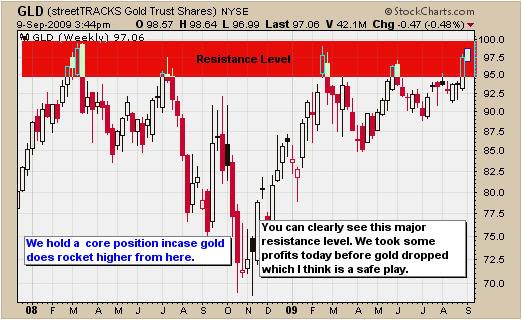
How the Federal Government will Lose in 2009 – Seeking Alpha

By: Rob Viglione of The Freedom Factory

Through a combination of incompetence and greed, the federal government has placed itself in a position of checkmate. There is no way to finance its budget deficits without devaluing the dollar or causing interest rates to rise. With $10.6 trillion in debt, $8.5 trillion in new money created or given away in 2008, and multiple years of trillion dollar deficits planned by Obama, government has no way to fund its extravagances without either printing a lot more money or borrowing unprecedented sums.

This means that either Treasury bonds will crash, or the dollar will suffer significant devaluation relative to foreign exchange or precious metals, especially gold.

TV Does Great Interview With Peter Schiff (Russian TV, That Is)

=====================================================
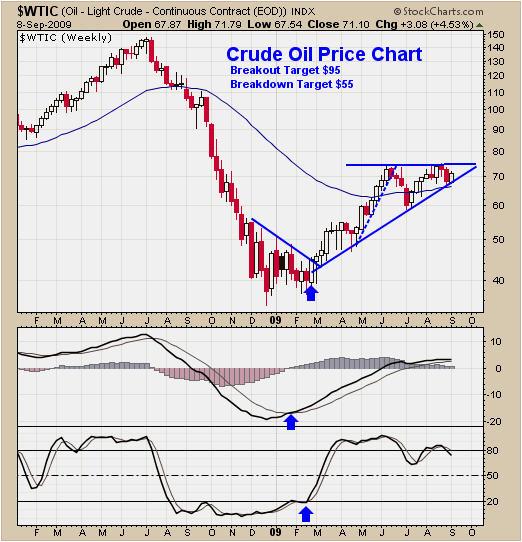
Remember Dare Something Worthy Today Too!


Market forces are telling the world to shed unproductive assets and shrink capacity, yet central banks and governments around the world, in particular the U.S., are refusing to listen. Rather than allow markets to snap back to sustainable equilibrium from previously artificial highs, the federal government clings to the notion that forcibly shuffling resources, propping up asset prices, and diluting the money supply will magically save the day.

There are consequences to everything. The consequences of shuffling resources (taxing productive ventures and doling out those resources to failing ones, i.e. bailouts) are stunted growth for good businesses and propagation of bad ones. Artificially propping up asset prices means that those who are generally less competent remain the custodians of society’s capital, and diluting the money supply inflates aways everyone’s wealth over time, particularly harming the poor and middle class.

For decades the federal government has gotten away with this reshuffle and inflate game, but the pawns are drowning, the rooks helpless, and the knights ready to turn on the King. Perhaps this is overly dramatic. Clearly, I doubt the capability of the Federal Reserve, Congress, and Obama to “fix” the economy; rather, I strongly believe they are destroying it by forcing us all to drink this Keynesian Kool-Aid. However, whether or not the economy recovers amidst this historic central government action, there are two phenomena we can exploit to our advantage:

  • Short the US dollar
  • Short US Treasuries

In “When will the great Treasury unwinding begin?” I show how government debt has been bid to unsustainable levels and will likely fall. The one concern I see stated all too often is that the Federal Reserve will keep buying Treasuries to artificially depress interest rates. This will, it is claimed, keep bond prices inflated. The one undeniable counter to this is that government must somehow fund its $1.2 trillion estimated 2009 deficit. It cannot do this by issuing and then buying the same bonds. It can only raise revenue by selling bonds to other parties, or by diluting the money supply by cranking up the printing presses. There are no other options. There you have it – we have the government in checkmate!

The likely outcome is that they will try to do both. That is why I am heavily shorting both 30-Year Treasury bonds and the dollar. Both assets will likely lose as the government becomes increasingly desperate and the world’s biggest buyers realize there are better alternatives available. Make your bets now before it becomes treasonous to bet against Big Brother!

Disclosure: Long UDN, short TLT, long GLD.

==============================================
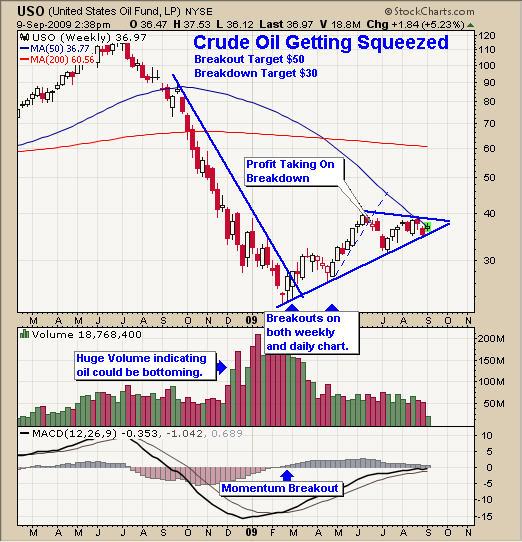
Five New Forces to Drive Gold Higher – Seeking Alpha

By: James West of The Midas Letter

Gold naysayers habitually point to the relatively weak performance of gold relative to the broader market over the last 5 years. Given the market today, that argument is increasingly wrong, and the naysayers are soon to either admit their mistake, or pretend that they were never naysayers at all. That’s because during the last 3 months, five major new forces have emerged to compound the previous strong drivers of the gold price up to now.

These new forces are as follows:

  1. China has stopped buying U.S. debt.
    An interesting piece in the New York Times today signals that China, up until now the biggest buyer of U.S. Treasuries and bonds issued by Fannie and Freddie, is moving towards an end to that policy. China holds over US$1 trillion of such paper, and as interest rates collapse, there is less and less incentive for them to buy American.China has made several adjustments to programs that used to give banks and other financial institutions within the country incentive to buy U.S. assets, which means essentially that these same customers for assets will now be looking for Chinese products.The effect this will have on gold is two-fold. In the first place, reduced demand for U.S. debt will hamper Obama’s plans to keep printing money, because the one limiting factor that still seems to be respected in terms of how much paper can be printed, is the idea that there must be a counterparty to every issuance of T-Bills to warrant continued printing. Theoretically, less demand for T-Bills will force a rise in interest rates to attract investors. But that does not appear forthcoming, which will make the U.S. dollar weak relative to other currencies – especially gold.The second effect is that by eliminating incentives for Chinese banks to acquire U.S. denominated assets, investors there will divert more funds to holding gold as a hedge against their current U.S. dollar holdings, which will be diminishing in value.
  2. Future discoveries of gold deposits will diminish dramatically.
    The biggest source of gold ounce inventory for major gold producers is the discoveries made by the several thousand juniors who scour the earth in search of favorable geology. With the collapse in base metals prices, many of these juniors are under increasing pressure to consolidate and downsize, and many more will disappear altogether.That means less money going into gold exploration, and that means the number of new discoveries that can be acquired by majors is going to go down sharply in the coming years. In theory, as gold continues to outperform all other asset classes, there will be a rush back into junior gold exploration, but that won’t happen until gold is taken much higher and investment demand for it soars.
  3. Existing by-product gold production will fall sharply
    In copper, zinc and other base metals mines around the world, gold occurs in metallic deposits as a by-product of some other dominant mineral. In the United States, 15 percent of gold production is derived from mining copper, lead and zinc ores.With the collapse in prices for these metals, the by-product production of gold is most often insufficient to justify the continued operation of the mine profitably, and it is likely that a significant amount of this by-product gold production will cease along with the shutdown of these operations. The result will be less gold production from existing operations, contributing to the now even faster growing gap between supply and demand.
  4. Gold is becoming mainstream
    One of the biggest contributors to gold’s unpopularity as a main street investment is that it has been mercilessly derided and ridiculed by mainstream investment media and institutions. There is very little opportunity for an investment advisor to insinuate himself into a gold purchase transaction, since most anybody who wants to hold the metal can visit their local bullion exchange or mint and buy as much as they’d like. Because the massive investment institutions that dominate the investment advisory business can’t make a fee out of advising you to buy gold, they try to convince you to purchase other asset classes which their firm has either originated or is a participant in a syndication of investment banks selling such products.Thanks to the widespread coverage of the questionable integrity of these complex securities, and since many main street investors have been burned by their investment advisors (they feel), there is increasing main street advice being doled out to buy gold. One need only search Google news on any given day to discover that headlines critical of gold are now replaced with headlines singing its praises.
  5. Gold is the best performing asset class of the decade
    Now that the global financial meltdown has got up a head of steam, investors are hard pressed to find any investment that has performed well over the last ten years as consistently as gold. The chart below outlines this performance and appears here courtesy of James Turk’s GoldMoney.com.
Gold Performance: 2001-2008 (click to enlarge)
Gold Performance 2001 - 2008

As you can see, any investment still returning an average of 10 – 17 percent is a winner, compared to everything else you can generate a chart for. As this intelligence permeates the none-too-quick popular investment imagination, and, combined with the other 4 factors, gold is going to be where the world’s next crop of millionaires is minted.

===========================================
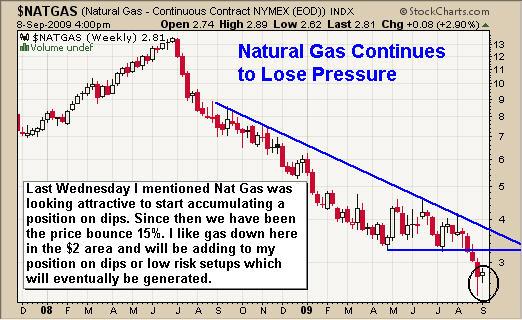
Share this:

  • Click to share on Reddit (Opens in new window) Reddit
  • Click to share on Facebook (Opens in new window) Facebook
  • Click to share on LinkedIn (Opens in new window) LinkedIn
  • More
  • Click to share on X (Opens in new window) X
  • Click to share on Pinterest (Opens in new window) Pinterest
  • Click to share on Tumblr (Opens in new window) Tumblr
  • Click to print (Opens in new window) Print
  • Click to email a link to a friend (Opens in new window) Email
Like Loading...

Authors

  • jschulmansr's avatar jschulmansr
    • Free Crypto!
    • Free Crypto Currency
    • This is Blessed!
    • Trump Rally Charleston
    • Trump Rally Charleston

Blog at WordPress.com.

Privacy & Cookies: This site uses cookies. By continuing to use this website, you agree to their use.
To find out more, including how to control cookies, see here: Cookie Policy
  • Subscribe Subscribed
    • Dare Something Worthy Today Too!
    • Already have a WordPress.com account? Log in now.
    • Dare Something Worthy Today Too!
    • Subscribe Subscribed
    • Sign up
    • Log in
    • Report this content
    • View site in Reader
    • Manage subscriptions
    • Collapse this bar
%d